If you have ever tried to get a power chair covered, you know the process can feel like alphabet soup and red tape. Here’s the good news: getting medicare covered power wheelchairs approved is absolutely doable when you know what Medicare wants to see, who fills out which forms, and how to steer prior authorization. I’ve helped friends and clients do this, and the difference between a quick approval and a painful delay is often one or two sentences in a doctor’s note.
In this friendly guide, you’ll learn the five insider steps that cut through confusion: what to bring to your exam, the exact phrasing clinicians should include, which documents matter most, and a prior-authorization checklist you can literally copy. Along the way, I’ll show how Go Wheelchairs makes the process easier with personalized support, insurance guidance, and a wide range of motorized wheelchair options, plus resources to help you prepare the necessary documentation so reviewers see the full picture.
Why Medicare Covered Power Wheelchairs Get Denied — And How to Avoid It
Let’s start with the hard truth: most denials happen because the paperwork doesn’t clearly prove medical necessity for home use. Review summaries from the Centers for Medicare & Medicaid Services [CMS] frequently show missing or vague exam notes, absent statements about why a manual wheelchair won’t work, or a lack of evidence that the home environment is compatible with a powered device. It’s rarely about the chair itself; it’s about the story your documentation tells.
After Medicare Part B [Medical Insurance] applies the deductible, beneficiaries typically owe 20 percent of the Medicare-approved amount. That 20 percent is worth protecting with clean documentation. Providers and suppliers must also be enrolled in Medicare and accept assignment, which means they agree to Medicare’s approved amount as full payment; if they do not, you could end up with unexpected bills. Add to that, certain power chair categories require prior authorization before Medicare pays, so timing and completeness really matter.
- Common pitfalls: no face-to-face exam note, or the note lacks detail about daily in-home activities like bathing, dressing, and meal prep.
- Missing statement explaining why a manual wheelchair and scooter won’t meet in-home needs safely and effectively.
- No confirmation that the patient can safely operate a power chair or has a caregiver who can assist.
- Supplier not enrolled in Medicare or not accepting assignment, increasing out-of-pocket risk.
- Prior authorization request submitted without the Standard Written Order [SWO] or without the clinician’s signed, dated visit note.
The fix is simple but specific: document medical necessity for in-home mobility, show why less costly options are not reasonable, confirm safe operation, and confirm your supplier’s role in prior authorization and that all required pieces are attached. That is exactly what the steps below help you do.
Insider Step 1: Nail the Face-to-Face Exam and Clinician Language
Medicare only covers a power wheelchair when it is medically necessary for use in the home. That starts with a face-to-face evaluation by your treating provider. Your clinician can be a Doctor of Medicine [MD], Doctor of Osteopathic Medicine [DO], Nurse Practitioner [NP], or Physician Assistant [PA]; the key is a thorough, current exam note that is signed and dated. Aim to schedule this visit close to your order date; many suppliers prefer within 30 to 60 days to prevent paperwork expiring.
Bring a simple one-page summary to the appointment. List the rooms you need to access, what stops you now, and any falls, fatigue, pain, or shortness of breath. If you’ve tried a manual wheelchair or scooter, say how it went. A short video of you attempting transfers or moving in your home can also help your clinician describe functional limits accurately in the chart.
Here are documentation phrases that consistently help, and your clinician can adapt them as medically appropriate. These are not scripts; they are themes Medicare reviewers look for when deciding on medical necessity:
- “Patient cannot safely self-propel a manual wheelchair due to [upper-extremity weakness, cardiopulmonary limitations, pain, endurance].”
- “A scooter is not appropriate because [insufficient trunk control, home layout requires tight turns, difficulty managing tiller].”
- “A power wheelchair is medically necessary for in-home mobility to complete activities of daily living including bathing, dressing, toileting, and meal preparation.”
- “Patient demonstrates safe cognitive ability and judgment to operate a power wheelchair, or a caregiver will assist daily.”
- “Home environment supports use of a power wheelchair: surfaces are level, entry accessible, key doorways ≥ 32 inches, and there is adequate turning space.”
- “Symptoms are expected to last at least 3 months; conservative measures have not restored safe in-home mobility.”
- “Seating and positioning needs require [captain’s chair/adjustable features] to maintain upright posture and prevent skin breakdown.”
- “Patient will use the device primarily in the home; community use may occur but is not the basis for medical necessity.”
Quick story: Maria, a retired teacher, had two denials before adding a single sentence about why she couldn’t safely steer a scooter in her narrow hallway. Her clinician updated the note, the supplier resubmitted, and the request was affirmed within a week. Small details, big results.
Insider Step 2: Forms, Documentation, and Timelines That Actually Work

Once your clinician documents medical necessity, the paperwork must line up. A complete file typically includes a face-to-face visit note, a Standard Written Order [SWO], a detailed product description, and any therapy evaluations that support seating and positioning. Your supplier compiles everything for submission, but it helps to know who is responsible for what and when each piece is due.
Use the table below as your map. Dates matter because some documents expire; for example, the face-to-face exam should be current relative to the order date, and signatures must be legible and dated. Pro tip: keep digital photos or scans of every signed page. If anything is missing, you can fix it fast rather than restarting the entire process.
| Document | Who Completes | Key Elements | Typical Timing | Common Mistakes to Avoid |
|---|---|---|---|---|
| Face-to-Face Visit Note | Treating clinician (MD [Doctor of Medicine], DO [Doctor of Osteopathic Medicine], NP [Nurse Practitioner], PA [Physician Assistant]) | In-home mobility needs, why manual and scooter fail, safety to operate, expected duration, home compatibility | Within weeks of order; sooner is better | Vague language, missing date/signature, focuses on outdoor needs instead of in-home |
| Standard Written Order [SWO] | Treating clinician | Beneficiary name, item description, quantity, clinician name, signature, and date | Signed after visit note; before prior authorization | Wrong model or no description, undated signature, illegible clinician details |
| Detailed Product Description | Supplier with clinician oversight | Manufacturer, model, key features, seat dimensions, battery type, accessories | With SWO or immediately after | Model mismatch between forms, missing dimensions, accessories not justified |
| Therapy/Seating Evaluation | Physical Therapist [PT] or Occupational Therapist [OT] if needed | Postural needs, pressure relief, transfer method, cushion and back support | Before prior authorization submission | No link to in-home function, no measurable findings |
| Home Assessment | Supplier with beneficiary input | Door widths, thresholds, turning space, storage and charging access | Before device selection | Assuming the home fits without measuring real spaces |
| Prior Authorization Packet | Supplier | All items above, cover sheet, and contact info | After SWO; submission triggers review | Submitting without the signed visit note or SWO |
Keep a simple timeline: Day 0 exam; Days 1–7 SWO signed; Days 7–14 prior authorization submitted; within about 10 business days a decision typically arrives, with an expedited path in urgent situations. Most delays come from preventable document gaps, not from medical disagreements. That’s why double-checking each line item pays off.
Insider Step 3: Prior Authorization Made Easy for Medicare Covered Power Wheelchairs
Prior authorization exists to verify medical necessity before Medicare pays. Your supplier requests it, sends the packet to Medicare or your Medicare Administrative Contractor [MAC], and receives an “affirmed” or “non-affirmed” decision. Many power wheelchair categories, especially standard and heavy-duty chairs, fall under prior authorization rules. The decision letter guides next steps: deliver the chair if affirmed, or correct the documentation and resubmit if not.
Medicare typically responds within approximately 10 business days, and expedited review can be faster if a delay could seriously jeopardize health. If the decision is non-affirmed, you have options: ask the supplier to resubmit with clarifications, request your clinician add missing details, and consider a fast re-review. Formal appeal rights also exist, but most issues resolve when the exam note specifically ties the chair to in-home activities and explains why alternatives fail.
| Category | Typical Healthcare Common Procedure Coding System [HCPCS] Range | Typical Weight Capacity | Prior Authorization | Who Submits | Usual Review Time |
|---|---|---|---|---|---|
| Standard Power Wheelchair | Often in K0813–K0840 ranges | Up to ~300 lb | Frequently required | Supplier | About 10 business days; expedited possible |
| Heavy-Duty Power Wheelchair | Often in K0841–K0864 ranges | ~301–450 lb or more | Frequently required | Supplier | About 10 business days; expedited possible |
| Very Heavy-Duty / Bariatric | Varies by manufacturer and code | ~451–600 lb+ | Commonly required | Supplier | About 10 business days; expedited possible |
Two practical tips: first, make sure your supplier is enrolled in Medicare and accepts assignment to avoid surprise costs. Second, ask your supplier to share the exact reason if a request is non-affirmed. A one-line clarification from your clinician often flips the decision on resubmission. Go Wheelchairs can help you coordinate and understand these details, so you are never left wondering what to fix or who to call.
Insider Step 4: Match the Chair to Your Life — Standard, Heavy Duty, and Travel Picks
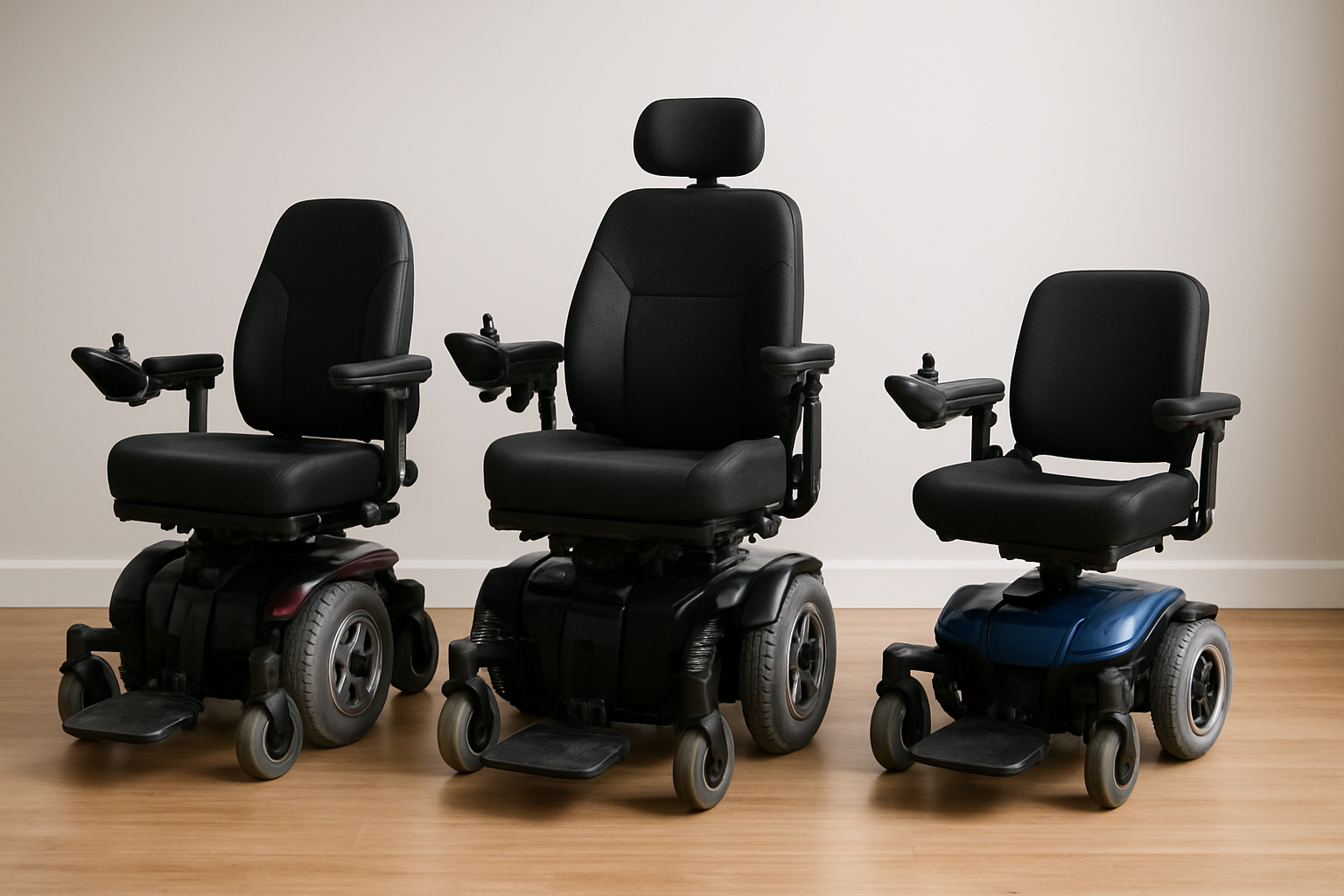
The right chair is the one that fits your body, your home, and your day. Standard models work well for many people, while heavy-duty builds support higher weight capacities and rugged use. Lightweight, foldable designs are perfect for travel and tight storage. Medicare coverage focuses on in-home necessity, but your daily reality also includes doorway widths, thresholds, and turning space. Keep those measurements handy during selection.
Go Wheelchairs helps you compare options side-by-side. We carry a wide range of standard and heavy-duty motorized wheelchairs, plus lightweight, foldable designs for people who travel or live in smaller spaces. Our personalized guidance connects your clinical needs to a specific model and cushion setup, minimizing back-and-forth with prior authorization and speeding up delivery.
| Type | Best For | Typical Features | Home Fit Notes | Go Wheelchairs Highlights |
|---|---|---|---|---|
| Standard Power Chair | Daily in-home mobility with moderate terrain | Captain’s chair, mid- or rear-wheel drive, adjustable armrests | Needs ~32-inch doors, clear turning space near bathroom/kitchen | Popular, dependable models with quick-ship setup and Medicare assistance |
| Heavy-Duty Power Chair | Higher weight capacity and durability | Reinforced frame, larger motors, upgraded suspension | Confirm ramps and storage; check battery access for charging | Wide selection of heavy-duty options with personalized support |
| Lightweight/Foldable Power Chair | Travel, apartment living, or frequent transport | Compact frame, quick-fold, airline-friendly batteries in some models | Great for small closets; verify cushion fit and daily comfort | Lightweight designs plus travel tips in our Resources Hub |
Unsure where to start? A Go Wheelchairs specialist can walk you through measurements, show you comparable models, and coordinate with your clinician so the Standard Written Order [SWO] and detailed product description match the chair you actually want to use every day.
Insider Step 5: The Prior-Auth Checklist You Can Copy
Here is a streamlined, ready-to-use checklist that mirrors what successful submissions include. Print it, share it with your clinician, and hand it to your supplier. When this list is checked off, approvals tend to move quickly.
- Confirm your supplier is enrolled in Medicare and accepts assignment.
- Schedule a face-to-face visit focused on in-home mobility limits and safety.
- Bring a one-page summary: rooms you must reach daily, tasks you cannot do safely, and what happened when you tried a manual chair or scooter.
- Ask your clinician to include clear statements: why manual and scooter options do not work at home, your ability to operate the device, and home compatibility.
- Ensure the visit note is signed and dated with legible credentials.
- Obtain a complete Standard Written Order [SWO] that lists the item and necessary accessories.
- Complete a home assessment with measurements: doorway widths, turning spaces, and charging access.
- Align the detailed product description with the exact model and seating you need.
- Ask the supplier to submit prior authorization and share the confirmation number.
- Track timelines: expect about 10 business days; ask if expedited review is appropriate.
- If non-affirmed, request the reason in writing, update the note or SWO, and resubmit promptly.
- Verify cost-sharing: after your deductible, Medicare Part B [Medical Insurance] generally covers 80 percent of the approved amount.
- If you have a Medicare Advantage plan [Medicare Advantage], check plan-specific rules; prior authorization still applies, but processes can vary.
- Schedule delivery, fitting, and a safety check, including driving practice and charger setup.
- Keep a digital folder with every note, order, and approval for future repairs or upgrades.
Where does Go Wheelchairs fit? Right alongside you. We offer insurance and Medicare assistance, model comparisons, and hands-on guidance so your documentation speaks the reviewer’s language the first time. Our Resources Hub includes buying guides, comparison tools, and travel tips, making it easier to choose confidently and move forward with independence.
Quick FAQs Inside the Checklist
- How long does the whole process take? With a proactive team, 4–8 weeks from exam to delivery is common; without guidance, it can stretch to 10–12 weeks.
- Rent or buy? Depending on the chair type and code, Medicare may purchase or rent. Your supplier will advise based on current rules.
- Repairs later? Keep your paperwork. Approvals and detailed descriptions make repair authorization smoother down the road.
When you combine the right exam note, the right forms, and the right partner, prior authorization stops being a roadblock and becomes a green light. And yes, that means fewer phone calls and faster wheels on the ground.
Go Wheelchairs: Personalized Support From First Note to Final Approval
Individuals with mobility challenges often struggle to find affordable, dependable wheelchair solutions that fit their lifestyle and coverage needs. Go Wheelchairs exists to change that experience. We curate a wide range of standard and heavy-duty motorized wheelchairs, plus lightweight, foldable designs for everyday life and travel. But selection is only half the story; our personalized support helps you gather the exact documentation Medicare reviewers expect and keeps your prior authorization process moving smoothly by advising on next steps and timelines.
Here is how we help, step by step. We listen to your daily goals, match them to chair features that truly matter, then coordinate with your clinician on the Standard Written Order [SWO] and product details. We provide guidance to prepare prior authorization packets, advise on timelines and follow-up steps, and help translate decision letters into clear next steps. Behind the scenes, our Resources Hub offers buying guides, comparison tools, and travel tips so you feel confident at every decision point.
- Wide range of standard and heavy-duty motorized wheelchairs, including trusted everyday models and bariatric-capable options.
- Lightweight, foldable wheelchair designs for travel and compact storage.
- Personalized support and guidance that connects your medical story to the right chair.
- Insurance and Medicare assistance so your forms and orders are complete and you understand prior authorization steps and timelines.
- Resources Hub with buying guides, comparison tools, and travel tips you can act on today.
If you want a knowledgeable partner to guide the process while you focus on living your life, Go Wheelchairs is ready. We help turn paperwork into progress, questions into clarity, and mobility goals into the daily independence you deserve.
Recap promise: Follow these five insider steps and you’ll give Medicare exactly what it needs to approve the right power chair.
Imagine opening your front door and rolling into a year filled with easier mornings, safer transfers, and the simple joy of making your own coffee again. In the next 12 months, small daily wins stack up into confidence and independence.
What would change for you if medicare covered power wheelchairs were approved on the first try?
Additional Resources
Explore these authoritative resources to dive deeper into medicare covered power wheelchairs.
Streamline Medicare Power Chair Approvals with Go Wheelchairs
For individuals seeking mobility and coverage, Go Wheelchairs brings a Wide range of standard and heavy-duty motorized wheelchairs plus guidance to get approvals, help you move forward confidently and independently.