
If getting a power chair covered feels like deciphering a foreign language, you are not alone, and that is exactly why a simple, reliable process for electric wheelchair insurance coverage verification can change the game for you. Non-Medicare plans play by different rules, and knowing those rules up front is the fastest way to approval rather than a surprise denial. I have seen families lose weeks to missing signatures or network mix-ups, which is why I am laying out the exact moves that consistently work with employer coverage, Affordable Care Act Marketplace plans, and Medicaid managed care. Along the way, you will see how Go Wheelchairs pairs practical know-how with a wide range of standard and heavy-duty motorized wheelchairs so you can match your lifestyle, your budget, and your plan requirements without the runaround.
Electric wheelchair insurance coverage verification: how it works beyond Medicare
Unlike Medicare, many commercial policies publish plan-specific mobility policies that dictate who can prescribe, what documentation is required, and whether your chair is rented before purchase, so the first victory is understanding the map before you drive on it. Employer and Marketplace policies often require prior authorization, insist on in-network durable medical equipment suppliers, and compare your clinical notes to medical-necessity checklists such as “safer mobility inside the home” and “unable to use a cane or walker,” so your paperwork must speak their language clearly. Timelines vary—some plans decide in five to seven business days while others take two to three weeks—but insurers almost always move faster when the request is complete, consistent, and aligned to the exact features you need, from turning radius to battery range to bariatric capacity. At Go Wheelchairs, we front-load this work by verifying benefits, capturing the right clinical language in your notes, and mapping the chair to the policy line by line so your request arrives tidy, defensible, and easy to approve.
- Network first: confirm your prescriber and supplier are in network and authorized for durable medical equipment.
- Medical necessity is specific: connect daily activities you cannot perform to chair features that make them safe and possible.
- Know the format: some plans require their own forms, digital signatures, or a pre-submission home access review.
The 9 proven steps to speed approvals and avoid denials
Here is the truth many people miss: most denials are not about whether you need a motorized wheelchair—they happen because the insurer cannot find the exact phrase, measurement, or signature their policy demands. Industry audits routinely show that documentation gaps cause the majority of initial denials, and the silver lining is that gaps are fixable with a checklist and a little persistence. Think of this like packing for a long trip; if you make a list and check it twice, you avoid the midnight scramble to find a charger at the airport. Below are the nine steps our team follows with non-Medicare plans, and while every insurer has its quirks, these steps cover the 80 percent that unlocks faster approvals and far fewer appeals.
Watch This Helpful Video
To help you better understand electric wheelchair insurance coverage verification, we’ve included this informative video from WPS Government Services – Medicare. It provides valuable insights and visual demonstrations that complement the written content.
- Confirm your benefits and rules: call the member line, ask if prior authorization is required, verify your in-network supplier options, and note your coinsurance and out-of-pocket maximum; record the representative’s name and reference number.
- Schedule a face-to-face mobility evaluation with your treating clinician and ensure the visit notes clearly state why a manual chair, cane, or walker is insufficient for safe home mobility and daily activities.
- Request a robust Letter of Medical Necessity [LMN (Letter of Medical Necessity)] that links your medical limitations to chair features such as power tilt, elevating leg rests, mid-wheel drive control, or heavy-duty frames.
- Complete a seating and mobility evaluation with an ATP [Assistive Technology Professional (ATP)] and test-drive at least two models; document scores, obstacle tests, and comfort so your choice looks evidence-based.
- Document home access: measure doorway widths, hallway turns, ramp needs, and transfer spaces; include a simple sketch or photos if your plan allows and note any caregiver or vehicle transport considerations.
- Secure a Detailed Written Order [DWO (Detailed Written Order)] that includes model, seating, batteries, charger, joystick or alternative drive controls, and any medically necessary accessories with clear quantities.
- Assemble a clean prior authorization packet: policy citation, LMN, clinician visit notes, ATP evaluation, DWO, home access summary, and a concise justification letter that connects the plan’s criteria to your documents.
- Track the request proactively: confirm receipt, ask for the review timeline, and if the file is flagged, request a peer-to-peer discussion between your prescriber and the plan’s reviewer to resolve issues quickly.
- Prepare delivery and a Plan B: keep your Explanation of Benefits [EOB (Explanation of Benefits)] and, if denied, submit a clear, timely appeal that addresses the exact reason using the same evidence—most overturned denials win on better documentation.
Documents and timelines: a quick-reference table
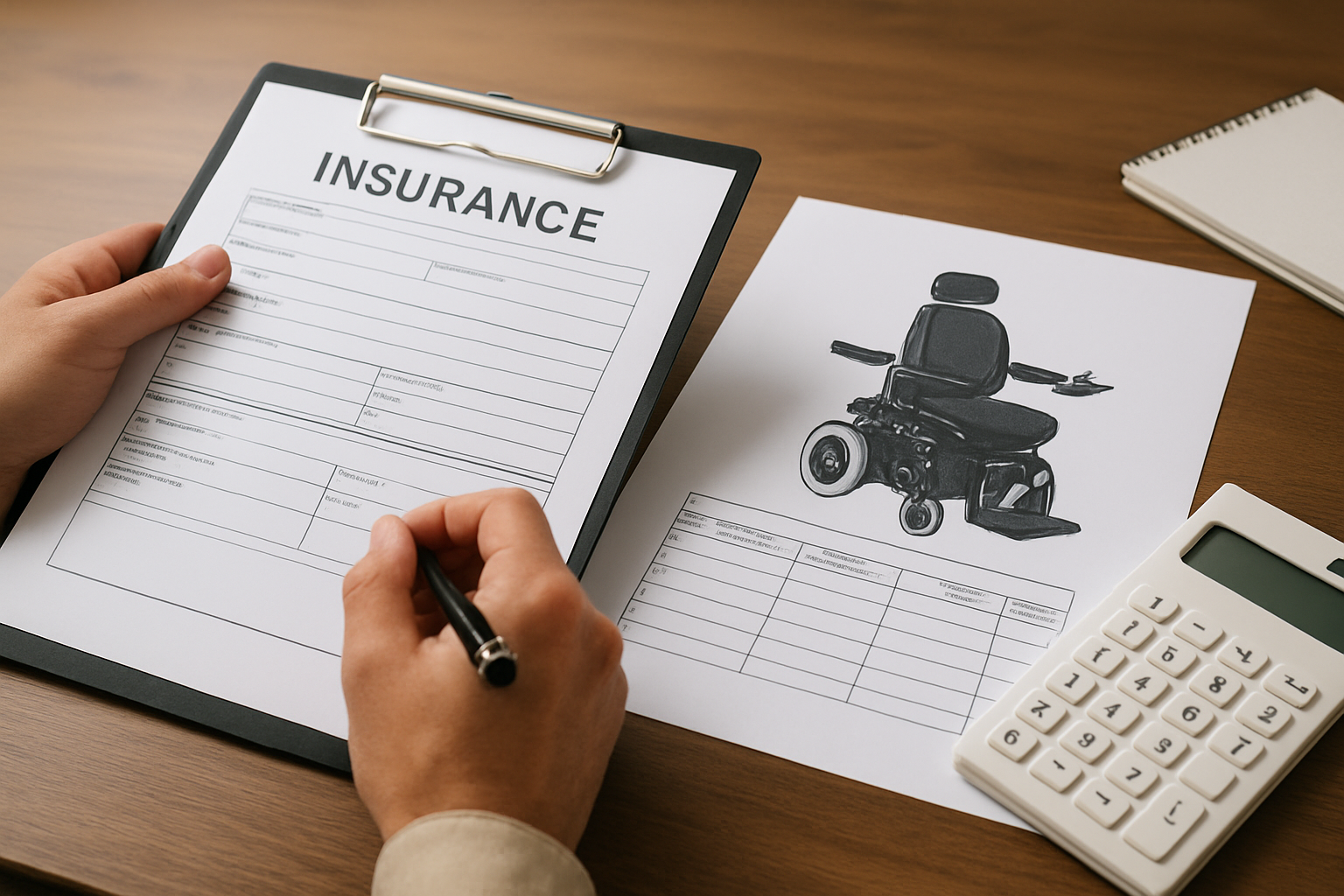
Paperwork wins approvals, and tidy paperwork wins them faster, so think of your file as a story in which every page confirms a requirement the insurer expects to see. A strong file will include a face-to-face evaluation that proves daily need, an LMN [Letter of Medical Necessity (LMN)] that connects limitations to features, a DWO [Detailed Written Order (DWO)] that lists all components, and a seating and mobility evaluation from an ATP [Assistive Technology Professional (ATP)] that shows you tried and selected an appropriate model. Most non-Medicare plans will also want proof that you can operate the chair safely at home and that the supplier and clinician are in network, which is why we always include a short home access summary plus network verification. Below is the cheat sheet we use at Go Wheelchairs, and while timelines vary by insurer and state, it will help you spot bottlenecks before they slow you down.
| Document or Milestone | Who Provides It | Key Details to Include | Frequent Pitfalls | Typical Turnaround |
|---|---|---|---|---|
| Face-to-face evaluation notes | Treating clinician | Why a manual chair is unsafe or inadequate; daily tasks impacted; home use focus | Vague language, no home-use statement | 1 to 3 business days to finalize |
| LMN [Letter of Medical Necessity (LMN)] | Treating clinician | Clear link from impairments to chair features; measurable goals | Generic template with no feature-level justification | 2 to 5 business days |
| Seating and mobility evaluation by ATP [Assistive Technology Professional (ATP)] | Go Wheelchairs or clinic-based ATP | Trials, fit measurements, control method, pressure relief plan | No comparison of options, missing measurements | 3 to 7 business days |
| DWO [Detailed Written Order (DWO)] | Prescriber with supplier support | Model, seating, accessories, batteries, charger, quantities | Missing accessories or ambiguous model numbers | 1 to 2 business days |
| Home access summary | Patient or supplier | Doorway widths, turning spaces, ramp needs, transfer plan | No measurements; only general statements | Same day to 2 business days |
| Prior authorization packet | Supplier | Coversheet, policy citations, complete documentation, justification letter | Out-of-network supplier; missing signatures | Submission in 1 to 2 days; review 5 to 15 days |
| Peer-to-peer review | Plan reviewer and prescriber | Clarify criteria, confirm safety and home use, answer questions | Delayed scheduling; missed calls | 1 to 5 business days |
| Delivery confirmation and proof of delivery | Supplier | Model delivered, accessories, serial numbers, patient signature | Unsigned or incomplete proof of delivery | Same day |
| Appeal packet with EOB [Explanation of Benefits (EOB)] | Patient with supplier and clinician | Rebuttal to denial reason, corrected documents, timelines met | Late filing; not addressing the stated reason | Varies: 15 to 45 days |
Real-world scenarios: how approvals succeed and why denials happen
Let me share two everyday stories I see. Maya, a teacher with an employer health maintenance organization plan, needed a heavy-duty chair for safe indoor mobility and community access, and her first request stalled because her original supplier was not in network and the LMN [Letter of Medical Necessity (LMN)] never connected her falls to the need for power tilt. We moved her file to an in-network supplier, updated the LMN to tie tilt and elevating leg rests to pressure relief and safe transfers, and added a simple home access summary; the plan approved in nine business days and her coinsurance dropped because the negotiated in-network rate was lower. Ben, a Marketplace Silver plan member, was initially denied for “insufficient home-use justification,” so we resubmitted with a seating evaluation, a doorway measurement table, and a short letter quoting the plan’s own policy line on “safe in-home mobility,” and the approval followed within a week.
Cost and coverage variables to watch
Coverage is not just yes or no—it is also how the plan handles rental periods, accessories, and repairs, which can influence your total cost by hundreds or even thousands of dollars over a year. Many employer plans split cost-sharing between coinsurance and deductibles, Marketplace plans may have narrower networks but clearer prior authorization portals, and Medicaid managed care often requires more frequent documentation updates yet can be generous with repairs when the medical need is well documented. Across plans, the most common out-of-pocket surprises are accessory exclusions and rental-to-purchase timelines, which is why we list every medically necessary part in the DWO [Detailed Written Order (DWO)] and confirm whether the chair converts to ownership. Use the table below as a conversation starter with your insurer and your Go Wheelchairs specialist so you can plan with your wallet and your calendar, not guesswork.
| Feature | Employer Preferred Provider Organization | Employer Health Maintenance Organization | Marketplace Silver (Affordable Care Act) | Medicaid Managed Care |
|---|---|---|---|---|
| Prior authorization | Usually required; portal submission | Required; strict network and form rules | Common; standardized online portals | Required; may need additional clinical reviews |
| In-network supplier requirement | Strongly preferred; out-of-network penalties | Mandatory except emergencies | Preferred; narrower networks | Mandatory; plan-assigned providers |
| Typical cost-sharing | 10 to 30 percent coinsurance after deductible | Fixed copay or 20 percent coinsurance | 20 to 40 percent coinsurance; varies by metal tier | Low or no cost; benefits vary by state |
| Rental versus purchase | Often rent first for several months | Rent first common; purchase after period | Mix; policy-specific timelines | Varies; some plans purchase for medical necessity |
| Repairs and maintenance | Covered when medically necessary | Covered in network; pre-approval may apply | Covered; may require new notes for major repairs | Covered; documentation-heavy |
| Batteries and chargers | Usually covered with intervals | Covered with supplier documentation | Covered; check frequency limits | Covered; state-specific intervals |
| Upgrades for heavy-duty frames or complex seating | Covered when medical necessity is documented | Covered if policy criteria are met | Often covered with strong justification | Covered; may need additional reviews |
Why partner with Go Wheelchairs for coverage and confidence
When your mobility, independence, and calendar are at stake, you deserve a partner that handles the details and keeps you in control, and that is where Go Wheelchairs shines. Our team pairs practical documentation help with a wide range of standard and heavy-duty motorized wheelchairs, so you are not choosing between coverage and comfort—you are getting both. We guide you through electric wheelchair insurance coverage verification, coordinate directly with your clinician, and submit clean, policy-aligned prior authorization packets that reviewers can say yes to without a scavenger hunt. Add in our lightweight, foldable wheelchair designs for travel and our resources hub with buying guides, comparison tools, and travel tips, and you get a clear path from “maybe” to “approved” to “let’s roll.”
- Personalized support and guidance from first call to delivery, including appeals if needed.
- Insurance and Medicare assistance that translates policies into plain language and action steps.
- Product breadth from everyday power chairs to bariatric and complex seating options for unique needs.
- Resources hub with how-tos, checklists, and side-by-side comparisons to make confident decisions.
- Post-delivery support for fitting, training, and repair coordination so you are covered long after approval.
Fast, predictable approvals come from doing the right steps in the right order with the right documentation, and now you have the playbook. Imagine the next 12 months with a chair that matches your life, delivered faster, with fewer phone marathons and no mystery paperwork. What would you do first when your electric wheelchair insurance coverage verification turns into a confident yes?
Additional Resources
Explore these authoritative resources to dive deeper into electric wheelchair insurance coverage verification.
Speed Electric Wheelchair Approvals with Go Wheelchairs
Access a wide range of standard and heavy-duty motorized wheelchairs with guided insurance verification so individuals move confidently using Medicare or other health insurance.