10 Motorized Wheelchairs to Match Your Mobility Needs: Top Models for Home, Travel, Heavy-Duty & Medicare Coverage
Choosing motorized wheelchairs can feel overwhelming, especially when you are balancing comfort, terrain, transport, and coverage. The good news? There is a perfect power chair out there for your everyday life, whether you are navigating cozy hallways at home or rolling confidently through parks and errands. With roughly 2.7 million people in the United States using a wheelchair, the market has grown into a rich ecosystem of options that genuinely fit different lifestyles and budgets.
At Go Wheelchairs, we help people every day match features to real-world routines, then decode insurance and Medicare details with them so nothing gets lost in the fine print. Below, you will find ten model types we recommend most often, organized by where and how you plan to ride. For each, I will share what it is, why it matters, and a quick example so you can picture how it would work for you.
#1 Home Comfort Mid-Wheel Drive Chair for Everyday Living
What it is: A mid-wheel drive power chair designed to turn tightly in small rooms while keeping a stable, cushioned ride. It often features six wheels on the ground, supportive seating, and a turning radius that can be as low as roughly 20 to 22 inches. Think of it as the living room champion that also handles hallways, kitchens, and bedroom doorways with ease.
Why it matters: Most homes have door openings around 28 to 32 inches, and furniture can create maze-like paths. A mid-wheel drive setup pivots around the user’s center, which translates to smoother cornering and fewer multi-point turns. Add in basic suspension and adjustable armrests, and you have an indoor-first chair that feels intuitive and relaxed during daily routines.
Quick example: If you spend 80 percent of your time at home and want easy turns around the coffee table without scuffing walls, this is your sweet spot. Customers at Go Wheelchairs often tell us they immediately notice less “back and forth” when parking at the dining table.
#2 Ultra-Portable Folding Motorized Wheelchair for Travel
What it is: A lightweight, foldable power chair built to collapse quickly for car trunks or to meet typical airline battery policies. Many models weigh under 60 pounds, use removable lithium-ion batteries, and fold like a stroller in seconds. They are the Swiss Army knife of mobility when you are on the go.
Watch This Helpful Video
To help you better understand motorized wheelchairs, we’ve included this informative video from Mobility Scooters Direct. It provides valuable insights and visual demonstrations that complement the written content.
Why it matters: If you want spontaneous trips, you need a chair that does not require a ramp van or elaborate breakdown. The fold-down design means you can hop into a rideshare, store it in the closet, or roll through a hotel without hunting for oversized elevators. While range is usually shorter than larger chairs, the convenience is unbeatable.
Quick example: Picture a weekend getaway with carry-on luggage and your chair in the trunk. You unfold at the curb, explore a museum, then fold it again for dinner across town. That is common for Go Wheelchairs travelers who prefer flexibility over maximum range.
#3 Narrow-Doorway Specialist: Compact Indoor Power Chair
What it is: A compact chair with narrower seating and a shortened wheelbase for older homes, apartments, and tight elevators. It prioritizes width and turning radius above all else, often matching the indoor agility of mid-wheel chairs but in a slimmer package.
Why it matters: Some doorways simply will not budge, and remodeling is expensive. Having a chair that fits the space you have lets you keep your routines—without carving up door frames. Many of these chairs also place the joystick where it best suits your reach so you glide through tight sections with confidence.
Quick example: One Go Wheelchairs client in a classic bungalow had a 29-inch bathroom doorway. The compact indoor chair slipped in without drama, eliminating a months-long remodel they had been dreading.
#4 Heavy-Duty, High-Capacity Chair for Bigger Builds
What it is: A heavy-duty, bariatric-friendly chair engineered for durability and comfort with higher weight capacities, wider seats, and reinforced frames. Expect sturdy motors, generous seat cushions, and supportive backrests that stay comfortable over longer daily sessions.
Why it matters: A chair should fit your body like a tailored suit, not a one-size-fits-all t-shirt. Heavy-duty options provide stability, smoother acceleration, and seating that distributes pressure more evenly. Many customers also appreciate the extra torque for ramps and uneven surfaces near home.
Quick example: If you have felt cramped in standard seats or noticed sluggish performance on inclines, a heavy-duty model can be transformative. At Go Wheelchairs, we often pair these chairs with upgraded cushions and power-adjustable footrests for all-day comfort.
#5 Outdoor Terrain Power Chair with Rugged Suspension
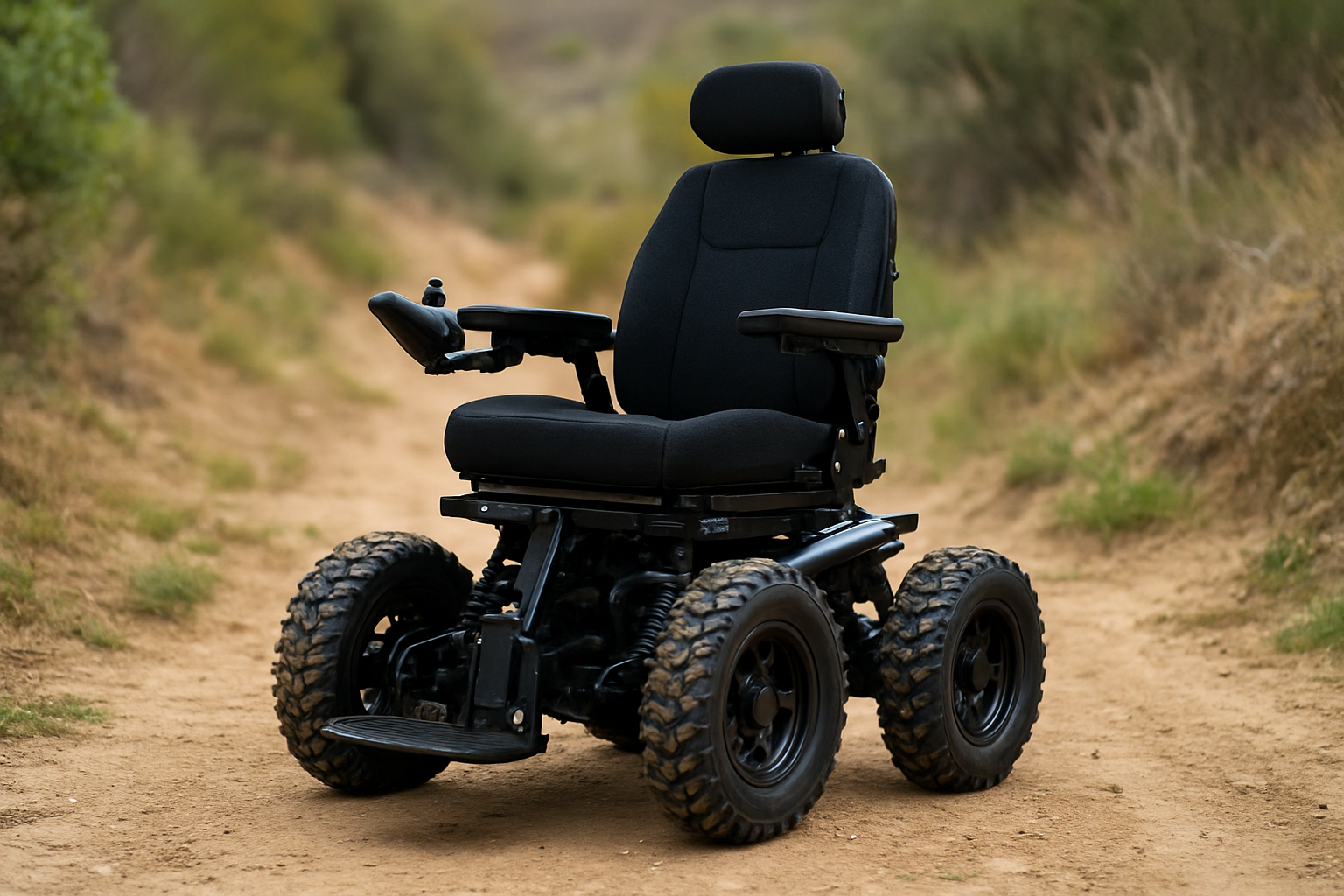
What it is: A chair designed for parks, gravel paths, and suburban sidewalks, featuring knobbier tires, active suspension, and a more robust frame. It will not replace a trail vehicle, but it will handle real-world bumps and curb cuts better than indoor-focused models.
Why it matters: Life does not stop at your front porch. If your daily routine includes rolling the dog, visiting a farmer’s market, or crossing campus, suspension and tire grip matter. The result is less vibration, improved confidence, and better traction across surfaces like grass and packed dirt.
Quick example: One Go Wheelchairs customer uses an outdoor terrain chair to attend their grandchild’s soccer matches each week. They park on grass, pivot along the sideline, and chat with other parents without worrying about getting stuck in soft soil.
#6 Long-Range Commuter Chair for Busy Days
What it is: A power chair with larger batteries and efficient motors that aim for longer per-charge distance. While actual range depends on rider weight, terrain, and speed, these models often prioritize batteries with higher ampere-hours and geared motors that sip energy.
Why it matters: If your life includes a campus, a shopping district, or a multi-stop day, short range becomes a hassle fast. A long-range chair reduces charge anxiety, lets you keep appointments back-to-back, and means fewer mid-day top-ups. Many also offer easy battery access so you can swap a spare at lunch.
Quick example: A healthcare worker who commutes between buildings told us their long-range chair turned frantic schedules into predictable ones. They plug in overnight and do not stress about the last case of the day.
#7 Elevating-Seat Power Chair for Reach and Visibility
What it is: A chair with a powered seat lift system that raises you several inches—sometimes a foot or more—so you can reach cabinets, chat at eye level, or safely tackle counters. The base may be mid-wheel or front-wheel, but the star is the lift mechanism integrated with stable controls.
Why it matters: Independence is not only about movement; it is also about access. An elevating seat supports safer transfers, reduces strain when you reach, and keeps social interactions more natural. Many customers say the lift helps them run errands without repeatedly asking for assistance.
Quick example: Imagine rolling up to your kitchen counter and lifting to the exact height for chopping vegetables. A Go Wheelchairs client told us this single feature restored their favorite Sunday meal prep ritual.
#8 Tilt-and-Recline Clinical Positioning Chair
What it is: A medical-grade seating system with powered tilt, recline, and sometimes elevating leg rests to redistribute pressure and manage posture. These are often prescribed for users with complex seating and positioning needs, and they are customizable with supports and cushions.
Why it matters: Skin protection and posture are foundational to long-term health. Tilt changes the angle of your body relative to gravity, reducing pressure on sit bones, while recline opens the hip angle to relieve back stress. When set up properly, these features can help prevent pressure injuries and support breathing comfort during extended use.
Quick example: If you spend most of the day in your chair, a tilt-and-recline system can enable scheduled pressure relief. At Go Wheelchairs, our team walks people through positioning plans recommended by their clinicians so the setup matches medical goals.
#9 Rear-Wheel Drive Stability Chair for Mixed Terrain
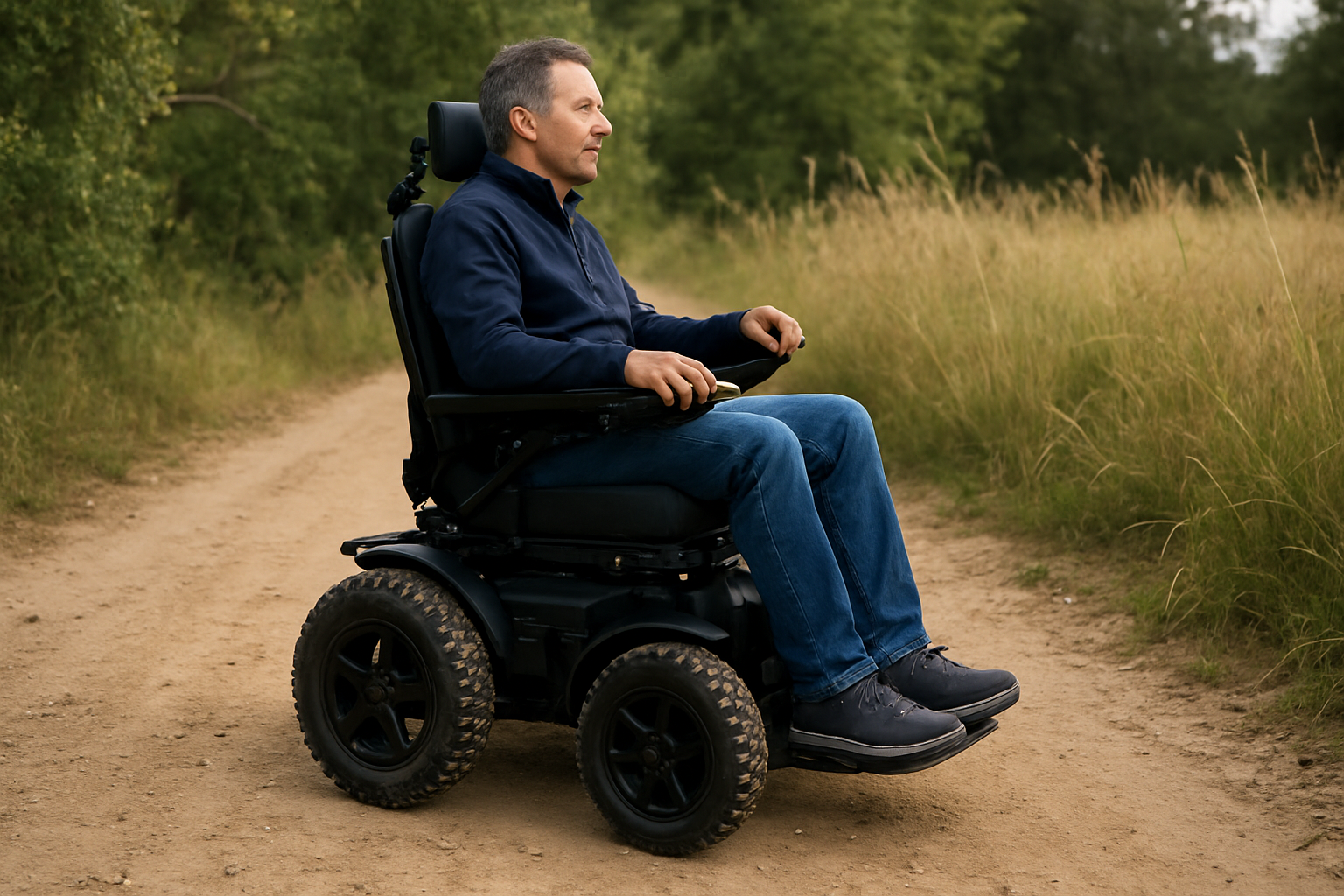
What it is: A rear-wheel drive chair known for straight-line stability, predictable handling on ramps, and solid curb performance. The larger drive wheels in the back push the chair with a planted feel, while front casters guide the path.
Why it matters: If you routinely transition from carpet to sidewalk to parking lots, rear-wheel drive feels natural and steady. It usually offers a slightly larger turning radius than mid-wheel, but you gain confident outdoor manners and reliable tracking on longer stretches.
Quick example: A customer who attends a weekly community center class loved the rear-wheel drive chair for its smooth ramp climbs and reliable performance crossing street seams and curb cuts.
#10 Medicare-Friendly Essentials Chair for Coverage
What it is: A straightforward, indoor-capable power chair designed to align with common Medicare Part B coverage criteria for medical necessity, when appropriate. These chairs emphasize safe indoor mobility at home, basic seating comfort, and reliable controls—without packing in premium extras that are often unnecessary for coverage decisions.
Why it matters: According to CMS [Centers for Medicare & Medicaid Services] guidelines, Medicare Part B may help pay for a power wheelchair when it is deemed medically necessary for use inside the home and ordered by your clinician. You typically need a face-to-face exam, an LMN [Letter of Medical Necessity], and a WOPD [Written Order Prior to Delivery], plus a participating DME [Durable Medical Equipment] supplier. A Medicare-friendly build focuses on the functionality that coverage decisions tend to prioritize.
Quick example: If your primary goal is safe indoor mobility and your clinician agrees, Go Wheelchairs can coordinate documentation, work with your plan, and suggest a chair that meets needs without adding cost for features you will not use.
At-a-Glance Comparison
The quick table below summarizes typical traits. Exact specifications vary by brand and configuration, so use this as a starting point and confirm details with your Go Wheelchairs specialist and your clinician.
| Option | Category | Typical Range (miles) | Weight Capacity (pounds) | Turning Radius (inches) | Best For | Medicare Coverage Notes |
|---|---|---|---|---|---|---|
| #1 | Mid-Wheel Home Comfort | 8–15 | 250–300 | 20–22 | Indoor agility | Common when medically necessary for primary in-home mobility |
| #2 | Folding Travel | 6–10 | 220–265 | 24–28 | Car trunks, flights | Coverage varies; travel focus may not align with home-only use criteria |
| #3 | Compact Indoor | 8–12 | 220–300 | 20–23 | Narrow doorways | Often considered when home navigation is the main need |
| #4 | Heavy-Duty | 10–18 | 350–450+ | 22–26 | Larger builds, stability | Considered when medically necessary for safe in-home mobility |
| #5 | Outdoor Terrain | 10–18 | 300–350 | 22–26 | Parks, uneven ground | Outdoor features alone may not drive coverage; case-dependent |
| #6 | Long-Range | 12–20+ | 250–300 | 22–26 | Full-day errands | Coverage focuses on medical necessity in the home |
| #7 | Elevating Seat | 8–15 | 250–300 | 22–25 | Reach, visibility | Lift feature may be optional; ask about plan specifics |
| #8 | Tilt-and-Recline | 8–15 | 250–350 | 22–26 | Pressure relief, posture | Often prescribed; documentation from clinician is essential |
| #9 | Rear-Wheel Drive | 10–18 | 250–300 | 24–28 | Ramps, mixed terrain | Considered when it meets in-home mobility needs |
| #10 | Medicare-Friendly Essentials | 8–12 | 250–300 | 22–25 | Indoor medical necessity | Designed to align with common criteria; plan rules vary |
How to Choose the Right Option
Here is a simple, field-tested framework we use at Go Wheelchairs to narrow choices fast while keeping comfort, safety, and coverage front and center. Grab a tape measure and a notepad—this part is practical and empowering.
- Map your life: List your top three places you ride most weekdays and weekends. Are you primarily at home, in the car, on sidewalks, or all of the above?
- Measure your space: Check door widths, hallway turns, elevator dimensions, and car trunk openings. ADA [Americans with Disabilities Act] guidance suggests a 32-inch minimum clear opening; knowing your numbers locks in fit.
- Match drive type to terrain: Mid-wheel for indoor agility, rear-wheel for ramps and mixed outdoor, front-wheel for confident curb handling at slower speeds.
- Select seat and posture features: Choose seat width and depth that match your measurements, then consider cushions, elevating seat, or tilt-and-recline if you sit for long periods.
- Decide on transport style: Foldable for frequent travel, or modular chairs with removable batteries if you transport by car often.
- Right-size the range: Estimate daily miles, then add a 20 to 30 percent buffer. Bring a spare battery if you are away from outlets for long stretches.
- Plan for coverage and budget: For Medicare Part B, you typically need a face-to-face exam, LMN [Letter of Medical Necessity], and WOPD [Written Order Prior to Delivery], plus a participating DME [Durable Medical Equipment] supplier. Go Wheelchairs can help organize paperwork and submit cleanly.
- Test-drive and fine-tune: A short trial reveals joystick comfort, turning feel, and seating nuances. Adjust armrests, footrests, and back angle until it feels natural.
If you want backup, our Resources Hub at Go Wheelchairs includes printable checklists, comparison tools, and travel tips to make each step clear. And when insurance questions pop up, our team will translate policy language into plain English and coordinate with your clinician to keep approvals moving.
Conclusion
These ten categories show how today’s power chairs can fit your home, your calendar, and your coverage.
Imagine the next 12 months with a chair that turns where you live, travels where you go, and supports your body the way you need—without surprise costs or confusing paperwork.
Which of these motorized wheelchairs best matches your daily life, and what will your first ride let you do that you have not done in a while?
Choose Confident Mobility with Go Wheelchairs
Explore our wide range of standard and heavy-duty motorized wheelchairs with guided Medicare or insurance help, so you move forward with independence.