If you want freedom without the bulk, lightweight portable power wheelchairs are the sweet spot between independence and simplicity. Many travel-friendly models disassemble or compact to fit in a car trunk, breeze through tight hallways, and make airport travel surprisingly doable. The everyday convenience of a chair that breaks down into manageable pieces or stows cleanly is what makes these portable power chairs so useful for errands, trips, and daily life.
Whether you are new to powered mobility or upgrading from a scooter, this guide breaks down what matters, how these chairs work, and how to avoid costly missteps. If you need help with Medicare or other health insurance, or you want options that match your lifestyle and budget, Go Wheelchairs has your back with personalized support and a wide range of standard and heavy-duty motorized wheelchairs. Let us demystify the choices so you can move forward confidently.
Fundamentals of Lightweight Portable Power Wheelchairs
At their core, portable and disassemblable electric power chairs combine a compact frame, electric motors, and smart controls in a design you can stow or break down for transport. Compared with larger mid-wheel or rear-wheel power chairs, they are built for portability and everyday versatility. Think errands, medical appointments, smooth sidewalks, offices, and travel days when you do not want mobility to slow you down. Some travel models fold for quick stowage, while others split into lighter pieces or fully disassemble for easier lifting; Go Wheelchairs’ portable models (for example, the Go Chair) are designed with disassembly in mind rather than a stroller-style fold, while showroom mid-wheel models are full-size and not travel-style.
Key specs shape your daily experience. Chair weight influences how easily you or a caregiver can lift and load it; travel/lightweight models can weigh about 34 to 60 pounds (lbs), while full-size mid-wheel models on the showroom floor are heavier. User weight capacity usually spans 220 to 400 pounds (lbs), with heavy-duty models going higher. Range per charge varies by model — the Go Chair is approximately 11.2 miles, while the Jazzy Air 2 lists about 19.2 miles. Top speeds for Go Wheelchairs’ offerings run up to about 4 miles per hour (mph) depending on model (the Go Chair is roughly 3.8 mph; the Jazzy Air 2 can drive up to 4 mph). Turning radius and stowed size determine how smoothly you maneuver at home, at work, and through airport gates.
| Factor | Typical Range | Why It Matters | Quick Tip |
|---|---|---|---|
| Total Chair Weight | Travel models: ~34 to 60 pounds (lbs); full-size mid-wheel models are heavier | Lighter chairs are easier to lift into cars and store in closets. | Confirm if listed weight includes the battery. |
| User Weight Capacity | 220 to 400 pounds (lbs) | Ensures safety, durability, and motor performance. | Leave at least 10 percent headroom above your body weight. |
| Range per Charge | Approx. 11 to 19.2 miles (model-dependent) | Determines how far you can go in a day without charging. | Plan for 20 percent real-world reserve for hills and wind. |
| Top Speed | Up to about 4 miles per hour (mph) — model dependent | Impacts outdoor flow and crossing streets safely. | Balance speed with turning control and comfort. |
| Turning Radius | 28 to 35 inches | Affects maneuvering in kitchens, bathrooms, and tight spaces. | Measure your narrowest doorway and tightest hallway turn. |
| Folded Size | Suitcase-like footprint | Makes storage and travel more practical. | Compare folded length against your car trunk opening. |
| Battery Type | Lithium-ion (Li-ion) | Lighter, longer life, airline-friendly when within limits. | Ask for watt-hour (Wh) label for flights. |
Build materials also matter. Aircraft-grade aluminum balances strength and price, magnesium and carbon fiber shave weight, and steel supports heavier users at a modest weight trade-off. Seat geometry, cushion quality, and armrest adjustability can make a full-day difference. Safety features like electromagnetic (EM) brakes, anti-tip casters, and reliable lap belts are non-negotiables. Go Wheelchairs curates both standard and heavy-duty options, so you can match frame material, ride feel, and capacity to your daily routine.
How It Works: From Joystick to Movement
Watch This Helpful Video
To help you better understand lightweight foldable power wheelchairs, we’ve included this informative video from Mobility Scooters Direct. It provides valuable insights and visual demonstrations that complement the written content.
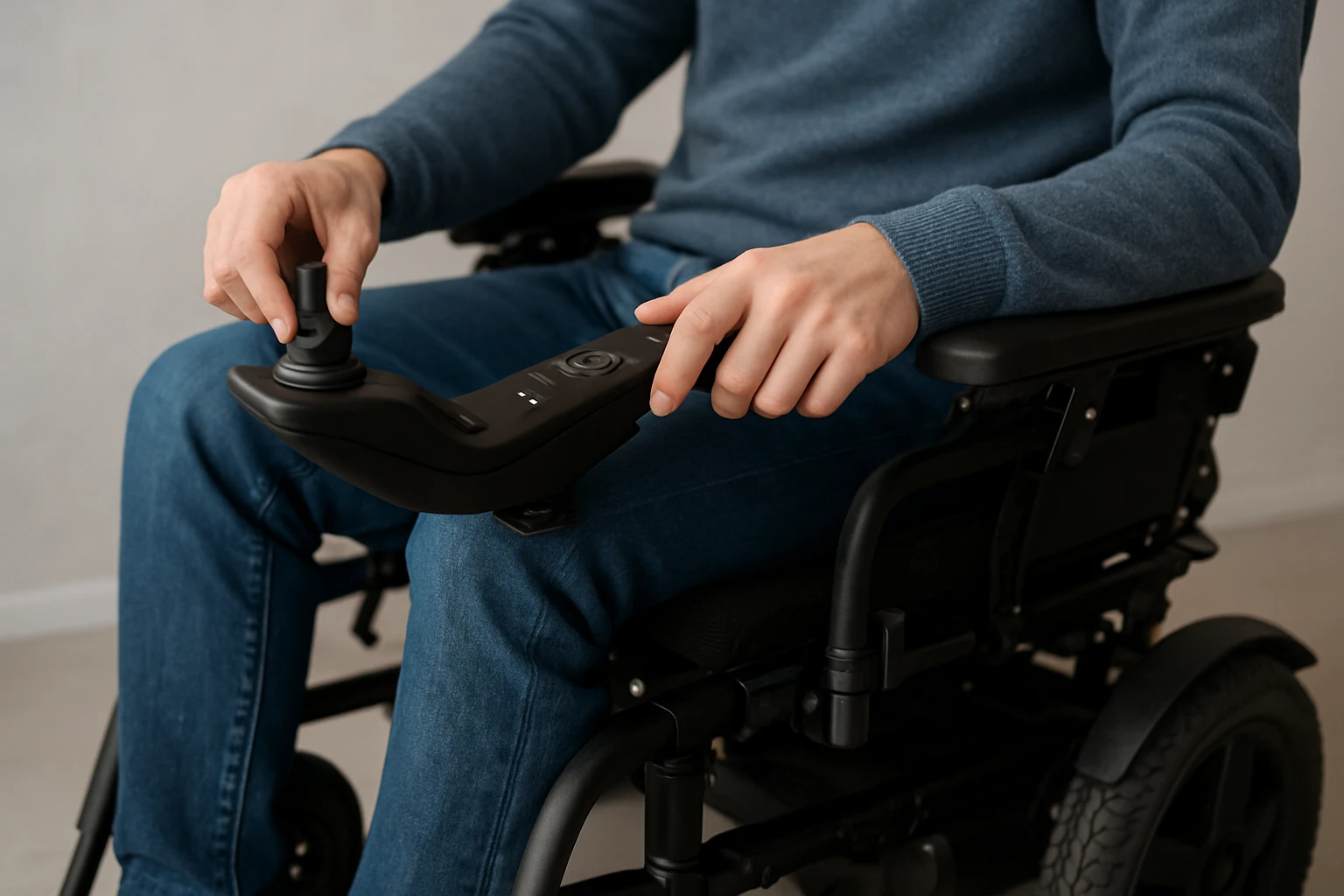
Press the joystick and a compact control system translates your input into smooth motion. A controller modulates power to the motors, shaping acceleration and braking, so starts and stops feel natural. Most chairs use high-efficiency direct current (DC) motors paired with electromagnetic (EM) brakes that automatically engage when you let go of the joystick. The result is confidence on ramps, thresholds, and crowded spaces where precise control matters.
Power comes from lightweight lithium-ion (Li-ion) batteries, favored for energy density and long service life. A Battery Management System (BMS) inside the pack monitors temperature and voltage, protecting cells from overcharge or deep discharge. Charging is as simple as plugging the charger into a standard alternating current (AC) wall outlet and connecting the port on the chair or battery. Older sealed lead acid (SLA) batteries are heavier and less common today, but you may still see them on budget models or legacy units.
Packing and disassembly mechanisms vary. Some chairs offer one-step vertical folds or scissor/book folds, while others use split-frame disassembly so batteries or rear sections lift out first to lighten the load. Latches and safety pins keep things secure, while reinforced hinges prevent wobble. If you are moving in and out of ride shares or taxis frequently, a one-lever fold or quick-disassembly feature (when available) can save time and shoulder strain.
| Folding Style | Speed & Convenience | Best For | Watch Outs |
|---|---|---|---|
| One-Step Vertical Fold | Fast, intuitive | Daily car loading, ride shares | Confirm latch clarity and hand clearance. |
| Scissor/Book Fold | Compact, stable | Closet storage, apartments | Mind fingers around crossbars. |
| Split-Frame / Disassembly | Light pieces to lift | Caregivers, stairs, small trunks | Keep track of pins and connectors. |
Traveling by air? Airlines follow Federal Aviation Administration (FAA) guidelines that rely on watt-hour (Wh) limits for lithium-ion (Li-ion) batteries. Many chairs ship with one battery under 300 watt-hour (Wh) or two smaller batteries (often under 160 watt-hour (Wh) each) that meet typical rules. You will need visible labels and a way to remove the battery for gate checking, plus a carrying case or protective sleeve. When in doubt, check your carrier’s special assistance page and bring the manual to the counter.
Best Practices: Choose, Use, Travel, and Get Covered
Start with your day, not the brochure. List the distances you roll, the doors you pass, the car you ride in, and the places you store your chair. If you live on a hill or cross grassy parks, you may want knobbier tires and a higher torque motor. If you take taxis or ride shares, prioritize lift weight and a clear, glove-friendly release or disassembly method.
- Measure doorways, hallways, and elevator depths before you shop.
- Weigh your heaviest item you will carry to choose a capacity buffer.
- Decide your must-have features: seat width, swing-away footrests, suspension.
- Check the stowed or disassembled dimensions against your car trunk opening.
- Ask whether the quoted weight includes the battery and accessories.
- Test turning in tight spaces and stopping on ramps.
- Review the battery’s watt-hour (Wh) label for airline travel.
- Confirm parts availability and local service support.
- Compare warranty terms in plain language.
- Speak with a product specialist to fit the chair to your body and goals.
Daily use should feel effortless and safe. Charge the battery after each day’s use or when it drops below roughly 30 percent, and store it indoors away from extreme temperatures. Wipe the frame weekly, keep debris out of the wheel hubs, and check quick-release pins after long car rides. If your joystick feels twitchy, many controllers allow sensitivity tuning so starts, stops, and turns match your preference.
- Keep a spare key, charger, and tool kit in a labeled pouch.
- Grease moving hinges sparingly to prevent squeaks without attracting grit.
- Rotate tires front to back if your model allows, balancing tread wear.
- Schedule a six-month safety check for wiring, brakes, and caster alignment.
Travel smart and smooth. For flights, print the page in your manual that shows the battery type, watt-hour (Wh) rating, and removal steps. Label your name and mobile number on the frame and battery case. On arrival, ask for jet bridge delivery, and take a quick video of the chair’s condition at drop-off and pick-up for peace of mind. For buses and trains overseen by the Department of Transportation (DOT), the Americans with Disabilities Act (ADA) requires reasonable accommodation, including securement, so arriving a few extra minutes early helps staff prep the spot.
- Carry a compact strap to secure the stowed chair in car trunks.
- Use a soft cover to protect joysticks from bumps in overhead bins and trunks.
- Bring a universal power adapter for international alternating current (AC) outlets.
- Pack a photocopy of your prescription and Letter of Medical Necessity (LMN) if questioned about batteries or equipment.
Funding and coverage can feel like a maze, but it is navigable. Medicare treats most power chairs as Durable Medical Equipment (DME) when medically necessary, and many private plans follow similar rules. Codes in the Healthcare Common Procedure Coding System (HCPCS) vary by chair category, and documentation is key. Go Wheelchairs helps coordinate paperwork with your clinician and insurer, clarifying benefits before you commit.
- See your clinician for an evaluation and a detailed Letter of Medical Necessity (LMN).
- Work with a specialist to match the chair to your medical and home needs.
- Submit prior authorization if required by your plan.
- Confirm what is covered: base chair, battery, cushions, accessories, and repairs.
- Keep copies of all forms, approvals, and delivery tickets for your records.
Common Mistakes to Avoid
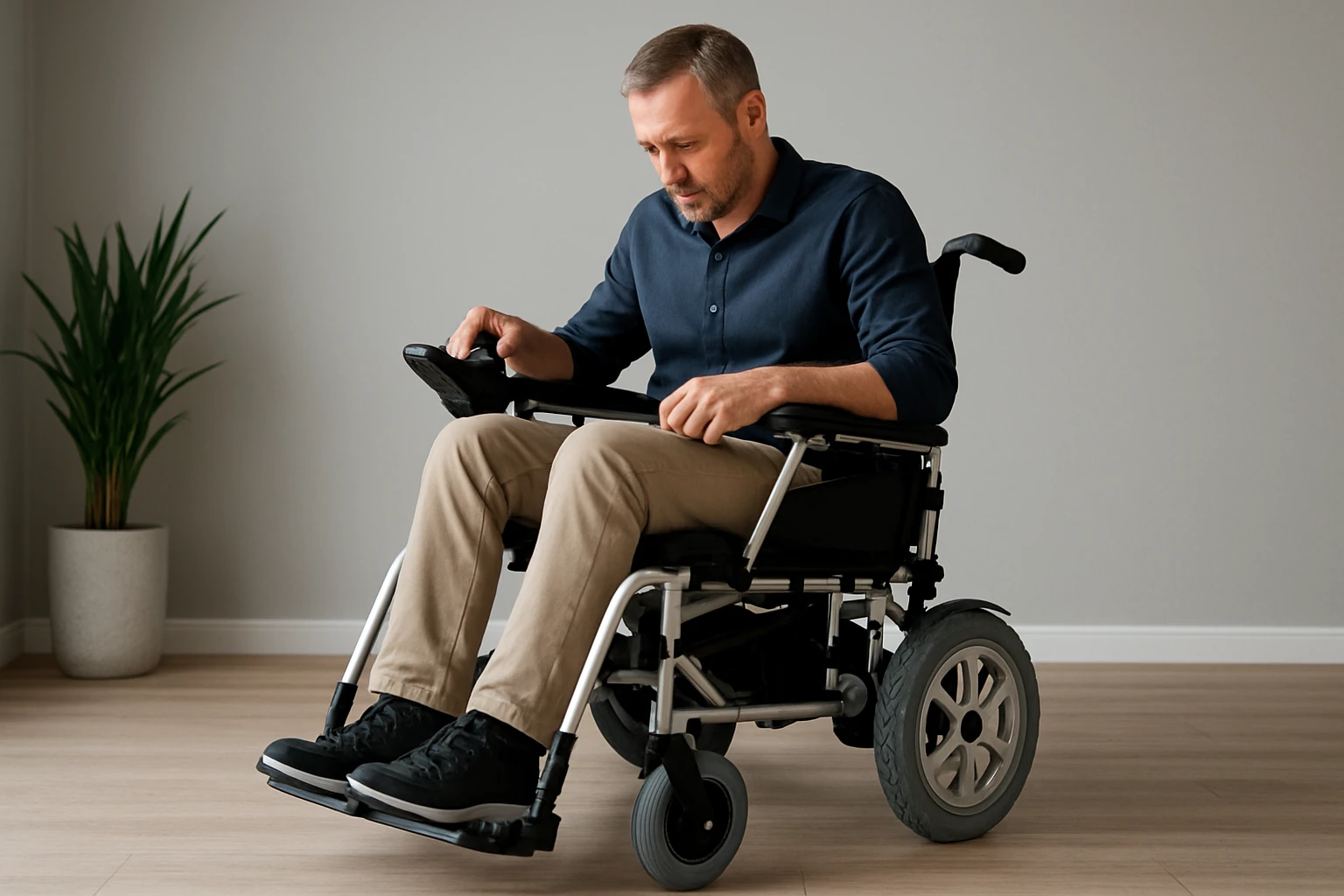
It is easy to fall for a slick spec sheet and miss the lived details that matter. One frequent slip is choosing a chair that is technically light but still too heavy for your car’s trunk height or your shoulder comfort. Another is underestimating terrain; a chair that flies indoors can bog down on grass or cobblestones. And for frequent flyers, forgetting to check battery watt-hour (Wh) labels can slow you at the gate.
- Ignoring battery labels for flights. Fix: verify watt-hour (Wh) and removal steps.
- Buying too narrow or too wide a seat. Fix: measure hips in your everyday clothing.
- Overlooking service availability. Fix: ask about local techs and parts lead times.
- Confusing total weight with frame-only weight. Fix: confirm if battery is included.
- Skipping a real-world test. Fix: practice disassembly, lifting, and turning in tight spaces.
- Choosing speed over control. Fix: test acceleration and joystick sensitivity.
- Underestimating accessories. Fix: plan for a travel cover, cup holder, or headlamp.
- Not aligning with coverage rules. Fix: confirm Medicare and insurer requirements early.
A quick story. Maya loved her ultra-light chair on showroom floors, but her apartment elevator door was a half inch too narrow for comfortable turns. After a fit session with Go Wheelchairs, she chose a model with a tighter turning radius and swing-away footrests, and her hallway pirouettes went from awkward to graceful. A few small measurements saved her months of frustration.
Tools and Resources
The right tools speed decisions and simplify travel days. Use the checklist below to guide your shopping, measure your spaces, and prep for flights. Go Wheelchairs maintains a growing resources hub with buying guides, comparison tools, and travel tips, and our specialists can walk you through Medicare or private coverage step by step.
| Resource | What It Helps With | How to Use It |
|---|---|---|
| Go Wheelchairs Resources Hub | Buying guides, comparisons, travel checklists, coverage help | Browse expert tips and talk with a specialist |
| Home Measurement Worksheet | Doorways, hallways, elevator depths, trunk openings | Record tight spots to match turning radius and stowed size |
| Battery Label Template | Federal Aviation Administration (FAA) flight compliance | Print watt-hour (Wh) info, chair model, and removal steps |
| Medicare DME Supplier Directory | Locate Durable Medical Equipment (DME) providers | Search local suppliers and coverage info |
| Department of Transportation (DOT) Disability Resources | Air travel rights and assistance guidance | Review rights before you fly |
| Center for Independent Living (CIL) | Peer support, local training, accessibility advocacy | Contact your local CIL for lived-experience insights |
When you are ready to compare models, lean on expert support. Go Wheelchairs offers a wide range of standard and heavy-duty motorized wheelchairs, including lightweight, travel-friendly and disassemblable designs that match real-world needs. With personalized guidance, insurance and Medicare assistance, and practical resources, you can make a confident decision without guesswork.
Your next move can be simple and liberating. Imagine packing for a weekend trip without debating whether your chair will fit, charge, or fly. In the next 12 months, small, smarter upgrades in batteries and controllers will make disassembly and packing even faster and rides even smoother. What will your days feel like when your chair quietly adapts to you and not the other way around, especially with lightweight portable power wheelchairs?
Choose Confident Mobility with Go Wheelchairs
Explore a wide range of standard and heavy-duty motorized wheelchairs with personalized guidance and Medicare or insurance help, so you move confidently toward greater independence.