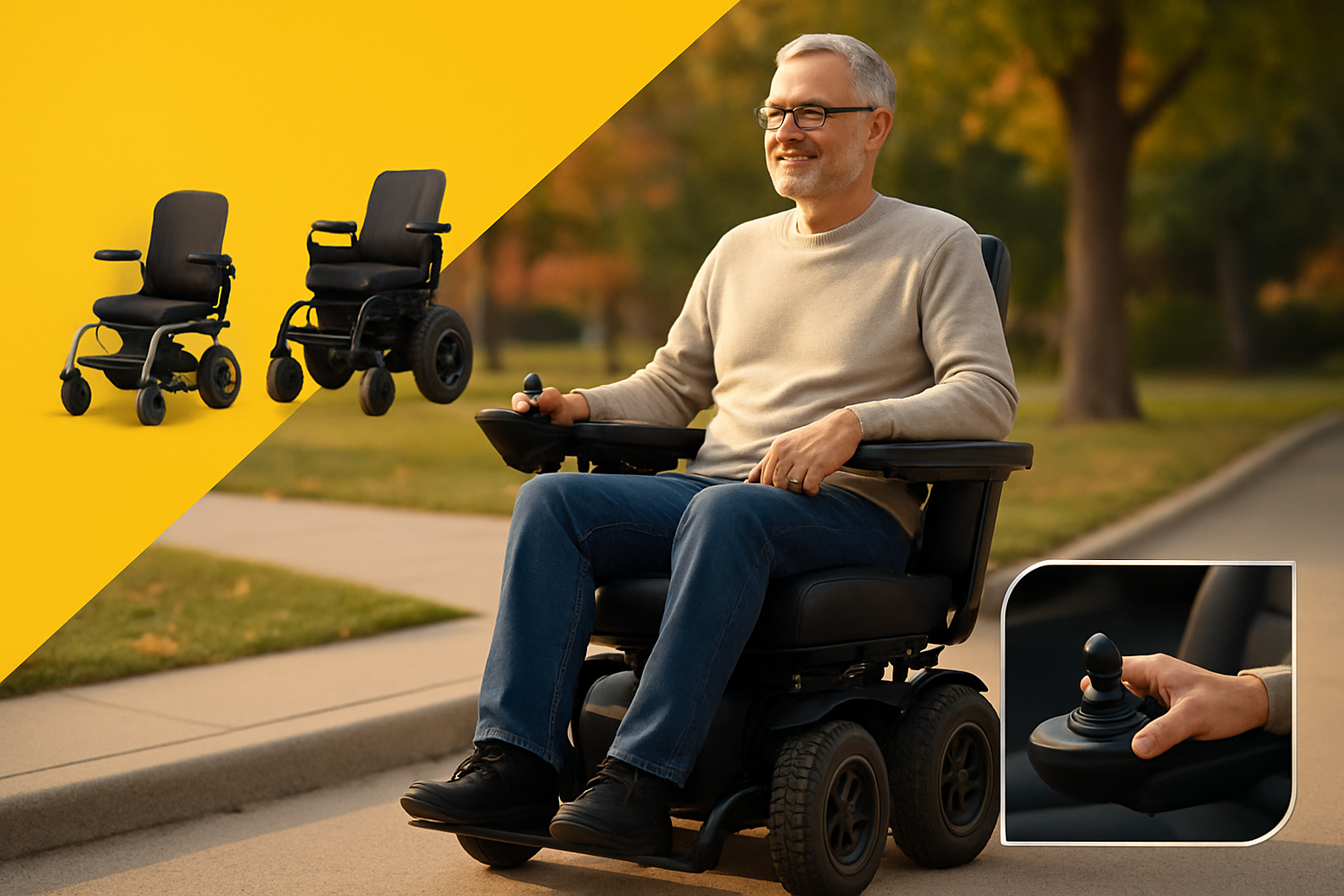
Choosing an electric wheel chair can feel a lot like shopping for a car: there are specs, must-have features, “nice-to-haves,” and the bigger question of how it will actually fit your everyday life and coverage plan. If you are weighing standard versus heavy-duty, you are really deciding between agility and portability on one side and reinforced power and capacity on the other, and the right answer depends on your body, your home, your terrain, and your budget. Add Medicare [Centers for Medicare & Medicaid Services (CMS) Medicare] and health insurance rules to the mix, and it is no wonder many folks stall out during the decision process. That is precisely where Go Wheelchairs steps in—offering a wide range of motorized options, personalized guidance (including free mobility consultations), and clear Medicare [Centers for Medicare & Medicaid Services (CMS) Medicare] assistance so you can move forward with confidence.
Electric wheel chair basics: standard vs heavy-duty, decoded
Let’s demystify the labels first, because the difference between “standard” and “heavy-duty” is more than a marketing tag: it is about the frame, motors, batteries, seating, weight capacity, and how all of that feels in tight hallways and on busy sidewalks. Standard power chairs prioritize compact turning and lighter overall weight, often supporting 250 to 300 lbs [pounds] with seat widths around 16 to 20 inches and turning radiuses commonly between 20 and 25 inches, which makes them comfortable in apartments, condos, and homes with narrow interior doors. Heavy-duty models, by contrast, are engineered with reinforced frames, larger drive wheels, stiffer suspension, and higher torque motors, commonly supporting 350 to 450+ lbs [pounds] and seat widths that can reach 24 inches or more, and that extra muscle pays off on cracked sidewalks, slopes, grass, and mixed outdoor terrain. If you picture standard as a nimble hatchback and heavy-duty as a capable SUV, you will make smarter tradeoffs and stay focused on what matters most: fit, safety, and uptime.
Industry snapshots suggest most riders spend the majority of their hours indoors, yet a meaningful portion rely on outdoor trips for work, school, and community life, which is why matching the chair to your dominant environments pays dividends every day. If you live in a home with many 28 to 30 inch doors and tight corners, the standard category’s shorter wheelbase and smaller footprint usually make daily transfers and kitchen maneuvers easier, while caregivers appreciate lighter total chair weight for transport. Heavy-duty shines when higher weight capacity, wider seating, or rugged surfaces are non-negotiable, and the sturdier ride can help reduce fatigue over longer outings compared with lighter frames. Go Wheelchairs carries both categories, plus lightweight, foldable designs for travel, helping you test what real-world agility and stability feel like before you commit, and that hands-on experience beats spec sheets every time.
Size and seating: measure once, ride comfortably
Comfort starts with accurate measurements, because the best motor and battery cannot compensate for a seat that is too narrow, too deep, or misaligned with your posture and transfer style. A well-fitted chair distributes pressure evenly, keeps shoulders relaxed, and puts controls exactly where your hand expects them, and that reduces the little micro-stresses that add up over hours. Standard chairs often offer seat widths from 16 to 20 inches with depth options around 16 to 18 inches, while heavy-duty platforms expand those ranges for broader hips, thicker cushions, or specialized backrests, and the extra frame width influences turning radius and doorway clearance. At Go Wheelchairs, a specialist can guide you through fit and posture, but here is a quick measuring checklist you can use today to start narrowing choices with confidence.
Watch This Helpful Video
To help you better understand electric wheel chair, we’ve included this informative video from Mobility Scooters Direct. It provides valuable insights and visual demonstrations that complement the written content.
- Seat width: Measure the widest point of your hips or thighs while seated, then add 1 inch for light clothing and movement.
- Seat depth: From the back of your buttocks to the back of your knee, then subtract about 1 to 2 inches to prevent calf pressure.
- Back height: From seat surface to the top of the shoulder blades, adjusted for the cushion thickness you prefer.
- Footplate clearance: Ensure at least 2 inches of ground clearance with your everyday shoes, accounting for uneven surfaces.
- Joystick reach: Sit as you normally would and check that your forearm rests comfortably with a relaxed shoulder and open elbow angle.
- Doorways: Measure the narrowest interior door you routinely pass; many homes have 28 to 30 inch interior doors that define your real maximum width.
Capacity, power, and terrain performance: what the numbers really mean
Numbers on a spec page are not bragging rights; they are clues to how a chair behaves when the sidewalk tilts, the ramp is slick, or the outing takes longer than planned, and understanding them prevents buyer’s remorse. Weight capacity tells you the chair’s structural rating when you consider your body weight plus the accessories and bags you actually carry, and heavy-duty frames raise those ceilings without pushing motors to their upper limits all the time, which extends component life. Battery capacity, often listed in Ah [ampere hours] for sealed lead-acid or as Wh equivalents for Li-ion [lithium-ion], translates to real-world range that changes with rider weight, terrain, temperature, and driving style, so two riders rarely see the same numbers even with identical chairs. Top speed in mph [miles per hour] matters less than consistent torque at low speeds and safe stopping performance, and this is where demo rides over your real routes help you feel differences that the brochure cannot capture.
| Feature | Standard | Heavy-duty |
|---|---|---|
| Weight capacity | 250–300 lbs [pounds] | 350–450+ lbs [pounds] |
| Chair weight | 70–120 lbs [pounds] | 120–200+ lbs [pounds] |
| Seat width range | 16–20 inches | 20–24+ inches |
| Turning radius | 20–25 inches | 24–30+ inches |
| Battery range (typical) | 10–15 miles | 15–25 miles |
| Top speed | 3.5–5 mph [miles per hour] | 4–8 mph [miles per hour] |
| Terrain | Indoor and smooth outdoor | Mixed outdoor and uneven surfaces |
| Suspension | Basic | Upgraded, shock-absorbing |
| Portability | Often foldable/quick-disassemble | Bulkier, limited fold options |
| Airline travel battery | Many Li-ion [lithium-ion] options | Varies; confirm battery type |
Figures are approximate and vary by model; test the exact configuration you plan to buy. Quick rule of thumb: if you frequently navigate tight interiors, shared elevators, and compact cars, start with standard; if you prioritize wider seating, higher weight capacity, and predictable control over bumps or grass, start with heavy-duty. Also consider drive configuration: mid-wheel drive excels at tight indoor turns, front-wheel drive tracks confidently on curb cuts and rougher paths, and rear-wheel drive can feel stable at higher speeds, and each layout changes how the chair pivots around you. Go Wheelchairs can walk you through these tradeoffs, pair you with lightweight, foldable designs if travel matters, and even spec upgrades like elevating seat, power tilt, or enhanced cushions when medically indicated and supported by your documentation.
Medicare and insurance essentials: documentation that clears the path

Medicare Part B [Medicare Part B] generally covers 80 percent of the Medicare-approved amount for a medically necessary power wheelchair after you meet your annual deductible, as long as you use a supplier that accepts assignment and your documentation checks every box. The core tests are simple in concept but precise in execution: you must have a face-to-face evaluation with a clinician, show that a cane, walker, or manual chair is insufficient in your home, and demonstrate that a power mobility device [power mobility device (PMD)] is reasonable and necessary for daily activities like toileting, dressing, and meal prep in your typical indoor environments. Some models and codes may require prior authorization in certain areas, and Medicare Advantage [Medicare Advantage (Part C)] plans can add plan-specific rules, so it pays to work with a supplier that lives and breathes this process. Go Wheelchairs coordinates closely with your clinician, assembles a clean packet, and communicates clearly about timelines, next steps, and your expected out-of-pocket costs, and that alone can save weeks of back-and-forth.
| Document | Who Provides It | Why It Matters |
|---|---|---|
| Face-to-face visit note | Physician or qualified practitioner | States diagnosis, in-home mobility needs, and why lesser devices fail in your home. |
| Prescription with details | Physician | Specifies power wheelchair and key features required for safe use. |
| Supplier evaluation | Accredited DME supplier [durable medical equipment supplier (DME supplier)] | Confirms fit, measurements, and home access considerations with model recommendations. |
| Home assessment | Supplier or therapist | Documents doorway widths, turning spaces, and safety considerations to support medical necessity. |
| Prior authorization (if required) | Supplier submits to plan | Pre-approval reduces denial risk for certain models or codes under plan rules. |
Two practical tips can make a big difference: bring photos or measurements of your tightest spaces to your evaluation, and speak in specifics about what happens at home when you attempt bathing, cooking, or getting to the closet, because concrete examples strengthen medical necessity. If you have a Medigap plan [Medicare Supplement Insurance (Medigap)], it may cover the 20 percent coinsurance after Medicare Part B [Medicare Part B] pays, and if you are on Medicare Advantage [Medicare Advantage (Part C)] you will follow your plan’s provider network and authorization workflow, which a knowledgeable supplier can navigate. Typical timelines from evaluation to delivery can range from a few weeks to a couple of months depending on clinic scheduling, documentation readiness, plan review, and any custom parts, so starting early helps you avoid gaps in mobility. Go Wheelchairs’ insurance team translates the jargon, tracks milestones, and keeps you looped in, and many customers say that support is as valuable as the chair itself when life is already busy enough.
Real-world scenarios: which chair matches your day-to-day?
It is easy to focus on the spec that shouts the loudest, like top speed in mph [miles per hour] or maximum range, yet the happiest riders match their chair to the moments that repeat most often in a week. If you share a small kitchen, pivot in bathrooms, and ride elevators, indoor agility is king, so a compact standard model with mid-wheel drive may feel almost telepathic in tight turns and reduce “three-point turns” into smooth arcs. If your weekends include local parks, lawn chores, or uneven paths, the torque and suspension of heavy-duty models keep the ride composed and predictable, and that steadiness reduces fatigue over longer outings. And if you travel, a lightweight, foldable frame can be the difference between spontaneous trips and staying home, so think about your year, not just your day.
- The apartment navigator: Values 20–22 inch overall width, 20–25 inch turning radius, and easy disassembly for rideshares; standard category is the likely winner.
- The suburban explorer: Needs confident curb cuts and grass; heavy-duty with front or rear-wheel drive and upgraded suspension keeps outings stress-free.
- The bariatric user: Requires 350+ lbs [pounds] capacity, wider seating, and durable casters; heavy-duty frames provide headroom with less strain on motors.
- The frequent traveler: Prefers lightweight, foldable designs with airline-friendly batteries; select from travel-ready standard models with Li-ion [lithium-ion] packs.
- The student or worker: Wants reliable all-day range, lap tray, and USB power; consider a standard platform with range upgrade or a compact heavy-duty for mixed campuses.
How Go Wheelchairs makes selection simple and stress-free
When choices and coverage rules collide, it helps to have a guide, and Go Wheelchairs is built for exactly this moment with a wide range of standard and heavy-duty motorized wheelchairs, lightweight foldable designs, and a friendly team that turns complicated steps into a clean checklist. Start with a conversation about fit and goals, try a few chairs over your real surfaces, and let a specialist translate specs into sensations you can feel, like how mid-wheel drive tracks through your hallway or how front-wheel drive climbs that sloped driveway without drama. Behind the scenes, our Medicare and insurance support verifies benefits, coordinates paperwork, and prepares a strong case for medical necessity, while our Resources hub offers buying guides, comparison tools, and travel tips so you stay confident after delivery as well. In short, we connect the dots between comfort, capability, and coverage so your chair does not just arrive—it arrives ready to make your life easier from day one.
Electric wheel chair questions we hear all the time

You might be wondering whether a heavy-duty model is always louder or harder to maneuver, and the answer is no: modern designs can be surprisingly quiet and precise, but the larger footprint still matters in tight homes. Another common question is whether a standard chair can go off-path in parks, and while a few can handle smooth gravel, heavy-duty frames with better tires and suspension stay calmer when surfaces turn unpredictable, which preserves energy and comfort. People also ask about batteries and airline travel, and while many standard chairs with Li-ion [lithium-ion] packs are airline-friendly under carrier rules, always confirm your exact battery type and documentation before booking, because regulations and airline policies can differ. Finally, if your needs change over time, Go Wheelchairs can revisit your setup, adjust controls and cushions, or discuss a different category, because the right chair is not just a purchase—it is an evolving partnership focused on your independence.
Medicare tips you can act on this week
If you are planning to start the Medicare Part B [Medicare Part B] process soon, a few small steps can prevent delays and help ensure your electric wheel chair is approved correctly and configured for your home from day one. First, call your primary clinician and schedule the face-to-face visit with mobility evaluation, and bring a clear list of daily tasks you cannot perform safely with lesser devices, because specific in-home examples anchor medical necessity more effectively than general statements. Second, choose a supplier like Go Wheelchairs that accepts assignment and has deep experience with power mobility device [power mobility device (PMD)] documentation, and ask them to preview your notes for completeness before submission so corrections happen in hours, not weeks. Third, measure your doors and key spaces now, take photos of tight corners and entry thresholds, and share them with both your clinician and supplier, because well-documented home realities lead to better fit, fewer returns, and a smoother first ride.
| Decision Area | Standard | Heavy-duty | Medicare Tip |
|---|---|---|---|
| Overall width | Smaller, easier indoors | Wider, needs more clearance | Document tight doors to justify compact frames or special seating as needed. |
| Weight capacity | Up to ~300 lbs [pounds] | 350–450+ lbs [pounds] | Include body weight plus gear to support medical necessity for higher capacity. |
| Range and batteries | Travel-friendly options | Longer range potential | Have the supplier note terrain and daily distances in the documentation. |
| Primary environment | Indoor-first | Mixed indoor-outdoor | In-home needs drive coverage decisions; describe typical daily paths at home. |
| Portability | Often foldable or lighter | Bulkier, stronger frames | If caregiver transport is essential, note vehicle and lifting limits. |
Choosing the right chair is simpler when you align size, capacity, and coverage into a single, clear plan, and that is exactly what this guide and the Go Wheelchairs team are here to help you build. By measuring your spaces, defining your top two environments, and clarifying your comfort needs, you will quickly see whether a standard model’s agility or a heavy-duty model’s strength better matches your life. From there, a short demo ride often resolves lingering doubts, because feeling turning control, ramp traction, and brake response makes the decision real. When you are ready, we will help you pair the right configuration with the clearest path through Medicare [Centers for Medicare & Medicaid Services (CMS) Medicare] or private insurance so you can roll into your next season with confidence.
Final thoughts before you roll
You came here to choose between standard agility and heavy-duty strength, and now you have a practical way to match features with the life you actually live. Imagine the next 12 months with a chair that fits your home, keeps pace outside, and checks every box your clinician and Medicare [Centers for Medicare & Medicaid Services (CMS) Medicare] require, so progress is measured in good days, not paperwork. What would you say yes to if the right electric wheel chair made every doorway easier and every outing less of a production?
Additional Resources
Explore these authoritative resources to dive deeper into electric wheel chair.
Choose Confidently with Go Wheelchairs
Wide range of standard and heavy-duty motorized wheelchairs with personal guidance helps individuals seeking reliable mobility, including Medicare-covered buyers, move forward with confidence and independence.