If you have ever rolled out with two bars left and felt your palms sweat, this is for you. This wheelchair battery charger and range checklist turns guesswork into a simple, repeatable routine. Instead of worrying about whether you will make it home, you will know how far you can go, how long to charge, and how to treat your batteries so they last. Think of it like turning your energy plan from a mystery into a map.
I learned this the hard way on a chilly morning errand run. A short detour, a surprise headwind, and I was limping back at turtle speed. Since then, I track my route length, charge smarter, and carry a tiny outlet checker. The stress vanished. And with Go Wheelchairs by your side, you get not only dependable chairs and chargers but also guidance on insurance and Medicare [Medicare] support so your plan and your power both fit your life.
Because checklists save time and batteries, here is what you will do next: nail your numbers, follow a clean charging routine, validate your real-world range, and avoid the small mistakes that drain miles. Ready to power more confident trips?
Pre-work checklist for your wheelchair battery charger and range
- Confirm your battery chemistry. Identify whether you use Sealed Lead Acid [Sealed Lead Acid] or AGM [Absorbent Glass Mat] or Li-ion [Lithium-ion]. Chemistry determines charging voltage, current, and ideal storage rules. Check your wheelchair manual or battery label before anything else.
- Note capacity and voltage. Record battery capacity in Ah [ampere hour] and system voltage in V [volt]. Quick math: watt-hours in Wh [watt-hour] equals V [volt] multiplied by Ah [ampere hour]. More Wh [watt-hour] generally equals more range.
- Match the charger to the battery. Verify charger output voltage, max current in A [ampere], and algorithm are approved by your wheelchair manufacturer. Using a random car charger is risky and can shorten battery life or void warranties.
- Check connector fit and condition. Inspect the charging port and plug for bent pins, looseness, heat discoloration, or charring. A snug, cool connection protects both charger and battery.
- Assess battery age and health. Note install date and cycles. Lead-acid types often show noticeable capacity loss after 18 to 24 months of regular use, while Li-ion [Lithium-ion] packs can last 3 to 5 years with proper care, according to typical manufacturer data.
- Weigh the real load. Include your body weight, backpack, oxygen tank, groceries, and accessories. More mass means more energy per mile. A 15 percent weight increase can cut range by roughly 5 to 10 percent on flats.
- Map your daily route and terrain. Track total distance, average speed, stops, and hills. Climbing even a gentle 5 percent grade can raise energy use 20 to 40 percent, based on mobility lab testing summaries.
- Check tire type and pressure. Pneumatic tires rolling 10 percent under recommended pressure can waste miles. Keep pressures at the label spec for efficient rolling and a smoother ride.
- Review drive settings. Eco modes, acceleration ramps, and speed limiters influence range. If your chair allows profiles, set one for distance days and one for quick errands.
- Plan your charging environment. Choose a cool, dry, ventilated spot away from direct sun. Ideal charging is typically 50 to 77 degrees Fahrenheit to help both speed and longevity.
- Gather safety basics. Use a quality surge protector, a wall outlet test plug, and a timer if your charger lacks automatic shutoff. Never drape cords where they create trip hazards.
Capture the essentials in one place so you do not have to hunt for them later:
| Item | Where to Find It | Your Number or Notes |
|---|---|---|
| Chemistry | Battery label or manual | |
| Voltage V [volt] | Spec sheet or charger plate | |
| Capacity Ah [ampere hour] | Battery case or invoice | |
| Charger Output A [ampere] | Charger rating label | |
| Install Date | Receipt or calendar | |
| Daily Route Length | Map app with GPS [Global Positioning System] | |
| Tire Pressure | Sidewall and gauge |
Need a second opinion on any of the above? Go Wheelchairs offers personalized support and a resources hub with buying guides and comparison tools, so your specs and your coverage line up with your life.
Execution checklist: charge smarter, protect range
- Use only the approved charger. Pair chemistry to charger algorithm and output. Many smart chargers taper current as voltage rises to avoid overcharge and heat, which extends battery life.
- Plug into a proper wall outlet. Avoid thin, coiled extension cords that heat up. Keep cords fully uncoiled and off walkways. If you must use an extension, choose a heavy gauge rated above the charger’s A [ampere].
- Connect before powering the charger. Seat the connector fully, then switch the charger on. Look for a solid LED [Light-Emitting Diode] indicator. If it flickers or stays dark, stop and recheck connections.
- Charge in the comfort zone. Room temperature helps. Industry data suggests cold charging under 32 degrees Fahrenheit is slow and wasteful, while hot charging above 95 degrees Fahrenheit accelerates aging.
- Aim for gentle daily cycles. Try 20 to 80 percent for routine use if your manual allows, with a full 100 percent top-off weekly to rebalance pack cells. For Sealed Lead Acid [Sealed Lead Acid], top up after each day’s use to limit sulfation.
- Respect rest times. After a full charge, let batteries rest 30 minutes before a demanding ride, especially in hot weather. This helps voltage stabilize and reduces heat stress.
- Watch the clock but trust the charger. Most modern chargers stop safely when full. As a guide, a 5 A [ampere] charger on a 40 Ah [ampere hour] pack can take roughly 6 to 10 hours depending on depth of discharge and taper behavior.
- Keep contacts clean. Wipe dust and gently clean contacts with approved electronics wipes once a month. Dirty contacts create resistance and wasted heat.
- Enable an energy-saving ride profile. Use eco mode, soften acceleration, and set a realistic top speed. Smooth rolling saves power the way highway cruising saves gas in a car.
- Lighten your load. Remove items you will not use today. Even small reductions matter over hills and long routes.
- Plan a midday top-off when needed. A 30 to 60 minute coffee-stop charge can add helpful miles. Bring a compact outlet checker and your approved charger when traveling.
- Update firmware if supported. Some chairs offer software updates that optimize power delivery. Check with your manufacturer or Go Wheelchairs service team.
Watch This Helpful Video
To help you better understand wheelchair battery charger and range, we’ve included this informative video from Mobility Scooters Direct. It provides valuable insights and visual demonstrations that complement the written content.
Here is a quick reference on common battery chemistries and what that means for your charging routine:
| Chemistry | Typical System Voltage | Capacity Range Ah [ampere hour] | Charger Type | Approx. Charge Time 20 to 100 percent | Notes |
|---|---|---|---|---|---|
| Sealed Lead Acid [Sealed Lead Acid] or AGM [Absorbent Glass Mat] | 24 V [volt] | 24 to 75 Ah [ampere hour] | Constant current then constant voltage, temp compensated | 6 to 12 hours with 4 to 8 A [ampere] | Top-up daily to reduce sulfation; avoid deep discharge below 50 percent when possible |
| Li-ion [Lithium-ion] | 24 V [volt] to 36 V [volt] | 10 to 50 Ah [ampere hour] | Smart charger managed by BMS [Battery Management System] | 3 to 6 hours with 4 to 8 A [ampere] | Gentle partial cycles extend life; avoid charging in extreme heat or cold |
Real-world example: Maya rides 9 miles of mixed neighborhood terrain daily. After adopting a nightly top-up, raising tire pressure to spec, and switching to eco acceleration, her average charge time dropped by 30 minutes and she added an extra mile of margin. Small tweaks, big confidence.
Validation checklist: prove your real-world range
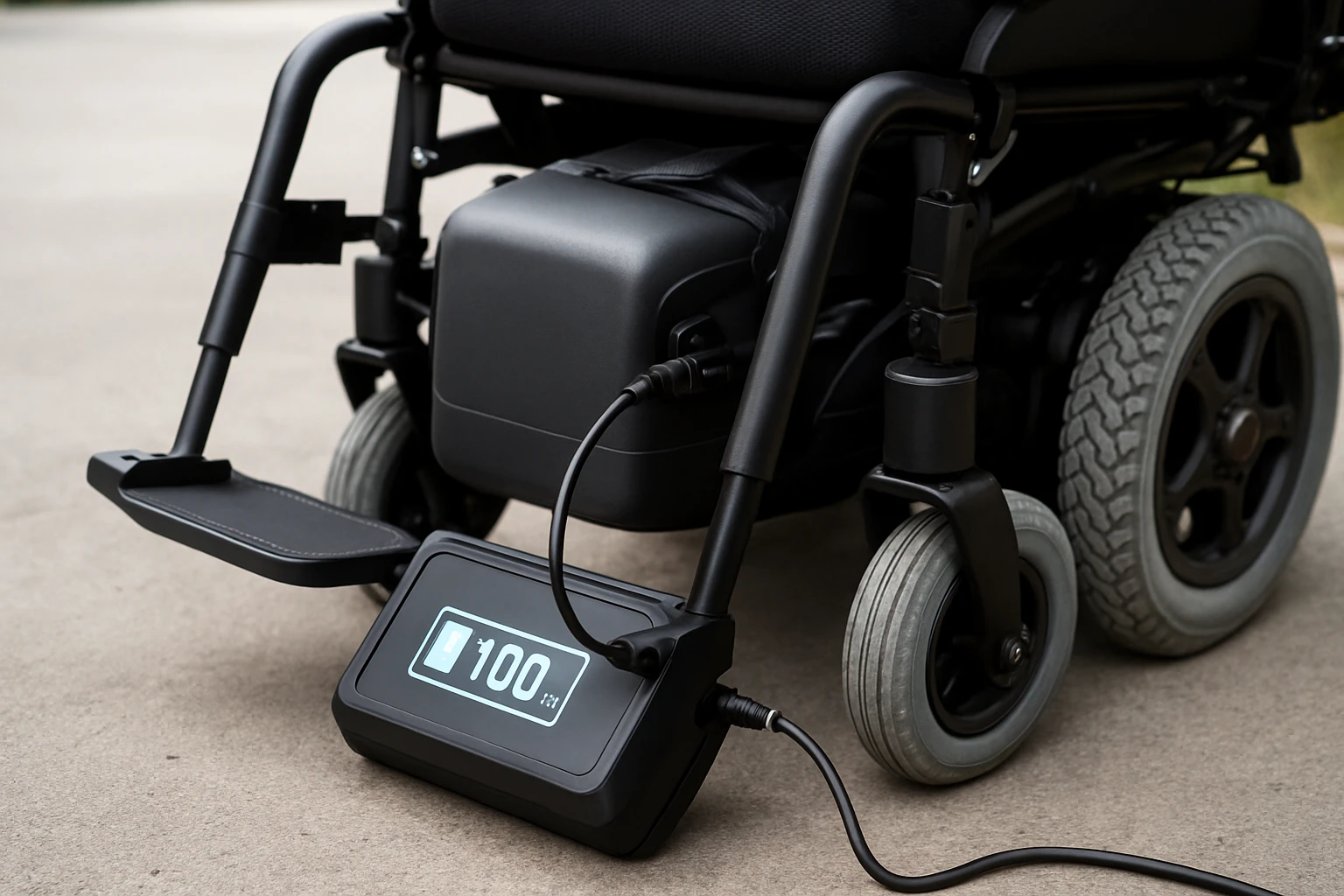
- Establish a clean baseline. Fully charge overnight, let the chair rest 30 minutes, then note the starting percentage or voltage.
- Measure a known route. Use a phone app with GPS [Global Positioning System] to record a 2 to 3 mile loop in your usual conditions. Keep speed and stops typical for your day.
- Log key stats. Record miles traveled, ending percentage, average speed, temperature, and any hills. Two or three loops give a better average.
- Calculate energy per mile. Convert your pack to Wh [watt-hour] using V [volt] multiplied by Ah [ampere hour]. Divide Wh [watt-hour] used by miles to get Wh [watt-hour] per mile. Lower is more efficient.
- Project safe range. Divide total usable Wh [watt-hour] by your Wh [watt-hour] per mile, then subtract a 15 to 20 percent buffer for comfort. That is your practical range for similar conditions.
- Repeat in different weather. Cold can trim range by 10 to 25 percent; strong headwinds and hills add more load. Validate a winter and a summer number.
- Verify charger health. During charging, the LED [Light-Emitting Diode] should progress from charging to ready without excessive heat or smell. If charge times suddenly double, investigate batteries and connections.
- Create a simple log. A notes app entry with date, miles, and percent used is enough. Over a month, you will spot patterns and can plan with ease.
Use this quick-impact table to translate conditions into realistic expectations:
| Factor | Typical Impact on Range | Fast Fix |
|---|---|---|
| Underinflated tires | Minus 5 to 10 percent | Inflate to labeled pressure weekly |
| Cold weather below 40 degrees Fahrenheit | Minus 10 to 25 percent | Store and charge indoors; pre-warm before riding |
| Hilly route with 5 percent grade | Minus 20 to 40 percent | Choose gentler streets or add a midday top-off |
| Aggressive acceleration | Minus 5 to 15 percent | Enable eco mode; smooth throttle |
| Heavy load plus accessories | Minus 5 to 12 percent | Remove non-essentials for long trips |
If you prefer help running these numbers, Go Wheelchairs offers personalized guidance and a comparison toolkit in the resources hub. Bring your notes, and a specialist can quickly translate them into the right chair, charger, and coverage options that keep your miles steady.
Common misses that quietly steal miles
- Using a car charger or random power brick. Mismatched voltage or charge curves can overheat or underfill your pack. Stick with the approved charger.
- Letting Sealed Lead Acid [Sealed Lead Acid] sit partially discharged. Sulfation builds when left undercharged. Top up after rides and avoid storing empty.
- Deep cycling below 20 percent regularly. For many chemistries, frequent deep discharge shortens life. Keep a buffer and plan a midday charge if your routes are long.
- Charging in the trunk or direct sun. Heat is the battery’s silent enemy. Choose shade and airflow for every charge.
- Ignoring a wobbly plug or hot connector. Heat at the plug can signal resistance or damage. Stop, cool, and address it before continuing.
- Mixing old and new batteries in pairs. In two-battery lead-acid systems, always replace in matched pairs to avoid imbalance.
- Skipping monthly full top-offs. Many systems need periodic full charges to keep pack balance aligned. Put it on your calendar.
- Riding with low tire pressure. It is like pedaling a flat bike tire. Check weekly and bring a compact gauge.
- Storing for weeks without a maintenance plan. For lead-acid, trickle or top-off every few weeks. For Li-ion [Lithium-ion], store around 40 to 60 percent in a cool room if idle for long periods, following your manual.
- Forgetting insurance and coverage steps. People often buy the perfect charger or battery and then discover coverage limits. Go Wheelchairs helps you align choices with Medicare [Medicare] and insurance so you avoid surprises.
Here is a simple troubleshooting branch you can try before calling support:
- If charge time suddenly doubles: Check outlet with a tester, inspect cords for damage, feel the connector for heat, and verify the LED [Light-Emitting Diode] pattern. Then test another outlet.
- If range drops week to week: Measure tire pressure, note temperature swings, and run a fresh validation loop. Compare Wh [watt-hour] per mile to your baseline.
- If the charger never reaches ready: Reseat connections, cool the area, and confirm ventilation. If it persists, contact your provider for a battery test.
When in doubt, ask. The team at Go Wheelchairs can review your chair model, charger spec, and riding patterns, then recommend an optimized combo from a wide range of standard and heavy-duty motorized wheelchairs, plus lightweight, foldable designs for travel days.
Execution add-on: plan trips with quick math

When you want to stretch confidence for a new route, a tiny bit of math helps. Multiply your pack’s V [volt] by Ah [ampere hour] for Wh [watt-hour]. If your log shows 25 Wh [watt-hour] per mile on city streets and you have 600 Wh [watt-hour] usable with a 20 percent buffer, that is about 19 miles of comfortable range. If you expect hills and wind, plan for 15 instead and add a cafe stop for a top-off.
| Pack Example | Total Wh [watt-hour] | Usable Wh [watt-hour] with 20 percent Buffer | Average Wh [watt-hour] per Mile | Comfort Range |
|---|---|---|---|---|
| 24 V [volt] x 40 Ah [ampere hour] | 960 Wh [watt-hour] | 768 Wh [watt-hour] | 30 Wh [watt-hour] | About 25 miles |
| 24 V [volt] x 20 Ah [ampere hour] travel chair | 480 Wh [watt-hour] | 384 Wh [watt-hour] | 25 Wh [watt-hour] | About 15 miles |
| 36 V [volt] x 17 Ah [ampere hour] sporty chair | 612 Wh [watt-hour] | 490 Wh [watt-hour] | 28 Wh [watt-hour] | About 17 miles |
These are example numbers. Your wheelchair’s motor efficiency, controller settings, seat function usage, and terrain can move the target. That is why your validation loop is the gold standard.
Validation add-on: pack care that pays back
- Store smart between rides. For Sealed Lead Acid [Sealed Lead Acid], keep on a maintenance charger if idle more than two weeks. For Li-ion [Lithium-ion], store partly charged and cool, per your manual.
- Keep records for service and coverage. Mileage and charge logs help technicians diagnose faster and assist with Medicare [Medicare] or insurance documentation.
- Schedule annual battery checks. A quick capacity test can spot early decline so you can budget and plan replacements without surprises.
If replacing soon, Go Wheelchairs can pair you with the right pack and approved charger, then help sync your purchase with insurance and Medicare [Medicare] assistance. It is exactly the blend of tech and paperwork support most riders wish they had from day one.
Conclusion
Charge right, ride farther, and relax more. That is the promise of a clear routine built around your chair, your charger, and your routes.
Imagine the next 12 months with predictable miles, faster morning turnarounds, and trips that end with a smile instead of a sigh. With the right plan, your energy becomes freedom.
What one habit will you start this week to strengthen your wheelchair battery charger and range?
Power Your Range with Go Wheelchairs
Discover a wide range of standard and heavy-duty motorized wheelchairs, insurance and Medicare support, and charger guidance so you travel farther with confidence and independence.