
If you rely on your chair to do life, a rock-solid routine is freedom. That is exactly why an electric wheelchair maintenance checklist and schedule matters so much. It turns guesswork into confidence, stretches battery life, reduces downtime, and keeps you safe. When I helped a small community center maintain a fleet of power chairs, the people who stuck to a simple plan had far fewer midweek surprises. Their rides were cleaner, quieter, and simply worked when they needed them most. That peace of mind is the real win.
In this friendly, practical guide, you will set up and run a maintenance flow you can actually keep. You will also see how Go Wheelchairs serves as a trusted resource, offering a wide range of standard and heavy-duty motorized wheelchairs, lightweight travel-friendly and highly portable models, and real people who help with insurance and Medicare coverage. Along the way, you will grab checklists, quick-reference tables, and pro tips I have picked up from techs and users who put serious miles on their chairs. Ready to prevent little issues before they turn into big bills?
Pre-work checklist
Preparation makes maintenance faster and safer. Before you tighten a bolt or plug in a charger, lay the groundwork. A few minutes up front will save hours later, not to mention protect your warranty and your health. Think of this stage like setting out ingredients before cooking a favorite recipe. The goal is to gather what you need, define your plan, and make it easy to repeat week after week without overthinking it.
- Collect the manual and warranty. Print or download the latest manual from Go Wheelchairs’ Resource Hub or the manufacturer. Flag pages for batteries, tires, controller, and safety features. Note warranty limits.
- Record your chair details. Write down model, serial number, purchase date, battery type, charger model, and your typical daily mileage. Keep this in your phone notes and your paper log.
- Create your calendar. Block recurring daily, weekly, monthly, and quarterly tasks. Use your phone reminders or a wall calendar. Consistency beats intensity.
- Prepare a safe workspace. Choose a flat, well lit area with room to turn the chair off and on, tip footrests, and remove cushions. Avoid moisture and clutter.
- Build a basic toolkit. Include hex keys, screwdrivers, a torque-limiting screwdriver if you have one, tire gauge in PSI [pounds per square inch], microfiber cloths, cotton swabs, isopropyl alcohol wipes, zip ties, and dielectric grease for electrical connectors.
- Set up a charging station. Place the charger where air can circulate. Chargers with fans or LED [light-emitting diode] indicators need space to cool and signal correctly.
- Clean before you inspect. Dust hides cracks. Wipe the frame, casters, and around the joystick with a barely damp cloth, then dry thoroughly.
- Photograph your baseline. Snap clear pictures of tire tread, caster forks, cables, battery terminals, and any existing scuffs. Photos help you spot changes over time.
- Make a maintenance log. A simple table works. Track date, task, findings, parts used, and next action. Your future self, and your technician, will thank you.
- Check coverage options. If you have Medicare or other health insurance, confirm what maintenance parts and services are covered. Go Wheelchairs can walk you through this step-by-step.
For quick access while you work, here is a tiny starter table you can print and tape near your charging station.
| Item | Why It Matters | Where You Keep It |
|---|---|---|
| Manual + Warranty | Correct procedures protect your coverage and safety | Binder near charger |
| Tire Gauge in PSI [pounds per square inch] | Accurate pressures improve range and handling | Toolkit drawer |
| Microfiber Cloths | Gentle cleaning prevents scratches and grit build up | Storage bin |
| Isopropyl Alcohol Wipes | Clean electrical contacts without residue | Sealed bag |
| Dielectric Grease | Moisture barrier for connectors | Small tube in toolkit |
Execution checklist: your electric wheelchair maintenance checklist and schedule in action

Watch This Helpful Video
To help you better understand electric wheelchair maintenance checklist and schedule, we’ve included this informative video from Spencer2TheWest. It provides valuable insights and visual demonstrations that complement the written content.
Let’s make the plan tangible. Below you will find a practical rhythm many users follow. Manufacturers and service data consistently show that small, frequent checks beat rare deep dives for preventing breakdowns. You will also notice where heavy-duty motorized wheelchairs might need slightly shorter intervals because they carry more weight and see rougher surfaces. Tweak the timing to fit your terrain, mileage, and weather. If you travel often or ride in rain, nudge the cleaning and inspection to happen more frequently.
Do these daily or after each ride
- Power down and disconnect. Turn the chair off before handling footrests, armrests, or the joystick.
- Scan tires and casters. Look for embedded stones, sidewall cracks, or wobble. Spin casters to ensure smooth rotation without grinding.
- Test the joystick and brakes. With safe clearance, move forward and back at low speed, then release to ensure brakes engage crisply.
- Wipe touchpoints. Clean the joystick housing, armrest tops, and seat controls. Sweat and dust are sneaky wear accelerators.
- Check the charger indicator. Confirm the LED [light-emitting diode] shows the expected state when you plug in. If it flickers or feels hot, note it in your log.
Do these weekly
- Set tire pressures. Inflate pneumatic tires to the manual’s recommended PSI [pounds per square inch]. Underinflation saps range and strains motors.
- Tighten what loosens. Lightly snug armrest bolts, joystick mount screws, and footplate hardware. Do not overtighten.
- Clean and dry connectors. Unplug, wipe contacts with alcohol, let fully dry, and re-seat firmly.
- Inspect the seat and cushion. Look for sagging, torn seams, or uneven support that could cause hot spots on skin.
- Cable management. Ensure no wires are pinched, rubbing, or stretched at full turn. Add a zip tie where slack flops around.
Do these monthly
- Battery check. For sealed lead-acid packs, ensure all connections are secure and corrosion free. For lithium-ion packs, verify the case is intact and the pack seats fully. Either way, note any swelling, odor, or unusual warmth.
- Fastener sweep. Systematically check frame bolts, caster fork bolts, and anti-tip rollers. Mark a bolt head with a fine Sharpie line to spot movement next month.
- Brake and freewheel. Confirm the freewheel levers engage and disengage smoothly, and that electromagnetic brakes bite firmly.
- Controller self test. Many chairs display diagnostic codes at startup. Watch for any new flashes or beeps and record them.
Do these quarterly
- Deep clean and protect. Remove cushions and covers. Vacuum crumbs and grit from rails and hinges. Apply a light protectant to metal surfaces where the manual allows.
- Caster alignment. Check that castor forks are vertical and axles are not bent. Misalignment can cause drift and shoulder fatigue.
- Wear check on tires. Measure tread depth. If the center is bald or you see cords, plan a replacement.
- Terrain test. Find a safe, open space. Accelerate, turn, and stop at moderate speed. Listen for clicks, squeals, or rattles that normal indoor driving masks.
Do these twice a year
- Comprehensive inspection. Go end to end: upholstery, frame welds, footrests, arm supports, joystick boot, tilt or recline mechanisms, charger cord strain relief, and battery tray.
- Motor brushes if applicable. Some motors have serviceable brushes. If your manual calls it out, inspect for wear and replace before they are gone.
- Refresh cushions and supports. Wash covers, check foam integrity, and verify positioning accessories are secure.
Do this annually
- Professional tune up. Schedule a certified technician to check controller calibration, motor health, alignment, and safety systems. Many users time this with insurance or Medicare benefit renewals.
Use the table below to keep your tasks, time, and likely costs visible. Costs vary by model and region, but these ballparks help you plan. Where coverage applies, Go Wheelchairs can help you navigate claims so you pay less out of pocket.
| Interval | Task | Typical Time | Parts Cost | Who Usually Does It |
|---|---|---|---|---|
| Daily | Visual scan, wipe touchpoints, charger check | 5 to 8 minutes | None | You |
| Weekly | Tire pressure, hardware snug, connectors clean | 15 to 25 minutes | Under 10 dollars for wipes and lube | You |
| Monthly | Battery inspection, brake and freewheel test | 20 to 30 minutes | None if no issues | You or Tech |
| Quarterly | Deep clean, caster alignment, terrain test | 45 to 60 minutes | 10 to 30 dollars for protectants | You |
| Semiannual | Motor brushes where applicable, cushion refresh | 60 to 90 minutes | 20 to 60 dollars brushes or covers | Tech if brushes |
| Annual | Professional tune up and calibration | 60 to 120 minutes | Service billed to insurance when eligible | Certified Tech |
Practical note: Many users report batteries last 18 to 36 months depending on type, charging habits, and load. Keeping tires at proper PSI [pounds per square inch] and avoiding deep discharges helps range and longevity. Also, heavy-duty motorized wheelchairs that handle outdoor miles often need tire changes sooner than indoor-only chairs. If you notice a steady drop in daily range over several weeks, schedule a battery test rather than waiting for a no start morning.
Validation checklist for your electric wheelchair maintenance checklist and schedule
After you complete a maintenance block, validate the results. Think of this as quality assurance for your mobility. It is easy to tighten a bolt and assume all is well, but validation catches the subtle things like a slight drift that tires your shoulders or a brake that grabs a hair late. The following quick checks help you confirm safety, performance, and comfort before you head out for a long day.
- Run a straight line test. In a quiet hallway or lot, drive forward 20 to 30 feet. Release and confirm a smooth, true stop without veering.
- Do a tilt and bump check. Gently test over a threshold you face often. Listen for new rattles or rubbing. If you hear scraping, find it now, not halfway to the store.
- Verify charger performance. After a full cycle, the charger’s LED [light-emitting diode] should indicate complete and feel only mildly warm. Unexpected heat is a red flag.
- Measure tire and caster play. Lift slightly and wiggle. Movement at the hub or fork may mean a bearing is going or a bolt has settled.
- Assess comfort. Sit for 15 minutes. Any new pressure points, sliding, or numbness deserves attention. Often, a small positioning tweak solves it.
- Check your log. Capture what you did, what you found, and what you felt on the test drive. Trends are powerful decision makers.
Use this simple tracker to keep performance baselines clear. It turns feelings into data you can share with a technician or with Go Wheelchairs support if you want guidance.
| Metric | Target | Measured Today | Action If Off |
|---|---|---|---|
| Stopping distance at low speed | Consistent and straight | ___________________ | Inspect brakes, tire pressure, caster wear |
| Range on a usual route | Matches last month | ___________________ | Battery test, check tire pressure and load |
| Charger finish time | Normal for your pack | ___________________ | Evaluate charger and battery health |
| Noise level on turns | Quiet with no grinding | ___________________ | Clean casters, inspect bearings |
| Seat comfort at 15 minutes | No hot spots or sliding | ___________________ | Adjust cushion or supports |
When numbers or sensations drift from your baseline, follow up promptly. Often, a five dollar part or a five minute tweak restores the feel you expect. If you are not sure, this is where personalized support matters. Go Wheelchairs can help you interpret symptoms, compare options, and if needed, find a better matched model from our wide range of standard and heavy-duty motorized wheelchairs.
Common misses
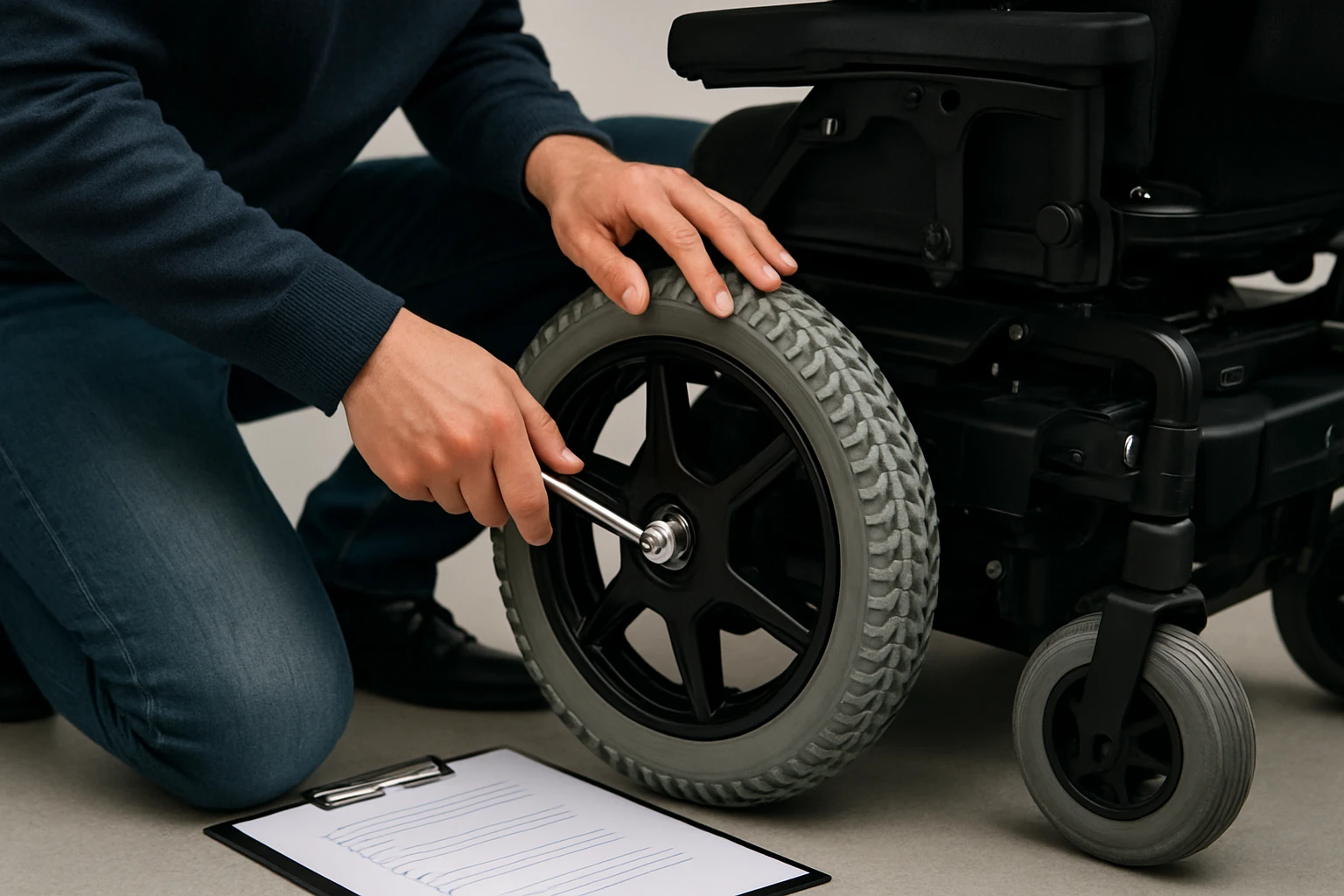
Even diligent owners have blind spots. These are not failures, just patterns I see over and over when helping people fine tune their routines. Clearing these up usually unlocks easier steering, fewer mystery noises, more range, and softer landings over bumps. Scan the list, circle the ones that sound familiar, and make one small change this week. You will feel the difference.
- Ignoring caster forks. Lint and hair wrap around axles and quietly ruin bearings. Cut and clear them regularly.
- Riding underinflated. Low PSI [pounds per square inch] drags range and makes turning harder. Set pressures weekly.
- Skipping connector care. A little corrosion invites heat and voltage drop. Clean, dry, and protect with a light film of dielectric grease.
- Overtightening. Cranking down fasteners can crack mounts, especially on plastic housings. Snug, not gorilla tight.
- Charging in a hot closet. Heat shortens charger life and stresses batteries. Give your charger air and time.
- Mixing old and new batteries. Always replace packs as a matched set unless your manual clearly allows otherwise.
- Waiting on wobble. A small caster flutter today is a costly fork tomorrow. Address it right away.
- Not leveraging coverage. Many plans support annual tune ups and parts. Go Wheelchairs will help you navigate Medicare and insurance paperwork so you do not overpay.
Sometimes you can fix it in minutes. Other times, the safest and cheapest path is a professional. Use this quick table to decide. When in doubt, hold off on riding until a tech looks it over.
| Symptom | Try This First | Stop and Call a Pro |
|---|---|---|
| Chair pulls slightly left or right | Set tire pressures, clear caster hair, check fork alignment | If drift persists or worsens after adjustments |
| Shorter range this week | Inflate tires, charge fully, minimize high drain accessories | Swelling batteries, burning odor, or hot charger |
| New clicking on turns | Snug hardware, inspect caster bearings | Visible cracks in frame or mounts |
| Joystick feels sticky | Power off, clean housing and boot gently | Uncommanded movement or fault codes at startup |
| Charger light flickers | Try a different outlet, inspect plug and cable | Sparks, scorch marks, or repeated breaker trips |
One more tip from the road: travel days are special cases. After flights or long car rides, do a quick after travel check. Verify freewheel levers are engaged, controller settings did not change, and connectors stayed tight. A 90 second scan saves that first vacation outing from becoming an unplanned troubleshooting session. If you frequently travel, Go Wheelchairs has a resources hub with buying guides, comparison tools, and travel tips to keep your chair and plans aligned.
Conclusion
Simple, steady care keeps your chair safe, smooth, and ready for every plan on your calendar. In the next 12 months, imagine gliding farther on the same charge, steering with less effort, and scheduling service on your terms instead of the chair’s. What one small step will you take today to lock in an electric wheelchair maintenance checklist and schedule that fits your life?
Move Forward Confidently With Go Wheelchairs
Explore a wide range of standard and heavy-duty motorized wheelchairs with personalized guidance, insurance and Medicare assistance, and maintenance resources that keep you independent.