
Lift Chairs & Medicare: Step-by-Step Guide to Coverage
If you are exploring lift chairs for yourself or someone you love, you are probably juggling two questions at once. First, what recliner is safe and comfortable for daily use. Second, how do you get Medicare to help pay for it. I remember helping my neighbor choose a power lift recliner after knee surgery, and the paperwork felt like a foreign language at first. In this friendly guide, I will show you how Medicare views the seat lift mechanism, how to qualify, how much you might pay, and how to pick a chair that fits your body and your space with confidence.
Along the way, I will point you to simple checklists, comparison tables, and insider tips from working with families who want both comfort and coverage. You will also see how Go Wheelchairs supports people at each step with personalized guidance on Medicare Part B [Medical Insurance] and Medicare Part C [Medicare Advantage], plus practical help coordinating suppliers. While Go Wheelchairs is best known for its wide range of standard and heavy-duty motorized wheelchairs and lightweight, foldable wheelchair designs, the same coverage know-how applies when customers are pairing a power chair with a coverage-ready lift recliner for home; Go Wheelchairs provides guidance and coordination for that process but does not sell lift chairs.
How Medicare Views Lift Chairs
Here is the key that unlocks the process. Original Medicare Part B [Medical Insurance] treats the seat lift mechanism inside a lift chair as DME [Durable Medical Equipment]. That means Medicare may cover the lifting mechanism when it is medically necessary, but it does not cover the upholstery, frame, or massage and heat features. Many people are surprised by that split, yet it makes sense once you think of the motorized lifter as mobility equipment and the rest of the recliner as furniture. Medicare Part C [Medicare Advantage] plans follow similar rules and often require prior authorization, which is a plan’s way of confirming medical necessity before you buy.
To qualify, a doctor must document that you have a condition that makes it hard to stand up from a standard chair. Examples include severe osteoarthritis, a neuromuscular disease, or a recent hip or knee replacement with limited mobility. You must also be able to walk once standing with a cane, walker, or power mobility device, because the goal is to help you rise safely, not to replace a wheelchair. After you meet the Medicare Part B [Medical Insurance] deductible, Medicare typically pays 80 percent of the approved amount for the seat lift mechanism, and you pay the remaining 20 percent to a Medicare-enrolled supplier that accepts assignment.
| Program | What Is Considered | Typical Patient Cost Share | Extra Rules |
|---|---|---|---|
| Original Medicare Part B [Medical Insurance] | Seat lift mechanism only, as DME [Durable Medical Equipment] | 20 percent coinsurance after deductible | Doctor order and medical necessity; supplier must accept assignment |
| Medicare Part C [Medicare Advantage] | Seat lift mechanism, similar to Part B | Plan specific copay or coinsurance | Prior authorization commonly required; use in-network supplier |
| Medicaid | Varies by state program | Varies | State rules and medical policy apply |
| Commercial Insurance | Plan dependent | Plan dependent | Check policy; preauthorization may apply |
Step-by-Step: Your Medicare Game Plan From Paperwork to Delivery
A little structure turns the process from confusing to clear. Use this sequence to save time and avoid denials. Each step builds a small paper trail that tells one simple story, your health need and the right solution. If you follow it carefully, you will reduce back and forth and set yourself up for smooth approval. Keep a folder or digital notes so everything lives in one place, and bring a trusted friend or family member to appointments if you can.
Watch This Helpful Video
To help you better understand lift chairs, we’ve included this informative video from EquipMeOT. It provides valuable insights and visual demonstrations that complement the written content.
- Start with your primary care provider. Ask for an evaluation of your difficulty standing from a standard chair and discuss fall risks and daily activities. Be specific about pain, weakness, and any near falls.
- Obtain a detailed prescription plus an LMN [Letter of Medical Necessity]. The note should state your diagnosis, functional limitation, that a seat lift mechanism will help you transfer safely, and that once standing, you can ambulate with a cane, walker, or mobility device.
- Document chair trials if possible. If you test a lift recliner in a showroom or clinic, note the model, fit, and whether you can stand safely. Ask the clinician to add this to your chart.
- Choose a Medicare-enrolled supplier that accepts assignment. Confirm in writing that they will bill Medicare Part B [Medical Insurance] or your Medicare Part C [Medicare Advantage] plan for the seat lift mechanism and disclose your estimated coinsurance.
- If you have Medicare Part C [Medicare Advantage], request prior authorization. Submit the prescription, LMN [Letter of Medical Necessity], and any therapy notes. Ask the plan for the expected decision timeline and a reference number.
- Select your chair configuration. Pick size, fabric, and features like infinite position, heat, or battery backup. Remember, only the mechanism is billable DME [Durable Medical Equipment], so the supplier will show a line-item cost split on your quote.
- Get a written estimate. It should show the approved amount for the mechanism, your 20 percent coinsurance estimate, any non-covered upgrades, delivery fees, and sales tax where applicable.
- Schedule delivery and fitting. On arrival, test the hand control, lift speed, and safe standing. Ask for written maintenance instructions and warranty details.
- Keep all receipts and the supplier’s proof of delivery. This is essential in case Medicare or your plan requests records later.
- Watch your Medicare summary or plan EOB [Explanation of Benefits]. Confirm the claim was processed as expected, and if there is a denial, appeal promptly with your doctor’s support.
- Time saver tip: ask your doctor’s staff to fax the LMN [Letter of Medical Necessity] directly to your chosen supplier so they can build the file fast.
- Safety tip: review fall hazards at home during delivery, especially rug edges and cord placement near the chair.
Costs, Timelines, and What Medicare Pays

Let us talk dollars and days, because budgeting matters. Prices vary by brand and feature set, yet they generally break into two buckets, the DME [Durable Medical Equipment] seat lift mechanism and the rest of the recliner. For planning, most families like to see both the Medicare-approved amount for the mechanism and the total retail price, then calculate their share. Remember, coinsurance applies after the Medicare Part B [Medical Insurance] deductible, and a Medicare Part C [Medicare Advantage] plan may use a flat copay or a percentage depending on the plan.
| Item | Illustrative Amount | How Medicare Treats It | Your Estimated Share |
|---|---|---|---|
| Seat lift mechanism (billable DME [Durable Medical Equipment]) | $450 to $800 approved amount | Medicare Part B [Medical Insurance] covers 80 percent after deductible | 20 percent coinsurance, about $90 to $160 |
| Chair frame, upholstery, heat or massage | $400 to $1,200 retail | Not covered by Medicare | 100 percent out of pocket |
| Delivery and setup | $0 to $150 | Not covered by Medicare | 100 percent out of pocket |
What about timing. From first appointment to sitting comfortably at home, most readers report two to four weeks, depending on doctor availability, plan authorization, and whether your chosen chair is in stock. Suppliers commonly deliver in seven to fourteen days after approval. According to published Medicare processing standards and plan disclosures, prior authorizations for simple DME often complete within a week, though it can be longer during seasonal peaks. Build a little cushion into your plans, and if you are recovering from surgery, order as soon as the doctor anticipates the need.
| Step | Typical Duration | How to Speed It Up |
|---|---|---|
| Doctor visit and LMN [Letter of Medical Necessity] | 2 to 7 days | Ask for same-day documentation and clinic fax to supplier |
| Plan prior authorization (if Medicare Part C [Medicare Advantage]) | 3 to 10 days | Submit complete records; request status updates with reference number |
| Supplier scheduling and delivery | 7 to 14 days | Choose in-stock models; confirm delivery window early |
Choosing the Right Power Recliner: Comfort, Safety, and Fit
Coverage is great, but comfort rules the living room. The best lift chairs fit like a good pair of shoes, supporting your lower back, knees, and shoulders without forcing your hips forward. Pay close attention to seat depth, seat height, and the distance from the wall the chair needs to recline fully. If you are taller, you will want a longer back and deeper seat; if you are shorter, a lower seat height reduces pressure behind the knees and makes standing feel natural. Also consider fabric that is easy to clean and grippy enough that you do not slide when the chair rises.
Features matter for both wellness and ease of use. Infinite position chairs can move the back and footrest independently, which is helpful for swelling, circulation, or just finding your perfect nap angle. Zero-gravity styles tilt to align hips and shoulders, which some users find relieves back pressure. Heavy-duty or bariatric models offer higher weight capacities and reinforced frames. A battery backup keeps the lift working during a power outage. A simple, well-labeled remote makes all the difference for arthritic hands, and a slower lift speed can feel more stable if balance is a concern.
| Your Need | Feature to Prioritize | Why It Helps |
|---|---|---|
| Knee or hip pain when standing | Smooth, gradual lift mechanism with sturdy arms | Reduces strain and allows a controlled rise |
| Leg swelling or circulation issues | Infinite position or zero-gravity recline | Elevates legs and fine-tunes angles for comfort |
| Small living space | Wall-hugger or space-saver design | Reclines fully with less clearance behind the chair |
| Higher body weight | Heavy-duty frame with higher capacity | Safer support and long-term durability |
| Arthritic hands | Large-button remote with simple icons | Reduces hand fatigue and confusion |
- Try before you buy if possible. A five-minute sit test reveals more than a brochure ever could.
- Measure your room and doorways, then double-check the chair’s shipping width and wall clearance.
- Ask about weight capacity, warranty length, and battery backup before finalizing your order.
Real-World Examples and Pro Tips
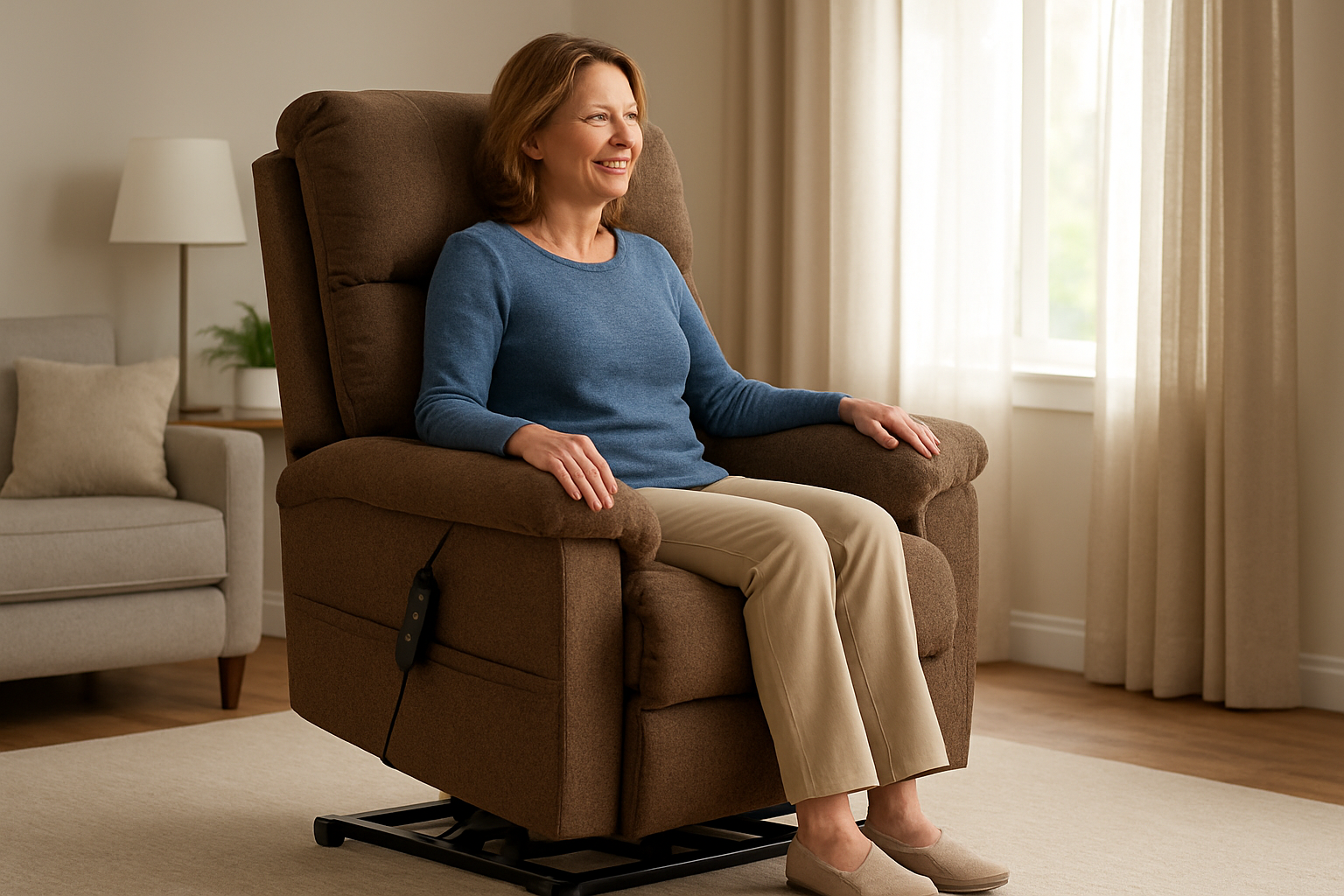
Here are two quick stories that reflect common paths. Maria, 72, struggled after a knee replacement. Her doctor wrote a clear LMN [Letter of Medical Necessity] noting she could walk with a cane once standing. She selected an infinite position chair so she could elevate her legs after physical therapy, and the supplier billed the seat lift mechanism through Medicare Part B [Medical Insurance]. Her out-of-pocket costs were the non-covered chair features plus the 20 percent coinsurance on the mechanism, which she prepared for after seeing the estimate.
James, 58, lives with a neuromuscular condition and a smaller apartment. His Medicare Part C [Medicare Advantage] plan required prior authorization, so he submitted records up front and chose a wall-hugger model. Because he also uses a power wheelchair, he coordinated placement of his lift recliner to simplify transfers. He added a battery backup and large-button remote to limit fatigue, and a fall-risk review during delivery led him to reroute a lamp cord that had been a hidden trip hazard. A small tweak, big peace of mind.
- Documentation wins approvals. Industry audits frequently note that missing or vague medical necessity notes drive denials. Ask your doctor to include functional details and the expected benefit from a lift mechanism.
- Request a line-item quote. It should separate the DME [Durable Medical Equipment] mechanism from the non-covered parts of the chair so there are no surprises on your bill.
- Plan for maintenance. Keep the remote cord clear, dust the motor area, and schedule a quick checkup if lift speed changes or you hear new sounds.
- Think transfers, not just lounging. Position the chair near stable grab points and away from slippery rugs to reduce twisting while standing.
Where Go Wheelchairs Fits In: Your Coverage Ally
Finding mobility solutions that match your body and your budget should feel supportive, not stressful. That is the heart of Go Wheelchairs. The team offers a wide range of standard and heavy-duty motorized wheelchairs plus lightweight, foldable wheelchair designs for travel and tight spaces. Just as important, you get personalized support for documentation and plan rules, including practical help aligning your prescription, LMN [Letter of Medical Necessity], and supplier requirements for seat lift mechanisms billed to Medicare Part B [Medical Insurance] or Medicare Part C [Medicare Advantage]. When your mobility needs include both a power wheelchair and a home lift recliner, coordinated guidance keeps everything coverage-ready.
You will also find a resources hub with buying guides, comparison tools, and travel tips that translate policy into plain English. Not sure whether a heavy-duty model or a compact design fits your routine. Use the comparison tools to weigh capacity, range, and transport needs side by side, then discuss your notes with a real person who understands insurance language and everyday life. Many readers tell us that having one knowledgeable partner to coach them through both mobility choices and coverage steps reduces decision fatigue, speeds approvals, and ultimately helps them move forward with confidence and independence.
| What You Need | How Go Wheelchairs Supports You | Your Benefit |
|---|---|---|
| Coverage clarity for seat lift mechanisms | Guidance on Medicare Part B [Medical Insurance] and Medicare Part C [Medicare Advantage] rules, plus supplier coordination | Fewer delays and cleaner claims |
| The right mobility device for everyday life | Wide range of standard and heavy-duty motorized wheelchairs and lightweight, foldable wheelchair options | Comfort, durability, and lifestyle fit |
| Confidence choosing features | Buying guides, comparison tools, and real-world tips in the resources hub | Smarter decisions with less stress |
| Personal help when questions pop up | One-on-one support from a friendly team | Faster answers and peace of mind |
A quick reminder before we wrap. While this guide is packed with practical steps, coverage details can change by plan and region. Always confirm benefits with your insurer or Medicare, and work with a Medicare-enrolled supplier that accepts assignment. If something on your estimate or EOB [Explanation of Benefits] looks off, ask questions right away. Clear communication turns complex processes into simple next steps.
Frequently Asked Questions About Lift Chairs and Coverage
What documentation should be in my LMN [Letter of Medical Necessity]. Your diagnosis, your difficulty rising from a standard chair, that you can ambulate once standing, and that a seat lift mechanism is reasonable and necessary. Who can write the prescription. Your primary care provider or a specialist. Do I need to try the chair first. It is not always required, but a documented trial or therapy note can strengthen medical necessity. Will Medicare pay for heat and massage. Those are considered comfort features, so expect to pay for them out of pocket. Can I buy online. Yes, but make sure the supplier is Medicare-enrolled and will bill the mechanism correctly as DME [Durable Medical Equipment].
How many positions do I need. If you have swelling or back pain, infinite position or zero-gravity styles offer more flexibility than basic three-position chairs. What if my claim is denied. File an appeal with updated clinical notes and any missing information. Timing matters, so use the window listed on your plan letter. Are there safety risks. As with any powered furniture, keep pets, kids, and cords away from moving parts and learn the remote before using the stand function. If dizziness or blood pressure concerns are part of your health picture, ask your clinician for a safe standing technique and consider a slower lift speed.
Can I use my Health Savings Account [HSA] or Flexible Spending Account [FSA] for any costs. Many plans allow using pre-tax funds for the coinsurance portion of the seat lift mechanism or for non-covered medical equipment, but confirm with your administrator. Is there a code I should know. Suppliers handle coding using HCPCS [Healthcare Common Procedure Coding System] for the seat lift mechanism, so your main job is providing clean documentation and choosing a supplier that accepts assignment. How long should a lift chair last. Quality models often serve well for years with basic maintenance. If anything feels off, call the supplier before small issues become bigger ones.
Last thought, make your home environment work for you. Put the chair near lighting, remotes, and water within easy reach. Use a small caddy for the hand control and keep pathways clear for transfers to your wheelchair or walker. Little adjustments translate into safer movements and more relaxing evenings. When your equipment fits your life instead of the other way around, independence grows.
With the right plan and partners, you can turn a complex benefit into a simple purchase that supports daily joy. Whether you are rising after a movie or standing to greet a grandchild at the door, a coverage-ready setup protects your energy and your budget. And if you want a co-pilot who knows both mobility and Medicare, Go Wheelchairs is ready when you are.
Recap in one sentence: you now know how to document medical need, align suppliers, and budget smartly so your power recliner is both comfortable and coverage-ready.
Imagine the next 12 months with safer standing, easier transfers, and a living room that welcomes long conversations rather than early bedtimes. With a few informed choices today, your future self will thank you for every quiet, confident rise.
What is the small next step you can take this week to move closer to the lift chairs setup that truly supports your independence and daily rhythm?
Additional Resources
Explore these authoritative resources to dive deeper into lift chairs.
Go Wheelchairs: Coverage Guidance & Mobility Support
Get personalized coverage guidance for lift chairs and support choosing from a wide range of standard and heavy-duty motorized wheelchairs, so you move forward with confidence and independence.