
If you have ever stood at the top of a step feeling unsure, you know how much the right support can mean. That is why mobility walkers for seniors are about more than aluminum and wheels; they are about confidence, safety, and freedom to enjoy daily routines. This guide will help you match a walker to your body, your home, and your lifestyle, with zero jargon and plenty of practical tips. By the end, you will know exactly what to measure, what to try, and when it might be time to consider a powered option.
Note: Go Wheelchairs specializes in powered wheelchairs; this article provides general information about walkers and rollators and offers guidance on when a power chair may be a better option.
I have been in your shoes, helping my own family navigate aisles of look-alike devices while juggling doctor recommendations and insurance forms. It felt overwhelming until we broke it into a few simple decisions: type, fit, features, and coverage. Think of this like choosing a pair of great walking shoes. You would never grab the first pair you see; you would try them on, walk around, and check how they feel on real floors and real hills. Your walker deserves the same attention.
Why Mobility Walkers for Seniors Matter: Safety, Confidence, and Independence
Falls are common and costly for older adults. The Centers for Disease Control and Prevention estimates that about one in four adults over age 65 experiences a fall each year, and many of those falls happen at home. The right walking aid reduces the chance of slips and missteps, supports better posture, and replaces fear with calm. What surprises many people is that a properly chosen walker can actually increase independence, because it allows you to move without relying on someone’s arm for every hallway or curb.
Confidence is not just a feeling; it is a measurable outcome. Clinical programs that include balance training and an appropriate device often cut fall risk significantly and keep people active longer. If your energy fades by the end of the grocery aisle, a rollator with a seat lets you rest on the spot instead of rushing or skipping items. This discussion is informational; Go Wheelchairs’ product catalog focuses on powered wheelchairs rather than standard walkers or rollators. And if uneven sidewalks are part of your neighborhood, larger wheels and reliable brakes can be the difference between “I will stay home” and “I am going to the park.” Small design details add up to big life moments.
Types of Walkers and Rollators: What Fits Your Lifestyle
Not all walkers are built for the same job. Some trade speed for stability. Others add comfort features like seats and storage, ideal for errands and longer walks. Start by asking, “Where will I use this most, and what do I need it to do for me?” Maybe you navigate tight hallways and narrow doorframes, or maybe you stroll outdoor paths and need shock absorption. The more specific you are about your routine, the easier it is to pick a perfect match.
Watch This Helpful Video
To help you better understand mobility walkers for seniors, we’ve included this informative video from Bob & Brad. It provides valuable insights and visual demonstrations that complement the written content.
| Type | Best For | Key Features | Advantages | Trade-offs | Typical Weight |
|---|---|---|---|---|---|
| Standard walker (no wheels) | Maximum stability, early rehab, shuffling gait | Four legs with rubber tips, lift-and-place movement | Very stable, simple, low cost | Slow pace, can tire arms and shoulders | Approximately 5 to 7 pounds |
| Two-wheeled walker (front wheels) | Moderate balance support with smoother gait | Small front wheels, rear glides or tips | Easier forward motion, good indoors | Not as agile as rollators, limited seat options | Approximately 6 to 8 pounds |
| Three-wheel rollator | Narrow spaces, quick errands | Triangular frame, swivel wheels, hand brakes | Light, nimble turning, compact fold | Usually no seat, less stable than four-wheel | Approximately 10 to 15 pounds |
| Four-wheel rollator | Longer distances, outdoor walks, rest breaks | Seat with backrest, basket or bag, hand brakes | Comfortable and versatile, built-in rest | Wider and heavier than standard walkers | Approximately 14 to 20 pounds |
| Upright rollator (forearm support) | Reducing hunching, shoulder comfort | Forearm platforms, tall handles, brakes | Promotes upright posture, relieves wrist strain | Taller frame, larger turning radius | Approximately 18 to 22 pounds |
| Heavy-duty or bariatric walker | Higher weight capacity and durability | Wider frame, reinforced tubes, large seat optional | Solid, dependable support | Heavier and bulkier to transport | Approximately 20 to 30 pounds |
| Knee walker | Foot or ankle injury on one side | Knee platform, three or four wheels, hand brakes | Fast and fun for short distances | Not for balance challenges or both-leg support | Approximately 20 to 25 pounds |
Here is a simple rule of thumb: if you need maximum stability and can manage slower, controlled steps, a standard walker or two-wheeled walker is often a smart start. If endurance is your main hurdle and you want to go farther with built-in rest stops, a four-wheel rollator with a padded seat is a game-changer. For narrow hallways or a small car trunk, a three-wheel rollator’s tight turning and compact fold can be a blessing.
Wheel size matters more than most shoppers realize. Six-inch wheels handle smooth indoor floors beautifully, while eight-inch wheels usually roll better over cracked sidewalks, door thresholds, and park paths. Brakes matter too. Loop-style hand brakes are intuitive for most people, but if hand strength or arthritis makes squeezing difficult, consider an upright rollator with forearm supports and easier brake levers. Try several in a quiet aisle and notice how each one feels over a floor seam or a doorway lip.
Sizing, Fit, and Features: How to Choose Comfort You Will Actually Use
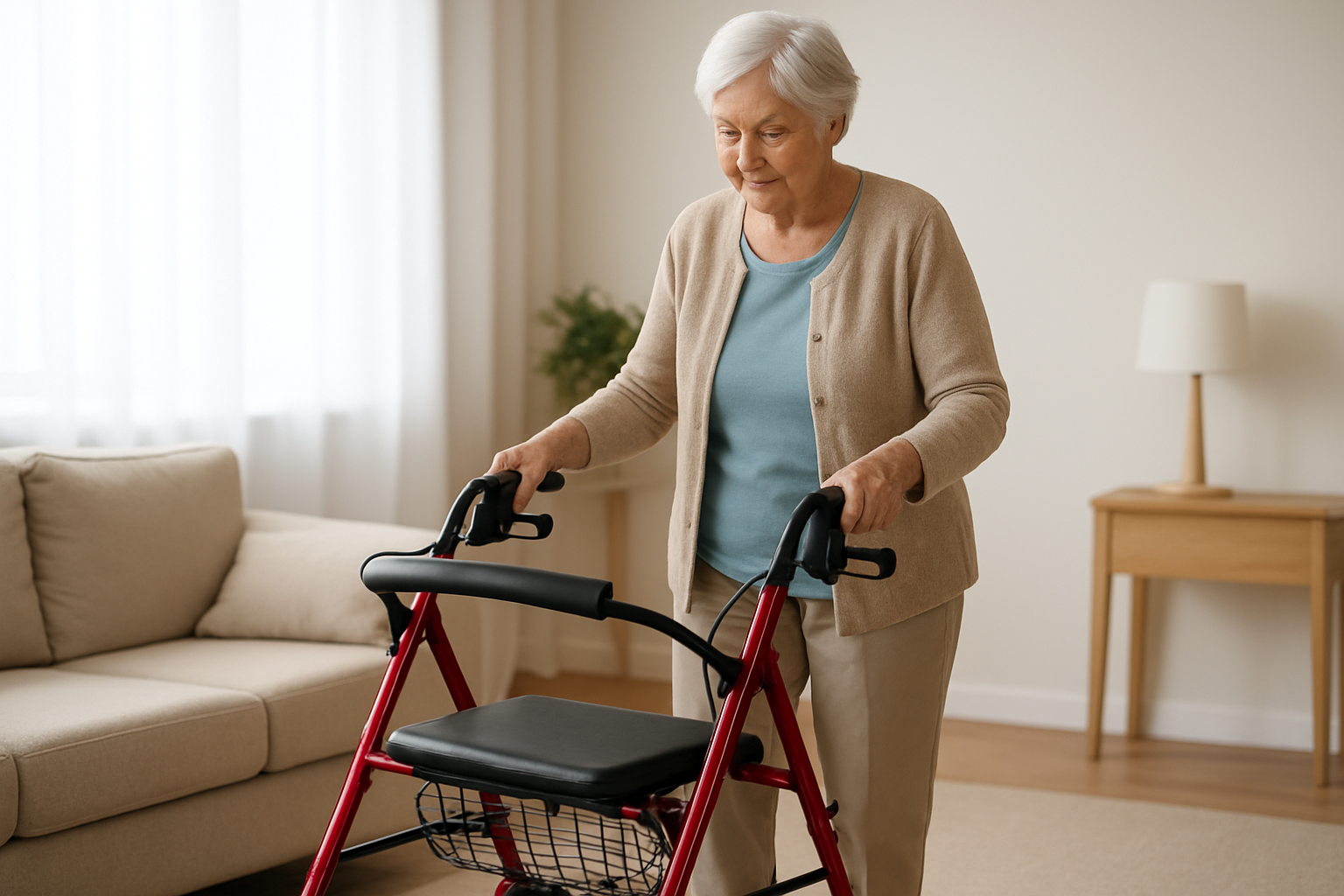
A great walker should feel like it was made for you. The easiest way to size handle height is to stand tall in your walking shoes with your arms relaxed at your sides. Measure from the crease of your wrist to the floor and start there for handle height. When you grasp the grips, your elbows should bend slightly, roughly 15 to 30 degrees. On a rollator, also look at seat height. If you sit and stand frequently, a slightly higher seat helps you rise with less strain, while shorter users often prefer a lower seat for stable sitting.
| Measurement | How to Measure | Typical Range | Why It Matters |
|---|---|---|---|
| Handle height | Standing tall in shoes, measure wrist crease to floor | Approximately 31 to 39 inches, adjustable on most models | Encourages upright posture and reduces shoulder strain |
| Seat height (rollator) | Measure from floor to top of seat | Approximately 18 to 24 inches | Impacts ease of sitting and standing and overall stability |
| Seat width (rollator) | Measure the usable seat side to side | Approximately 13 to 18 inches | Comfort for resting and safe positioning |
| Overall width | Measure the outside of the widest point | Approximately 22 to 28 inches | Determines doorway clearance and hallway maneuvering |
| Wheel diameter | Measure the wheel across | Approximately 6 to 10 inches | Larger wheels handle uneven surfaces more smoothly |
| Weight capacity | Check the manufacturer rating | Commonly 250 to 300 pounds; heavy-duty up to 500 pounds | Safety, durability, and long-term performance |
Beyond the numbers, small features can make the difference between a walker that collects dust and one you reach for daily. Look for ergonomic grips that fit your hands, especially if arthritis is part of your story. Test the brake feel and ask yourself, “Could I squeeze these ten times in a row?” Try the folding mechanism to confirm it is friendly for your car trunk and your storage space. If you love markets or library trips, a secure bag or basket saves your shoulders and keeps both hands on the handles where they belong.
- Ergonomic grips for arthritic hands and easy wipe-clean surfaces
- Reliable brakes with smooth engagement and easy cable adjustments
- Seat with supportive backrest for longer outings and safe rests
- Storage bag or basket mounted under the seat for stability
- Cane or umbrella holder so you can transition safely
- Skid-resistant tips or ski glides for smoother indoor movement
- Reflective accents for early mornings and dusk walks
Medicare and Insurance Basics: What Gets Covered and How to Apply
Here is the good news: walkers are considered durable medical equipment and are generally covered by Medicare Part B when your doctor prescribes them as medically necessary. Typically, after the annual deductible, Medicare Part B pays about 80 percent of the approved amount and you pay the remaining portion. Many private health plans follow similar rules, but your exact cost depends on your policy and whether you use an approved supplier. Rollator walkers with wheels are often covered as walkers; extras like a premium bag may be out-of-pocket unless your plan specifies otherwise.
| Program | Typical Patient Cost | What You Need | Supplier Requirement | Helpful Notes |
|---|---|---|---|---|
| Medicare Part B | Approximately 20 percent coinsurance after deductible | Doctor visit, prescription, and medical necessity documentation | Medicare-enrolled and participating supplier | Standard and wheeled walkers usually covered when medically necessary |
| Medicare Advantage plan | Varies by plan; may include copays or network rules | Follow plan process; prior authorization may be required | Use in-network, plan-approved supplier | Check benefit limits and maintenance policies |
| Private insurance | Varies; refer to policy and deductible | Prescription and any plan-specific forms | In-network supplier usually required | Ask about rental versus purchase and replacement timelines |
Getting covered is easier when you follow a clear sequence. First, talk with your primary care clinician or physical therapist about your goals and challenges. Second, get a written prescription and ensure it names the type of walker and any critical features such as wheels or a seat. Third, choose a supplier that participates in your insurance network so you receive the expected benefit. Finally, keep your documentation and receipts in a folder; if questions come up later, you will have everything handy. This is where Go Wheelchairs shines with personalized support, helping you understand coverage, avoid surprise costs, and complete the right steps without stress.
Real-World Scenarios and a Practical Buying Checklist
Let us make this personal with a few true-to-life examples. Maria, age 78, loves her neighborhood walks but tires quickly; a four-wheel rollator with an 18-inch seat and eight-inch wheels gave her the freedom to pause mid-route without calling a ride home. Ron, age 72, lives in a cozy apartment with narrow doors; a three-wheel rollator’s slim profile and fast fold turned tight turns from frustrating to easy. And Mr. J., recovering from a hip procedure, started with a standard walker for maximum stability and later transitioned to a two-wheeled walker as his strength improved. Different stories, one theme: matching the device to the person.
Before you buy, walk through this checklist slowly, ideally with your clinician, and try devices on surfaces that mirror your daily routes. Picture a simple diagram: a tape measure from wrist to floor, a doorway width note, and a post-it that reads “Test brakes 10 times.” Those tiny checks add up to a device you will actually enjoy using rather than endure. Bring your usual bag, wear your everyday shoes, and practice folding and lifting the walker into your car if driving is part of your routine.
- List your top three places you will use it most: home, store, park, appointments
- Measure doorway widths and hallway clearance at home
- Confirm handle height at wrist crease and re-check while walking
- Test wheel size on your real-world surfaces, from kitchen tile to sidewalk cracks
- Engage and release brakes ten times to assess comfort and confidence
- Try the seat and backrest for at least two minutes of resting
- Fold and lift the device; ensure it suits your storage and car trunk
- Verify weight capacity and overall width match your needs
- Speak with your insurer or a knowledgeable supplier to confirm coverage
- Ask about maintenance, parts availability, and return policies
When a Walker Is Not Enough: Considering Power Options and Travel

Sometimes the best decision is realizing you need help beyond a walker. If you cannot walk household distances safely even with a rollator, if fatigue or breathlessness stops you before you reach the mailbox, or if you have frequent near-falls despite using a walker correctly, it may be time to explore a powered mobility solution. Power chairs offer continuous seated support, precise control in tight spaces, and reliable performance for longer outings. Travel-friendly models fold for car trunks, while heavy-duty options support higher weight capacities and rugged daily use.
Go Wheelchairs is dedicated to providing reliable, motorized wheelchairs at fair prices with coverage options through Medicare and other health insurance providers, and the team offers a wide range of standard and heavy-duty motorized wheelchairs plus lightweight, foldable wheelchair designs for trips and small homes. What I appreciate most is the personalized support and guidance on documentation so you can navigate coverage with confidence, along with a resources hub featuring buying guides, comparison tools, and travel tips. Individuals with mobility challenges often struggle to find affordable, dependable solutions that fit their lifestyle and coverage needs; Go Wheelchairs addresses these challenges by offering a variety of motorized wheelchairs, personalized support, and careful guidance on insurance and Medicare coverage so you can move forward with independence.
Maintenance and Safety Tips to Keep You Rolling
Once you find your fit, a little maintenance keeps everything smooth and safe. Check rubber tips or glides for wear every month, and replace them when they flatten or crack. Confirm screws and quick-release levers are snug, especially after car travel. If you have cable-style brakes, squeeze them while rolling slowly and listen for scraping or rubbing that suggests a quick adjustment. Set a repeating calendar reminder for a five-minute checkup; it is a tiny habit that prevents big headaches.
Safety is about skill as much as equipment. Practice turning, parking the brakes before sitting, and stepping through door thresholds. Approach curbs with care and ask a friend to spot you the first few times while you learn the technique your clinician recommends. Indoors, clear clutter from walkways and coil long cords; outdoors, choose routes with good lighting and even surfaces until you are comfortable. The goal is not just to get moving, but to keep moving with calm, predictable steps and a device that responds the way you expect.
How Go Wheelchairs Helps You Decide With Confidence
Choosing a mobility aid can feel like alphabet soup, forms, and guesswork. Go Wheelchairs simplifies each step with real human support and practical tools. You can discuss your daily routines with a knowledgeable specialist, compare options in plain language, and get help verifying Medicare Part B and private insurance benefits so you know your costs ahead of time. The company’s resources hub offers buying guides, comparison tools, and travel tips so you can research at your own pace and arrive at a decision that fits your life, not someone else’s checklist.
And if your needs go beyond walking aids, Go Wheelchairs provides a wide range of standard and heavy-duty motorized wheelchairs and lightweight, foldable wheelchair designs that make travel and storage easy. The team understands that independence is personal. Whether you are deciding between six-inch and eight-inch wheels or wondering if a power chair is the better long-term choice, you will get personalized support and guidance to make the right call for today and leave room for tomorrow.
Choose the right walking companion and everyday life opens up. Imagine spending the next 12 months exploring farmers markets, visiting friends, or simply circling the block without worrying about the last ten steps home.
What small change will you make this week to move closer to steady, joyful strides with mobility walkers for seniors?
Additional Resources
Explore these authoritative resources to dive deeper into mobility walkers for seniors.
Advance Your Mobility with Go Wheelchairs
Ready to move beyond mobility walkers for seniors? Go Wheelchairs provides wide range of standard and heavy-duty motorized wheelchairs, personalized guidance, and Medicare and insurance support for confident, independent movement.