
9 Best Travel-Ready Power Wheelchair Categories for Air Travel — TSA-Ready Picks & Medicare-Friendly Options
If you are researching travel-ready power wheelchairs and airline-safe battery options, you are in the right place. Flying with a power chair should feel exciting, not stressful. The key is picking a chair that meets your travel needs, fits your lifestyle, and—when applicable—can be configured with a lithium-ion battery that meets airline guidance.
My first time flying with a compact power chair, the gate agent asked two questions: What are the battery watt-hours and do you have the test summary? Thanks to a little prep, I handed over a one-page sheet referencing the United Nations [UN] Manual of Tests and Criteria, Section 38.3, and everything moved along smoothly. You deserve that same peace of mind every trip.
At Go Wheelchairs, we help you compare options side by side, confirm airline details, and navigate Medicare Part B [Medical Insurance] paperwork when eligible. With a wide selection of standard and heavy-duty motorized wheelchairs and select lightweight travel models, and a friendly resources hub, our team makes it easier to choose with confidence and travel on your terms.
#1 Best Overall Lightweight Folding Power Wheelchair with Airline-Safe Battery
What it is: A balanced travel-first power chair category. Many models in this category fold quickly, weigh in a moderate range depending on configuration, and—on certain models—offer airline-compliant lithium-ion battery options that meet common airline watt-hour thresholds. Exact folding methods, weights, and battery specifications vary by make and model.
Why it matters: Many travelers want one chair that does everything well. The best overall category keeps the battery securely mounted when configured that way, provides printed documentation for airline staff where available, and offers adjustable features like seat depth and intuitive joystick control. It hits the sweet spot between portability, stability, and everyday usability for many users.
Quick example: You roll to the gate, fold a travel-configured chair quickly (exact time varies by model), and attach a gate-check tag. If the chair is equipped with an airline-compliant battery, the battery sheet shows a watt-hour rating aligned with common airline limits and the United Nations [UN] 38.3 test summary where provided. You board with a smile and meet your chair plane-side at arrival, ready to cruise the terminal.
#2 Best Budget-Friendly TSA-Ready Travel Chair
What it is: An affordable folding power chair that skips luxury extras but keeps the essentials travel-safe. It uses a right-sized lithium-ion battery with a clearly labeled watt-hour rating, plus simple folding hardware and a sturdy footplate.
Watch This Helpful Video
To help you better understand lightweight folding power wheelchair with airline-safe battery, we’ve included this informative video from Mobility Scooters Direct. It provides valuable insights and visual demonstrations that complement the written content.
Why it matters: If you fly a couple of times a year and want a dependable companion that will not wreck your budget, this category shines. It proves you can get Transportation Security Administration [TSA] friendly features without paying for bells and whistles you will rarely use.
Quick example: Think long weekend trips or family visits. You pack the user manual and airline battery letter in the seat pouch, wheel to the gate, and fold on the jet bridge. You save money up front and still get smooth, predictable airline check-in.
#3 Best Heavy-Duty Travel Chair for Higher Weight Capacity
What it is: A reinforced higher-capacity power chair category. Some higher-capacity models in our lineup offer 300 lb+ capacities, but these models may not be folding travel chairs or airline-friendly in every configuration—confirm model specs and battery configuration for air travel.
Why it matters: Strength and stability do not have to mean oversized for some users, but many heavy-duty designs prioritize frame rigidity and reinforced components over compact folding. This pick emphasizes frame strength, motor torque for ramps, and supportive seating. If airline travel is important, check whether the specific model and battery option meet airline requirements.
Quick example: You book a cross-country flight for a conference. For a heavy-duty model configured with airline-compliant batteries (if available for that specific model), you would show the battery documentation at check-in. Always confirm with the carrier whether that particular heavy-capacity configuration is acceptable for gate-check or cargo handling.
#4 Best Ultra-Light Frame for Easy Lifting
What it is: A featherweight folding design, often using magnesium or carbon-fiber elements, that trims every ounce while protecting comfort. The frame can dip under about 40 pounds without the battery, making car transfers and stairs more realistic for many caregivers.
Why it matters: If you or a travel partner does the lifting, every pound counts. Ultra-light frames help with car trunks, rideshares, and hotel entrances without ramps. Despite the diet, the battery remains airline-compliant and documentation is straightforward.
Quick example: Your driver pulls up to the curb. You pop the latch, the frame folds like a book, and the chair slides into the trunk without a grunt. At the airport, the battery watt-hours are clearly printed, and security officers wave you through with a nod.
#5 Best Long-Range Traveler With Swappable Modules
What it is: A folding power chair that prioritizes range by using modular lithium-ion batteries. Each module maintains an airline-friendly watt-hour rating, and you carry a spare or two in approved protective cases as allowed by the Federal Aviation Administration [FAA] rules for mobility aids.
Why it matters: Layovers, large resorts, and all-day sightseeing can chew through a single battery. With swappable modules, you recharge while you relax and keep rolling when others are hunting outlets. The design also simplifies battery removal if an airline asks you to detach it before gate-check.
Quick example: You spend the day at a national park lodge. After lunch, you click in a fresh battery and log another five miles along accessible paths. On travel day, you show your spare battery cases and paperwork, then store them in the cabin as required.
#6 Best Compact Footprint for Tight Spaces
What it is: A chair engineered to fold extra slim and turn on a dime, often posting a tight turning radius and narrow folded width. It is made for small elevators, older hotel corridors, and restaurants with tight table spacing.
Why it matters: Cities and historic districts are amazing, but sometimes cozy means cramped. A compact footprint lets you breeze through doorways, pivot easily in washrooms, and stash the chair in car trunks without Tetris-level effort.
Quick example: Your taxi has a smaller trunk than expected. No problem. The frame folds to a tidy stack, the airline-ready battery is already labeled, and you are off to dinner reservations without fuss.
#7 Best for Taller Riders and Long Legs
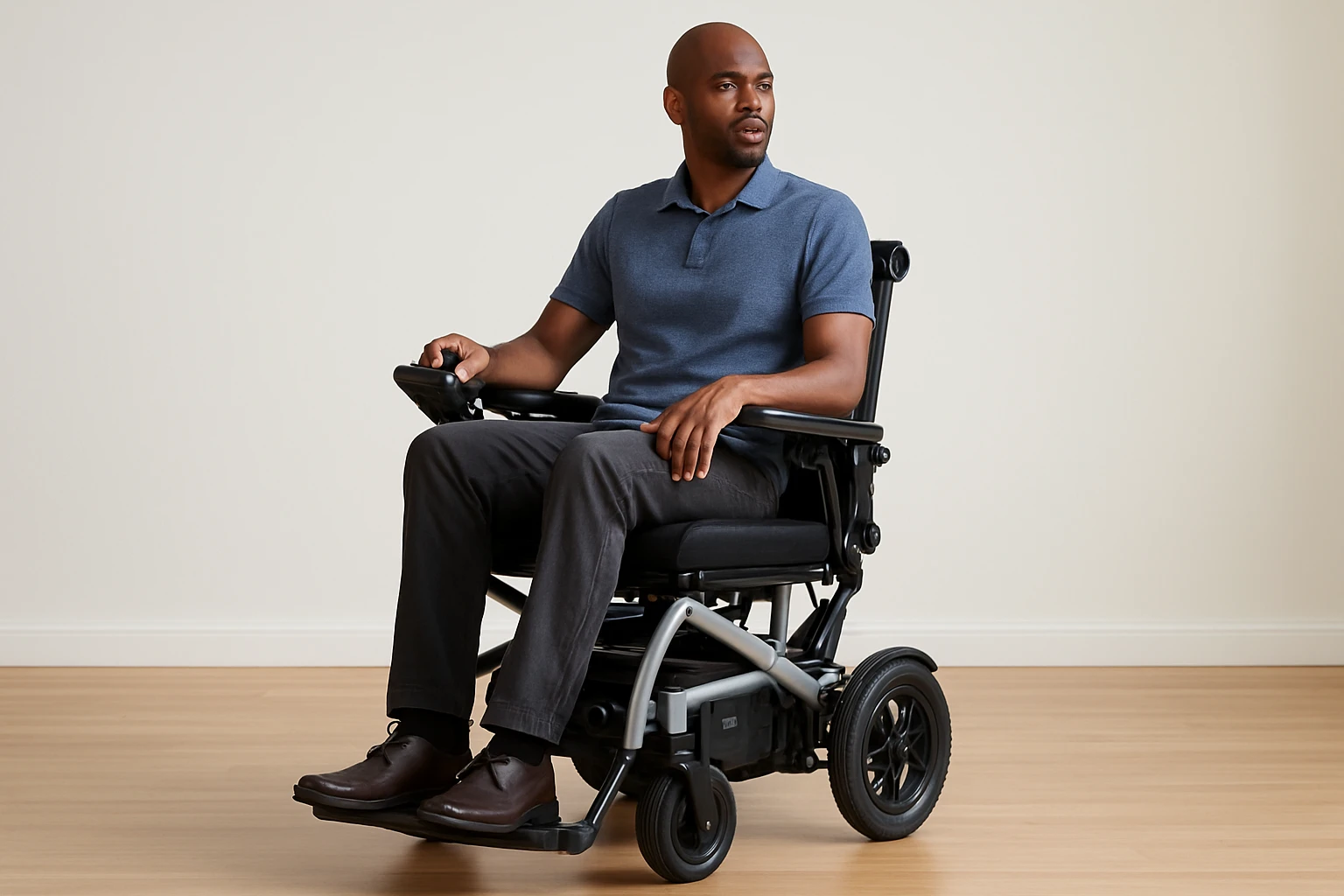
What it is: A travel-ready power chair featuring extended seat depth, adjustable footplate height, and longer armrest spacing. It keeps the same airline battery compliance but adds the geometry taller riders need to sit comfortably for hours.
Why it matters: Proper fit reduces fatigue on long travel days. With a longer wheelbase and supportive cushions, this pick helps keep knees and hips happy while preserving stability over thresholds and jet bridges.
Quick example: You book back-to-back flights with a tight connection. The adjustable footplate keeps your knees from crowding, and the stable frame handles the jet bridge bump without drama. You deplane energized, not achy.
#8 Most Medicare-Friendly Choice for Eligible Users
What it is: A folding power wheelchair that may qualify for coverage when strict medical necessity criteria are met under Medicare Part B [Medical Insurance] as Durable Medical Equipment [DME]. It is designed for daily in-home mobility needs first, with travel features as a bonus.
Why it matters: When you qualify, Medicare can help offset costs. The right documentation from your clinician, correct Healthcare Common Procedure Coding System [HCPCS] coding, and a supplier who knows the process are essential. Go Wheelchairs assists with coverage questions, paperwork coordination, and next steps.
Quick example: Your physical therapist completes a mobility evaluation noting in-home power mobility needs. Our team reviews coverage pathways, matches you with a Medicare-friendly model, and helps ensure you have the letters and forms airlines appreciate seeing during travel.
#9 Best All-Terrain Travel Pick for Varied Surfaces
What it is: A travel-focused chair with larger rear wheels, grippy tires, and a bit more ground clearance. It keeps the airline battery compliant but adds confidence on boardwalks, packed gravel paths, and uneven sidewalks.
Why it matters: Not every vacation rolls on marble floors. Extra traction and stability help on cobblestones, park trails, and resort pathways. You still get quick folding and airline documentation without the bulk of a full outdoor chair.
Quick example: You explore a coastal town with bumpy streets. The chair tracks straight, you pause for gelato, and later hand over your battery letter at the gate. Your chair glides off the aircraft ready for the next adventure.
Quick Comparison Table: Specs at a Glance
Use this table as a starting point. Values reflect typical ranges for each pick category. Exact specifications vary by model, so confirm before you buy or fly.
| Pick | Frame Weight | User Capacity | Typical Range | Battery Type and Watt-Hours | Folded Size (L x W x H) | Notes |
|---|---|---|---|---|---|---|
| #1 Best Overall | 45 to 55 pounds (without battery) | 250 to 300 pounds | 10 to 12 miles | Lithium-ion, under 300 watt-hours | Approx. 26 x 24 x 12 inches | Balanced comfort, easy gate-check |
| #2 Budget-Friendly | 50 to 60 pounds | 220 to 265 pounds | 8 to 10 miles | Lithium-ion, under typical airline limit | Approx. 28 x 24 x 13 inches | Great value, fewer extras |
| #3 Heavy-Duty | 60 to 70 pounds | 300 to 400 pounds | 9 to 12 miles | Dual lithium-ion modules, each airline-safe | Approx. 29 x 26 x 14 inches | Reinforced frame, strong motors |
| #4 Ultra-Light Frame | 35 to 40 pounds | 200 to 250 pounds | 7 to 10 miles | Lithium-ion, airline-compliant | Approx. 25 x 23 x 11 inches | Easy lifting, compact |
| #5 Long-Range | 50 to 60 pounds | 250 to 300 pounds | 12 to 18 miles (with modules) | Modular lithium-ion packs, each under limit | Approx. 27 x 24 x 13 inches | Swappable batteries for all-day use |
| #6 Compact Footprint | 45 to 55 pounds | 220 to 265 pounds | 8 to 11 miles | Lithium-ion, labeled watt-hours | Approx. 24 x 22 x 11 inches | Narrow, tight turning radius |
| #7 Tall Riders | 50 to 60 pounds | 250 to 300 pounds | 9 to 12 miles | Lithium-ion, airline-compliant | Approx. 28 x 25 x 13 inches | Longer seat depth, footplate adjust |
| #8 Medicare-Friendly | 55 to 65 pounds | 250 to 300 pounds | 8 to 12 miles | Lithium-ion, with documentation | Approx. 28 x 25 x 13 inches | Coverage pathway when eligible |
| #9 All-Terrain Travel | 55 to 65 pounds | 250 to 330 pounds | 9 to 12 miles | Lithium-ion, airline-compliant | Approx. 29 x 26 x 14 inches | Traction tires, extra clearance |
Airline Battery Basics: What Staff Usually Check
Airline agents tend to verify three things for mobility device batteries. First, that the battery is lithium-ion designed for mobility aids and securely attached or removable by design. Second, that the watt-hour rating is clearly labeled and within typical airline guidance. Third, that a battery test summary exists under the United Nations [UN] Manual of Tests and Criteria, Section 38.3.
| Item | What It Means | What You Can Prepare |
|---|---|---|
| Battery watt-hours | Airlines use watt-hours to gauge lithium-ion size and handling | A label or spec sheet showing the watt-hour value |
| Installed vs spare batteries | Installed mobility batteries are typically allowed; spares often have stricter cabin rules | Protective battery cases for spares and printed airline policy highlights |
| United Nations [UN] 38.3 test summary | Proof the battery passed transport safety tests | A one-page test summary from the manufacturer |
| Protection against activation | Chairs should be switched off and protected from accidental start | Power off, joystick cover, and note for staff on how to keep chair in neutral |
Tip: The Federal Aviation Administration [FAA] publishes guidance for flying with lithium-ion batteries in mobility aids. Airlines can apply their own procedures, so always confirm with your carrier 48 to 72 hours before departure. Go Wheelchairs can help you gather battery documents and a simple one-page handling guide for gate agents.
How to Choose the Right Option
Use this quick decision framework to narrow your shortlist, then talk with Go Wheelchairs for personalized guidance:
- Define your primary use. Daily at home with occasional flights, or frequent air travel first and home second. Your main use drives the frame, seating, and battery priorities.
- Match body measurements. Seat width, seat depth, armrest spacing, and footplate height should fit you like a tailored jacket. Comfort on hour five matters as much as minute five.
- Weigh lifting realities. If someone will lift the chair into a trunk, aim for an ultra-light or balanced frame. If you need higher capacity, pick heavy-duty but confirm fold size.
- Plan your range. City breaks may need 7 to 10 miles per day, resorts 10 to 15. Consider modular batteries if you do long sightseeing days.
- Check airline steps. Ensure watt-hour labeling, the United Nations [UN] 38.3 test summary, and a printed gate-handling note. Confirm with the airline a couple of days ahead.
- Explore coverage and budget. If you may qualify for Medicare Part B [Medical Insurance], let us review eligibility and documentation. Otherwise, weigh features against total cost of ownership.
- Do a test roll. If possible, try the chair in doorways, on small thresholds, and through a simulated travel day pace. Your hands, hips, and shoulders will tell you fast if it is a match.
Expert Travel Tips You Will Be Glad You Knew
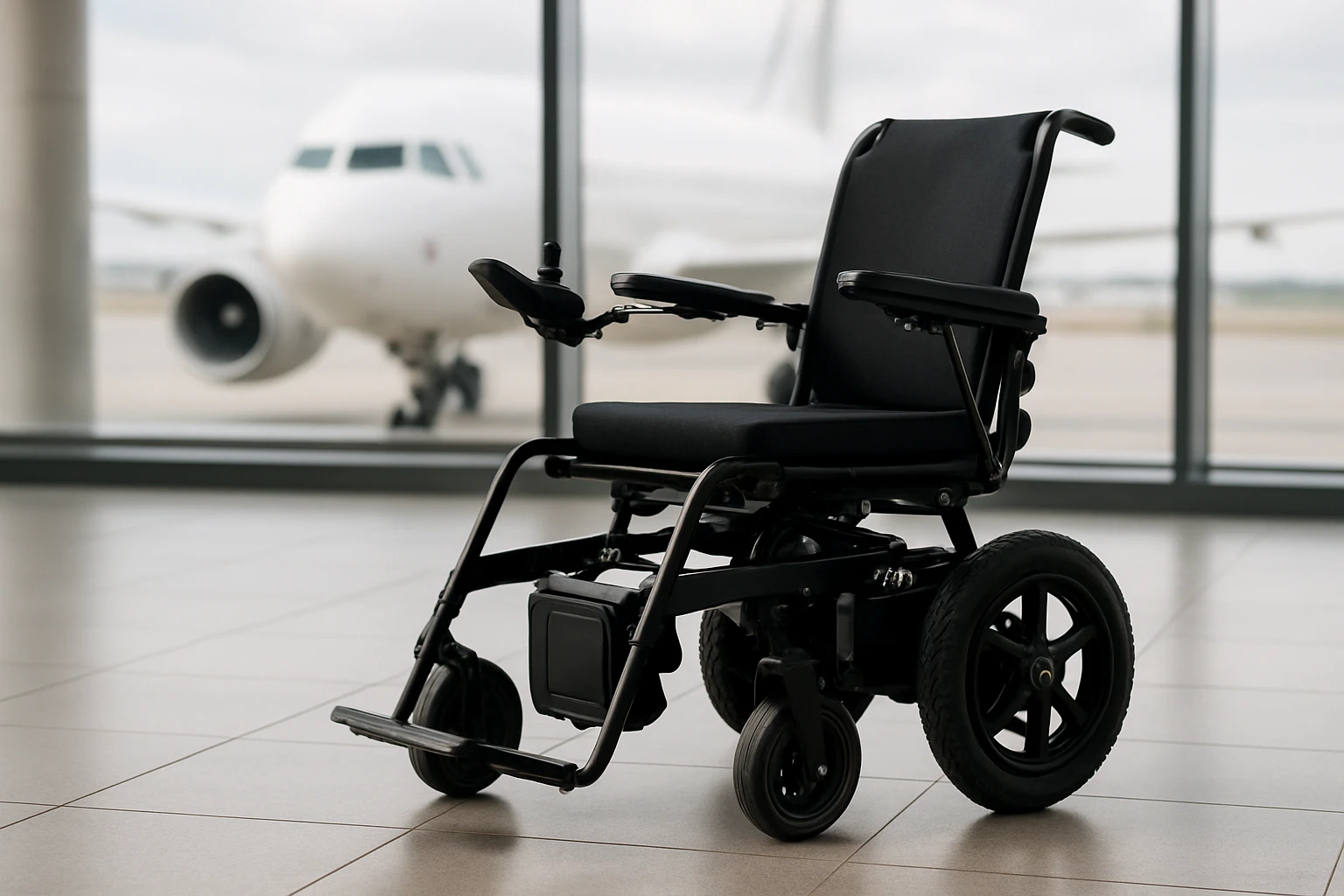
- Build a travel kit. Include the owner’s manual, a one-page battery sheet with watt-hours and the United Nations [UN] 38.3 reference, a hex key or tool for folding levers, and your charger.
- Label smartly. Put your name and phone number on the frame and the battery module. A luggage tag on the chair handle helps agents return it quickly.
- Photograph before check. Quick photos of the chair at the gate add peace of mind if you need to file a report with the United States Department of Transportation [DOT].
- Know mishandling stats. Airlines report roughly 1 to 2 percent mishandling for mobility devices according to federal data, so documentation and photos are worth the minute they take.
- Turn, then roll. Power off before handing over your chair. Explain freewheel mode and safe lifting points to staff, and offer your handling sheet.
Need help assembling your kit or verifying airline wording? Go Wheelchairs offers templates, comparison tools, and a friendly checklist so you can focus on the fun part of travel.
Where Go Wheelchairs Fits In
Individuals with mobility challenges often struggle to find affordable, dependable solutions that truly fit both lifestyle and coverage needs. That is why our team curates a wide range of standard and heavy-duty motorized wheelchairs, plus select lightweight travel models designed with airline travel in mind. We compare specs, measure fit, and help you understand the trade-offs that matter for your everyday life.
From personalized support to assistance with Medicare Part B [Medical Insurance] and other health insurance documentation, Go Wheelchairs is your co-pilot. Explore our resources hub for buying guides, side-by-side comparisons, and real-world travel tips drawn from thousands of customer conversations. Together, we will map the path that gets you moving with confidence.
Medicare-Friendly Pathway: What to Expect
While many travel chairs are purchased out of pocket, some models can be Medicare-friendly when strict criteria are met. Typically, your clinician must document that you need a power wheelchair for regular in-home mobility and that alternatives are insufficient. The supplier then confirms product details, Healthcare Common Procedure Coding System [HCPCS] coding, and documentation for Medicare Part B [Medical Insurance].
We help coordinate the details with your care team, clarify what counts as medically necessary, and align features with your goals. Even when coverage is not available, our guidance helps you choose the right features so your investment goes further, from home to the airport and back.
Real-World Scenario: Smooth Door-to-Door Travel
Here is a simple playbook customers tell us works. The day before travel, charge the battery, pack your documents, and confirm the airline has your mobility aid noted in the record. At the airport, request gate-check for your chair and keep your charger with you in carry-on.
On arrival, wait at the aircraft door for your chair. Inspect it quickly, switch on, and roll to baggage claim. That little checklist keeps you calm and gives agents what they need. Small steps, big difference.
FAQs: Your Top Questions, Answered
Are lithium-ion batteries allowed on planes for wheelchairs? Yes, mobility aid lithium-ion batteries are typically allowed with conditions. Airlines rely on Federal Aviation Administration [FAA] guidance. Installed batteries can stay in the device. Spares often go in the cabin with terminal protection. Always confirm with your airline.
What watt-hour rating is considered airline-safe? Airlines commonly look for clear watt-hour labeling within Federal Aviation Administration [FAA] guidance. Many travel chairs use batteries under 300 watt-hours or modular packs under common spare limits. Bring documentation to make this quick and easy.
How do I protect my chair from damage? Gate-check when possible, share a one-page handling note, photograph at the jet bridge, and add simple padding on protruding parts. The United States Department of Transportation [DOT] requires reporting for mishandled devices, so keep your documents handy.
Want to see these nine categories translated into specific models and fits? Reach out to Go Wheelchairs and we will show you examples tailored to your body measurements, travel frequency, and coverage pathway.
How to choose the right option
Start by ranking what matters most: frame weight for lifting, seat dimensions for comfort, or range for long days. Next, decide whether all-in-one balance or a specialty like ultra-light or heavy-duty better suits your life. Finally, verify airline readiness by confirming watt-hours, the United Nations [UN] 38.3 summary, and a gate-handling note.
When you want a trusted co-pilot, Go Wheelchairs will walk you through side-by-side specs, share real-world trade-offs, and help with Medicare Part B [Medical Insurance] or other insurance questions. That way, you buy once and smile often.
Wrap-up
Nine smart categories, one happy outcome: a travel-ready power chair that fits your body, your budget, and the airplane aisle dance. The right prep means less airport guessing and more destination joy.
Imagine the next 12 months filled with easy gate-checks, faster transfers, and strolls through places you used to skip. With clear specs and a partner who gets it, travel freedom becomes delightfully ordinary.
Which destination will you roll into first with your travel-ready power wheelchair?
Travel Smarter With Go Wheelchairs
Explore a wide range of standard and heavy-duty motorized wheelchairs with expert guidance, Medicare and insurance help, and friendly support for confident, airline-ready mobility.