
Vehicle Lifts and Wheelchair Ramps: The Medicare-Friendly Buyer’s Guide for Vans, SUVs & Cars
If you have ever balanced a grocery run with a power chair and a tight parking space, you know why the right setup matters. This guide unpacks vehicle lifts and wheelchair ramps for everyday cars, vans, and sport utility vehicles (SUVs), with practical steps to get Medicare-related questions answered quickly. I learned the hard way helping a family friend: a mismatch between a heavy power chair and a light-duty hitch turned every errand into a mini workout. You deserve a safer, smoother routine, and with the right plan, you can have it without guesswork.
We will cover types, fit, costs, safety, and a Medicare-friendly buying roadmap. Along the way, I will share real-world tips and decision shortcuts that professionals use. And because finding the right wheelchair and ensuring coverage can feel overwhelming, I will show you where Go Wheelchairs fits in with personalized guidance and a wide range of standard and heavy-duty motorized wheelchairs that actually match your life.
Start With Your Life, Not the Hardware
Before comparing product specs, sketch a day in your life. Do you travel solo or with a caregiver? Is your driveway steep, or do you street-park downtown? Small details like garage height or winter road salt can steer you toward one path over another. A solution that looks perfect on paper can become frustrating if it does not fit your daily rhythms, and that is why the best mobility providers start with your goals and routines rather than pushing a single model.
Here is a quick lifestyle checklist to guide your first decisions:
- Independence: Will you load and ride solo, or will a caregiver assist?
- Storage: Do you need your full cargo area for groceries, medical gear, or a service animal?
- Weather: Do you deal with rain, snow, or road salt that could affect an exterior lift?
- Parking: Tight urban spots may reward interior lifts or ramps that keep your footprint small.
- Travel: Frequent flights or rideshares may favor portable ramp options and lightweight chairs.
This is also where equipment choices converge. If you are shopping wheelchairs and transport at once, you can often choose a lighter, foldable power chair or a heavy-duty model and then pair the right lift. Go Wheelchairs helps here with two advantages: lightweight, foldable wheelchair designs for nimble travel, and a wide range of standard and heavy-duty motorized wheelchairs for maximum stability and range. Their team can also help you consider insurance and Medicare (United States federal health insurance) details early so you do not fall in love with a setup that is tough to fund.
Types of Vehicle Lifts and Wheelchair Ramps
Once you know how you want to live, it is time to match the technology. There are four common categories of lifts you will see, and each trades space, convenience, and cost differently. Exterior hitch lifts are fast to use and keep interiors clear. Interior hoist lifts protect equipment from weather but need cargo space. Full platform lifts enable roll-on, roll-off independence, most often in vans. Under-vehicle lifts tuck away cleanly and preserve doorways, but they need specific van configurations and professional installation.
| Lift Type | Mount Location | Typical Capacity | Best With | Pros | Watch-outs | Good For Vehicles |
|---|---|---|---|---|---|---|
| Exterior Hitch Platform | Rear hitch | 300–500 lb | Power wheelchairs, scooters | Fast loading, no interior space used | Reduces ground clearance, needs Class II/III hitch | Cars with strong hitch, sport utility vehicles (SUVs), vans |
| Interior Hoist (Crane) | Cargo area or trunk | 200–450 lb | Foldable power chairs, scooters | Weather-protected, keeps footprint small | Uses cargo space, lifting arm clearance required | Sport utility vehicles (SUVs), hatchbacks, vans, some sedans |
| Full Platform (In-Vehicle) | Side or rear door | 600–800 lb | Heavy power chairs, bariatric needs | Roll-on independence, strong safety rails | Higher cost, major install, usually van-based | Full-size vans, minivans |
| Under-Vehicle Lift | Stows beneath van | 600–800 lb | Power wheelchairs | Doorway remains clear, sleek look | Specific van compatibility, professional maintenance | Minivans and full-size vans configured for accessibility |
| Pickup Bed Crane | Truck bed | 300–500 lb | Power wheelchairs or scooters | Great for trucks, durable | Requires lifting swing, careful tie-downs | Pickup trucks |
| Roof-Top Manual Chair Carrier | Roof | 25–50 lb | Folding manual chairs | Leaves trunk free | Limited to manual chairs, height clearance | Sedans, small cars |
As a quick benchmark, many exterior lifts top out near 350 to 400 pounds, while heavy-duty platforms reach 600 to 800 pounds. Industry technicians will tell you that most service calls stem from two issues: wiring quality and improper loading. Good news, both are preventable with a solid installation and repeatable loading routine. If your power chair is on the heavier side, start your search at the higher-capacity end for extra headroom and long-term peace of mind.
Ramp Options: From Portable to Installed

Ramps can be a smart alternative or companion to lifts, especially for short rises like porch steps, garage lips, or low cargo heights. Portable ramps fold up and travel with you, while installed ramps and lowered-floor conversions transform vans into roll-in rides. For safe use, remember the Americans with Disabilities Act (ADA) guideline of a 1:12 slope for occupied chairs, meaning one inch of rise for each twelve inches of ramp. Shorter is steeper, and steeper gets risky fast, particularly in the rain or snow.
| Ramp Type | Length Range | Capacity | Best Use | Pros | Watch-outs |
|---|---|---|---|---|---|
| Portable Folding “Suitcase” Ramp | 2–10 ft | 600–800 lb | Curbs, single steps, travel | Light, stows in trunk, quick | Steep at short lengths, needs stable landing |
| Telescoping Track Ramp | 5–10 ft | 400–600 lb | Narrow thresholds, adjustable vehicles | Compact, adjustable width | Alignment takes practice, lower capacity |
| Threshold Ramp | 1–3 ft | 600–800 lb | Door lips, sliding doors | Simple, affordable | Very short, not for vehicles with high sills |
| Installed Van Ramp | Varies with conversion | 600–800 lb | Side or rear entry van access | Roll-in independence, low effort | Requires compatible van and professional conversion |
If you are weighing a powered lift against a ramp, picture your most frequent stop. For a sloped driveway and tall cargo sill, a powered lift is often safer and faster. For travelers hopping in and out of rideshares or friends’ cars, a portable ramp paired with a lightweight, foldable power chair can be wonderfully nimble. Go Wheelchairs’ resource hub offers buying guides, comparison tools, and travel tips that show what these solutions look like in real homes and parking lots, not just spec sheets.
Fit Check: Matching Your Vehicle and Mobility Device
Compatibility is where frustration either disappears or multiplies, so measure twice and decide once. Start with your mobility device weight, dimensions, and turning radius. Then check your vehicle’s hitch class and tongue weight rating if you are considering an exterior platform. Finally, look at door height, opening width, and cargo floor to ground distance. These three checkpoints will eliminate 80 percent of bad fits before you ever step into a showroom.
| Mobility Device | Weight Range | Likely Lift or Ramp | Vehicle Notes |
|---|---|---|---|
| Standard Power Wheelchair | 200–300 lb | Exterior hitch platform or interior hoist | Class II/III hitch, confirm rear ground clearance |
| Heavy-Duty Power Wheelchair | 300–450 lb | High-capacity hitch platform or full platform lift | Sport utility vehicles (SUVs) or vans recommended for capacity |
| Folding, Lightweight Power Chair | 50–80 lb | Interior hoist or manual loading with portable ramp | Great with compact cars and hatchbacks |
| 3-Wheel Scooter | 100–200 lb | Exterior platform or interior hoist | Mind deck length and tiller height |
A quick story: Lena, a traveling nurse, thought she needed a van. After measuring, we paired her sport utility vehicle with a high-capacity hitch platform and a waterproof cover. She kept all five seats, loads in under a minute, and saved thousands over a conversion. Her secret? Choosing a robust platform and confirming her hitch and tongue weight ratings with a reputable installer.
If you are still shopping for the chair itself, you can widen your options by right-sizing. Go Wheelchairs carries a wide range of standard and heavy-duty motorized wheelchairs, plus lightweight, foldable wheelchair designs that make interior hoists and portable ramps more practical. Their specialists will walk you through measurements, weight ratings, tie-down options, and even driveway slope so your choice actually fits your vehicle and your life.
Medicare-Friendly Buying Roadmap and Coverage Essentials
Here is the candid take: Medicare Part B (United States federal health insurance Part B) typically covers medically necessary wheelchairs and certain accessories for use in the home as durable medical equipment (DME) [durable medical equipment (DME)], but it usually does not cover vehicle lifts or vehicle-specific ramps. However, your wheelchair coverage can still influence the overall budget, and some Medicare Advantage plans (Medicare Part C [Medicare Advantage (Medicare Part C)]) may offer supplemental benefits. Other funding avenues can include state assistive technology programs, vocational rehabilitation, veterans benefits, or nonprofit grants. The path is not always straightforward, so documentation and timing are everything.
| Step | Who Leads | Key Documents | Typical Timing | Pro Tip |
|---|---|---|---|---|
| 1. Clinical Evaluation | Physician and therapist | Letter of medical necessity (LMN) [letter of medical necessity (LMN)], mobility assessment | 1–2 appointments | Ask the clinician to specify weight, dimensions, and transport needs for future planning. |
| 2. Wheelchair Selection | You and mobility expert | Healthcare Common Procedure Coding System (HCPCS) [Healthcare Common Procedure Coding System (HCPCS)] codes for chair and accessories | 1–2 weeks | Select the chair first so your lift or ramp capacity is crystal clear. |
| 3. Coverage Check | DME supplier and insurer | Insurance verification, in-network supplier confirmation | 3–10 business days | Ask about prior authorization and expected out-of-pocket costs in writing. |
| 4. Funding Alternatives | You with dealer support | Grant applications, state program forms | 2–8 weeks | Use one-page summaries with specs and quotes to speed approvals. |
| 5. Lift or Ramp Install | Certified installer | Vehicle VIN, hitch rating, wiring plan | Half to full day | Schedule a loading practice session and bring your chair to the install. |
Why the extra paperwork if Medicare will not pay for the lift? Because strong clinical notes and a detailed letter of medical necessity (LMN) help unlock alternative funding and can reduce delays for your wheelchair itself. Go Wheelchairs supports this process end to end. Their team coordinates with clinicians, translates Healthcare Common Procedure Coding System (HCPCS) language into plain English, and helps you prepare what many programs ask for: quotes, spec sheets, photos, and a simple statement of need. The result is a straighter path to the setup you want.
Safety, Setup, and Cost Planning
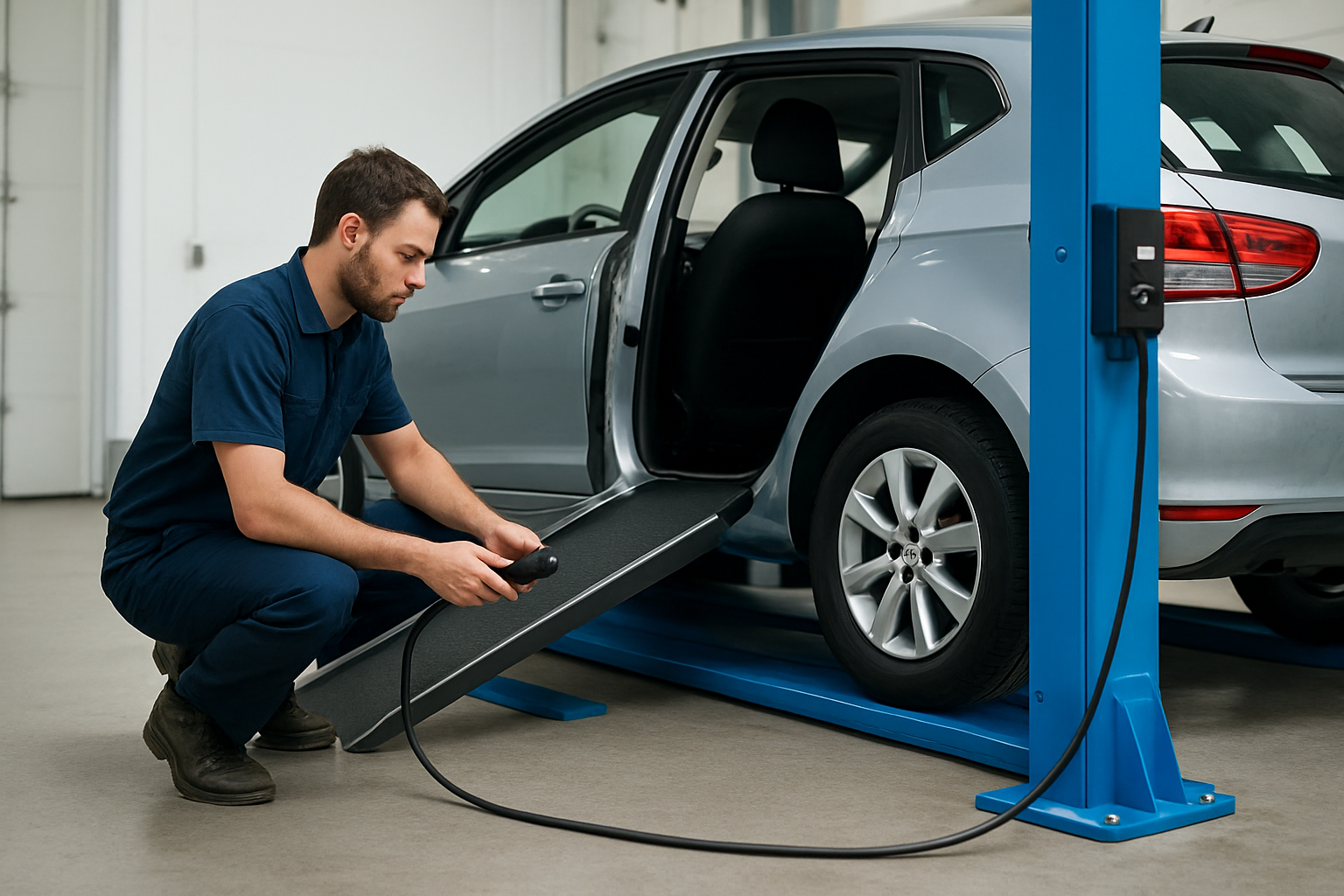
Safety starts with repeatable loading and verified tie-downs. Practice on level ground with your installer until every step feels dull in the best way. Use four-point tie-downs or a docking system rated for your chair’s weight, and recheck straps after the first few drives. According to service techs, over 70 percent of lift issues are traced to wiring or technique rather than equipment failure, so those extra ten minutes of training pay back for years.
| Category | Entry Range | Mid Range | Heavy-Duty Range | Notes |
|---|---|---|---|---|
| Exterior Hitch Lift | $800–$1,800 | $1,800–$2,800 | $2,800–$3,800 | May need hitch upgrade and wiring |
| Interior Hoist Lift | $1,200–$2,200 | $2,200–$3,500 | $3,500–$4,500 | Check trunk clearance and swing |
| Full Platform Lift | $8,000–$12,000 | $12,000–$16,000 | $16,000–$20,000+ | Most common in vans and conversions |
| Portable Ramp | $150–$450 | $450–$800 | $800–$1,200 | Higher capacity adds weight |
| Installed Van Ramp | $2,500–$4,000 | $4,000–$6,500 | $6,500–$9,000+ | Often part of a conversion package |
Prices vary by brand, materials, and installer, but these ranges reflect current retail snapshots. Factor in accessories like covers, anti-rattle hitch devices, extra tie-downs, or a battery isolator for clean power. Maintenance is simple and preventive: wipe rails, check for corrosion, confirm fasteners are snug, and schedule an annual inspection. If you live near the coast or on salted winter roads, consider aluminum or coated steel and rinse gear after storms to extend lifespan.
Before you sign, ask these five questions:
- Can you confirm my chair weight and dimensions fit this exact lift or ramp with 10 percent extra capacity?
- What is my vehicle’s tongue weight rating, and does this setup stay under it with a full load?
- How will wiring be run and protected, and what is the warranty on labor and parts?
- Will you train me and my caregiver, and can we practice loading with my actual chair at pickup?
- If I change vehicles later, can this lift move with me, and what would that cost?
Go Wheelchairs can walk you through these checks and more. Their personalized support and guidance, plus insurance and Medicare assistance, mean your plan covers both day-to-day practicality and long-term ownership. Better still, their resources hub offers comparison tools and travel tips, so you can see how people like you solved the same puzzle and what they would do differently next time.
Stats and Insights That Help You Choose Faster
Numbers make decisions clearer. About one in four adults in the United States lives with a disability, and mobility challenges are among the most common, according to national health data. Typical exterior lifts support 300 to 500 pounds, while many heavy-duty platforms are rated to 600 to 800 pounds, creating a useful cushion above most power chairs. The Americans with Disabilities Act (ADA) suggests a 1:12 slope for occupied use, which means a 24 inch rise needs a 24 foot ramp to stay within guidance. Finally, most professional installers can complete a hitch lift in a half day and a full platform system in one to two days, so you can plan transportation during install.
If you are deciding between two workable options, prioritize ease of use. The best setup is the one you will use every time, even in the rain, on a tight street, or after a long appointment. When in doubt, simulate your most stressful scenario with the installer and pick the configuration that feels calm and repeatable. That is a small step that pays huge dividends for safety and independence.
Let Go Wheelchairs help you build a plan that fits your life, budget, and coverage. With a wide range of standard and heavy-duty motorized wheelchairs, lightweight, foldable wheelchair designs, and real humans ready to support your Medicare and insurance questions, you can choose confidently. Then, once the equipment arrives, their team stays available for tune-ups, retraining, and upgrades as your needs evolve.
The Bottom Line
This guide promised a smarter, calmer path to mobility, and that is what you now have. You have seen how to match your lifestyle to the right technology, fit your device to your vehicle, and navigate coverage without losing momentum. Most importantly, you know the questions to ask and the numbers that matter.
In the next 12 months, manufacturers will keep refining lighter chairs, sleeker lifts, and more durable coatings that laugh at rain and road salt. Imagine tapping a button, rolling in, and heading out while paperwork and prep feel almost invisible. With the right team behind you, independence becomes the default rather than the exception.
So, what would change first for you if loading became effortless and your day flowed around vehicle lifts and wheelchair ramps instead of the other way around?
Additional Resources
Explore these authoritative resources to dive deeper into vehicle lifts and wheelchair ramps.
Go Wheelchairs Guides Smarter Vehicle Lifts and Wheelchair Ramps Choices
Explore standard and heavy-duty motorized wheelchairs with Medicare and insurance guidance, helping you move forward with confidence and independence on vehicle lifts and wheelchair ramps.