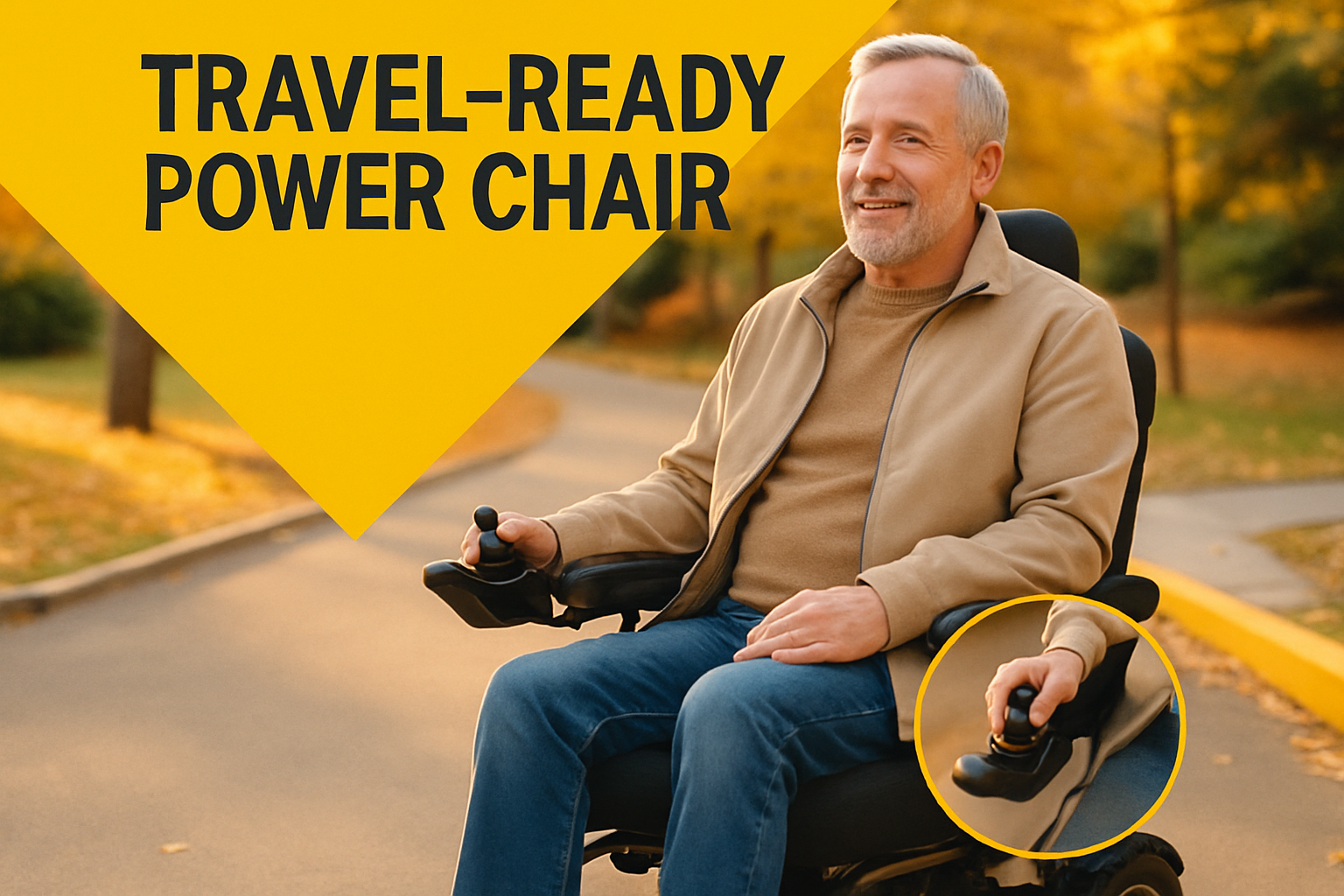
Travel-Ready Power Chair: Your TSA-Friendly Packing & Medicare Coverage Checklist
If you are eyeing a travel-ready power chair for trips, you are probably ready to see more of the world without leaving your independence at home. I have helped friends and clients navigate airports with power chairs, and the two questions I hear most are simple: Will security give me trouble, and will Medicare cover the chair I actually want? Good news — with the right plan, both may be possible. In this friendly guide, you will get clear, step-by-step help for a stress-free airport experience and a practical Medicare coverage pathway. Along the way, you will also see how Go Wheelchairs simplifies the choices with lightweight, travel-friendly designs, a wide range of standard and heavy-duty motorized wheelchairs, and personalized insurance and coverage guidance that makes real life easier.
Travel-Ready Power Chair: TSA [Transportation Security Administration]-Friendly Essentials
Let us start with what actually makes a chair travel ready. Portability helps, but airports reward smart details: quick-fold frames, protected batteries, and carry cases that signal to gate agents that your device is made for movement. Add in clear labeling and a laminated instruction card, and you have just made everyone’s day — including your own. Industry surveys suggest that more than 4 out of 5 travelers with mobility devices report smoother screening when batteries are labeled with watt-hour [Wh] info and terminals are protected. That is why Go Wheelchairs’ travel guidance, downloadable spec sheets, and battery-label recommendations are designed to speak the same language as airline checklists.
Beyond compliance, think comfort and control. A chair that folds in seconds and fits through a standard interior doorway saves energy during hotel transfers. A carry case with reinforced seams, padded panels, and ID [identification] slots prevents scuffs and misplaced tags. Light does not have to mean flimsy either. Many modern folding power chairs carry 250 to 400 pounds while still packing into compact trunks. Go Wheelchairs offers lightweight, travel-friendly wheelchair designs, plus heavy-duty options, so you can match terrain, body type, and trip length without compromising the airport experience.
| Feature | Recommended Spec | Why It Matters at the Airport |
|---|---|---|
| Quick-Fold Mechanism | Quick fold or easy disassembly (varies by model) | Speeds security checks and gate-tagging. |
| Chair Weight | Under 60 pounds without battery | Easier curb-to-gate handling for agents and companions. |
| Battery Labeling | Watt-hour [Wh] clearly printed | Meets airline and FAA [Federal Aviation Administration] requirements fast. |
| Carry Case | Padded, reinforced, ID [identification] window | Prevents damage and confusion at gate-check. |
| Manual Freewheel | Tool-free engage/disengage | Allows easy movement during inspection. |
| Turning Radius | About 32 inches or less | Makes tight airport corridors manageable. |
Step-by-Step Airport Game Plan: From Curbside to Boarding
Air travel flows better when you set the pace. Two to three days before your flight, call TSA Cares [Transportation Security Administration Cares] and request passenger support at the security checkpoint. Then contact the airline to note your mobility device, battery type, and whether you plan to gate-check. On departure day, arrive early, print a large label with your name and phone number for the carry case, and tuck a one-page “How to Fold and Freewheel” sheet into an exterior pocket. Go Wheelchairs customers often carry the company’s quick-reference battery info card too, which speeds up the conversation with agents and reduces repetitive questions.
- Check-in: Tell the agent you will gate-check a folding power chair and keep the battery installed if allowed. Ask for a gate-check tag and preboarding.
- Security screening: Request a visual inspection. If asked to remove the battery, show the watt-hour [Wh] label first and follow the agent’s guidance.
- At the gate: Fold your chair, engage freewheel, and cover with the carry case. Hand over any external accessories in a small tote.
- Boarding: Preboard so you have time to transfer and stow small items. Keep spare batteries in your carry-on if permitted.
- Arrival: Inspect the chair at the jet bridge. If something looks off, report it immediately for documentation and assistance.
Real-world example: Jordan, a frequent flier who uses a compact folding power chair from Go Wheelchairs, shaved 20 minutes off boarding by preprinting their battery label and keeping the carry case partially unzipped for the gate agent. They also laminated a one-page “fold and freewheel” card and attached it to the side handle. Little details go a long way when three people need to understand your device in under a minute.
Airline Battery Rules and Labels: The Quick-Glance Table
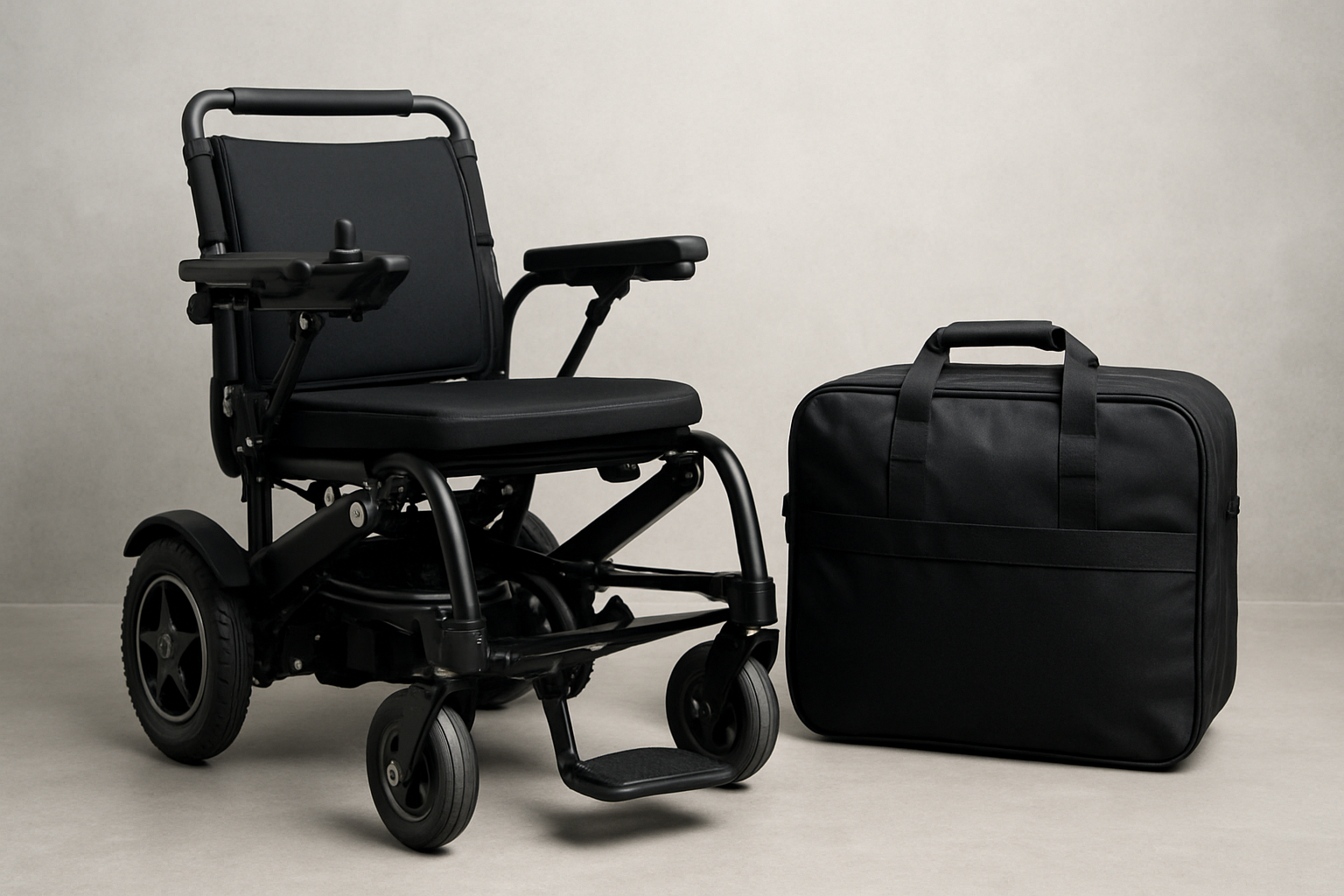
Batteries drive questions, and clarity wins. Most airline policies align with FAA [Federal Aviation Administration] guidance and DOT [United States Department of Transportation] safety rules. In plain terms, a securely installed battery is usually fine, and spare batteries must ride in the cabin with protected terminals. The exact watt-hour [Wh] thresholds matter. Many travel-ready chairs use 240 to 300 watt-hour [Wh] packs, which fit common limits for installed and spare battery policies. Always confirm with your airline in advance and keep specs on a printed card or in your phone’s wallet app.
| Battery Type | Typical Rating | Installed Battery Policy | Spare Battery Policy | Documentation Tip |
|---|---|---|---|---|
| Li-ion [lithium-ion] | Up to 300 watt-hours [Wh] | Allowed if secured in the device and protected from activation. | Carry-on only. Usually one spare up to 300 watt-hours [Wh] or two spares up to 160 watt-hours [Wh] each. | Print watt-hours [Wh] and voltage. Cover terminals with caps or tape. |
| Sealed lead-acid | Varies, often 12 V 35 Ah | Allowed if non-spillable and terminals protected. Airline may require special handling. | Spare non-spillable typically allowed in carry-on with protections. Confirm policy. | Mark “non-spillable” and insulate terminals. |
| Nickel-metal hydride | Less common in power chairs | Generally allowed when installed securely. | Carry-on with terminal protection, in line with airline policy. | Provide chemistry type and capacity if asked. |
Note: Policies can vary by airline and country. When in doubt, bring the user manual, battery spec sheet, and a simple statement that your chair’s battery is within the airline’s published limits. Go Wheelchairs includes downloadable spec sheets in its resources hub to make this easy.
Medicare [Centers for Medicare & Medicaid Services] Made Clear: Coverage Pathway and Documents
Coverage is not just a checkbox; it is the difference between a chair that kind of works and one that fits your life. Under Medicare Part B, many power wheelchairs fall under durable medical equipment when medically necessary. Typical requirements include a face-to-face evaluation by a clinician, a detailed written order prior to delivery, confirmation that the device is reasonable and necessary for use in the home, and using a supplier that accepts assignment. Medicare Advantage plans often follow similar medical-necessity standards with their own prior authorization steps. Go Wheelchairs helps you gather the right documents, verify benefits, and choose a model that aligns with your coverage and your day-to-day routine.
Because plan rules can differ, think in terms of roles. Your clinician documents mobility limitations and why a power chair meets your needs better than a cane, walker, or manual wheelchair. You choose a supplier experienced in Medicare processes and travel-friendly models. Go Wheelchairs bridges both sides by translating requirements into a simple checklist, supporting clinical teams with specification sheets, and helping you understand total cost after insurance so there are no surprises at delivery or at the gate.
| Step | Your Role | Go Wheelchairs Support | What to Watch |
|---|---|---|---|
| Clinical evaluation | Schedule a face-to-face visit and discuss daily mobility at home and outside. | Provides model options and spec sheets for clinician review. | Make sure notes reflect why a power chair is needed in the home. |
| Detailed order | Confirm the exact features you need: folding frame, battery type, seating width. | Helps draft a clear, itemized quote aligned to medical notes. | Details matter. Insufficient specificity can delay approval. |
| Supplier selection | Choose a supplier that accepts assignment to control out-of-pocket costs. | Confirms participation status and estimated patient responsibility. | Verify network rules if you have a Medicare Advantage plan. |
| Prior authorization | Sign any forms and respond quickly to requests for information. | Submits documentation, tracks status, and updates you. | Timelines vary. Expect 1 to 4 weeks depending on plan. |
| Delivery and training | Review fit, folding, battery labeling, and carry case use. | Provides setup, safety walk-through, and travel tips. | Keep your paperwork for future flights and service. |
Quick reminder: This article shares general information, not legal or medical advice. Always confirm benefits with your plan and consult your clinician. Go Wheelchairs offers insurance and Medicare assistance to help you understand options before you decide.
Fit and Features: Choosing Between Lightweight and Heavy-Duty Power Chairs
Picking the right chair is about balancing portability, comfort, and the places you love to go. If your trips involve hotel carpets, museum ramps, and city sidewalks, a lightweight folder may be perfect. If you want all-day theme park stamina or need higher weight capacity, a heavy-duty motorized option offers power and stability while still packing travel smarts. The magic is in matching specs to your body and your calendar. Go Wheelchairs makes this easier with side-by-side comparisons, demo videos, and a resource hub that translates jargon into plain English so your choice is more about confidence than guesswork.
Consider these dimensions beyond battery type: seat width for pressure relief on long days, armrest adjustability for transfers, tires suited to cobblestones or boardwalks, and whether the folded size fits your trunk or closet shelf. Add accessories that travel well, like a seatback organizer, an airline-friendly battery cover, and reflective tags for after-dark arrivals. Go Wheelchairs keeps both standard and heavy-duty models in the conversation so you do not have to compromise between a chair that lifts easily and a chair that handles your favorite terrain.
| Category | Typical Capacity | Device Weight | Folded Footprint | Best For | Notes |
|---|---|---|---|---|---|
| Lightweight Folding | Up to 250 to 300 pounds | About 40 to 60 pounds | Compact trunk fit | City breaks, hotel hopping, quick transfers | Fast folding, easy carrying, great for frequent flights. |
| Standard Portable | Up to 300 to 350 pounds | About 55 to 75 pounds | Compact SUV cargo area | Mixed trips, moderate outdoor use | Balance of comfort, range, and portability. |
| Heavy-Duty Travel | Up to 400 pounds or more | About 70 to 95 pounds | Larger SUV or hatchback | Theme parks, hills, longer days | Stronger motors and frames for confidence on varied terrain. |
Your Ultimate Packing and Paperwork Checklist
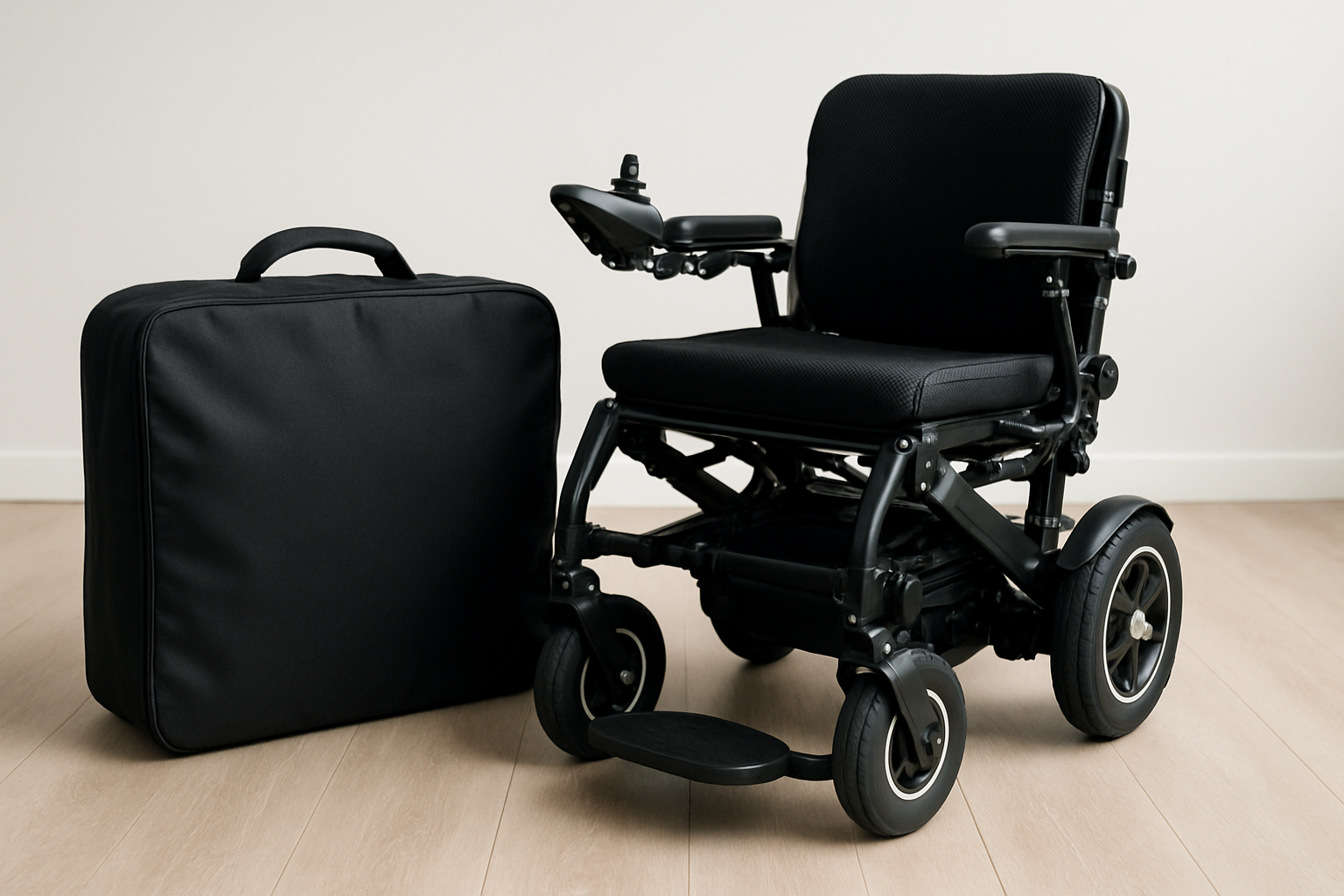
I like to think of packing as insurance against the unpredictable. When your gear is sorted and your paperwork is ready, you gain back time and energy for the fun parts. Print this, save it to your phone, and share it with your travel partner or a family member. If you work with Go Wheelchairs, ask for their printable travel packet — it covers the same essentials and includes a friendly quick-start guide for gate agents.
- Chair and case: Clean, fully charged, folding mechanism tested, carry case labeled with your name and phone number.
- Battery and tools: Battery watt-hour [Wh] printed, terminals protected, spare fuses if applicable, compact multi-tool, a small roll of tape.
- Cables and parts: Charger, power cord, any unique connector, a spare joystick knob if removable.
- Documents: Prescription or order, clinician notes, supplier quote or invoice, warranty card, airline mobility assistance note, and your personal ID [identification].
- Contact list: Airline accessibility desk, TSA Cares [Transportation Security Administration Cares], your supplier support line, hotel front desk.
- Day-of timeline: Arrive at airport two hours early, preboard when invited, inspect chair at jet bridge on arrival.
- Comfort extras: Seat cushion, small blanket, snacks, collapsible water bottle, sanitizing wipes.
Pro tip: Put battery specs and your folding instructions in the same see-through sleeve on the carry case. Agents will love you for it, and you will love how quickly the line moves.
How Go Wheelchairs Makes the Hard Parts Easy
Choices matter when you want freedom, not friction. Go Wheelchairs is dedicated to providing reliable, motorized wheelchairs at fair prices with coverage options through Medicare and other health insurance providers, empowering you to move freely and independently. The team offers personalized support and guidance so you can compare models by the details that change travel days: turning radius, folded size, range, battery chemistry, and carry case durability. Their resources hub brings together buying guides, comparison tools, and travel tips that translate regulations into real steps, which is exactly what you need at 6 a.m. when a gate agent is asking about watt-hours [Wh].
Just as important, Go Wheelchairs helps you navigate coverage. From verifying benefits to aligning clinical notes with the chair you prefer, the process is made transparent and human. Individuals with mobility challenges often struggle to find affordable, dependable wheelchair solutions that fit lifestyle and coverage needs. Go Wheelchairs addresses these challenges by offering a variety of motorized wheelchairs, personalized support, and guidance on insurance and Medicare coverage, ensuring customers can move forward with confidence and independence. Whether you lean lightweight for frequent flights or heavy-duty for all-day comfort, you can pick a chair that matches your destinations, not just your doorway.
Final thought before you pack: If you are unsure which way to go, bring your top two choices to a quick consult and ask how each performs at the gate, in hotel lobbies, and on everyday errands. You will know the right answer the moment you picture your next trip.
Frequently Asked Practical Questions
Will security make me power off the chair? Usually yes, and sometimes they ask you to engage freewheel during inspection. Is my battery safe to fly? If it is clearly labeled with watt-hours [Wh] and within policy, it is typically fine. What if my chair is damaged in transit? Tell the gate agent immediately, document with photos, and file the report before leaving the jet bridge so the airline can help. Can I take a folding ramp? Many travelers do, but check airline size limits. For anything unique, ask the accessibility desk in advance; they are there to help you roll through, not slow you down.
Wrap-up you can trust: You now have the travel smarts, the packing checklist, and the coverage roadmap to make a travel-ready power chair trip feel smooth and safe. Imagine the next 12 months filled with spontaneous weekend flights, brighter hotel lobbies, and less time debating battery rules because your prep is tight and your chair is right. What new place will you roll into first with your travel-ready power chair?
Additional Resources
Explore these authoritative resources to dive deeper into travel ready folding power chair with carry case.
Plan Your Travel Power Chair With Go Wheelchairs
For individuals seeking reliable mobility solutions, explore a wide range of standard and heavy-duty motorized wheelchairs with Medicare and insurance guidance for confident, independent travel.