
If you travel with a wheelchair, the right wheelchair travel accessories can turn a nerve‑wracking day into a smooth, story‑worthy adventure. I still remember my first long‑haul flight with a power chair; one rain squall, a forgotten joystick cover, and I spent an hour drying controls with tissues. Since then, I have built a zero‑drama system: pack smart, protect essentials, and plan two steps ahead. In this guide, you will get a complete, tested checklist, plus real‑world advice on what to bring, how to pack it, and how to handle airline rules without breaking a sweat.
Big picture matters too. The Centers for Disease Control and Prevention [CDC] estimates that tens of millions of adults in the United States live with a disability, and thousands of mobility devices are mishandled by airlines each year according to the United States Department of Transportation [USDOT]. That is precisely why preparation pays off. Throughout this article, you will also see how Go Wheelchairs supports travelers with a wide range of standard and heavy-duty motorized wheelchairs, lightweight foldable designs, personalized guidance, and insurance or Medicare assistance. Together, we will turn potential pain points into predictable wins, one accessory and one tip at a time.
Wheelchair Travel Accessories: The Complete Checklist
Great trips are built on dependable gear and a repeatable routine. Think in categories: protection and carry, power and charging, comfort and health, safety and visibility, access and transfers, cleanliness and care, and documents. Start by listing what you use every day at home, then imagine that routine bumped, jostled, delayed, or rained on. Which items keep you moving if a latch loosens, a puddle appears, or a charger goes missing? The checklist below prioritizes small items with big impact, especially for power chair users balancing batteries, controls, and portability. Use it as a menu: pick what fits your trip length, weather, and transport mode, then pack it where you can reach it without acrobatics.
| Accessory | Why It Matters | Best For | Pro Tip |
|---|---|---|---|
| Seatback or under‑seat bag with zippers | Keeps essentials attached to your chair, not your lap | Daily carry, flights, buses | Choose a bag with reflective trim and D‑rings for cable locks |
| Weatherproof joystick and control cover | Protects electronics from rain and drink spills | Outdoor days, unpredictable weather | Practice putting it on one‑handed before your trip |
| Collapsible travel ramp (3–5 feet [ft]) | Bridges curbs, porch steps, and surprise thresholds | Road trips, rentals, older venues | Check weight rating against your chair plus you and luggage |
| Tire repair kit and compact pump | Handles slow leaks and keeps you rolling | Manual chairs and pneumatic tires | Pack valve adapters and a few CO₂ cartridges for speed |
| Universal Serial Bus [USB]‑C 20,000 milliampere-hour [mAh] power bank | Charges phones, lights, and small accessories | All travel modes | Pick one with pass‑through charging and a battery percentage display |
| Multi‑port wall charger + cable organizer | One outlet, many devices, no cable spaghetti | Hotels, cruise cabins | Color‑code cables and label ends with washi tape |
| Light‑emitting diode [LED] headlight and reflective tape | Improves visibility at dusk and in tight spaces | Evening outings, dim corridors | Aim lights slightly down to avoid dazzling others |
| Transfer board (polished) | Smoother moves between surfaces | Hotel beds, rental cars | Dust with a tiny bit of talc to reduce friction |
| Pressure‑relief cushion or portable overlay | Protects skin during long sits | Flights, tours, conferences | Set a phone reminder for pressure shifts every 30–60 minutes |
| Medical‑grade wipes and hand sanitizer | Quick cleanups and hygiene on the go | Public spaces, dining | Separate a small daily pouch so the big pack stays sealed |
| Global Positioning System [GPS] tracker tag | Helps you locate checked bags or detachable parts | Air travel with gate‑checked items | Attach to bags and note tag names in your phone |
| Cable lock and Velcro straps | Secures backpacks, cushions, and detachable controls | Busy stations, museums | Use a bright strap color to deter casual grab‑and‑go |
| Printed chair handling instructions | Guides staff to lift and stow correctly | Airlines, ferries | Include photos and arrow stickers on lift points |
| Document wallet with identification [ID], prescriptions, and contacts | Keeps critical papers together | All trips | Carry copies plus digital Portable Document Format [PDF] backups |
- Never pack essential controls, chargers, prescriptions, or your daily cushion in checked luggage.
- Photograph your chair from all sides before heading to the airport; it speeds claims if damage happens.
- Bring a small roll of gaffer tape and a handful of zip ties for quick fixes that do not leave residue.
Packing Smart: How to Organize, Protect, and Power Your Gear
Good packing is part logistics, part self‑care. Start by staging everything on a bed or table, grouping items by when you will need them: at security, on board, at arrival, and for daily roaming. Put must‑reach items high on your chair or at the top of a carry‑on; bury rarely used spares in checked luggage. Then, create a “power pod” that always travels as a set: your Universal Serial Bus [USB]‑C power bank, multi‑port charger, international plug adapter, and neatly coiled cables. This one habit prevents the dreaded hotel‑room scavenger hunt for a missing cord when your phone sits at nine percent.
Watch This Helpful Video
To help you better understand wheelchair travel accessories, we’ve included this informative video from BHM University. It provides valuable insights and visual demonstrations that complement the written content.
- Protect against rain and bumps. Use dry bags or zipper pouches for electronics and a lightweight rain shell or poncho to cover you and the chair in a sudden downpour.
- Distribute weight evenly. A seatback bag packed like a bowling ball can affect steering, so split heavy items into two smaller pouches.
- Label everything. A tiny label on your charger or cushion can stop accidental “borrowing” by well‑meaning travel companions or staff.
- Attach a simple “Read Me” card. A laminated card on your chair with handling directions saves time when you need to gate‑check or stow quickly.
Finally, pack “comfort anchors” you will use daily: a pressure‑relief cushion, neck pillow, noise‑blocking headphones, and a small snack kit. I also keep a one‑page checklist inside my seatback bag. On departure day, I scan it line by line before closing the door. It takes two minutes and has saved me again and again from forgetting the tiniest, most vital piece of gear.
Air, Road, and Rail: Rules that Matter and How to Breeze Through
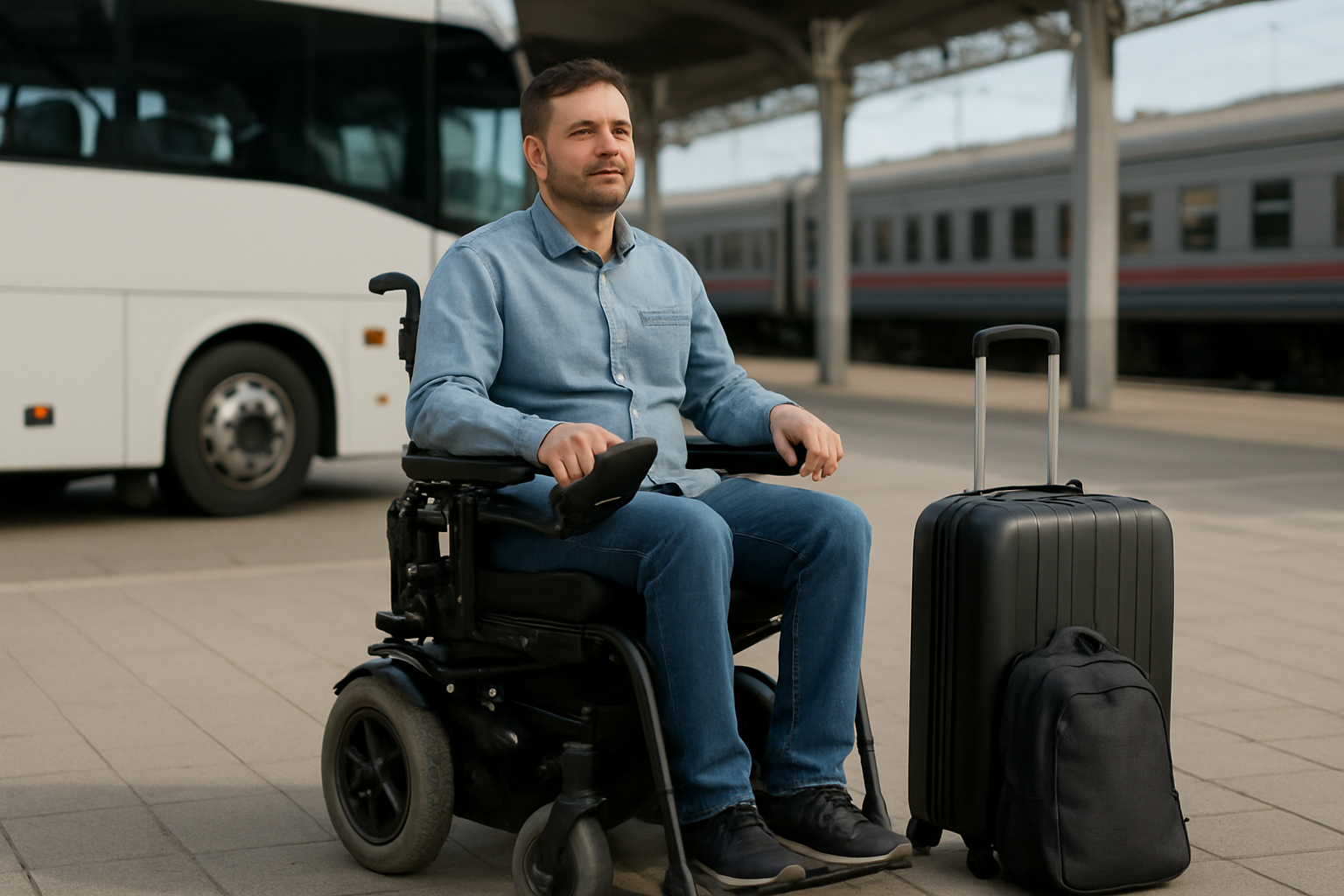
When you know the rules, travel staff become partners instead of roadblocks. For air travel, two agencies share the spotlight: the Transportation Security Administration [TSA] and the Federal Aviation Administration [FAA]. The Transportation Security Administration [TSA] provides a Notification Card you can hand to officers to discreetly request screening accommodations, and their Passenger Support Specialists can assist if screening gets complicated. The Federal Aviation Administration [FAA] sets battery rules; airlines then implement them, so always check your carrier’s specific policy and carry documentation for your battery type and capacity. On rail and road trips, ask ahead about boarding ramps, tie‑down points, and accessible restrooms so you are never surprised at the platform or parking lot.
| Power Source | Typical Airline Handling | What You Should Do |
|---|---|---|
| Sealed lead‑acid or gel battery (installed) | Usually allowed with chair upright or on its side, terminals protected | Bring handling instructions and mark lift points; ask for a gate‑tag “Do Not Stack” note |
| Lithium‑ion battery (installed) | Allowed if securely attached; airline may isolate power and protect terminals | Print specs and Watt‑hour [Wh] rating; show how to switch power off and secure joystick |
| Removable lithium‑ion battery (spare) | Must travel in cabin with terminals protected; airline approval and size limits apply | Place in a fire‑safe pouch; confirm Federal Aviation Administration [FAA] limits with your airline before departure |
| Universal Serial Bus [USB] power banks | Carry‑on only; size limits vary by airline | Keep accessible for inspection; show capacity label if asked |
- Ask to preboard. You will get extra minutes to secure carry‑ons, transfer if needed, and share chair handling instructions with staff.
- Photograph your battery label and save it as your phone’s lock screen. If someone asks capacity at the jet bridge, you can answer instantly.
- For trains and buses, confirm ramp angles and tie‑down availability, and request the accessible space when you book.
One more note on safety: if your chair has a freewheel mode, demonstrate it to ground crews and attach a bright tag showing the release location. It prevents awkward wrestling matches and the accidental pushing of a locked drive wheel. A little show‑and‑tell goes a very long way on a busy tarmac.
Comfort, Safety, and Independence: Accessories That Make the Trip
Comfort is not a luxury on the road; it is fuel for independence. A well‑fitted pressure‑relief cushion supports skin health during long sits, while a breathable seat cover keeps temperatures comfortable in hot, humid destinations. Add a lap tray for snacks and paperwork, plus a cup holder or insulated sling for hydration. For nighttime returns, a compact light‑emitting diode [LED] headlamp and reflective spoke stickers help drivers see you sooner. If you self‑transfer, a polished transfer board and grippy gloves reduce effort and protect hands, especially in crowded terminals where you cannot always pick the perfect transfer spot.
- Micro‑comfort kit: lip balm, sunscreen, spare socks, and a small cooling towel for heat waves.
- Visibility kit: reflective tape, an extra light‑emitting diode [LED] clip‑on light, and a tiny whistle for noisy streets.
- Cleanliness kit: fold‑flat tote for laundry, travel‑size detergent, and extra wipes for tires and footrests after rainy days.
- Health essentials: prescriptions with labels, a printed physician note for controlled medications, and a basic first‑aid pouch.
Safety also means planning for how your chair will be stored, charged, and moved. At hotels, request an outlet within cable distance of your chair and ask staff to avoid unplugging it during housekeeping. If you are traveling with companions, agree on a simple routine for ramps and doorways: who positions, who spots, who communicates. Clarity prevents accidents more effectively than any gadget can, and it keeps your energy for the good stuff: markets, museums, and meals with a view.
Troubleshooting on the Road: Repairs, Replacements, and Backups
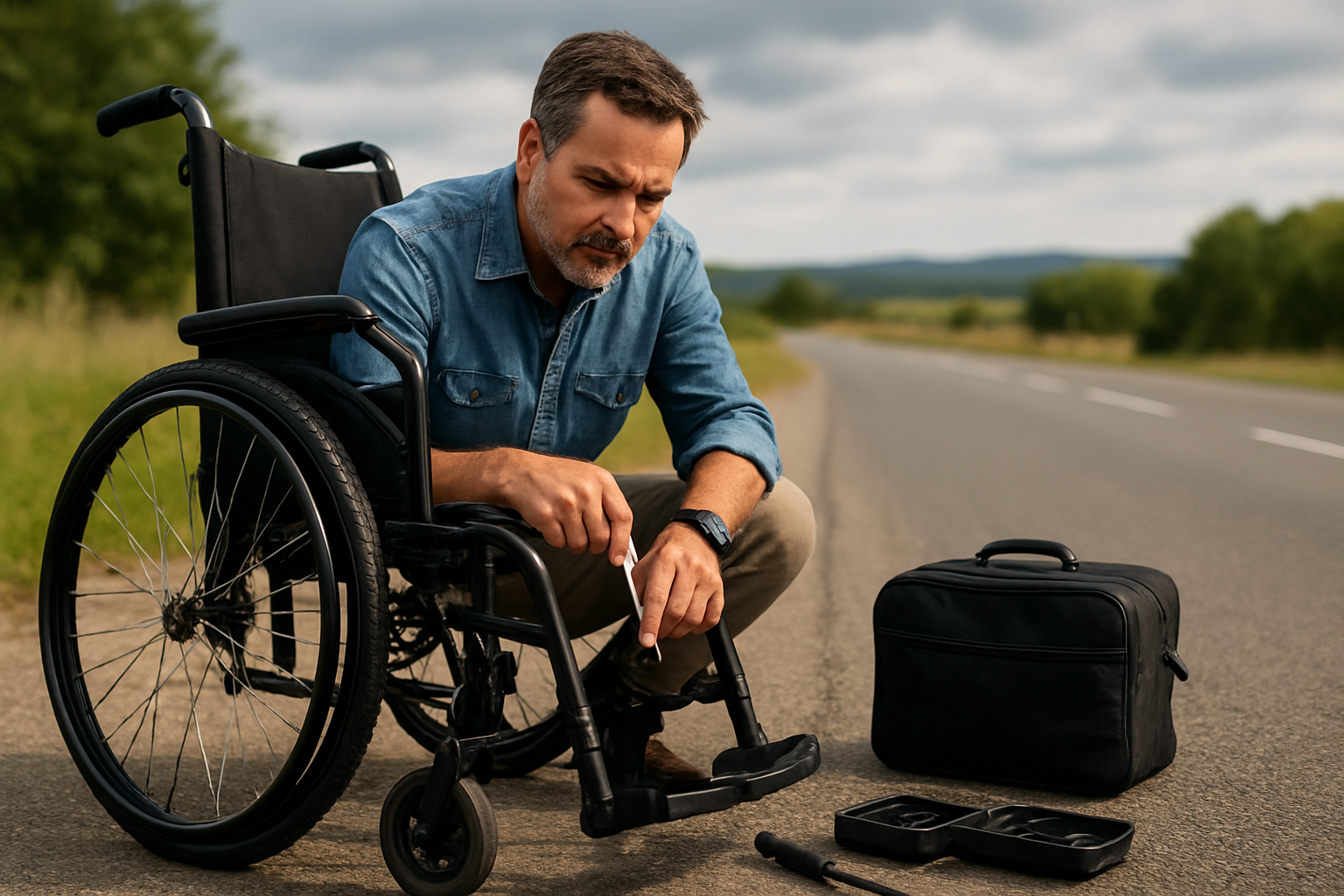
Even the best gear occasionally misbehaves, so pack a repair mindset. I keep a pocket multi‑tool, spare fuses that match my chair, a small adjustable wrench, electrical tape, zip ties, and a tiny tube of adhesive. On day one, I photograph the joystick settings and wiring so I know what “normal” looks like if something shifts. Save the customer service number for your chair brand, the nearest certified repair shop at your destination, and your home clinic. Many repairs are simple: a loose connector, an accidentally toggled freewheel lever, or a battery cable nudged during handling. With a little prep, you can fix the small stuff and confidently escalate the rest.
- Create a Quick Response [QR] code linking to your chair’s online manual; tape it under the armrest for staff and techs.
- Store a Portable Document Format [PDF] of your purchase receipt and serial number on your phone and in the cloud.
- Download offline maps so you do not lose navigation if Wireless Fidelity [Wi‑Fi] or cellular signals dip.
- When in doubt, stop and reassess. Ten calm seconds beats ten frantic minutes every time.
If an airline damages your chair, report it before leaving the airport and file in writing within the required time window. Photos, pre‑flight condition images, and your written handling instructions strengthen your case. Keep conversations friendly but precise; staff members are more likely to go the extra mile when you make their job easier. And always have a “Plan B” mobility option in mind at your destination, whether that is a rental chair, a loaner from a local nonprofit, or a brief itinerary tweak while repairs happen.
How Go Wheelchairs Helps You Travel Farther (and Worry Less)
Choosing the right chair is the foundation for every other travel choice. Go Wheelchairs offers a wide range of standard and heavy-duty motorized wheelchairs, including lightweight, foldable designs that play nicely with tight hotel rooms, train aisles, and trunk space. The team provides personalized support to match your lifestyle and coverage needs, and they work alongside you on insurance and Medicare assistance so costs are clearer and approvals come faster. Their Resources hub brings everything together with buying guides, comparison tools, and practical travel tips, so you are never cobbling together advice from random corners of the internet at midnight.
| Traveler Need | What Go Wheelchairs Provides | How It Helps On the Road |
|---|---|---|
| Durability without bulk | Heavy‑duty motorized models with travel‑savvy dimensions | Handles cobblestones and long days while fitting through doorways |
| Portability for mixed transport | Lightweight, foldable designs | Easier transfers into cars, rideshares, and trains |
| Coverage clarity | Insurance and Medicare assistance | Reduces surprises and aligns equipment with your benefits |
| Confidence in the details | Personalized support and a robust Resources hub | Step‑by‑step guidance for accessories, packing, and airline prep |
Here is the best part: the same design decisions that make a chair fantastic at home—reliable batteries, intuitive controls, stable frames—also make it a joy to travel with. When your chair fits your life and your coverage, all the smaller choices about bags, chargers, and ramps fall neatly into place. That is the Go Wheelchairs difference: gear that works, guidance that clicks, and support that follows you from planning to boarding to the last sunset of your trip.
Road‑test this system on your next weekend away. Pack from the checklist, label your power gear, and print chair handling instructions. The first time you breeze through a crowded terminal with everything exactly where you expect it, you will feel the difference. Less juggling. More joy.
Your adventure deserves tools that respect your time, energy, and ambitions. With smart planning, the right chair, and dialed‑in accessories, you can explore more places with fewer “what now?” moments. And if you want a partner who understands coverage, durability, and travel‑ready design, Go Wheelchairs is ready to help you roll farther.
One list, countless smoother journeys. Imagine the next 12 months filled with confident departures, easy transfers, and sunsets you did not have to sprint to catch. Which destination will you test your new wheelchair travel accessories system on first?
Additional Resources
Explore these authoritative resources to dive deeper into wheelchair travel accessories.
Travel Farther with Go Wheelchairs
Explore a wide range of standard and heavy-duty motorized wheelchairs plus accessory guidance and Medicare or insurance support, empowering you to travel freely and confidently.