
7 Essential Tips for Choosing Straight Stairlifts for Your Home — An Informational Guide
If climbing the stairs has started to feel like hiking a hill in winter boots, you are not alone, and straight stairlifts can be a simple, safe way to reclaim your whole home without a remodel. In this friendly guide, you will learn how to choose the right model for your staircase, your body, and your budget, using seven practical tips gathered from real users, installers, and mobility experts. I will translate the jargon into plain English, point out details that matter, and share small checks that prevent big headaches later. Along the way, I will also show how Go Wheelchairs supports your mobility plan with resources, Medicare assistance, and a wide range of motorized wheelchairs. Please note: Go Wheelchairs does not sell or install stairlifts; this article is informational. Stairlift sales, home assessments, and installations are provided by licensed stairlift manufacturers and installers or independent accessibility assessors.
What Are Straight Stairlifts and Who Benefits?
Straight stairlifts ride along a single, straight rail installed on the stair treads, moving a comfortable seat from one floor to another without changing your walls or trimming your banister, and the simplicity is what keeps costs down and reliability high. They are purpose-built for staircases without turns or intermediate landings, and they typically feature a swivel seat for easy dismounts, a folding footrest to save hallway space, and gentle acceleration for a smooth, confidence-building ride. Most residential models support roughly two hundred fifty to three hundred fifty pounds, with some heavy-duty options that go higher, and many include battery backup so the lift still runs during a power outage, which is a small feature that makes a big difference on stormy nights. People recovering from surgery, managing arthritis, living with limited balance, or simply wanting to age in place all benefit, and national safety organizations report that stair-related falls send hundreds of thousands of adults to emergency care each year, so acting early can be a proactive safety move rather than a last-minute scramble.
The 7 Essential Tips for Choosing the Best Straight Stairlifts
Think of a stairlift as a system where the seat, rail, drive, and your staircase all have to fit together like puzzle pieces, and a little planning now saves time and money later. Before you shop, jot down your staircase measurements, your preferred sitting posture, any doorway conflicts at the bottom or top of the stairs, and how much clearance you need in the hallway, then take those notes to a local demo showroom run by a licensed stairlift provider if possible to try a unit for comfort. If you cannot try one in person, arrange a home assessment with a licensed stairlift installer, occupational therapist, or independent assessor so a trained professional can check headroom, landing space, and power supply location, because photos alone rarely tell the full story. Finally, ask yourself how you want the stairwell to look when the lift is folded, who will service it, and whether you might share the lift with a spouse or caregiver whose needs differ from yours, because these practical questions keep you focused on real-life use rather than just brochure photos.
Watch This Helpful Video
To help you better understand straight stairlifts, we’ve included this informative video from USA Medical Supply. It provides valuable insights and visual demonstrations that complement the written content.
- Verify your staircase is truly straight. Be sure there is no change in pitch, wedge-shaped landing, or mid-flight turn; even a small bend can require a curved system, and forcing a straight rail onto a not-quite-straight staircase causes problems.
- Match weight capacity and seat ergonomics. Choose a capacity that exceeds your current weight by a comfortable margin, and test the seat width, armrest spacing, and swivel release to ensure you can transfer easily on good days and bad days.
- Prioritize safety features you will use every day. Look for a secure seat belt, obstruction sensors that stop gently, a keyed lock if children visit, and a top swivel that positions you facing the landing so you step off onto level flooring.
- Check folding footprint and parking spots. Confirm the folded seat does not block hallway traffic, and ask for a bottom or top “park” position that keeps the chair out of the thoroughfare between rides to reduce bumps and bruises.
- Consider power resilience. Battery-powered travel lets the lift run during outages, and smart charging keeps batteries topped up, so ask how many trips the system makes on a full charge and where the charger plugs in.
- Plan for installation, service, and parts. Clarify whether mounting is to the stairs or the wall, how long installation takes, whether drilling is needed, what the service response time is, and how long common parts are stocked.
- Budget for ownership, not just purchase. Add delivery, installation, any hinged rail for doorway clearance, annual safety checks, and eventual battery replacement, and weigh used or rental options if your need is temporary.
Compare Features Side-by-Side Before You Buy
Once you know your must-haves, comparing models side-by-side brings clarity, and a simple matrix will reveal which lift matches your needs without unnecessary extras. Consider capacity, seat design, rail profile, safety sensors, warranty, and support, then evaluate the trade-offs instead of chasing a single specification, because a perfect seat with poor service coverage is not a perfect choice. If you live in a household with grandkids, pets, or tight hallways, give extra weight to folding dimensions and obstruction detection, and if you have limited hand strength, test the swivel and footrest mechanisms for ease of use. When you speak with providers, ask for written specifications and keep them in one place, and do not be shy about asking “What is the feature I am paying for here?” because a good advisor will welcome informed questions and help you avoid paying for bells you will never ring.
| Feature | Why it matters | Typical range | Smart question to ask |
|---|---|---|---|
| Weight capacity | Ensures safe performance with a comfort margin for clothes, bags, or growth | 250 to 350 pounds; heavy-duty options higher | How much capacity remains after my full winter clothing and a small bag? |
| Seat and swivel | Makes transfers easier and positions you safely at the landing | Fixed or powered swivel; adjustable arm width | Can I operate the swivel and footrest without bending or gripping tightly? |
| Rail profile and hinged end | Prevents blocking a doorway or hallway at the bottom of the stairs | Slim rails; optional manual or powered hinge | Will a hinged rail remove any trip hazard at the foot of the stairs? |
| Power and backup | Keeps you moving during an outage and reduces anxiety | Smart-charged batteries; multiple trips per charge | How many one-way trips can I make if the power is out overnight? |
| Safety sensors and belt | Stops the lift gently if a pet toy or shoe blocks the path | Edge sensors; retractable seat belt | Where are the sensors located, and how sensitive are they to small items? |
| Warranty and service | Protects against unexpected repair costs and delays | Commonly one to three years; longer on major components | What is covered, what is excluded, and how fast is typical service response? |
| Certifications | Indicates testing to recognized standards | UL (Underwriters Laboratories) listings or equivalent | Which certifications does this model carry, and can I see the documentation? |
Straight Stairlifts Measurements and Fitting: Get the Specs Right the First Time
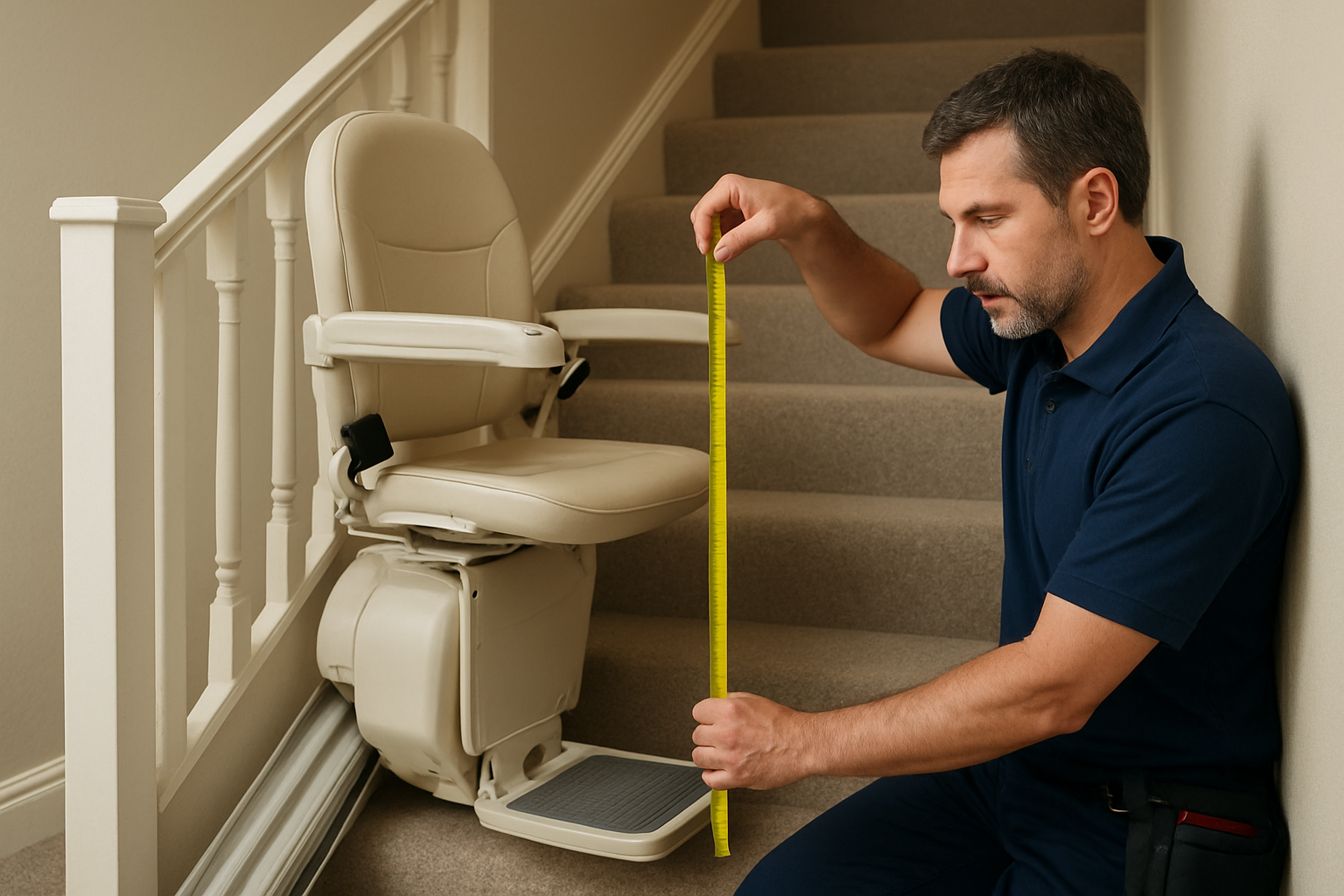
Good measurements are the difference between a tidy install and a frustrating redo, so take your time and write everything down, then have a professional verify before ordering, especially if a doorway sits near the bottom stair. Measure total staircase length along the tread noses, staircase width from wall to banister, headroom at the top landing, and the space available at the bottom for a parked chair, and note any door swings that could collide with the rail. If you plan to add a hinged rail, trace the swing of the hinge on the floor to see where feet will land when you step off, because the safest step is the one you have already rehearsed in your mind. For a visual, picture a simple diagram with labels showing length along the treads, width across the steps, landing depth at the top and bottom, and a small circle marking the nearest outlet, which helps installers plan charging and keeps cords tidy.
| Measurement | How to measure | Rule of thumb | Notes |
|---|---|---|---|
| Total staircase length | Follow the edge of each tread from the top landing to the bottom floor | Measure twice; note any overhangs | Include landing depth where the chair stops |
| Staircase width | Wall to banister or wall to wall across the narrowest point | Many lifts need about 28 inches minimum | Ask for folded dimensions to protect hallway flow |
| Tread depth and riser height | Front edge to back of each step; floor to the next step | Consistency matters more than exact numbers | Uneven steps can require shims and extra time |
| Top landing depth | Edge of top step to nearest obstacle behind you | Leave space to swivel and stand safely | Consider a powered swivel if depth is tight |
| Bottom clearance | Last step to nearest doorway or hallway | Check if a hinged rail would remove hazards | A taped outline on the floor helps visualize space |
| Outlet proximity | Distance from rail parking point to wall outlet | Shorter is cleaner and reduces cord clutter | Use surge protection if recommended by the installer |
| Unit access for service | Space for a technician to reach panels and covers | Plan for periodic checks | Ask where service points are and how they open |
Budget, Warranty, and Maintenance: The Total Cost of Ownership
Price tags tell only part of the story, because the total cost of ownership includes installation, any hinged rail, periodic safety checks, and eventual battery replacement, and smart buyers look at the whole picture to avoid surprises. A well-matched straight lift often installs in hours, which controls labor costs, and reputable providers include a clear warranty on the rail, drive, and batteries, plus options to extend coverage if you prefer predictable costs. Most users schedule a once-a-year safety service to verify sensors, belts, and charging, and batteries typically last several years depending on usage patterns and home temperature, so ask your installer about the expected lifespan for your climate. If your need is short-term due to a surgery recovery or a guest with mobility challenges, explore rental or certified pre-owned programs, because the right answer may be a quality used unit that maintains safety without long-term expense.
- Ask for an itemized quote that lists equipment, delivery, installation, and any disposal fees for packaging or old rails.
- Compare warranty term and labor coverage rather than focusing only on years for parts, because labor can add up.
- Request expected maintenance tasks and intervals in writing, including who performs them and typical appointment times.
- Evaluate used or rental straight lifts through reputable providers that certify and warranty their equipment for peace of mind.
Insurance, Medicare, and Smart Financing: How to Pay Less Out of Pocket
Coverage for residential straight stairlifts varies widely, and while many traditional plans treat a stairlift as a home modification rather than medical equipment, opportunities still exist through Medicare Advantage supplemental benefits, state waiver programs, community grants, and charitable funds, so it pays to ask and document. If you have access to a FSA (flexible spending account) or HSA (health savings account), confirm whether your plan allows reimbursements when your clinician documents medical necessity, and keep every estimate and invoice organized for quick submission. If you finance, compare transparent terms and ask for the APR (annual percentage rate) and any early payoff rules in writing, because clarity on the numbers prevents stress later. This is where a supportive partner makes the difference, and Go Wheelchairs offers personalized guidance on documentation and pre-authorization conversations with health insurance providers to help you prepare likely claim materials. Go Wheelchairs can help with practical templates and buying guides, but licensed stairlift providers handle claims that are specific to stairlift purchase and installation.
How Go Wheelchairs Supports Your Mobility Journey
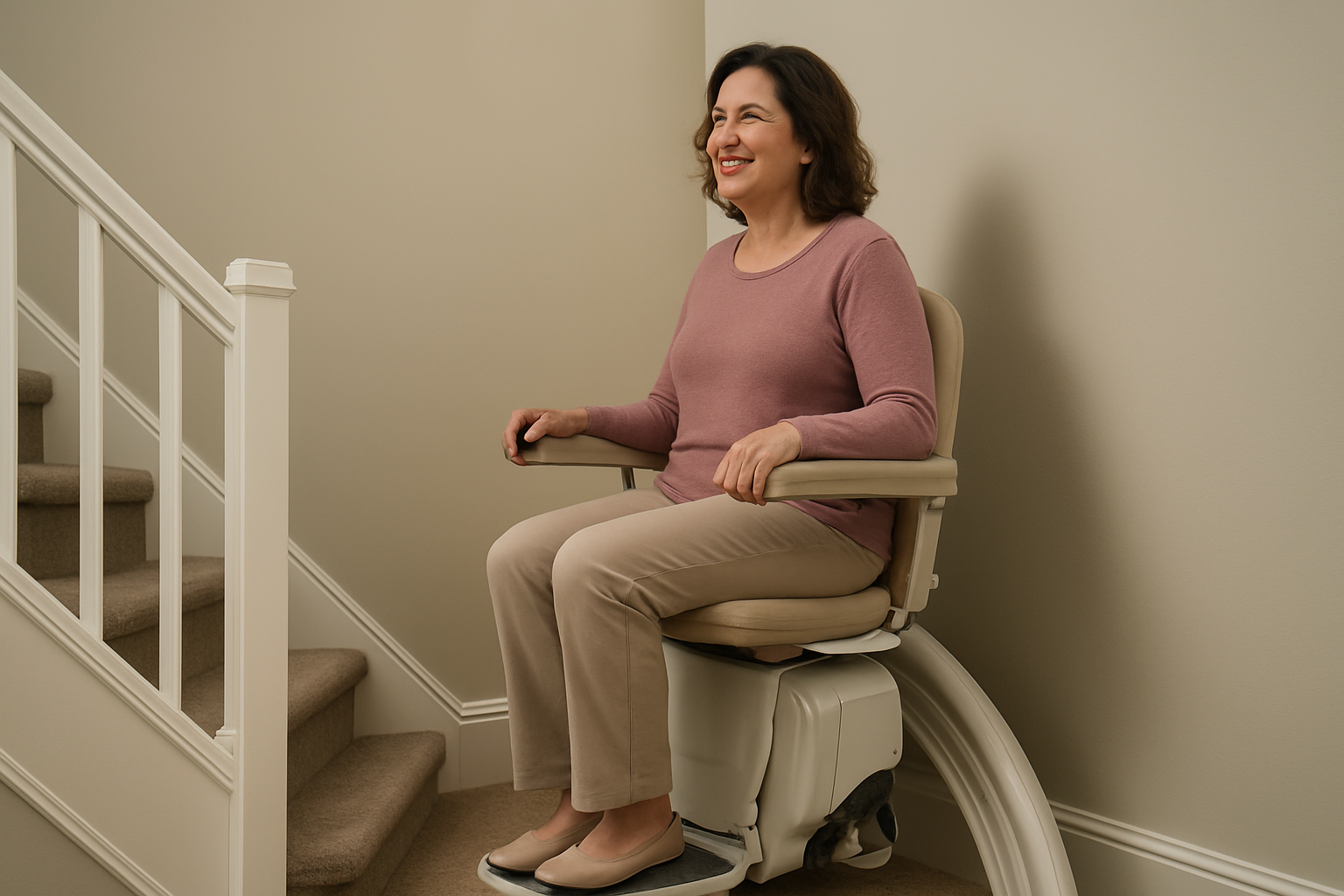
Even if a stairlift solves the stairs, life still happens on the level. While Go Wheelchairs does not sell or install stairlifts, we complement your straight-stairlift decision with everyday mobility options that fit your body, your routine, and your coverage. The team provides a wide range of standard and heavy-duty motorized wheelchairs for different terrains and body types, lightweight foldable designs for compact cars and travel, and personalized support to match features, battery range, and joystick controls to your lifestyle, and that combination turns independence into a daily habit. Because coverage can be confusing, Go Wheelchairs brings insurance and Medicare assistance that helps you prepare documentation, verify network details, and navigate durable medical equipment, also known as DME (durable medical equipment), approvals, and the Resources Hub delivers buying guides, comparison tools, and travel tips so you can make choices with confidence. Case in point: a reader named James combined a straight lift installed by a licensed provider at home with a heavy-duty power chair for errands and park trails, and with coaching on benefit language and correct forms, he secured partial coverage through his plan, proving that thoughtful planning plus expert guidance can stretch both safety and dollars further than going it alone.
For quick reference, here is a simple pathway you can follow today: decide whether your stairs are straight and obstacle-free, gather measurements from the table above, list your must-have safety features, request an itemized quote from two licensed stairlift providers, and call Go Wheelchairs for help mapping your mobility plan across home and community life. If you are weighing rentals or certified used models to reduce upfront costs, ask how warranties, service times, and battery lifespans compare between options, and make sure the company you choose has local support aligned with your schedule. Finally, think beyond the staircase, because pairing a reliable lift installed by a professional with a well-fitted motorized wheelchair can unlock not only multi-floor access but also low-fatigue errands, social visits, and easier medical appointments, and those small wins add up to a big difference in how your day feels.
Real-World Snapshots and Small Details That Make a Big Difference
Maria had a narrow hallway at the bottom of her stairs that pinched traffic during busy mornings, so a hinged rail let the last segment fold up out of the walkway, and a small “park” at the top kept the seat off the landing, which removed the two pinch points that caused bumps and frustration. She also struggled with hand strength after a wrist surgery, so a powered footrest and an easy-to-reach swivel lever meant she did not have to bend or grip hard to ride, and that small convenience turned into a big confidence boost. Another reader, Devon, was concerned about a stormy coastal power grid, so battery-backed travel made sure he could always get to bed and back down for coffee without waiting on electricity, and a simple wall surge protector provided extra peace of mind on lightning days. These stories may not be your exact situation, but they remind us to design for the way you live right now, not the way a brochure imagines you will live, and that mindset keeps your investment working for you every single day.
Before we wrap, picture a simple planning sketch: a side-profile of your staircase with a line tracing the rail, arrows marking landing clearances, a rectangle for a hinged section that lifts away from a doorway, and a small dot where the charger sits, and with that one page, you will have what you need for clear conversations, smart comparisons, and a smooth installation. A final rule of thumb is to try before you buy if you can, or at least sit in a similar seat and practice swiveling to face a landing, because body comfort is personal, and your peace of mind is the true performance metric. When you feel comfortable, can step off onto level flooring, and know whom to call for service and coverage, that is when the lift stops being a gadget and starts being a reliable part of your home, and it is hard to put a price on that kind of ease.
Wrap-Up: Your Next Best Step
Seven focused tips help you select straight stairlifts that fit your home, your body, and your budget without guesswork. Imagine gliding upstairs safely, then rolling out the door on a motorized wheelchair that matches your day, coverage, and pace, so the whole journey feels connected instead of piecemeal. What will your first small move be today to make those stairs and your next outing feel easier and more you?
Additional Resources
Explore these authoritative resources to dive deeper into straight stairlifts.
Get Guidance on Straight Stairlifts and Wheelchairs
Planning straight stairlifts? Go Wheelchairs provides guidance on coverage and practical fit considerations while offering a wide range of standard and heavy-duty motorized wheelchairs to support daily independence. Please note that Go Wheelchairs does not sell or install stairlifts; licensed stairlift providers perform assessments, sales, and installations.