
Ultimate Guide to Power Wheelchair Battery and Charger Specs: Compatibility, Range, Lifespan & Medicare-Friendly Charging Tips
If you rely on a power chair, your day runs on electrons. This guide breaks down every critical spec for a power wheelchair battery and charger so you can travel farther, charge smarter, and spend less time worrying about range. We will demystify battery chemistries, help you calculate realistic mileage, and walk through compatibility must-knows so you never fry a pack or undercharge it. Along the way, you will get Medicare-friendly charging tips that align with documentation requirements and real-world routines, and you will see how Go Wheelchairs pairs technology with personalized support to fit your lifestyle and coverage needs.
Why does this matter? Because the right match of battery capacity, chemistry, and charger algorithm can add years to your system, while the wrong pairing can cut lifespan in half. I often hear from riders who feel “stuck” with short range or slow charging, only to discover a simple mismatch between a 24 V (volts) system and an outdated 2 A (amperes) charger. With a few practical checks and a clear plan, you can keep mobility predictable, whether you are commuting to work, visiting family, or exploring a new park on the weekend.
Fundamentals of Your Power Wheelchair Battery and Charger
Power wheelchairs typically run on a 24 V (volts) system made by connecting two 12 V (volts) batteries in series. The big number to watch is capacity, expressed in Ah (ampere-hours), which tells you how much energy the pack can store. Multiply voltage by capacity to estimate total energy in Wh (watt-hours). For example, a 24 V (volts) pack at 35 Ah (ampere-hours) holds roughly 840 Wh (watt-hours). Chemistry matters too. Common choices include SLA (Sealed Lead Acid) in AGM (Absorbent Glass Mat) or Gel (Gelled Electrolyte) form, and newer Li-ion (Lithium-ion) or LiFePO4 (Lithium Iron Phosphate). Each chemistry has different weight, cycle life, charge behavior, and cost, which affects real-world range and maintenance.
Chargers are not one-size-fits-all. A good unit is matched to both voltage and chemistry and uses a compatible algorithm: lead-acid chargers often follow three-stage bulk, absorption, and float patterns, while Li-ion (Lithium-ion) units use CC/CV (constant current/constant voltage) profiles governed by a BMS (Battery Management System). Output current in A (amperes) influences speed. A 5 A (amperes) charger will generally refuel a 35 Ah (ampere-hours) pack faster than a 2 A (amperes) unit, though heat and safety limits still apply. Most off-board chargers connect via a 3-pin XLR (External Line Return) port on the chair, while on-board chargers plug into AC (Alternating Current) mains and remain fixed inside the chair.
Below is a quick comparison of popular chemistries to help you weigh trade-offs. Keep in mind: always follow your OEM (Original Equipment Manufacturer) manual, because some controllers only support specific chemistries and charger types, and some insurers require equipment to remain within OEM (Original Equipment Manufacturer) specifications for coverage.
| Chemistry | Typical Setup | Capacity Range (Ah) | Cycle Life (avg) | Weight (per 12 V) | Pros | Considerations | Charger Profile |
|---|---|---|---|---|---|---|---|
| AGM (Absorbent Glass Mat) | Two 12 V (volts) blocks | 33–75 Ah (ampere-hours) | 300–500 cycles | ~22–40 lb (pounds) | Stable, spill-proof, widely covered | Heavier, slower to charge | Lead-acid 3-stage |
| Gel (Gelled Electrolyte) | Two 12 V (volts) blocks | 33–70 Ah (ampere-hours) | 500–700 cycles | ~22–38 lb (pounds) | Deep-cycle durability | Needs gel-specific charger voltages | Lead-acid 3-stage, gel setpoints |
| Li-ion (Lithium-ion) | Integrated 24 V (volts) pack | 20–50 Ah (ampere-hours) | 800–1200 cycles | ~8–18 lb (pounds) | Lightweight, fast charging | Higher upfront cost, BMS (Battery Management System) required | CC/CV (constant current/constant voltage) |
| LiFePO4 (Lithium Iron Phosphate) | Integrated 24 V (volts) pack | 30–60 Ah (ampere-hours) | 1500–3000 cycles | ~10–20 lb (pounds) | Very long life, stable | Charger must be LiFePO4-compatible | CC/CV (constant current/constant voltage) |
How It Works: From Plug to Power
Every charge begins with compatibility. The charger checks voltage and, on many smart designs, senses battery condition before delivering current. Lead-acid units start in bulk mode at a constant current until the pack approaches target voltage, then hold near-constant voltage during absorption while current tapers, and finally enter float to maintain readiness without overcharge. Li-ion (Lithium-ion) and LiFePO4 (Lithium Iron Phosphate) chargers run CC/CV (constant current/constant voltage) and rely on the pack’s BMS (Battery Management System) to balance cells and cut off safely. If your chair has an on-board charger, it is already matched; off-board chargers must be selected with care and usually connect via a 3-pin XLR (External Line Return) jack.
Watch This Helpful Video
To help you better understand power wheelchair battery and charger, we’ve included this informative video from Mobility Scooters Direct. It provides valuable insights and visual demonstrations that complement the written content.
Range boils down to energy and efficiency. Total energy equals voltage times capacity, so a 24 V (volts), 50 Ah (ampere-hours) pack stores about 1200 Wh (watt-hours). Real-world consumption varies from roughly 25–50 Wh (watt-hours) per mile depending on rider weight, surface, speed, terrain, and tires. That means a 1200 Wh (watt-hours) system often yields 24–48 miles in gentle conditions, but hills, grass, or curb cuts can quickly trim that. It is wise to plan for a buffer. Many riders use 35–40 Wh (watt-hours) per mile as a practical estimate to avoid anxiety while still enjoying the day.
Charge time is influenced by both battery size and charger output, with temperature and chemistry also playing roles. As a simplified planning tool, divide capacity (in Ah) by charger current (in A) and add 20–30 percent overhead for tapering and balancing. For instance, a 35 Ah (ampere-hours) pack with a 5 A (amperes) charger might take around 8–9 hours for a deep recharge, while a partial top-up is faster. Keep in mind: charging every night for lead-acid is healthy because they prefer being full, whereas long-term storage for Li-ion (Lithium-ion) is best at moderate state of charge.
| Battery Pack | Charger Current | Estimated Time from 10 percent to 100 percent | Notes |
|---|---|---|---|
| 24 V (volts), 35 Ah (ampere-hours) | 2 A (amperes) | 16–18 hours | Common with travel chairs; overnight plus |
| 24 V (volts), 35 Ah (ampere-hours) | 5 A (amperes) | 7–9 hours | Typical off-board “fast” home charger |
| 24 V (volts), 50 Ah (ampere-hours) | 5 A (amperes) | 10–12 hours | Heavier-duty setups |
| 24 V (volts), 50 Ah (ampere-hours) | 8 A (amperes) | 7–9 hours | Check upper current limits in your manual |
Best Practices: Compatibility, Charging Habits, and Lifespan
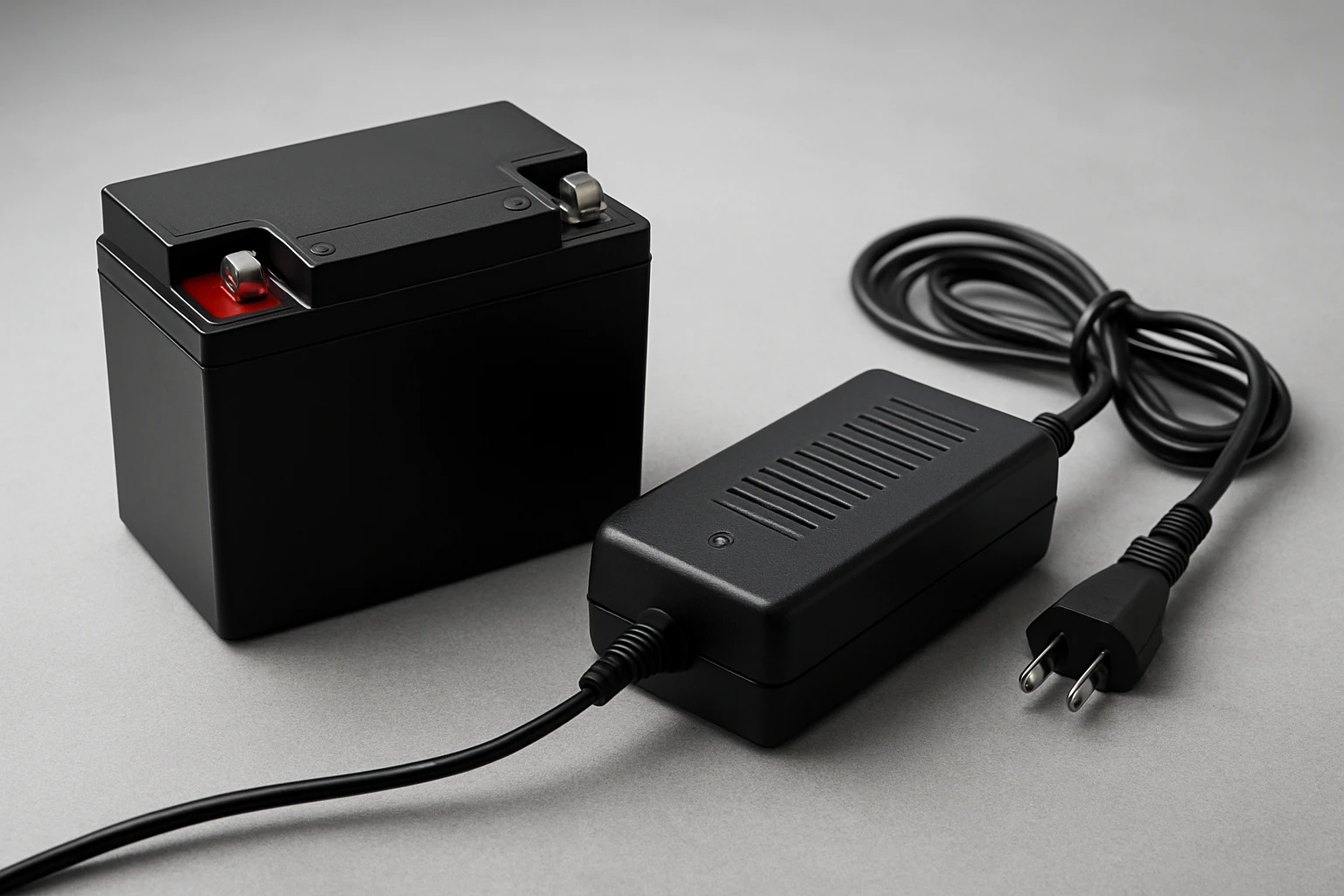
Start with a chemistry-correct charger that matches the pack’s voltage and connector and is listed by a recognized safety body such as UL (Underwriters Laboratories) or another NRTL (Nationally Recognized Testing Laboratory). For lead-acid packs like AGM (Absorbent Glass Mat) and Gel (Gelled Electrolyte), aim to recharge daily and avoid sitting below 50 percent charge for long periods, since sulfation can shorten life. For Li-ion (Lithium-ion) and LiFePO4 (Lithium Iron Phosphate), everyday partial charges are fine, and periodic full charges allow the BMS (Battery Management System) to balance cells. Either way, store batteries in a cool, dry place and keep the charging area ventilated and away from soft furnishings.
- Daily routine: Do a quick range check before leaving. If you expect a long day, plug in during lunch using an off-board charger. Keep cables off the floor to avoid trips.
- Weekly routine: Inspect the 3-pin XLR (External Line Return) or other connector for looseness or heat discoloration. Wipe terminals dry, and check the charger’s LED (Light-Emitting Diode) indicators for any error patterns.
- Monthly routine: Log charge time, estimated mileage, and any range dips. A simple battery log helps with early detection and can support Medicare Part B (Part B of Medicare) documentation if components require replacement.
- Travel routine: For air travel, confirm airline rules. Many accept Li-ion (Lithium-ion) packs up to a specific Wh (watt-hours) limit in the cabin. Bring the OEM (Original Equipment Manufacturer) manual and MSDS (Material Safety Data Sheet) if available.
Medicare-friendly charging tips can save headaches during coverage reviews. Keep your chair within OEM (Original Equipment Manufacturer) specifications, as some payers frown on non-standard modifications. Document when the battery no longer holds a useful charge despite proper use, note reduced range over time with dates and miles, and keep receipts for routine maintenance such as connector replacement. When in doubt, ask Go Wheelchairs for help: our team provides guidance on HCPCS (Healthcare Common Procedure Coding System) coding, supplier paperwork checklists, and how to talk with your clinician about DME (Durable Medical Equipment) needs that include batteries and chargers.
Common Mistakes That Kill Range and Lifespan
Even experienced riders run into pitfalls. The big one is mixing chemistry and charger. A gel-optimized charger has different voltage setpoints than a generic lead-acid unit, and a Li-ion (Lithium-ion) charger must never be used on lead-acid, or vice versa. Another common issue is deep discharging below 20 percent repeatedly, which is tough on most chemistries and can accelerate wear. Folks also sometimes pair an undersized charger with a high-capacity pack, resulting in chronic undercharge where the battery never really reaches full and gradually loses capacity.
- Using unlisted chargers without UL (Underwriters Laboratories) or NRTL (Nationally Recognized Testing Laboratory) marks; safety first, especially in bedrooms.
- Blocking charger vents or covering packs with blankets while charging; heat is the enemy of lifespan.
- Mixing old and new batteries in a series pair; always replace both 12 V (volts) blocks together for balance.
- Relying on extension cords or power strips with loose contacts; voltage drop and heat can damage connectors.
- Ignoring firmware updates when your chair manufacturer or supplier provides them; newer profiles may improve charging behavior.
- Leaving the chair stored fully discharged for weeks; for lead-acid, maintain full charge, and for Li-ion (Lithium-ion), store around 40–60 percent if parked long-term.
Tools and Resources to Make It Easy
Sometimes all you need is a clear checklist and a couple of simple tools. A smart outlet meter can show how many Wh (watt-hours) you draw per charge, offering a quick proxy for battery health trends. A multimeter with DC (Direct Current) capability lets a technician verify pack voltage at rest. Surge protectors help shield chargers from grid spikes, and a tidy cable caddy avoids strain on the XLR (External Line Return) connector. Most importantly, keep your OEM (Original Equipment Manufacturer) manual handy, because it lists supported chemistries, maximum charger current, and connector wiring. If you cannot find it, Go Wheelchairs can often source digital copies and guide you through the specs.
| Wheelchair Category | Typical Battery | Suggested Charger | Expected Range per Charge | Notes |
|---|---|---|---|---|
| Travel and Foldable | 24 V (volts), 20–30 Ah (ampere-hours), Li-ion (Lithium-ion) or small AGM (Absorbent Glass Mat) | 2–5 A (amperes), CC/CV (constant current/constant voltage) for Li-ion or lead-acid 3-stage | 10–20 miles (mileage varies) | Lightweight, airline-friendly options available |
| Standard Mid-Wheel | 24 V (volts), 33–50 Ah (ampere-hours), AGM (Absorbent Glass Mat) or Gel (Gelled Electrolyte) | 4–8 A (amperes), lead-acid 3-stage with correct setpoints | 12–25 miles | Common 3-pin XLR (External Line Return) port |
| Heavy-Duty and Bariatric | 24 V (volts), 55–75 Ah (ampere-hours), AGM (Absorbent Glass Mat) or Gel (Gelled Electrolyte) | 5–8 A (amperes), check manual for max current | 10–20 miles (depends on terrain and load) | Consider LiFePO4 (Lithium Iron Phosphate) for longevity if supported |
| Step | What to Provide | Who Helps | Helpful Notes |
|---|---|---|---|
| 1. Confirm Medical Need | Face-to-face evaluation, physician order | Clinician and supplier | Medicare Part B (Part B of Medicare) covers DME (Durable Medical Equipment) when medically necessary |
| 2. Document Battery Condition | Range logs, failed capacity notes, service records | You and supplier | Support for replacement of essential accessories like batteries and chargers |
| 3. Match OEM Specs | Model, chemistry, connector, HCPCS (Healthcare Common Procedure Coding System) codes | Supplier (Go Wheelchairs) | Coverage often expects OEM-compatible parts |
| 4. Submit and Track | Claim with documentation | Supplier and MAC (Medicare Administrative Contractor) | Policies can vary; keep copies and dates |
Go Wheelchairs makes this process less stressful. We maintain a wide range of standard and heavy-duty motorized wheelchairs, plus lightweight, foldable wheelchair designs for travel and apartment living. Our team offers personalized support from first questions to delivery, including insurance and Medicare assistance that aligns equipment choices with coverage. In our Resources hub, you will find buying guides, comparison tools, travel tips, and step-by-step compatibility checklists so you can confidently match the right charger profile to the right chemistry without guesswork.
| Type | Where It Lives | Output Profile | Connector | Best Use | Pros | Considerations |
|---|---|---|---|---|---|---|
| Off-Board Smart Charger | Separate brick | Lead-acid 3-stage or CC/CV (constant current/constant voltage) | 3-pin XLR (External Line Return) or OEM plug | Home and office top-ups | Flexible, easy replacements | Remember to pack it for trips |
| On-Board Charger | Inside the chair | Matched to OEM (Original Equipment Manufacturer) system | AC (Alternating Current) mains cable | Everyday convenience | Always with you | Repair may require service visit |
| Rapid Charger | Separate brick | Higher current within safe limits | 3-pin XLR (External Line Return) or OEM plug | Short windows between outings | Faster turnaround | Must meet chemistry limits to avoid heat stress |
Common Mistakes When Matching a Power Wheelchair Battery and Charger
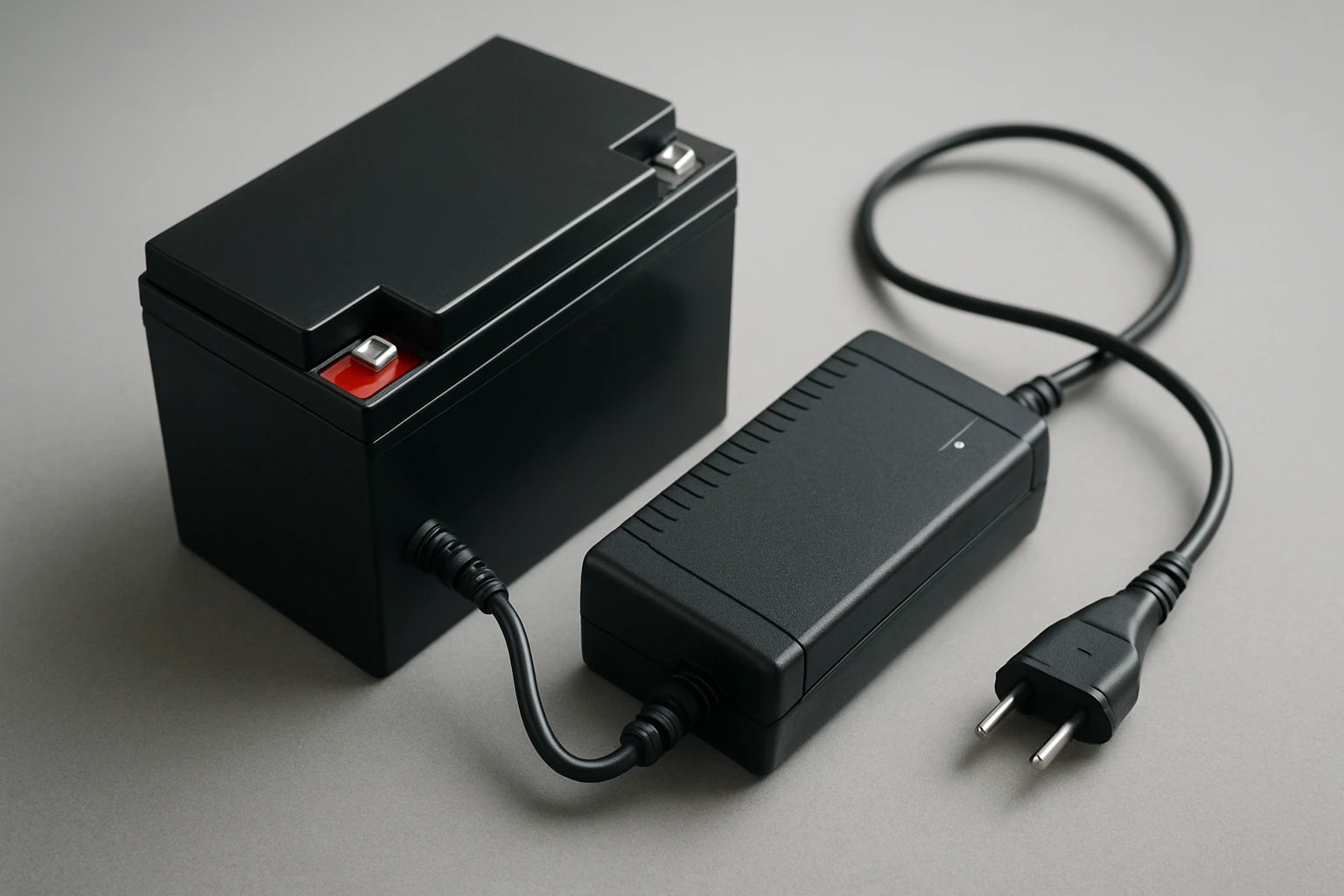
Let us call out a few more missteps that our team frequently helps riders correct. First, choosing a charger by price instead of certification and profile often leads to premature battery loss or nuisance faults. Second, assuming any 24 V (volts) charger fits all 24 V (volts) packs ignores chemistry and current limits set by your controller. Third, skipping the user manual and wiring diagram can cause reversed polarity at the connector, which is hard on controllers and may void coverage. Finally, focusing on peak range without considering daily top-up logistics leaves riders with avoidable downtime.
- Overlooking charge temperature windows; many manuals specify 50–86 °F (degrees Fahrenheit) for optimal charging.
- Letting the chair sit plugged in for months without use if the charger is not float-stage safe; verify float specs.
- Storing batteries on concrete floors in humid garages; moisture can corrode terminals and connectors.
- Not recalibrating range expectations after tire swaps; knobby tires and low pressure raise Wh (watt-hours) per mile.
- Forgetting to log serial numbers; helpful for warranty, service, and Medicare Part B (Part B of Medicare) inquiries.
Tools and Resources
Here is a simple toolkit and a couple of templates you can use today. Keep a printed Quick Specs card with your chair’s model, chemistry, capacity in Ah (ampere-hours), recommended charger current in A (amperes), and connector type. Maintain a monthly battery log with date, miles, approximate Wh (watt-hours) per charge, and any error lights. Consider a smart plug to track charging energy, which provides an objective trend line over time. Above all, have a support partner. Go Wheelchairs backs you with real people who understand matching chemistry, current, and connectors across a wide range of standard and heavy-duty motorized wheelchairs, including lightweight, foldable wheelchair designs for travel.
- Battery Log Template: Date, start percent, end percent, miles, terrain notes, charge hours, charger current (A), observed range.
- Compatibility Checklist: Voltage, chemistry, connector, charger algorithm (3-stage or CC/CV), max current, OEM (Original Equipment Manufacturer) approval, safety listing.
- Medicare and Insurance Prep: Physician documentation, supplier notes, HCPCS (Healthcare Common Procedure Coding System) codes, serial numbers, photos of connectors if requested.
- Travel Prep: Airline battery policy printout, OEM (Original Equipment Manufacturer) manual PDF (Portable Document Format), spare fuses, and a short extension rated for the charger’s current.
If you want a second set of eyes, bring your current specs to Go Wheelchairs. We will help you translate jargon into an everyday plan, compare compatible options across our catalog, and coordinate insurance and Medicare assistance so your equipment and paperwork are aligned. Our Resources hub also includes buying guides, comparison tools, and travel tips, making it easy to choose confidently and ride farther with the right charger strategy for your exact setup.
Conclusion
This guide showed you how to choose, charge, and care for your batteries so your chair is reliable, safe, and ready for the day. Imagine the next 12 months with predictable range, faster top-ups, and zero guesswork about compatibility or coverage, all supported by a friendly expert team.
Now it is your turn to apply the checklists, tables, and Medicare-friendly steps, and align your power wheelchair battery and charger with how you actually live. What will you do first to make your next ride easier and longer?
Power Your Mobility with Go Wheelchairs
Go Wheelchairs helps you choose with Medicare guidance, personal support, and a wide range of standard and heavy-duty motorized wheelchairs so you move forward confidently and independently.