
National DME Suppliers Unpacked: Secure Medicare Coverage, Compare Local Suppliers & Fast Delivery for Power Wheelchairs
If you are trying to make sense of national DME suppliers (Durable Medical Equipment) while lining up Medicare coverage for a power wheelchair, you are not alone. Between forms, codes, and local supplier choices, the process can feel like a maze. The good news is there is a straightforward path once you know where to look. Ready to breathe easier and move faster?
In this guide, I will translate the technical jargon into plain English, share checklists that cut weeks off delivery times, and explain how national suppliers compare with local specialists. I will also show exactly where Go Wheelchairs—an independent supplier—fits in with practical support on coverage, documentation, and model selection. Along the way, you will pick up tips that real families use to avoid delays.
When my neighbor’s dad needed an electric chair, what saved us was a simple routine: a clean document file, a clear request to the doctor, and a supplier who answered the phone. You can absolutely do the same. Let’s unpack each step, then match you with a chair that truly works for your life.
National DME Suppliers: What They Are and How They Work
First things first: national DME suppliers (Durable Medical Equipment) refers to companies and networks that distribute medically necessary devices, including power wheelchairs. Under Medicare Part B, power wheelchairs are covered when specific medical criteria are met and documentation is complete. Suppliers operate within strict rules set by CMS (Centers for Medicare & Medicaid Services), using HCPCS (Healthcare Common Procedure Coding System) codes to identify equipment and benefits.
For power mobility, your journey usually starts with a face-to-face exam to assess daily mobility limits at home. If a manual wheelchair or scooter will not meet your needs safely, the provider may recommend a standard or heavy-duty power wheelchair. Many people wonder whether to choose a national network or a regional dealer. The truth is, the right choice depends on speed, service coverage, and how comfortable you feel with their guidance on Medicare documentation.
To visualize the process, imagine a relay race. Your clinician hands the baton (the prescription), your supplier sprints through authorization, and the delivery team crosses the finish line by fitting the chair in your home. A coordinated handoff keeps your claim clean and your timeline short.
| Step | Who Leads | Why It Matters | Typical Timeframe |
|---|---|---|---|
| Face-to-face mobility exam | Clinician | Documents medical necessity for home use | 1–14 days, based on scheduling |
| Detailed written order | Clinician | Specifies chair type and features | Same day to 3 days |
| Supplier intake and benefits check | Supplier | Verifies coverage and out-of-pocket costs | 1–3 business days |
| Prior authorization (if required) | Supplier with Plan | Confirms Medicare or plan approval | 3–10 business days, varies by plan |
| Delivery, fitting, and education | Supplier | Ensures safe operation and home fit | 2–5 days after approval |
Industry data points to a wide range of timelines, but most clean cases complete in two to six weeks, depending on medical scheduling and plan response times. Faster claims share one trait: accurate documentation that answers Medicare’s questions before they are asked.
How to Secure Medicare Coverage for a Power Wheelchair
Medicare Part B covers 80 percent of the approved amount after the annual deductible when criteria are met. Medicare Advantage (MA) plans may have different prior authorization rules, but the clinical core stays similar. Use the steps below as a practical playbook to keep your approval on track and your delivery on schedule.
Watch This Helpful Video
To help you better understand lincare dme, we’ve included this informative video from USA Medical Supply. It provides valuable insights and visual demonstrations that complement the written content.
- Book a mobility-focused, face-to-face evaluation with your clinician. Ask them to document how mobility limits affect essential daily activities at home, like bathing and dressing.
- Confirm that a cane, walker, or manual wheelchair is not sufficient for safe, effective mobility in your home environment. This reasoning should be in your medical notes.
- Request a detailed written order specifying power wheelchair type, seating needs, and accessories that are medically necessary.
- Share a quick home layout summary with doorway widths and key turning spaces. This helps right-size the chair and avoids returns.
- Choose a supplier experienced with national DME documentation and Medicare prior authorizations. Ask how they prevent clerical denials.
- Verify benefits and expected out-of-pocket costs before authorization. If you carry a Medicare Supplement plan, ask how it coordinates benefits to reduce your share.
- Keep phone and email handy for any follow-up questions. Fast responses can shave days off the timeline.
- At delivery, insist on a thorough fitting and operating lesson. Safe use is part of coverage compliance and your comfort.
| Requirement | Who Provides | Pro Tip |
|---|---|---|
| Face-to-face mobility evaluation | Clinician | Ask for clear notes on why lesser devices are not sufficient. |
| Detailed written order | Clinician | Include model type, features, and medical rationale. |
| Home environment details | Patient/Caregiver | Measure doorways and turning spaces; note thresholds. |
| HCPCS (Healthcare Common Procedure Coding System) coding | Supplier | Confirm codes match the order and medical notes. |
| Prior authorization package | Supplier | Request a status update within 72 hours of submission. |
| Delivery and in-home fitting | Supplier | Test turning, ramps, and charging before they leave. |
Two small tips make a big difference. First, politely ask your clinician’s office to send notes directly to the supplier in a single, legible packet; clean submissions reduce back-and-forth. Second, track your claim with a simple checklist. People who keep a dated log of calls and documents often report faster resolution and fewer surprises when the Explanation of Benefits, or EOB (Explanation of Benefits), arrives.
Compare Local Suppliers: What to Ask and How to Vet
Choosing the right supplier is like picking a co-pilot. You want someone who knows the route, communicates clearly, and shows up on time. Whether you look at national networks or a neighborhood dealer, ask the same questions about speed, service, and Medicare expertise.
| Supplier Type | Strengths | Watch-outs | Medicare Expertise | Typical Delivery | Service After Sale |
|---|---|---|---|---|---|
| National network | Broad insurance contracts; standardized processes | Variable local response times | Strong on policy and forms | 1–4 weeks after authorization | Phone support + regional techs |
| Regional dealer | Local relationships; hands-on fittings | Coverage may be limited outside region | Good with area plans | 1–3 weeks after authorization | In-person service common |
| Specialty power chair boutique | Customization; advanced seating knowledge | May have longer lead times for special parts | Expert on complex cases | 2–6 weeks depending on build | High-touch follow-up |
| Online-first with local techs | Fast comparison; inventory visibility | Confirm local fitting and training availability | Good, varies by partner network | 3–10 days if in stock | Hybrid: remote + local visits |
Eight smart questions to ask any supplier:
- How many Medicare power wheelchair approvals did you complete last quarter?
- What is your average time from order to delivery for in-stock models?
- Will you handle prior authorization and provide status updates?
- Do you offer in-home fitting and training on delivery day?
- What is your process for repairs within the first 12 months?
- Which plans do you contract with beyond Medicare Part B?
- If a chair is back-ordered, what equivalent model can you supply?
- Who is my single point of contact for the entire process?
As a rule of thumb, suppliers that quote timelines in days, not vague ranges, tend to run tighter operations. Ask for specifics, and note which answers are confident and complete.
Fast Delivery, Real Compliance: Strategies That Save Weeks

You want speed, but not at the expense of coverage. Here is the secret: fast delivery is usually the result of thorough preparation, not cutting corners. According to CMS (Centers for Medicare & Medicaid Services) guidance and industry audits, most delays stem from incomplete notes or mismatched codes. Solve those early, and the rest often clicks.
- Schedule the mobility exam as soon as your clinician recommends a power chair. Bring a one-page summary of daily challenges at home to guide the conversation.
- Ask your clinician to include why a manual chair or scooter is not sufficient. This single sentence can prevent a denial.
- Choose an in-stock model that meets your needs. If a custom seat is optional, ask whether delivery can proceed now with a later seat swap.
- Request a same-day benefits check and an estimated out-of-pocket number before prior authorization.
- Provide your home measurements and preferred delivery windows on day one to avoid rescheduling.
Real-world example: Maria, a retired teacher, needed a heavy-duty chair for safe transfers. Her family measured doorways, emailed photos of tight corners, and selected an in-stock model. Because her clinician’s notes stated exactly why a manual device was unsafe, the claim sailed through prior authorization, and delivery happened nine days after approval. Preparation turned weeks into days.
Where Go Wheelchairs Fits: Choice, Coverage, and Confidence
Go Wheelchairs exists to make the process easier at every step. We offer a wide range of standard and heavy-duty motorized wheelchairs so you can match your space, terrain, and body needs without compromise. If you travel or store your chair in small spaces, our lightweight, foldable wheelchair designs simplify life without sacrificing reliability. Most importantly, you are never left to figure out paperwork alone.
Our team provides personalized support and guidance from day one: verifying benefits, coordinating with your clinician, and packaging a clean authorization request. We also maintain a resources hub with buying guides, side-by-side comparison tools, and travel tips for accessible hotels and flights. The outcome is simple: a chair you trust, coverage you understand, and delivery you can plan for.
- Coverage help: we walk you through Medicare Part B and secondary plans, including prior authorizations for Medicare Advantage (MA).
- Product fit: from narrow, apartment-friendly frames to heavy-duty models for higher weight capacities, we fit your home and lifestyle.
- Speed: inventory visibility and proactive communication help you avoid back-orders and surprise delays.
- Support: real people, real answers, and follow-up after delivery.
| Lifestyle Profile | Recommended Type | Why It Works | Key Specs to Prioritize |
|---|---|---|---|
| Small apartment, narrow doors | Standard power chair | Tight turning radius and compact footprint | Turning radius under 25 inches; slim frame width |
| Outdoor paths, uneven terrain | Heavy-duty power chair | Larger motors and robust suspension | High torque motors; puncture-resistant tires |
| Frequent travel or storage | Lightweight, foldable power chair | Quick folding and lighter frame | Weight under 60 lb; airline-friendly battery |
| Long daily use at home | Comfort-focused standard model | Balanced ride, seating comfort, range | Battery range 8–15 miles; adjustable armrests |
If you have been overwhelmed by choices or unsure how your plan will treat different features, that is where our guidance shines. We translate policy into plain options and steer you toward models that serve you now and later. That way, you do not outgrow your chair in six months.
Costs, Co-Pays, and Realistic Budgets
Let us talk dollars without the mystery. For Medicare Part B, after you meet the annual deductible, Medicare pays 80 percent of the approved amount and you pay 20 percent, often reduced by a Medigap supplement. Medicare Advantage (MA) plans set their own copays and networks; many require prior authorization. No matter your plan, clarity comes from a benefits check with exact HCPCS (Healthcare Common Procedure Coding System) coding and a written estimate before authorization.
Think of costs in three buckets: the chair and medically necessary accessories, delivery and fitting, and maintenance. Accessories like specialized cushions are sometimes covered when medically justified. Batteries, tires, or later adjustments may be routine maintenance. Asking your supplier to spell out what is covered in the first year eliminates surprises when your EOB (Explanation of Benefits) arrives.
| Item | Example Amount | Notes |
|---|---|---|
| Standard power wheelchair | $2,500–$4,500 | Actual approved amount varies by model and region |
| Heavy-duty power wheelchair | $3,500–$7,500 | Higher capacity and components increase cost |
| Medicare Part B share | 20 percent of approved amount | After deductible; Medigap may reduce your cost |
| Delivery and fitting | Typically included | Confirm inclusion before authorization |
| Maintenance in year one | Varies | Ask about labor, parts, and warranty coverage |
One more budgeting tip: if your plan offers preferred suppliers, picking within that network can lower out-of-pocket costs and shorten turnaround times. If you are on an HMO (Health Maintenance Organization) or PPO (Preferred Provider Organization), confirm referral rules to avoid surprise denials. A five-minute benefits call today can save hours later.
Your Roadmap: From Paperwork to Powering Up
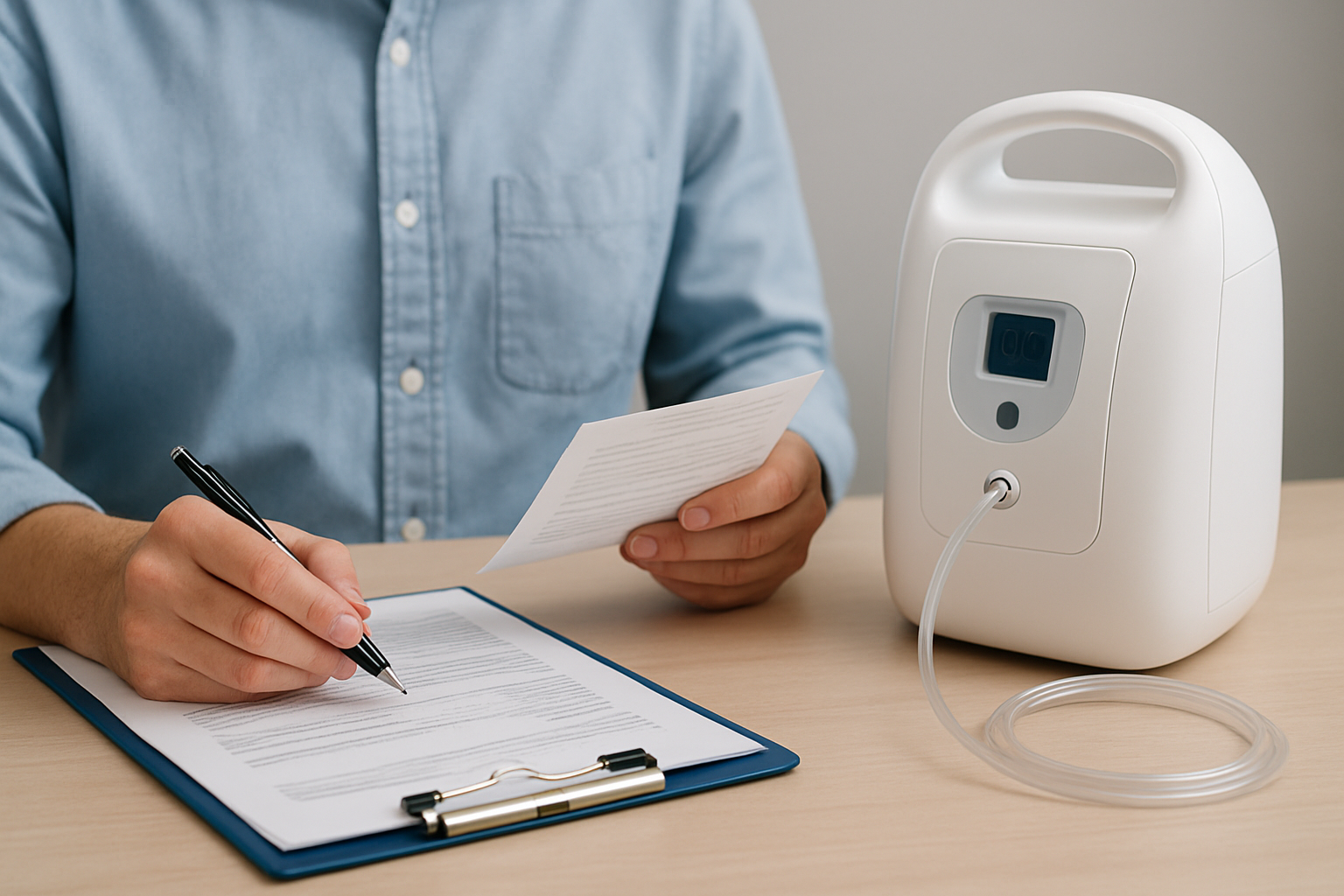
By now, you have a high-level plan: document medical need clearly, pick a supplier that handles national DME authorizations confidently, and choose an in-stock chair that fits your home. To keep momentum, combine the checklists in this article with your supplier’s timeline. Every clean document you submit now is a day you get back later.
- Create a one-folder system with your order, notes, and measurements.
- Set calendar reminders for follow-ups every 48–72 hours until approval.
- Ask for delivery windows at authorization, not after.
- Schedule a practice session on delivery day for you and your caregiver.
Go Wheelchairs is here to simplify each step with real people, practical tools, and a wide range of standard and heavy-duty motorized wheelchairs. With coverage guidance and hands-on support, you can move forward with confidence and independence.
FAQs: Quick Answers to Keep You Moving
What does Medicare require for power wheelchair coverage? Medicare asks for a face-to-face exam, a detailed written order, and proof that a manual device will not work safely in your home. Suppliers then send prior authorization if your plan requires it.
How long does approval take? Clean documentation can be approved in days; more complex cases may take a few weeks. The biggest variable is how quickly clinician notes and codes are finalized and aligned.
What if I have Medicare Advantage (MA)? Expect a plan-specific prior authorization and potential network requirements. Ask your supplier to confirm your copay and network rules before you commit.
Can I get fast delivery? Yes, especially if you choose in-stock models and a supplier that verifies benefits immediately. Turning your home measurements and clinician notes into a single, complete packet is the fastest path.
How does Go Wheelchairs help? We combine coverage guidance with a broad selection of standard, heavy-duty, and lightweight foldable chairs, along with a resources hub of buying guides, comparison tools, and travel tips. You get clarity, choice, and timely delivery.
Note: This article provides general guidance and is not a substitute for medical or legal advice. Always confirm benefits and medical necessity with your clinician and plan.
Final Thoughts
Simple, clear steps turn a confusing journey into a confident one, from coverage to delivery. Imagine choosing a chair on Tuesday, getting approval the next week, and cruising through your hallways by Friday. What could more independence unlock for you this year with DME (Durable Medical Equipment)?
In the next 12 months, more plans will refine prior authorization timelines and digital submissions. With a ready checklist and a responsive supplier, you will be ahead of the curve. Which part of your DME (Durable Medical Equipment) path do you want to streamline first?
Additional Resources
Explore these authoritative resources to dive deeper into lincare dme.
Accelerate DME (Durable Medical Equipment) Success with Go Wheelchairs
Unlock DME (Durable Medical Equipment) coverage using Go Wheelchairs’ wide range of standard and heavy-duty motorized wheelchairs and personal guidance to secure approval quickly and move forward confidently.