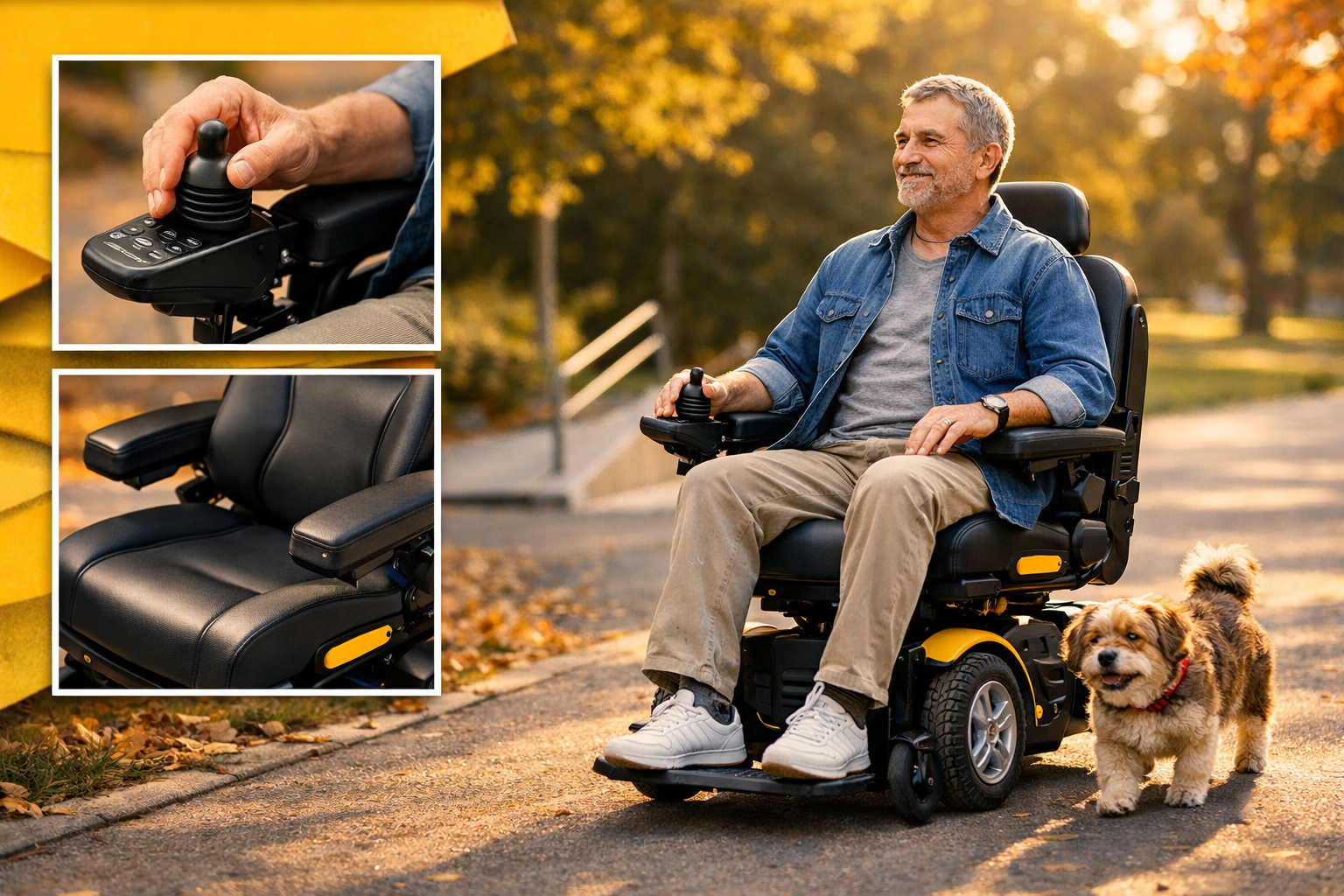
How to Get FEP Blue Durable Medical Equipment 2022 Coverage for Power Wheelchairs: The Complete Verification & Appeal Guide
If you are trying to navigate fep blue durable medical equipment 2022 for a power wheelchair, you are not alone. Between prior authorization paperwork, coding rules, and benefit tiers, it can feel like a maze with moving walls. The good news is that there is a clear, repeatable path from prescription to approval, and I am going to walk you through it step by step. Along the way, I will show you exactly where people get stuck and how to avoid those snags so you can save time, stress, and money.
Note: This guide reflects common 2022 coverage patterns; plans and requirements may have changed since 2022—verify current plan materials and ask your supplier for up-to-date guidance.
When I first helped a neighbor secure coverage through FEP [Federal Employee Program] Blue, we sat at the kitchen table with a stack of forms, an Explanation of Benefits [EOB] letter, and a highlighter. The denial boiled down to one detail: no in-home assessment was documented even though the physician had ordered a power chair. We fixed the record, resubmitted with a strong Letter of Medical Necessity, and approval followed. That experience shaped this guide, which blends real-world tactics with insurer language so you can move forward with confidence.
Quick Orientation: Are You Eligible and What to Expect in 2022
Before diving into forms, it helps to know what Durable Medical Equipment [DME] means for FEP [Federal Employee Program] Blue members in 2022 and how power wheelchairs are treated. Power wheelchairs are typically classified as specialty equipment, which means stricter criteria, a prior authorization requirement, and documentation that the chair is medically necessary for use in the home. Network status matters, too. Using an in-network DME supplier generally reduces your out-of-pocket costs and helps you avoid claim delays, because in-network suppliers know the plan’s paperwork rhythm. Note that Go Wheelchairs may not be in-network with every plan (including some FEP options); always verify whether a supplier is contracted with your specific plan before assuming in-network benefits.
Here is the big picture: your treating physician needs to document a condition that significantly impairs mobility, show why a cane, walker, or manual chair is insufficient, and confirm your ability to safely operate a power chair in your home environment. Industry audits suggest 30 to 50 percent of mobility-device authorizations get pended because one of these points is missing or vague. You can beat those odds by addressing each requirement with specific, measurable detail. Think “patient cannot propel manual wheelchair 20 feet without rest due to dyspnea and shoulder pain” instead of “patient fatigues easily.”
| Factor | What It Means | Why It Matters |
|---|---|---|
| In-Network Supplier | DME supplier contracted with your plan | Lower costs, fewer billing surprises, faster prior authorization |
| Prior Authorization | Approval before delivery | Required for most power chairs to ensure medical necessity |
| Home Use Requirement | Device primarily for home activities | Insurers emphasize function inside the home over community use |
| Medical Necessity | Clinically supported need | Must show why lesser options will not work |
| Documentation Quality | Specific, measurable, dated notes | Most common reason for delays or denials when weak |
Understanding fep blue durable medical equipment 2022 Coverage Criteria for Power Wheelchairs
Insurers love checklists, and FEP [Federal Employee Program] Blue is no exception. To meet Durable Medical Equipment criteria, a power wheelchair generally must be prescribed by your treating physician, be medically necessary, be primarily used for a medical purpose, be designed for long-term use, and serve a specific therapeutic function in the treatment of your condition. That is the formal language. In practice, it translates to a compelling story, backed by data, that a power chair is the least burdensome way for you to perform daily activities inside your home.
Watch This Helpful Video
To help you better understand fep blue durable medical equipment 2022, we’ve included this informative video from Mountain Top News. It provides valuable insights and visual demonstrations that complement the written content.
It helps to think in contrasts. If you can do your daily routines safely using a cane, walker, or manual wheelchair, a power chair will likely be denied. If a mobility scooter would suffice but cannot be used safely in your home or does not meet your positioning needs, then a power wheelchair might be appropriate. Your clinician’s notes should connect these dots. Industry data indicates that detailed Letters of Medical Necessity and therapist evaluations increase one-time approval rates by 40 to 60 percent compared with brief notes.
- Must-haves: treating physician prescription, face-to-face evaluation, in-home functional assessment, and a clear Letter of Medical Necessity.
- Common pitfalls: no in-home documentation, generic statements of fatigue, no trial of lesser devices, or missing support-surface positioning needs.
- Specialty considerations: bariatric needs, tilt-in-space or elevated leg rests, custom seating, and cognitive or vision screening for safe operation.
| Item | Typically Covered | Notes |
|---|---|---|
| Standard Power Wheelchair | Yes, with prior authorization | Requires documentation of failed lesser alternatives |
| Heavy-Duty Power Wheelchair | Yes, with added justification | Weight capacity or durability must be clinically supported |
| Mobility Scooter | Sometimes, if appropriate | Denied if home environment is unsafe for scooter use |
| Vehicle or Home Modifications | No, typically excluded | Ramps, lifts, and structural changes are usually out-of-pocket |
| Deluxe Convenience Upgrades | No, typically excluded | Non-medical features may not be covered |
Step-by-Step Verification Checklist: From Prescription to Prior Authorization
This is the blueprint I use when helping families, and it works whether you are a new user or upgrading. Picture a simple flow diagram: need recognized, physician evaluation, therapist assessment, product trial, prior authorization submission, delivery, training, claim, and, if needed, appeal. Each step feeds the next. You do not need to memorize insurance acronyms. You just need to gather the right pieces and put them in the right order. Below is the checklist you can follow and share with your clinician and supplier.
- Confirm eligibility: Call the number on your ID and ask if a power wheelchair requires prior authorization and which in-network DME [Durable Medical Equipment] suppliers can furnish it.
- Schedule a face-to-face visit: Your treating physician should evaluate mobility limits, comorbidities, and home layout, then document why lesser devices fail.
- Get a therapy evaluation: A Physical Therapy [PT] or Occupational Therapy [OT] assessment strengthens medical necessity with objective measures like strength, endurance, and transfer ability.
- Do an in-home assessment: Document door widths, thresholds, turning radius, and floor surfaces. Insurers prioritize function inside the home.
- Select a model with a supplier: Check whether your chosen supplier is in-network for your plan. Go Wheelchairs can match clinical needs to chair specifications and provide a preliminary estimate, and we can still assist with benefits checks and documentation if out-of-network options are needed.
- Assemble documentation: Include the prescription, clinic notes, therapy evaluation, Letter of Medical Necessity, in-home assessment, and a product spec sheet.
- Verify coding: Ask your supplier to list the primary code and accessories. If they mention HCPCS [Healthcare Common Procedure Coding System] codes, write them down for the authorization.
- Submit prior authorization: Your supplier often submits, but you can ask for a copy. Typical turnaround is 10 to 20 business days based on 2022 averages.
- Track status: Call every 5 business days. Log date, representative name, and notes. Many “missing info” delays are solved with a quick upload.
- Review approval terms: Check whether it is a purchase or rental, the approved accessories, and any expected coinsurance. Make sure delivery matches the authorization.
One more tip: ask your physician to avoid vague phrases and instead include distances, times, and safety risks. For example, “Patient cannot propel a manual chair more than 10 feet over carpet without rest due to shoulder pain and shortness of breath” carries far more weight than “Patient fatigues quickly.” Precision shortens the process and strengthens your case if you need to appeal.
Coding, Costs, and Paperwork: The Nuts and Bolts
Codes may look intimidating, but they are just labels that tell the plan what you are getting. A common mid-level power chair code is K0823, which generally corresponds to a standard Group 2 chair. Heavy-duty or advanced-function chairs may use different codes such as K0825 or, for complex rehab needs, codes like K0861. Accessories have their own codes as well. You do not need to memorize them, but you should review the list your supplier submits so you know exactly what is being requested and can spot if a medically necessary feature was left out.
| Example Code | Typical Category | When It Is Appropriate |
|---|---|---|
| K0821 | Group 2, Single Power | Indoor mobility, limited outdoor use, minimal accessories |
| K0823 | Group 2, Standard | Most common home-use power chair with basic seating |
| K0825 | Group 2, Heavy-Duty | Higher weight capacity and durability needs |
| K0861 | Group 3, Complex Rehab | Neuromuscular conditions requiring advanced seating/drive |
Cost sharing varies by plan option and network status, but the structure is familiar: you may have a deductible, then coinsurance, with lower out-of-pocket costs for in-network DME suppliers. Some power chairs are purchased, while others start as capped rentals that convert to ownership after a set number of months. An illustrative scenario: a $3,800 chair with 20 percent coinsurance would yield a $760 member responsibility after any deductible. Your actual numbers depend on your 2022 brochure and approvals. Always ask the supplier for a written estimate before delivery.
| Cost Element | Key Question | Why It Matters |
|---|---|---|
| Deductible | Has my deductible been met this year? | Determines if coinsurance applies immediately |
| Coinsurance | What percentage applies in-network? | Primary driver of out-of-pocket cost |
| Rental vs. Purchase | Is this billed as rental or outright purchase? | Changes monthly cost and ownership timing |
| Accessories | Which accessories are authorized and covered? | Unlisted items may be denied or billed to you |
| Delivery Timeline | What is the estimated ship and setup date? | Helps plan around therapy and caregiver schedules |
Paperwork is the oxygen of Durable Medical Equipment approvals. Keep everything: prescriptions, clinic notes, therapy assessments, supplier estimates, and prior authorization letters. If you receive an Advance Beneficiary Notice [ABN] or similar financial consent, review it carefully and ask your supplier to explain what happens if coverage is denied. Create a simple folder or digital drive to store PDFs. You will thank yourself if an appeal becomes necessary and you need to assemble a complete packet quickly.
How to Appeal a Denial: Scripts, Timelines, and Evidence That Works
A denial letter is not the end of the road. It is a map to what the plan still needs. Start by reading the reason codes and highlighting any phrases such as “not medically necessary,” “insufficient in-home documentation,” or “lesser alternatives not ruled out.” Then match each reason with new evidence. A targeted one-page letter from your physician or therapist can be more persuasive than a thick stack of redundant notes. Industry summaries suggest that well-constructed appeals overturn many initial denials, especially when objective in-home data is added.
- Request reconsideration quickly: Mark your calendar with the deadline and submit within that window, ideally within 30 days.
- Close the gaps: If the letter cites missing in-home details, add measurements, transfer risks, and distances. If it mentions safety, add caregiver training notes.
- Include a fresh Letter of Medical Necessity: It should state why canes, walkers, manual chairs, or scooters cannot safely meet needs in your home.
- Ask your supplier to attach product specifications: Show how the approved model addresses weight capacity, turning radius, and home-specific obstacles.
- Escalate as needed: If reconsideration fails, use your plan’s formal appeal process. For federal plans under the Federal Employees Health Benefits [FEHB], final external review may involve the Office of Personnel Management [OPM].
| Level | Typical Timeline | What to Include |
|---|---|---|
| Reconsideration | 30 to 60 days from notice | Updated clinical notes, in-home assessment details, product specs, new Letter of Medical Necessity |
| Formal Plan Appeal | Varies by plan | All prior documentation plus a point-by-point rebuttal to the denial reason |
| External Review | As permitted under FEHB and OPM processes | Complete case file and any new specialist opinions |
Phone script you can use: “Hello, I am calling about prior authorization case number ____ for a power wheelchair. The denial states that lesser alternatives were not ruled out. I am uploading a therapist assessment showing failed trials of a cane, walker, and manual chair, plus in-home measurements documenting unsafe transfers. Can you confirm receipt and note the file for expedited review due to safety risk?” Keep your tone calm and specific. Document the date, time, the representative’s name, and what they promised to do next.
Go Wheelchairs: Real-World Help with Coverage, Fit, and Freedom
If this process feels like a second job, you are exactly who Go Wheelchairs exists to serve. Individuals with mobility challenges often struggle to find affordable, dependable wheelchair solutions that fit lifestyle and coverage needs. We address those challenges with a wide range of standard and heavy-duty motorized wheelchairs; lightweight, foldable wheelchair designs for travel and storage; and personalized support that bridges the gap between clinic and insurer. Our team helps you match clinical needs to product features, navigate prior authorization, and prepare for delivery day.
Coverage questions are where many people stall, so we lean in with guidance on Medicare Part B [Centers for Medicare & Medicaid Services] rules, private insurance nuances, and the specifics FEP [Federal Employee Program] Blue often asks for in 2022 documentation. We provide sample Letters of Medical Necessity, checklists, and comparison tools in our Resources hub, plus travel tips for flying with a power chair and battery safety. Real-world example: a customer with cardiopulmonary disease needed a heavy-duty chair with tight turning radius for a small apartment. By documenting failed manual propulsion attempts and pairing the case with a chair that fit doorways and thresholds, approval arrived in two weeks.
| Stage | Our Role | Your Outcome |
|---|---|---|
| Pre-Verification | Benefits check, supplier network confirmation, product shortlist | Clarity on options and likely costs before you invest time |
| Clinical Documentation | Templates for Letters of Medical Necessity and in-home checklists | Stronger medical necessity narrative, fewer pends |
| Prior Authorization | Code verification, accessory alignment, status updates | Clean submission, predictable timeline |
| Delivery and Training | Setup, safety orientation, maintenance tips | Confidence using your chair from day one |
| Appeals Support | Point-by-point denial response guidance | Higher chance of overturn if needed |
Choosing the right wheelchair is part science and part lifestyle fit. That is why our range includes compact, foldable models for travel and apartment living, and robust, heavy-duty builds for outdoor durability and higher weight capacities. We speak the language of coverage and the language of daily life, so whether you need a tight turning radius for narrow hallways or advanced seating for pressure management, we will align specs with your physician’s plan and your insurer’s rules. When your chair and your coverage work together, independence becomes your everyday default.
Your 2022 Pre-Authorization Packet: A Practical Packing List
Think of your authorization packet as your evidence file. It should make it obvious why a power chair is necessary, safe, and appropriate for your home. A clear packet reduces back-and-forth calls and shortens the time to decision. Many families tell us that gathering everything up front shaved one to two weeks off their timeline because the plan did not have to request additional information. Use this list as your baseline and add plan-specific forms as needed.
- Treating physician prescription that specifies “power wheelchair” and the clinical reason.
- Clinic notes from the past 6 to 12 months detailing mobility limitations and comorbidities.
- PT [Physical Therapy] or OT [Occupational Therapy] evaluation with objective measures and failed trials of lesser devices.
- In-home assessment notes: doorway widths, turning radius needs, flooring, and transfer safety.
- Letter of Medical Necessity summarizing why a power chair is required for basic home activities.
- Product specification sheet with model, weight capacity, turning radius, and required accessories.
- Any relevant photos or a simple floor sketch showing layout constraints.
- Supplier estimate and the list of requested codes and accessories for transparency.
| Milestone | Typical Duration | Pro Tip |
|---|---|---|
| Clinic and Therapy Visits | 1 to 2 weeks | Book both visits early and ask for same-week documentation |
| Packet Assembly | 3 to 7 days | Use templates to speed up letters and checklists |
| Prior Authorization Review | 10 to 20 business days | Call every 5 business days and log each update |
| Delivery Scheduling | 3 to 10 days after approval | Coordinate with caregiver or therapist for training |
If you like mnemonics, try this: FIT HOME. Function, In-home safety, Trials of lesser devices, Home layout, Objective measures, Model specs, Evidence letter. If you can check each box, your file is likely complete. And if anything changes during the process, ask your clinician to add an addendum note with the date and the new information. Fresh, specific notes carry more weight than old, generic ones.
Plan Differences and Fine Print: 2022 Considerations to Double-Check
Even within FEP [Federal Employee Program] Blue, benefit details can vary by plan option and region, and updates may arrive mid-year. While this guide reflects common 2022 patterns, your exact coverage depends on your specific plan brochure and network agreements. Always confirm the latest requirements. That said, the core principles hold steady: medical necessity, home function, lesser alternatives ruled out, and safe operation. If you focus your documentation on those pillars, you will align with how reviewers make their decisions.
| Topic | What to Look For | Where to Find It |
|---|---|---|
| Prior Authorization Rules | Is prior authorization required for power chairs and accessories? | DME section of your 2022 brochure |
| Network Requirements | Are there preferred suppliers or service areas? | Find Care or Supplier Directory |
| Cost Sharing | Deductible and coinsurance details for DME | Benefits summary or cost share table |
| Appeal Process | Timelines and levels of appeal under FEHB [Federal Employees Health Benefits] | Appeals section of your plan materials |
If you are tight on time or energy, Go Wheelchairs can run a benefits check, suggest in-network pathways where available, and prepare a clean authorization packet. Our goal is simple: less paperwork fatigue, more forward motion. When your chair fits your life and your coverage, you reclaim hours each week and reduce caregiver strain. That payoff is why a little planning up front is worth it.
FAQs: Fast Answers to Common 2022 Questions
What if I can use a scooter in the community but not at home? Home function rules. If your home layout makes a scooter unsafe or impractical, and a power chair meets your needs, your clinician should document that. What if I work? Insurers prioritize basic home activities, but work-related function can support medical necessity when it overlaps with daily living tasks. What about batteries and maintenance? Ask your supplier which items are covered and the schedule for service. Documented safety issues can justify accessory coverage when medically necessary.
- Can I upgrade features and pay the difference? Sometimes, but non-medical upgrades are often excluded. Get written confirmation.
- How long should I expect the process to take? Many 2022 cases close within 3 to 6 weeks when documentation is complete on first submission.
- Who trains me on the chair? Reputable suppliers provide delivery setup and basic training. Ask for printed tips and a maintenance schedule.
Remember, you are not asking for a luxury. You are asking for the right tool to live safely and independently. That is exactly what Durable Medical Equipment is designed to provide when the medical record tells the story clearly. If you need help telling that story, lean on experienced partners who speak both clinical and coverage fluently.
Final Thoughts and Your Next Step
Everything here boils down to one promise: with the right documents in the right order, power wheelchair approvals become predictable instead of painful. Imagine replacing guesswork with a checklist and a knowledgeable guide who has done this hundreds of times, then watching your authorization move from pending to approved. What would you do with the time and freedom that follow? If you are ready to start, bring this guide to your next appointment and highlight your plan’s priorities.
In the next 12 months, more people will fast-track approvals by pairing strong clinical notes with in-home details and supplier expertise. You can be one of them. Are you prepared to turn the fep blue durable medical equipment 2022 process into a smooth, confidence-building win?
Additional Resources
Explore these authoritative resources to dive deeper into fep blue durable medical equipment 2022.
Navigate FEP Blue DME [Durable Medical Equipment] Coverage with Go Wheelchairs
Access a wide range of standard and heavy-duty motorized wheelchairs with expert insurance guidance from Go Wheelchairs to secure coverage and move with confidence and independence.