
What Will This Guide Help You Decide Today?
If you are eyeing a folding electric wheelchair, you are probably asking three big questions: can I take it on a plane, is it genuinely portable for daily life, and could Medicare help pay for it. You are in the right place. In the next several minutes, we will walk through airline rules, real-world portability, and step-by-step coverage essentials, so you can choose with confidence instead of guesswork. I will mix in a few stories from the road, practical checklists, and the kind of insider tips I wish my neighbor had before her first trip to see grandkids. Along the way, I will also show how Go Wheelchairs backs you up with a wide range of standard and heavy-duty motorized options, hands-on guidance, and insurance support that cuts through the noise.
What Is a Folding Electric Wheelchair, Really?
A folding electric wheelchair is a powered mobility device designed to fold into a compact shape for easier storage, car travel, or flights, without giving up the powered assistance you count on. Unlike a mobility scooter, the seating and controls are chair-like, the turning radius is often tighter for indoor use, and the frame is engineered to collapse quickly, usually in seconds. Standard models prioritize low weight and portability, while heavy-duty versions add reinforced frames and higher weight capacities for durability and comfort. If you have ever wrestled a bulky traditional power chair into a trunk, the appeal is obvious. Fold, lift, go. And when a device dovetails with daily life, you end up using it more, which is really the whole point.
Watch This Helpful Video
To help you better understand folding electric wheelchair, we’ve included this informative video from Mobility Scooters Direct. It provides valuable insights and visual demonstrations that complement the written content.
You will see a range of key specs: total weight, folded size, battery type, motor power, suspension, turning radius, and seat dimensions. Many popular models weigh between 38 and 65 pounds, while heavy-duty folding units can land in the 65 to 80 pounds range yet still fold for storage. Batteries are often Lithium-ion [Lithium-ion] for energy density and airline compatibility, and motors are typically brushless for reliability. If you are choosing your first chair, think through your most common use cases first: hallway turns, curb cuts, car transfers, or weekend flight connections. The right fit is less about a headline spec and more about how those specs play together for your lifestyle.
| Option | Typical Total Weight | Foldability | Turning Radius | Best For |
|---|---|---|---|---|
| Folding Electric Wheelchair | 38 to 80 pounds | Yes, compact fold | Tight, indoor-friendly | Mixed indoor-outdoor, car trunks, travel |
| Traditional Power Wheelchair | 100 to 200+ pounds | No, fixed frame | Varies by drive type | Full-time use, advanced seating, complex needs |
| Mobility Scooter | 50 to 120 pounds | Some disassemble, not fold | Wider turning circle | Longer outdoor distances, shopping centers |
Why Does a Folding Electric Wheelchair Matter for Everyday Life and Travel?
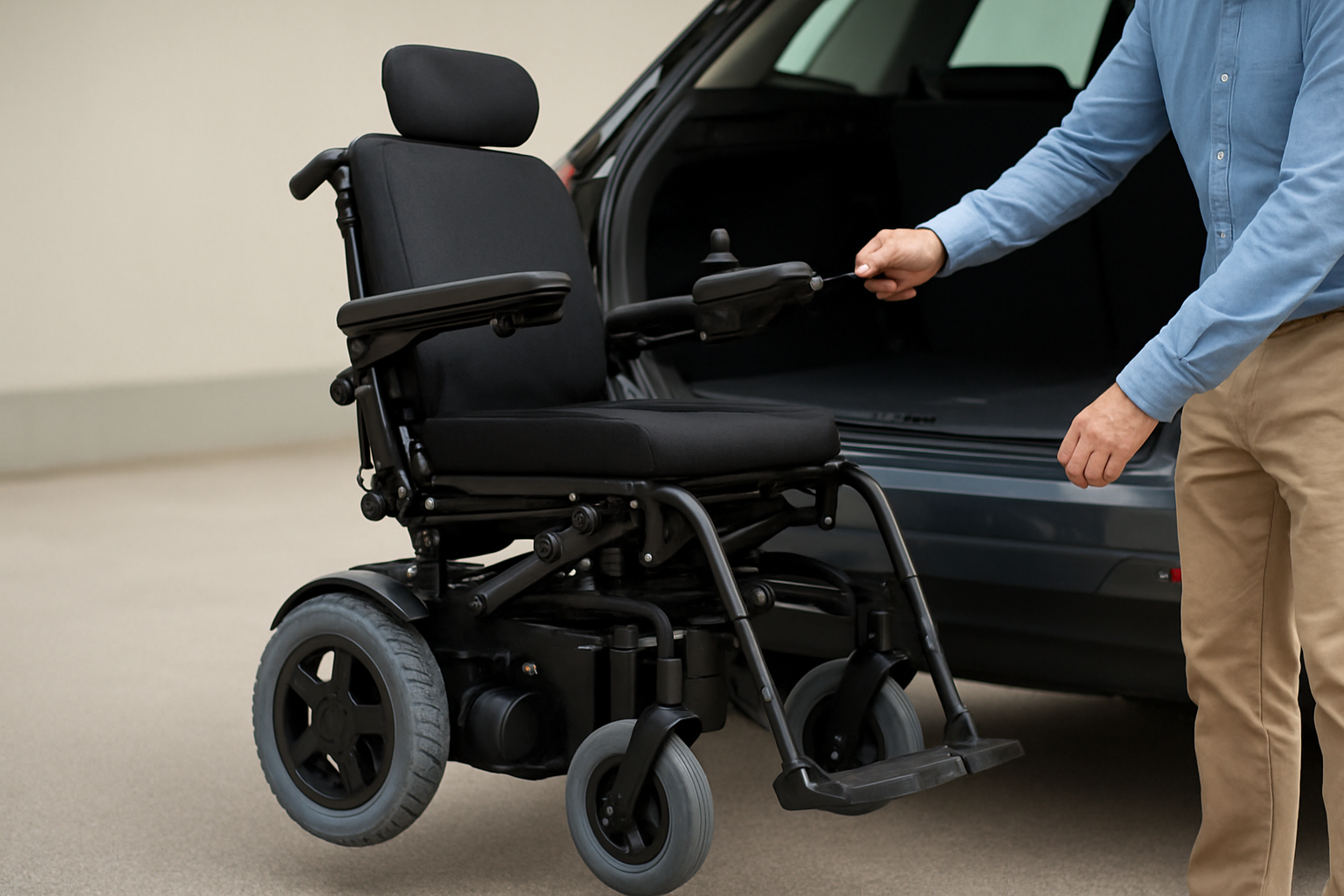
Freedom is the headline. A folding electric wheelchair brings the I can do this feeling back to everyday moments: coffee with friends, a quick run to the pharmacy, a spontaneous weekend drive. When you can fold a powered chair, place it in the trunk without a ramp, and be rolling minutes later, you remove the friction that makes outings feel like projects. That matters. According to the Bureau of Transportation Statistics [Bureau of Transportation Statistics], millions of adults report mobility-related travel limitations. Meanwhile, the Department of Transportation [Department of Transportation] has documented thousands of mishandled mobility devices annually on flights. Choosing travel-ready gear, packing smart, and knowing airline battery policies can lower your stress before wheels ever leave the gate.
Let me share a real-world example. Marisol, a retired teacher, wanted to fly cross-country to see her new grandson. The first time we talked, she was worried about batteries and transfers. With a folding chair and a bit of pre-trip homework (printing battery watt-hour info, calling the airline 48 hours out, and labeling the joystick), she breezed through the airport. Ground crew gate-checked the chair, and her spare battery rode in the cabin. She told me later, I did not feel like a passenger with special rules. I felt like a traveler again. That is the gap a good folding chair can close, and it is the kind of outcome Go Wheelchairs designs for, especially when you want portability without sacrificing reliability or coverage options.
How Does a Folding Electric Wheelchair Work, and What Features Should You Check?
Most folding frames use aircraft-grade aluminum or reinforced alloys for strength-to-weight balance. Two brushless hub motors power the rear wheels with regenerative or electromagnetic braking for smooth stops. The controller translates joystick input to motor output, modulating acceleration, turning, and braking so it feels intuitive within the first five minutes. Batteries are commonly Lithium-ion [Lithium-ion] because they are lighter than sealed lead-acid and can be airline-compliant when watt-hours are within policy. Suspension and tire choice impact comfort over sidewalk cracks and cobblestones. Indoors, the turning radius determines how easily you pivot in tight kitchens or bathrooms. Outdoors, look at torque, ground clearance, and hill ratings. If you live where driveways are steep or sidewalks are patchy, prioritize torque and tires over top speed.
Airline safety centers on battery type, watt-hours, and how the battery is installed or removed. In simple terms, airlines want terminals protected, watt-hours documented, and the chair secured against accidental activation. The Federal Aviation Administration [Federal Aviation Administration], Transportation Security Administration [Transportation Security Administration], and International Air Transport Association [International Air Transport Association] guidelines are broadly similar, but your airline’s policy is the final word. As a rule of thumb, many mobility batteries up to 300 watt-hours are allowed when properly secured, and removable spares are often limited to two units up to 160 watt-hours each in carry-on. Always confirm details before you fly and bring documentation. A one-page printout of your chair’s battery label and specs can save you precious minutes at the checkpoint.
| Battery Type | Typical Watt-Hours | Installed During Flight | Spare Batteries in Cabin | Notes |
|---|---|---|---|---|
| Lithium-ion [Lithium-ion] | 180 to 300 watt-hours common | Often allowed if secured and protected | Usually up to two spares, each up to 160 watt-hours | Confirm airline policy; label watt-hours; tape or cap terminals; disable chair |
| Sealed Gel/Lead-Acid | Not expressed as watt-hours on label | Allowed when non-spillable and properly secured | Not typically carried as spares | Ensure battery is non-spillable; protect against short circuits |
| Wet Cell Lead-Acid | Varies | Restricted; special packaging needed | Not allowed as spares | Rare in modern folding chairs; avoid for air travel |
Travel checklist for smoother flights:
- Call the airline’s special assistance desk 48 to 72 hours in advance and note wheelchair type, size, and battery watt-hours.
- Print the battery label and spec sheet; keep one copy on the chair and one in your bag.
- Protect terminals with caps or tape and bring zip ties to secure any loose leads if the battery is removed.
- Attach a simple instruction tag: Turn joystick off, pull freewheel lever, fold frame.
- At the gate, request loading in the cargo hold last and unloading first to reduce handling time.
Common Questions: Airline Safety, Portability, Medicare Coverage, and More
Is a folding electric wheelchair airline-safe?
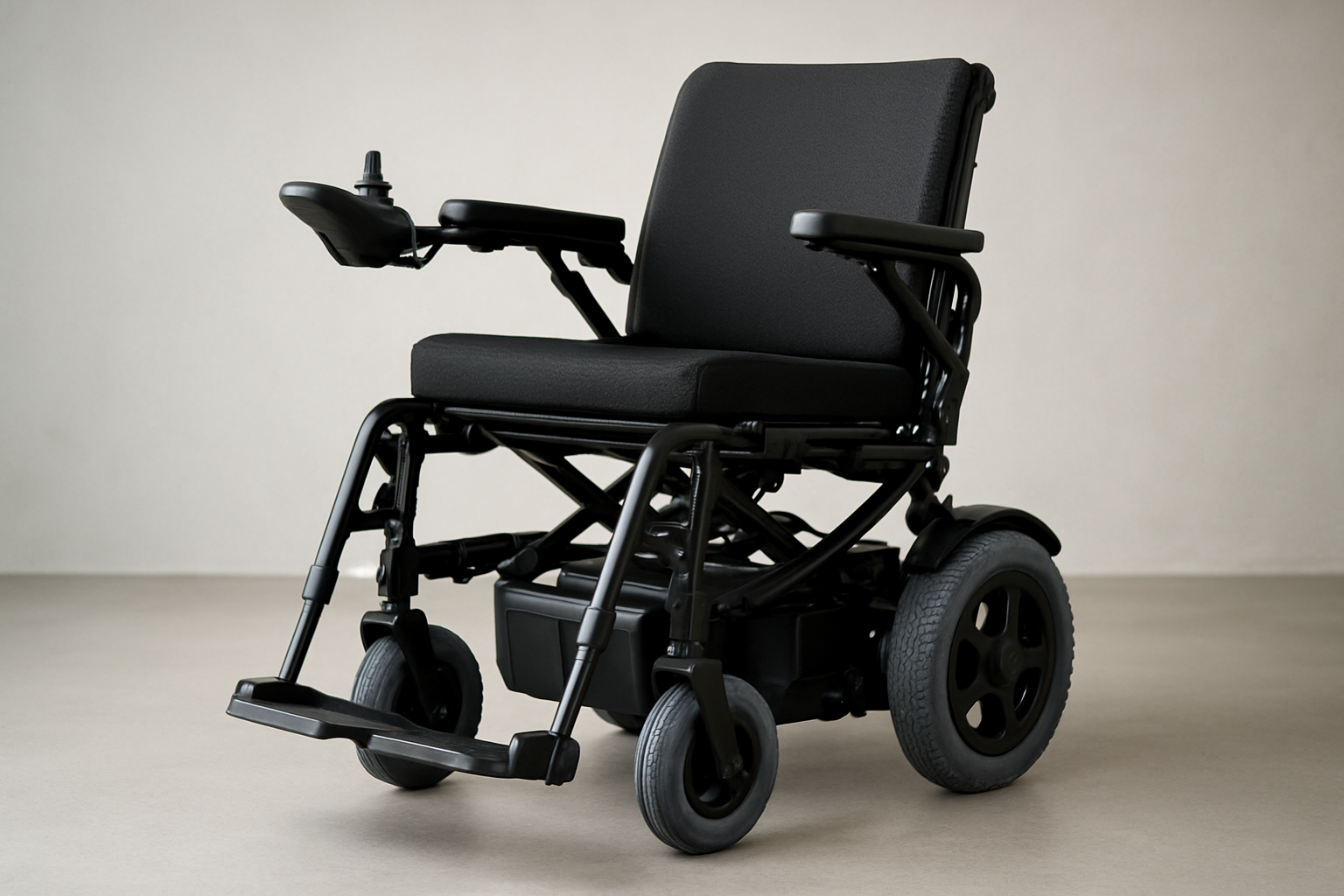
Yes, folding power chairs are commonly flown. Safety depends on the battery type and proper preparation. Lithium-ion [Lithium-ion] packs within airline watt-hour limits are typically allowed, and non-spillable gel batteries are also acceptable when secured. The Federal Aviation Administration [Federal Aviation Administration] and Transportation Security Administration [Transportation Security Administration] prioritize preventing short circuits, accidental activation, and leakage. Your action plan is simple: confirm watt-hours, print documentation, protect terminals, and communicate at check-in and at the gate. If you have a heavy-duty folding chair with a larger battery, verify the watt-hours specifically; some airlines allow installed batteries up to 300 watt-hours for mobility devices, but policies vary by carrier.
What about portability day to day?
Portability is where a folding electric wheelchair shines. Many models fold to the size of a carry-on suitcase, fit in standard sedans, and weigh similar to a loaded suitcase. If transfers or lifting are challenging, look for lighter frames, split-battery designs that remove several pounds, or a compact ramp for trunk loading. Heavy-duty folding chairs trade a bit of weight for stability and higher capacity, which is worth it if you need a robust frame. Try a trunk test during your demo. If it clears your trunk opening with two inches to spare, you will never think about it again; if it is tight, ask about an alternate model or a rear-hatch loading strategy.
Will Medicare help pay for a folding power chair?
Medicare Part B [Medicare Part B] may cover a power wheelchair as Durable Medical Equipment [Durable Medical Equipment] when it is medically necessary for use inside the home, you have a face-to-face examination with your treating practitioner, and you receive a detailed written order. The supplier must be Medicare-enrolled and accept assignment. After the Part B deductible, you typically pay 20 percent coinsurance of the Medicare-approved amount. Some power mobility devices require prior authorization under a nationwide demonstration program, and specific Healthcare Common Procedure Coding System [Healthcare Common Procedure Coding System] codes apply (for example, Group 2 power chairs). Coverage is not guaranteed for travel convenience alone; the home-use test is key. Go Wheelchairs helps you gather documentation, coordinate with your clinician, and work with Medicare or your Medicare Advantage [Medicare Advantage] plan so you are not navigating this alone.
| Requirement | What It Means | How Go Wheelchairs Helps |
|---|---|---|
| Face-to-face exam | Visit with your practitioner to assess mobility limits and home use needs | Prep checklist for your visit; sample talking points for documentation |
| Detailed written order | Prescription specifying power wheelchair type and features | Coordinate with your clinician; match features to Healthcare Common Procedure Coding System [Healthcare Common Procedure Coding System] codes |
| Home-use criteria | You cannot adequately use a cane, walker, or manual chair in the home | Assessment guidance to document daily activities you struggle with indoors |
| Medicare-enrolled supplier | Supplier accepts assignment and bills correctly | Work only with enrolled partners; transparent billing support |
| Prior authorization (when required) | Approval before delivery on certain power devices | Paperwork assembly; status checks; escalation if needed |
| Delivery, fitting, and training | Chair fits you and your home safely | Personalized setup and safety training; post-delivery follow-up |
How do I actually start the Medicare process?
- Talk to your primary practitioner about your in-home mobility challenges and why powered mobility is needed.
- Complete a face-to-face exam documenting why lesser devices do not meet your needs.
- Work with a Medicare-enrolled supplier to select an appropriate coded model and gather supporting paperwork.
- Submit for prior authorization if required for your code and region.
- Schedule delivery, fitting, and training once approved; keep copies of everything.
Tip: If you have Medicare Advantage [Medicare Advantage], call your plan to confirm network suppliers, any extra documentation, and whether a heavy-duty folding model meets criteria. Some plans offer supplemental benefits or care coordination that smooth the path.
What is the difference between airline-friendly and airline-approved?
Airline-friendly is a marketing phrase. Airline-approved implies the model meets typical policies, but airlines approve individual trips, not brands. In practice, what matters is watt-hours, battery mounting, and your documentation. Bring a spec sheet, label the watt-hour rating clearly, and follow the carrier’s instructions at the gate. If a listing says airline-approved but the battery is over the usual limits, ask the seller to provide a written policy reference or offer an alternate battery pack within limits.
How do I choose between standard and heavy-duty folding models?
Start with capacity, terrain, and time in chair. If you need a higher weight rating, reinforced armrests, and sturdier tires because you spend hours outdoors, heavy-duty earns its name. If you are prioritizing easiest lift into a car trunk and quick city errands, a lighter standard model may feel effortless. Go Wheelchairs carries a wide range of standard and heavy-duty motorized wheelchairs so you can test how each feels during turning, curb negotiation, and longer rides. The goal is not just a fit that works; it is a fit you enjoy using every day.
What are realistic specs I should look for?
- Chair weight: 38 to 65 pounds for standard folding; 65 to 80 pounds for heavy-duty folding.
- Weight capacity: 220 to 400+ pounds, depending on frame.
- Battery: Lithium-ion [Lithium-ion] 180 to 300 watt-hours for travel friendliness.
- Motors: Dual brushless hubs; steady torque is more important than raw top speed.
- Turning radius: The smaller, the easier indoors; test it in a tight hallway or kitchen.
- Comfort: Seat width and cushion, back support, and armrest adjustability change daily comfort more than you think.
What maintenance keeps my chair travel-ready?
- Monthly: Inspect frame locks, latches, and any quick-release pins; tighten if needed.
- Weekly: Check tire inflation (for pneumatic tires) or tread wear (for solid tires); wipe dust from joystick.
- Battery: Store at 40 to 80 percent state of charge if unused for weeks; avoid extreme heat.
- Cables: Ensure connectors are fully seated; keep a spare charger fuse in your travel kit.
What does Go Wheelchairs do differently?
Three things stand out. First, selection: from lightweight folding chairs to heavy-duty folding builds, the range lets you choose without compromise. Second, personalized support: a real human walks you through fit, test driving, trunk loading, and safety steps for flights. Third, insurance expertise: help with Medicare Part B [Medicare Part B], Medicare Advantage [Medicare Advantage], and other insurance, including documentation checklists, coding alignment, and prior authorization tracking. Add in a resources hub with buying guides, side-by-side comparisons, and travel tips, and you are not just buying a device; you are getting a plan for using it confidently.
Can you share a quick case study?
Andre lives in a walk-up and works part-time at a museum. He chose a heavy-duty folding model for its sturdier wheels and 330-pound capacity. During weekdays, it folds into a rideshare trunk; on weekends, he flies to regional art fairs. With Go Wheelchairs’ travel prep checklist, he pre-notifies airlines, carries a battery spec printout, and labels the freewheel lever for ground staff. He told us the main difference is not speed. It is the absence of worry. That is the outcome this gear should deliver.
How do scooters compare for travel?
Scooters are great for distance and stability, but many disassemble into several pieces rather than fold as one. That can be perfect if you prefer lighter individual pieces for lifting, but it introduces extra reassembly steps at curbs or gates. If you want one motion and done, a folding electric wheelchair simplifies things. Try both styles if you can, then choose the one that matches your routine best.
Any last pre-purchase tips?
- Measure trunk opening height and width; bring a tape measure to your demo.
- Do an indoor obstacle test: tight doorway, rug edge, and a 180-degree turn in a hallway.
- Ask about real-world range with your weight and local hills, not just lab numbers.
- Clarify warranty terms and local service options; ask who you call first if something feels off.
- If insurance matters, start paperwork early and keep copies of notes from every call.
What’s the Bottom Line Before You Choose?
Travel-ready batteries, genuine portability, and a clear path to coverage are the levers that turn a folding electric wheelchair from a maybe into a yes. With the right chair and a little prep, airports, errands, and everyday comfort all get easier. Imagine the next 12 months with more spontaneous plans, fewer what-ifs, and the confidence that your gear will keep up wherever you go. How do you want your mobility to feel a month from now, and what will it take to get there?
Choose Go Wheelchairs for Smarter Folding Electric Mobility
Explore a wide range of standard and heavy-duty motorized wheelchairs with coverage guidance to move confidently and independently.