
Shopping for your first power chair or upgrading from an older model can feel like juggling medical rules, tech specs, and budget all at once, which is exactly why electric wheelchair buying guides exist to save you time, money, and frustration. In the next few minutes, you will learn a clear, friendly process for choosing a reliable electric wheelchair that fits your body, your daily routes, and your insurance reality, including what Medicare tends to require and how to avoid common documentation pitfalls. We will translate the jargon into plain English, share real-world examples, and give you comparison tables so you can see trade-offs at a glance, because no one should have to guess about safety, range, or coverage when independence is on the line. Along the way, you will see how Go Wheelchairs helps you evaluate options, match coverage criteria, and secure a fair price with personalized guidance and a wide catalog that spans standard and heavy-duty motorized wheelchairs, lightweight foldable designs, and travel-friendly picks.
Electric Wheelchair Buying Guides: How to Use This 9-Step Checklist
Think of this guide as your road map, not a sales pitch, because the right power chair depends on your body measurements, your home layout, your surfaces, and your funding path. Start by reading through the nine steps to understand the sequence, and then loop back with a tape measure, a quick household walk-through, and your clinician’s notes so you can plug in your own answers. The goal is to move from “What if?” to “This model fits me, handles my day, and is covered,” which is a much calmer place to make a confident decision. As you go, you will see tips labeled as pro moves, example scenarios, and links you can bring to a prescribing clinician to make paperwork faster and more precise.
Before you dive into the steps, gather three things and set a ten-minute timer so you do not overthink it. First, list your top five daily places: kitchen, bathroom, front entrance, grocery aisle, bus stop, or park trail, because the chair must excel where you actually go. Second, write your weight, height, seated hip width, and hallway widths, since fit and maneuverability trump almost everything else. Third, have your insurance card handy, because if you plan to pursue Medicare coverage or another health plan, the process and timelines matter and some steps, like the face-to-face evaluation, must be done in a specific order.
Step-by-Step: The 9-Point Checklist to Choose the Right Power Chair
- Clarify your mission. In one sentence, describe what success looks like: “I want to ride to the mailbox, through my kitchen, and down the park trail without pain or battery anxiety.” When you get distracted by specs, return to this sentence to cut through noise and keep your values first, because the perfect chair on paper is not always the perfect chair for your day.
- Measure your body and your home. Note your weight, hip width, and preferred seat height, then measure doorways, hallway widths, and the tightest turn you use daily. A turning radius that looks great on a spec sheet can still feel different in a real kitchen, so map a rectangle on your floor with tape and practice the turns just to feel the space, which makes showroom tests more honest.
- Match terrain and drive system. If you mainly navigate carpet, tile, and tight indoor corners, look for compact frames and mid-wheel drive for tight turning; if you hit uneven sidewalks or grass, consider front-wheel drive and suspension that softens bumps. For hills, check motor torque and safe slope ratings, and decide whether you want a comfort-first ride or maximum portability for lifts, taxis, or trunk loading.
- Right-size power, battery, and range. Typical ranges run from roughly ten to twenty miles on a full charge, but your real range depends on rider weight, terrain, temperature, and speed. Ask about the battery chemistry, expected lifespan, and replacement cost, and consider a second charger for office or travel so you never have to ration rides or skip plans when the day runs long.
- Prioritize fit and seating. Seat width, depth, and cushion type can make the difference between “I can do this all day” and “I need to lie down,” so test multiple cushions and back supports if you sit for long periods. If you experience pressure risk or need postural support, ask your clinician about specific positioning options and how those map to coverage rules and delivery timelines.
- Check weight capacity and frame class. Standard frames are cost-effective and agile; heavy-duty frames boost weight capacity and durability for larger riders or frequent outdoor use. If you travel often, a lightweight foldable or quick-disassembly model can save your back and reduce ride-share hassles, though you may trade off some suspension comfort or seat adjustability compared to larger frames.
- Audit transport and storage. Measure trunk openings and ramp angles, and test lifting the heaviest single piece you would carry so you are not surprised on the first trip, especially if you travel solo. At home, confirm you have a safe outlet, charging space with airflow, and a clean corner where the chair will live, plus a plan for rain, mud, and pet fur if those are part of your world.
- Budget the full ownership cost. Beyond the sticker price, include batteries, tires, cushions, maintenance, and potential insurance cost-sharing, because the cheapest model today can be the most expensive later if parts are scarce or service is slow. Ask about warranty coverage, loaner availability during repairs, and whether your supplier offers preventive checkups that catch wear before it catches you.
- Plan coverage and paperwork early. If you are pursuing Medicare, you will need a face-to-face clinician evaluation, a detailed written order, and a supplier who is enrolled and willing to accept assignment; missing notes are a common reason for delays. Go Wheelchairs provides insurance guidance that coordinates with your clinician so documentation supports medical necessity and you spend more time riding and less time chasing signatures.
Watch This Helpful Video
To help you better understand electric wheelchair buying guides, we’ve included this informative video from Top 5 Picks. It provides valuable insights and visual demonstrations that complement the written content.
Compare Models Side by Side: Standard, Heavy-Duty, Lightweight, and Travel
It is easier to choose when you can see the trade-offs, so use the table below as a compass rather than a verdict. The right pick depends on your body size, your typical surfaces, and how often you need to transport the chair in a vehicle or store it in a small space. With Go Wheelchairs, you can compare popular standard and heavy-duty motorized wheelchairs alongside lightweight, foldable options, and the team will talk through what each number means in your daily life rather than leaving you to decode spec sheets alone. As you scan the table, ask yourself where you are willing to trade a little turning agility for outdoor stability, or a bit of range for easier lifting, because clarity beats perfection when independence is the priority.
| Category | Typical Weight Capacity | Turning Radius | Outdoor Capability | Foldable or Quick-Disassemble | Typical Range per Charge | Seat Width Options | Best For |
|---|---|---|---|---|---|---|---|
| Standard | Up to about 300 pounds | Very tight | Sidewalks and light parks | Often quick-disassemble | Around 10 to 15 miles | 16 to 20 inches | Indoor agility and mixed errands |
| Heavy-Duty | Over 300 pounds | Moderate | Uneven surfaces and hills | Usually not foldable | Around 15 to 20 miles | Up to 24 inches or more | Stability, higher capacity, durability |
| Lightweight Foldable | Up to about 265 pounds | Tight | Mostly urban or smooth paths | Yes, foldable | Around 8 to 12 miles | 16 to 18 inches | Travel, taxis, stairs, trunk loading |
| Travel/Portable | Up to about 250 pounds | Tight to moderate | Short outdoor trips | Yes, fastest to stow | Around 6 to 10 miles | 16 to 18 inches | Airports, hotel stays, quick errands |
Numbers vary by model and rider weight, so treat ranges as a starting point and ask for a real-world estimate based on your route and climate. For example, a rider who weighs two hundred thirty pounds rolling seven blocks of hilly sidewalk into a brisk wind will see different battery performance than a one hundred sixty-pound rider gliding across flat tile. This is why Go Wheelchairs encourages a conversation about your actual day, not an abstract average day, and why staff will happily review your routine, from your steep driveway to your grocery aisle widths, to recommend a standard or heavy-duty build that will not leave you short on turning space or traction.
Medicare and Insurance: Documents, Process, and Common Pitfalls

If you plan to use Medicare or another health insurance plan, process matters as much as preference, because approvals hinge on documentation that shows medical necessity and daily function limits in the home. Generally, Medicare Part B covers a power wheelchair when you cannot use a cane, walker, or manual wheelchair safely at home, after a face-to-face evaluation with a clinician and a detailed written order; many plans also require prior authorization and delivery by an enrolled supplier. Denials commonly occur due to incomplete notes, missing measurements, or a mismatch between the chair’s capabilities and the documented home needs, which is frustrating but fixable with a structured checklist. Go Wheelchairs supports you and your clinician with templates, measurement guides, and a dedicated insurance team to streamline each step so you do not have to become a paperwork expert overnight.
| Requirement | Who Provides It | What It Must Include | Pro Tip |
|---|---|---|---|
| Face-to-face evaluation | Your prescribing clinician | Functional limits at home, why other mobility aids are not sufficient, key measurements | Prepare a one-day diary of indoor tasks you cannot do safely without power assistance. |
| Detailed written order | Your clinician | Exact model or specifications, features required for medical need, supporting diagnoses | Ask the clinician to link each requested feature to a specific functional need. |
| Supplier validation | Go Wheelchairs or another enrolled supplier | Enrollment status, acceptance of assignment, availability of parts and service | Confirm loaner availability during repairs so you are never stranded. |
| Prior authorization (if required) | Supplier and health plan | All documentation, photos or measurements if needed, timelines | Submit early and keep copies; many delays are simply missing pages. |
| Billing codes | Supplier | Correct classification under Healthcare Common Procedure Coding System [HCPCS] | Ask for a plain-English explanation of the code and what it covers. |
Two practical notes can save you weeks. First, schedule the face-to-face evaluation before you finalize your model choice, because the order must reflect your documented needs and some features change the classification and how the plan views necessity. Second, ask whether your plan treats your chair as a rental-to-own or a purchase, since that affects repair responsibility and timelines for upgrades; if you are unsure, Go Wheelchairs can call the plan with you and translate the policy so you leave the call with dates, names, and a confident next step. For intricate cases, you can also ask about Healthcare Common Procedure Coding System [HCPCS] options that align with your seating or drive requirements, which helps set realistic expectations about both coverage and delivery time.
Budget, Value, and Lifetime Costs: Make Every Dollar Work
Beyond the initial price, a thoughtful budget anticipates the whole journey: batteries every few years, tires at intervals, cushions that compress over time, and occasional service appointments that keep everything safe and smooth. Industry snapshots suggest most riders spend significantly less each year when they choose a model with readily available parts and a local or mobile service partner, because downtime is expensive in both time and ride-share fares. Another overlooked lever is warranty coverage and repair logistics: a slightly higher-priced model with strong service support can be less costly overall if it includes quick diagnostics, loaners, or preventive checkups, which often catch small issues before they turn into big repairs. Go Wheelchairs helps you compare lifetime cost line by line, offers maintenance reminders, and stocks batteries and tires for core models, which means you can plan costs rather than react to them.
| Cost Element | What to Expect | How to Lower It |
|---|---|---|
| Initial chair price | Varies by class and features | Use coverage when possible, and choose features you will truly use daily. |
| Batteries | Replacement every two to three years depending on use and care | Charge consistently, avoid deep discharges, and store at moderate temperatures. |
| Tires and casters | Wear depends on terrain and rider weight | Rotate when possible and keep them clean of grit that accelerates wear. |
| Seating and cushions | Foams compress; covers wear | Use appropriate cushions, keep covers clean, and replace before discomfort builds. |
| Service and repairs | Labor plus parts | Choose a supplier with loaners, parts in stock, and preventive checkups. |
One quick example helps illustrate value in context. A traveler who picks a lightweight foldable model might spend a little more upfront to get a frame that stows in a trunk in seconds, then save hundreds over a year by avoiding lift fees, taxis that refuse bulky chairs, and last-minute rental chairs at events. Meanwhile, an outdoor enthusiast may choose a heavy-duty build that protects joints with better suspension, and the added comfort can reduce pain-related appointments or missed family outings, which is priceless even before you do the math. With Go Wheelchairs, you can build a simple side-by-side that lists initial price, expected battery cycles, tire replacements, and service options for your top two picks, so you can choose with your head and your heart aligned.
Fit, Comfort, and Daily Life: Test-Drive Checklist and Real-World Scenarios
Once you have a short list, schedule a test-drive that mimics your day rather than a smooth showroom lap, because your kitchen corners and parking-lot cracks are where the truth lives. Bring your tape measure, a small backpack with your usual items, and a five-minute loop that includes a doorway, a ramp, a tight turn, and a patch of sidewalk, then note comfort, noise, vibration, and joystick responsiveness under stress. If possible, spend at least fifteen minutes seated to assess cushion pressure and shoulder fatigue, and practice parking, transferring, and reaching for shelves to see how the chair fits your home routines. Go Wheelchairs can meet you with multiple models, adjust seating on the spot, and talk through accessories like cane holders, cup holders, storage pouches, and lights that quietly reduce friction in your day.
- Test turning through your narrowest doorway and your tightest corner.
- Climb the steepest safe incline you regularly use and descend slowly to check control.
- Drive across a sidewalk crack or small curb cut to feel suspension and traction.
- Practice indoor stops and starts near pets, kids, or busy counters to assess precision.
- Check armrests, joystick placement, and footplate fold to match your transfer style.
- Ask how to remove batteries and the heaviest piece if you will lift it into a car.
Real-world snapshots bring this home. Maria, a retired teacher who loves her neighborhood garden club, switched from a compact indoor model to a heavy-duty frame with better suspension and higher ground clearance, and now she comfortably crosses grass to her favorite bench without bump fatigue. James, a frequent traveler visiting his grandkids, chose a lightweight foldable model that breaks down quickly, paired with a second charger for his daughter’s house, and he reports saying “yes” to more trips because packing his chair is now a two-minute routine. Whether you need a standard or heavy-duty motorized wheelchair, Go Wheelchairs will map your daily loop, recommend a fit, and coordinate any coverage steps so your chair shows up ready for your life rather than asking your life to bend around the chair.
Measurement Cheatsheet and Quick Reference
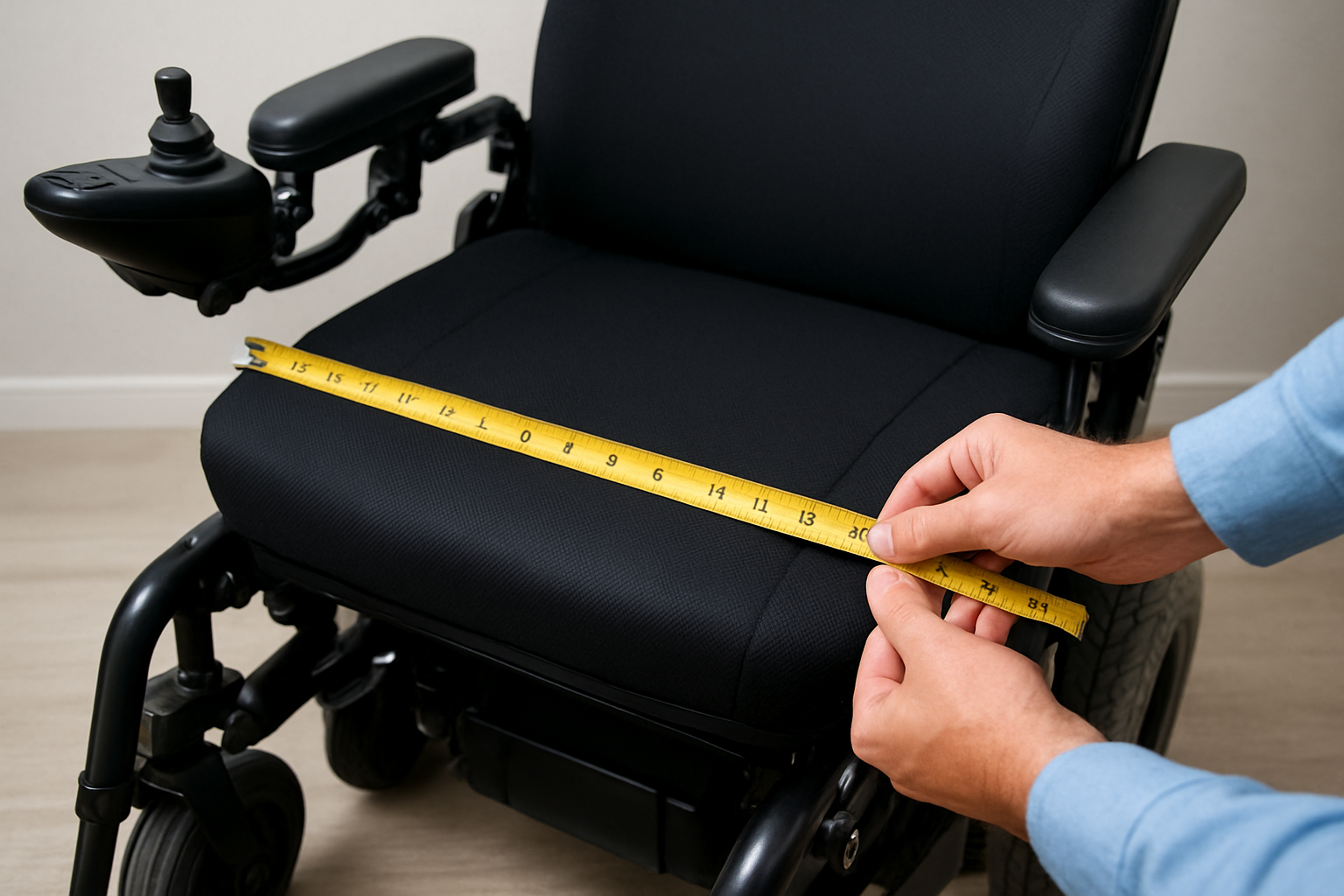
Good measurements reduce returns and speed approvals, so capture them once and keep them close. The chart below summarizes the core numbers many clinicians and suppliers ask for, plus a simple “how to measure” prompt you can follow with a friend and a tape measure. If you are working with a therapist, bring these numbers and photos of your hallway, entry, and favorite chair so everyone sees the same space, which keeps your notes and the detailed written order aligned. Go Wheelchairs also offers a resources hub with printable guides, comparison tools, and travel tips that walk you through each measurement with diagrams you can share.
| Measurement | Your Number | How to Measure | Why It Matters |
|---|---|---|---|
| Seated hip width | Record in inches | Across the widest part of the hips while seated | Determines seat width for comfort and posture |
| Seat depth | Record in inches | Back of buttocks to behind the knee, minus about one inch | Prevents pressure at the knees and supports thighs |
| Seat-to-floor height | Record in inches | From floor to top of the seat cushion | Matches desk, table, and transfer heights |
| Doorway width | Record in inches | Measure the narrowest interior doorway you use | Ensures the chair fits throughout your home |
| Tightest turn space | Record in inches | Length and width of the smallest turning area | Helps choose turning radius and drive type |
| Rider weight | Record in pounds | Weigh yourself with usual clothing | Ensures safe capacity and battery range estimates |
Two last fit tips can make a big difference right away. First, bring the shoes and coat you actually wear on cold days when you test, because bulky clothing affects armrest height, turning space, and transfer angles more than most people expect. Second, ask to try minor adjustments like joystick sensitivity, seat angle, or backrest height during the test, since a five-minute tweak can turn a “maybe” into a “this is it,” and those same settings could appear in your order to speed delivery. Go Wheelchairs consultants keep adjustment tools on hand exactly for this reason, and they love turning a good fit into your best fit before you sign anything.
Why Go Wheelchairs Fits This Journey
When you just want a chair that works and a path that makes sense, it helps to have a partner who lives and breathes this world every day. Go Wheelchairs offers a wide range of standard and heavy-duty motorized wheelchairs, lightweight and foldable designs for travel, and a human team that treats coverage and paperwork like a project with milestones rather than a maze. The company’s resources hub includes electric wheelchair buying guides, model comparisons, and travel tips you can actually use on a Saturday afternoon, and the insurance support team coordinates with your clinician so the medical details show up in the right place at the right time. In other words, you get choices, context, and calm guidance, which is exactly what most of us want when we are choosing a device that brings independence back within reach.
For transparency, you also get support after the sale, which is when many riders discover the difference between a box shipper and a committed partner. Go Wheelchairs helps with maintenance schedules, battery and tire replacements, and loaner arrangements when repairs are needed, because mobility should not pause when a bolt squeaks or a battery fades. You can book a call to discuss whether a standard or heavy-duty build matches your routes, or ask for help translating plan language, including the finer points of Healthcare Common Procedure Coding System [HCPCS] categories, into plain English. When your life changes, your chair can change with it, and having a team that knows your measurements, preferences, and coverage history means updates are smoother and faster.
Common Mistakes to Avoid (So You Do Not Learn the Hard Way)
Even smart shoppers fall into patterns that slow approvals or lead to awkward fits, but the good news is that each pitfall has a simple fix. Do not skip the home and body measurements, because guessing on seat width or ignoring doorway sizes creates daily friction and sometimes painful pressure points, and both are avoidable with five minutes and a tape measure. Do not choose by range alone, because a chair with great numbers on paper can feel twitchy in your kitchen or harsh on cracked sidewalks, and comfort nearly always determines whether you actually use the device as much as you planned. Finally, do not leave coverage to the end, because your clinician’s notes and the detailed order must match, and starting the coverage conversation early with a supplier like Go Wheelchairs shrinks timelines and surprises.
| Mistake | Why It Happens | Simple Fix |
|---|---|---|
| Skipping measurements | Looks time-consuming | Use the cheatsheet and ask a friend to help for five minutes. |
| Choosing by specs alone | Numbers feel objective | Test-drive on your route and adjust settings during the demo. |
| Waiting on coverage steps | Papers feel overwhelming | Start with a face-to-face visit and lean on supplier guidance. |
| Ignoring maintenance | Assumes new means worry-free | Schedule preventive checks and budget for tires and batteries. |
As a final confidence booster, remember that you are not choosing a lifetime companion on day one; you are choosing a chair that fits your life now with room to evolve. If your strength, routes, or goals change, seating, cushions, joystick settings, and even model class can change with you, and a supportive supplier makes that pivot simpler. That is why many riders stick with Go Wheelchairs across years: the team tracks your preferences, keeps parts and accessories stocked, and offers new electric wheelchair buying guides when fresh models arrive, so your independence keeps pace with your life, not the other way around.
Quick Recap Table: Which Chair Might Fit Your Story?
| Your Scenario | Likely Fit | Why |
|---|---|---|
| Small apartment, tight kitchen turns | Standard, mid-wheel drive | Excellent indoor maneuvering and compact frame |
| Hilly neighborhood, weekend park visits | Heavy-duty, front-wheel drive | Better traction, suspension, and capacity |
| Frequent travel with trunk loading | Lightweight foldable or quick-disassemble | Easier lifting and fast stowing |
| Mixed indoor errands plus uneven sidewalks | Standard with upgraded suspension | Balanced agility and comfort |
Now you have a map, a checklist, and a partner ready to help at each step. With the right model and coverage plan, your chair becomes a quiet background helper rather than the star of your day, which is exactly the point. If you want a friendly walk-through, Go Wheelchairs offers one-on-one guidance, a wide range of standard and heavy-duty motorized wheelchairs, and insurance support that turns paperwork from a barrier into a bridge you cross once.
Case Study Glimpse: Coverage Done Right
Consider Lena, who expected months of back-and-forth on coverage but left her first call with a clear path. With Go Wheelchairs, she scheduled a face-to-face evaluation the same week, used the measurement cheatsheet to prep, and the clinician tied each requested feature to Lena’s home tasks. The supplier prepared the prior authorization packet, verified the Healthcare Common Procedure Coding System [HCPCS] code match, and flagged a missing sentence in the notes before submission, avoiding a common delay. Four weeks later, Lena was driving a compact, quick-disassemble model that handled her apartment turns and grocery trips, and she told us the biggest surprise was how little she had to worry after she wrote down her measurements and her “mission sentence.”
Pro Move: Keep a Mobility Log for Seven Days
Write down where you go, how long you sit, any pressure or fatigue you notice, and what slowed you down each day for a week. This tiny habit gives your clinician powerful, specific language for medical necessity, and it gives you clarity about which features matter most. Go Wheelchairs will happily review your log and map each pain point to a solution, like suspensions that soften bumpy paths, cushions that relieve pressure, or lightweight folding frames that simplify rides with friends and family.
Everything you have read here points to one promise: the right chair removes friction so your life can expand again. Imagine the next twelve months with effortless grocery runs, park strolls that do not tax your shoulders, and spontaneous trips where stowing your chair is muscle-memory, not a puzzle. What would you do more of if the path from trying models to securing coverage and rolling out was as simple, clear, and supportive as these electric wheelchair buying guides?
Additional Resources
Explore these authoritative resources to dive deeper into electric wheelchair buying guides.
Choose Confidently with Go Wheelchairs
Explore a wide range of standard and heavy-duty motorized wheelchairs with personalized guidance and coverage support so you move forward with independence and peace of mind.