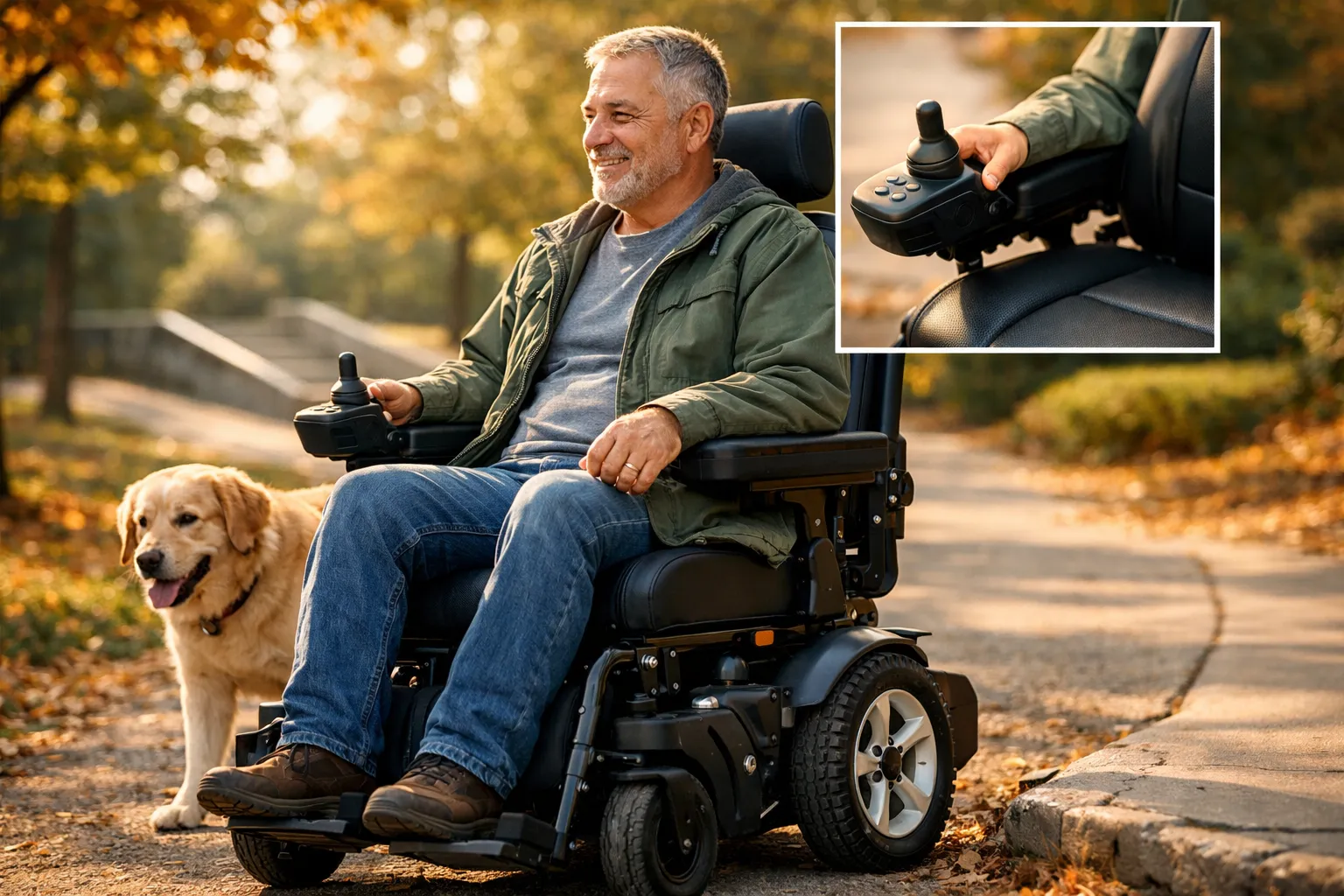
Compare Standard vs Heavy-Duty Power Wheelchairs: Weight Capacity, Terrain Performance & Medicare Coverage Guide
If you are ready to compare standard vs heavy-duty power wheelchairs, you are in the right place. Picking the best motorized wheelchair can feel like choosing between a city car and a pickup truck. Both get you where you want to go, but each is built for different roads, loads, and lifestyles. In a world where roughly 6.8 million people in the United States rely on mobility devices, understanding capacity, terrain handling, and Medicare Part B [Part B of Medicare] coverage can save time, stress, and money.
As you read, picture your daily routes, your favorite places, and the support you want from your chair. Do you prioritize tight indoor turns and easy transport in a sedan, or do you need extra muscle for uneven sidewalks, parks, or hilly neighborhoods? At Go Wheelchairs, we help you map those choices to the right model and coverage path, offering a wide range of standard and heavy-duty motorized wheelchairs plus friendly, personalized guidance from first question to first ride.
Standard Power Wheelchairs: What They Are and Who They Fit
Standard power wheelchairs are the everyday workhorses of indoor and light outdoor mobility. Most models support a user weight capacity of about 250 to 300 lb [pounds], offer seat widths from 16 to 20 in [inches], and keep overall width trim for doorways and hallways. If you live in an apartment, navigate crowded stores, or prefer quick, nimble handling at home, these chairs are designed for that. Think of a standard chair like a practical compact car that shines on city streets, fits in tight parking spots, and still handles weekend errands without drama.
Drive configurations vary. Mid-wheel drive centers the main wheels under your seat for a tight turning radius, often around 20 to 22 in [inches]. Rear-wheel drive tracks straight outdoors and can feel more stable on small bumps. Front-wheel drive pulls you over thresholds with confident curb or ramp starts. Most standard chairs offer a ground clearance of about 2 to 3 in [inches], smaller tires, and basic suspension tuned for smooth indoor floors and paved paths. Typical top speed ranges from 3.5 to 5 mph [miles per hour], which suits residential and retail settings.
Transport and storage are usually easier with standard models. Some designs are lightweight, foldable frames or break down into manageable pieces, making trunk transport possible without a van. Batteries are commonly sealed lead-acid or, in select travel-friendly units, lithium-ion for reduced weight and faster charging. Range varies, but many standard chairs deliver 8 to 15 miles per charge under typical conditions. If your week includes commutes across the living room, a few blocks to a cafe, and rides through a grocery store, this category matches that rhythm.
Medicare Part B coverage often places standard chairs in Group 1 or Group 2 categories under HCPCS [Healthcare Common Procedure Coding System] codes, with coverage dependent on medical necessity in the home. In plain language, if a face-to-face evaluation shows you cannot perform essential ADLs [Activities of Daily Living] at home without a power wheelchair, and a clinician writes a valid order, Medicare may help pay. At Go Wheelchairs, our insurance assistance team helps organize documentation and coordinates with Medicare-enrolled suppliers so approved claims go smoothly.
Heavy-Duty Power Wheelchairs: Extra Capacity, Stability, and Range
Heavy-duty power wheelchairs step in when you need more strength, more space, and more stability. Users who need a higher weight capacity, wider seating, or robust outdoor performance will notice the difference immediately. Common capacity limits start around 350 lb [pounds] and extend to 450, 600, or even 700 lb [pounds] in bariatric builds. Seat widths frequently begin at 20 in [inches] and can stretch to 26 in [inches] or more, paired with reinforced frames, larger motors, and beefier footplates that take pressure off your knees and ankles.
Watch This Helpful Video
To help you better understand compare standard vs heavy-duty power wheelchairs, we’ve included this informative video from Mobility Scooters Direct. It provides valuable insights and visual demonstrations that complement the written content.
Where standard chairs feel like nimble city cars, heavy-duty models are your dependable pickup truck. You will often see larger drive wheels with deeper tread, upgraded suspension, and higher ground clearance in the 3 to 5 in [inches] range. These upgrades translate to better traction on broken sidewalks, packed dirt, grass, or gravel and more confident handling on slopes. Top speed can reach 4 to 7 mph [miles per hour], and many models achieve a longer usable range per charge due to higher-capacity batteries measured in Ah [ampere hour].
Of course, that strength adds size and weight. Transport usually requires a vehicle lift, ramp, or a van. Turning radii can increase slightly, often 22 to 30 in [inches], and overall width may push past 26 in [inches], so checking doorways at home is essential. Still, if you want to cruise parks with grandkids, visit farmers’ markets, and roll up neighborhood slopes without hesitation, heavy-duty is purpose-built for that comfort and control.
For Medicare Part B coverage, many heavy-duty chairs fit in Group 2 or Group 3 categories within HCPCS [Healthcare Common Procedure Coding System]. The key is documenting medical necessity for a higher weight capacity or advanced positioning features. Prior authorization may apply to certain codes. Our team at Go Wheelchairs helps you and your clinician assemble notes, test results, and measurements to give claims reviewers a clear, accurate picture of why a heavy-duty device is the right medical solution for your daily life.
Side-by-Side Comparison to Compare Standard vs Heavy-Duty Power Wheelchairs
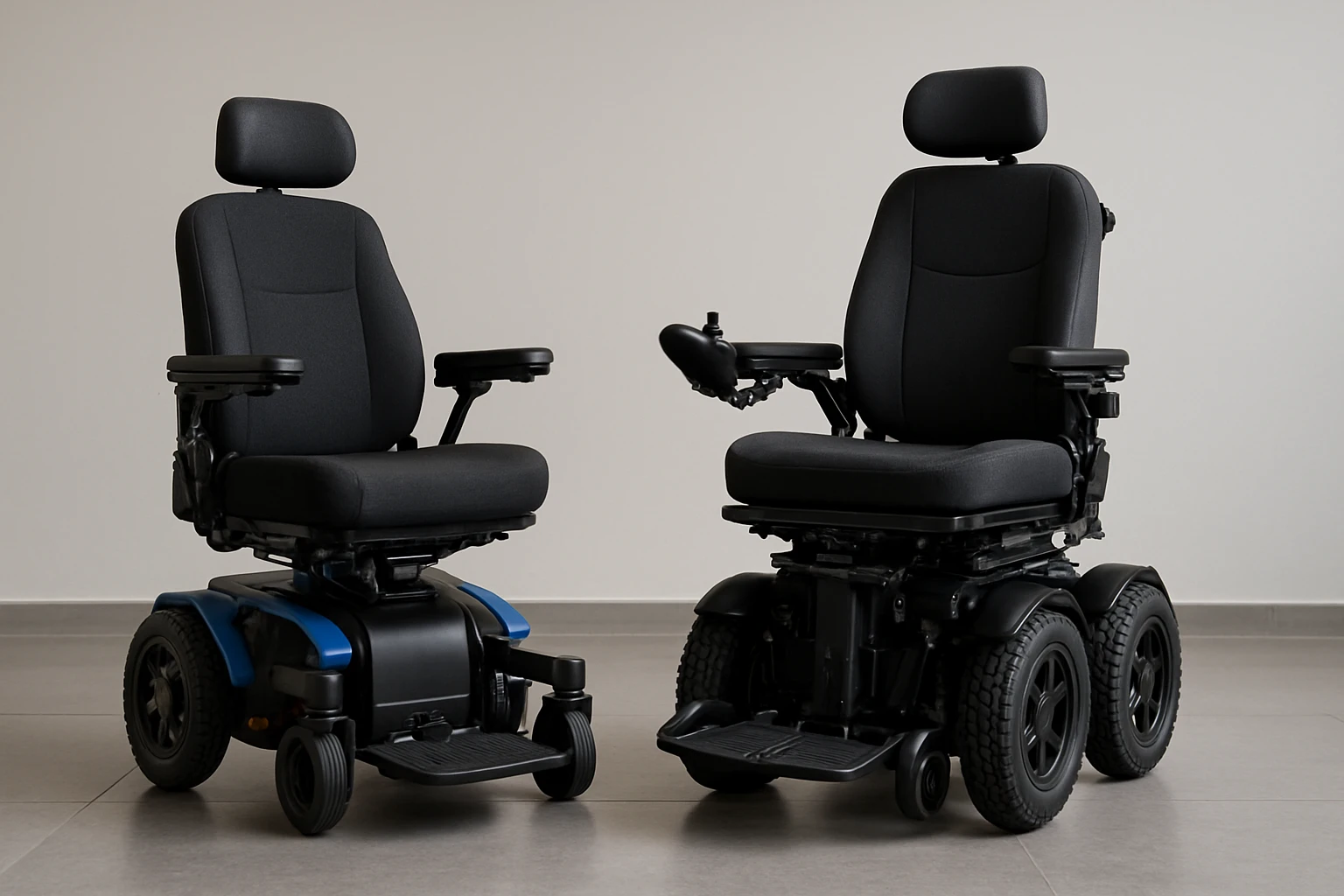
Here is a quick look at how typical specifications and coverage considerations stack up. Exact numbers vary by brand and model, so use this as a guide and lean on a hands-on demo to confirm your fit and feel.
| Feature | Standard Power Wheelchair | Heavy-Duty Power Wheelchair |
|---|---|---|
| Typical User Weight Capacity | 250 to 300 lb [pounds] | 350 to 700 lb [pounds] depending on model |
| Seat Width Options | 16 to 20 in [inches] | 20 to 26+ in [inches] |
| Overall Chair Width | 23 to 25 in [inches] | 26 to 30 in [inches] |
| Turning Radius | About 20 to 22 in [inches] with mid-wheel drive | About 22 to 30 in [inches] depending on configuration |
| Ground Clearance | 2 to 3 in [inches] | 3 to 5 in [inches] |
| Top Speed | 3.5 to 5 mph [miles per hour] | 4 to 7 mph [miles per hour] |
| Range Per Charge | 8 to 15 miles typical | 12 to 20 miles typical |
| Suspension | Basic or comfort suspension | Upgraded multi-link or enhanced suspension |
| Tire Size | Smaller, optimized for indoor floors | Larger, better on grass, gravel, broken pavement |
| Transportability | Some foldable or disassemble for car trunks | Usually needs vehicle lift, ramp, or van |
| Medicare Part B Eligibility | Yes with medical necessity in the home | Yes with documented need for higher capacity or features |
| Common HCPCS [Healthcare Common Procedure Coding System] Examples | Often Group 1 or Group 2, such as K0813 or K0823 | Often Group 2 HD or Group 3, such as K0825 or K0848 |
| User Share Under Medicare Part B | Typically 20 percent coinsurance after deductible | Typically 20 percent coinsurance after deductible |
| Price Range Before Insurance | About $1,500 to $4,000+ depending on features | About $3,000 to $8,000+ depending on features |
| Best For | Indoor mobility, tight spaces, lighter outdoor use | Higher capacities, varied terrain, longer daily routes |
Important note: Coding, coverage, and benefit rules change. Always confirm current HCPCS [Healthcare Common Procedure Coding System] requirements, prior authorization status, and supplier enrollment with your clinician and Go Wheelchairs before ordering.
When to Choose a Standard Power Wheelchair
Choose a standard chair when you want a compact, maneuverable mobility solution that fits everyday spaces and routines. If you live where doorways are around 28 to 32 in [inches] wide and your routes are mostly indoors or on smooth sidewalks, a standard model delivers the balance of agility and comfort you need. It is also a smart match if you value lighter weight, foldable options, and easier travel in a sedan or ride-share vehicle.
- Your clinician supports a capacity need within 250 to 300 lb [pounds].
- You navigate narrow hallways, small bathrooms, or galley kitchens daily.
- Transport in a car trunk or quick disassembly matters to you.
- Your usual terrain is smooth tile, hardwood, carpet, paved sidewalks, and ramps.
- You want a tighter turning radius for elevators and store aisles.
- You prefer lower up-front cost and potentially simpler Medicare documentation.
Mini case: Maria in Austin works remotely and spends most hours at home. She needs quick turns in a 30 in [inches] hallway and a small bathroom. A mid-wheel drive standard power chair with a 19 in [inches] seat and swing-away joystick lets her turn without bumping walls, slide under her desk, and stow the chair in a hatchback for weekend errands. That right-sized simplicity is what she needed to stay independent and comfortable.
When to Choose a Heavy-Duty Power Wheelchair
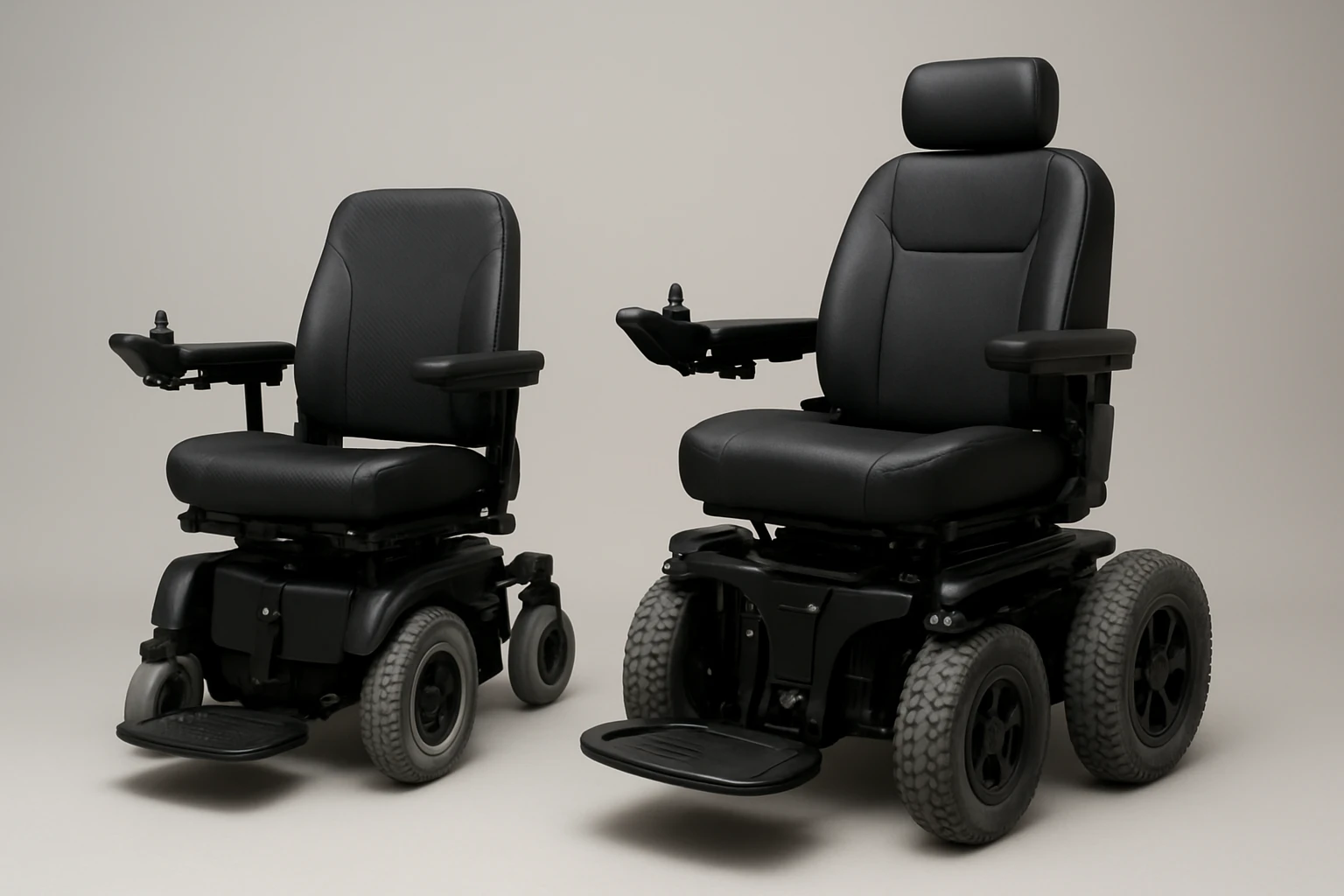
Pick a heavy-duty chair when your body, your routes, or your goals consistently demand more. If you need higher weight capacity, wider seating, or frequent outdoor trips on uneven ground, the added traction, suspension, and frame strength pay off every day. You will trade some transport simplicity, but you will gain confidence on slopes and surfaces that would slow a standard chair.
- Your clinician documents a capacity need above 300 lb [pounds] or wider seating.
- You regularly ride on grass, packed dirt, broken sidewalks, gravel, or curbs.
- Your neighborhood includes notable slopes or driveway lips.
- You want larger batteries for longer daily range in Ah [ampere hour].
- You prefer bigger tires, deeper tread, and upgraded suspension.
- You are comfortable using a vehicle lift, ramp, or van for transport.
Mini case: James in western Pennsylvania visits grandkids across a small park and handles mild hills daily. After getting winded wrestling a standard chair over uneven edges, he switched to a heavy-duty model with 4.5 in [inches] ground clearance, deeper tread, and a stronger motor. The result is simple: calmer rides, easier hill starts, and the freedom to stop by baseball practices without planning every crack in the sidewalk.
Medicare Coverage, Insurance, and Cost Basics
Medicare Part B covers power wheelchairs as DME [Durable Medical Equipment] when they are medically necessary for use in the home. That proof starts with a face-to-face evaluation by your treating clinician and a written order prior to delivery. Coverage typically requires that you cannot perform essential ADLs [Activities of Daily Living] at home using a cane, walker, or manual wheelchair and that a power wheelchair is reasonable and necessary for safe mobility. When a higher capacity or specific features are required, the clinician’s notes should clearly show why.
Your out-of-pocket with Medicare Part B is usually 20 percent coinsurance of the Medicare-approved amount after the annual deductible. Many power mobility devices are provided via capped rental up to 13 months, though some models and scenarios are eligible for purchase. Prior authorization may apply to specific HCPCS [Healthcare Common Procedure Coding System] codes. The quickest route to yes is clean, consistent documentation and a supplier properly enrolled in Medicare. This is where Go Wheelchairs helps: we guide you through forms, coordinate with your clinician, and ensure the right product aligns with your coverage rules before delivery.
| Medicare Topic | What to Know |
|---|---|
| Face-to-Face Evaluation | Required visit documents why a power wheelchair is medically necessary at home. |
| Written Order Prior to Delivery | Clinician must issue a valid order that matches your evaluation findings. |
| Supplier Enrollment | Use a Medicare-enrolled supplier. Go Wheelchairs verifies enrollment and billing steps. |
| Prior Authorization | Applies to certain HCPCS [Healthcare Common Procedure Coding System] codes. Submit all records clearly and early. |
| Your Cost Share | Typically 20 percent coinsurance after Part B deductible. Medigap or other insurance may reduce costs. |
| Rental vs Purchase | Many chairs are capped rentals for up to 13 months. Some situations may allow purchase. Confirm your category. |
Practical tip: Open your phone and measure a few real-world spots. Record doorway widths, hallway widths, elevator thresholds, trunk opening size, and the steepest ramp you use. Then bring those numbers to Go Wheelchairs. We will help you match them to turning radius, overall width, ground clearance, and incline specs so your chair fits your life, not the other way around.
Best-practice checklist:
- Map your daily routes and surfaces for one week.
- Measure key spaces at home and in transit in in [inches] and degrees for slopes.
- Confirm seat width, depth, and back height with a trained fitter.
- Ask about battery type, Ah [ampere hour] capacity, and charging time.
- Test-drive both standard and heavy-duty models on your typical terrain.
- Gather documentation early to streamline Medicare Part B review.
How Go Wheelchairs helps: Beyond a wide range of standard and heavy-duty motorized wheelchairs, our team offers lightweight, foldable designs for travel, step-by-step insurance and Medicare assistance, and a growing Resources Hub filled with buying guides, comparison tools, and travel tips. When choices get complicated, we simplify them with side-by-side demos, plain-English explanations, and clear next steps.
Expert insight: Many riders discover it is less about maximum speed and more about control. A chair that climbs your steepest driveway lip without stalling, turns in your narrowest hallway without scuffing, and carries you comfortably for your longest weekly trip is the chair that actually protects your energy and independence. Build your shortlist around those moments first.
Real-world outcomes: In our experience, riders who document their home layout, measure consistently, and test both categories before ordering report higher satisfaction and fewer support calls later. It is not magic — it is just matching real life to real specs with a little friendly coaching along the way.
Common questions we hear:
- Can I travel by air with my power chair? Yes, but airline rules vary. Lithium-ion batteries require special handling. Our Resources Hub has step-by-step checklists.
- What if my weight fluctuates? Choose capacity with a comfortable margin and talk with your clinician about long-term support needs.
- Do I need special tires? If you ride mostly indoors, low-profile tires are fine. For grass and gravel, ask about wider tires with deeper tread and adjust psi [pounds per square inch] per the manual.
Lastly, keep maintenance simple. Schedule routine checks, keep batteries charged after daily use, and store the chair in a cool, dry place. A quick monthly walk-around — tire wear, joystick response, and brake tests — catches small issues long before they interrupt your week.
At any point, if you are torn between categories, remember the city car versus pickup analogy. If your days are mostly hallways, elevators, and cafes, standard makes sense. If your days include daily hills, grass, or heavier loads, heavy-duty might be freedom waiting to happen. And if you still are not sure, we will line up both options for a back-to-back trial so you can feel the difference instantly.
Two final notes on coverage and confidence: Keep copies of all clinician notes, orders, and measurements, and confirm your supplier is Medicare-enrolled. These two steps alone answer most insurer questions before they are asked. When life changes — a move, a new job, or a new hobby — revisit your setup with us so your chair keeps up.
Have specific needs like elevating seats, tilt or recline, or alternative controls for limited hand strength? Let us know. Many of these features exist in both categories, and our team can direct you to models that mix capacity, positioning, and access controls for all-day comfort.
If you prefer to learn at your own pace first, explore the Go Wheelchairs Resources Hub for checklists, videos, and side-by-side charts. Then schedule a friendly call to review your shortlist, pricing, and your Medicare Part B next steps. When coverage, comfort, and confidence align, mobility becomes much more than movement — it becomes momentum.
Key takeaway: Choosing between standard and heavy-duty is not just about today’s weight or today’s hill. It is about next season’s plans, your favorite hangouts, and the confidence to say yes more often. Start with your routes, validate with a demo, and let documentation do the heavy lifting on coverage.
One more small but mighty tip: Door sweeps and threshold ramps can transform borderline spaces, turning a near-miss into a smooth roll. Ask us about low-profile solutions if a single spot at home is giving you trouble.
Ready to try models side by side? We will set up a hands-on session and review coverage scenarios in the same visit so you leave with answers, not more homework.
If your caregiver or family member is helping research, invite them to the demo and bring their questions. We welcome the whole decision team because everyone’s day gets easier when your chair fits just right.
And yes, we carry accessories that make daily life nicer — swing-away leg rests, lateral supports, trays, lights, and travel chargers — so your chair feels like your chair.
Finally, a quick confidence booster: Thousands of riders every year successfully navigate Medicare Part B approval for exactly the chair they need. With clear notes and the right partner, you can be one of them.
Fast recap of your checklist:
- Decide which surfaces and routes matter most.
- Measure key spaces in in [inches] and estimate the steepest slopes.
- Test-drive both chair categories on similar terrain.
- Confirm seat size, cushion type, and joystick placement.
- Gather clinician notes and the written order for Medicare Part B.
- Let Go Wheelchairs coordinate supplier enrollment and prior authorization.
Once those steps are done, the rest gets a lot easier — and a lot more fun.
Story spotlight: Carla chose a standard chair for apartment life and grocery runs. Six months later, she added a foldable travel model for air trips with her sister. Meanwhile, her dad switched to heavy-duty for weekend fishing across a grassy park. Same family, different needs, and both solutions worked because the choices matched the routes.
When you are ready, we will help you compare features, confirm fits, and outline the coverage path in writing so you know where you stand before you order.
Note: Specifications, codes, and coverage policies evolve. Always verify current details with your clinician and Go Wheelchairs before making a final decision.
Want a quick way to narrow your list? If three or more of your weekly trips involve uneven ground or slopes, start with heavy-duty. If three or more happen in tight indoor spaces, start with standard. Then test the opposite category once to confirm your choice.
Either way, you will learn something valuable in ten minutes that no spec sheet can teach — how the chair feels when it is you, on your route, doing your day.
Go Wheelchairs advantage: A wide range of standard and heavy-duty motorized wheelchairs, lightweight foldable designs for travel, personalized support, insurance and Medicare guidance, and a friendly Resources Hub with buying guides, comparison tools, and travel tips. Our mission is simple: reliable mobility at fair prices so you can move forward with confidence and independence.
That is the whole point, right?
Final guidance: Bring your questions. We will bring options and clarity. Then we will make coverage as simple as possible and get you rolling on the chair that fits your life today and your plans tomorrow.
Once you try both categories back to back, the right choice usually jumps out like a green light. When it does, we will be right there to guide paperwork, delivery, and your first ride.
And when your world changes, we will be here with new solutions, too.
Quick Medicare vocabulary so you feel fluent:
– DME [Durable Medical Equipment] is equipment prescribed for home use to support a medical need.
– HCPCS [Healthcare Common Procedure Coding System] is how items are categorized for billing.
– ADLs [Activities of Daily Living] include bathing, dressing, toileting, and moving safely at home.
With that, you have the knowledge, the steps, and the partner to make a confident choice.
Short example setups to visualize fit:
– Studio apartment, elevator building, two grocery trips weekly: standard, mid-wheel drive.
– Suburban home, uneven sidewalks, weekend park visits: heavy-duty with upgraded suspension.
– Frequent car travel, hotel stays, and flights: standard with a lightweight, foldable frame.
Ready to roll forward? Let’s lock in your specs, test-drive, and start the coverage process together.
Your move: Jot down your five most common routes and one dream trip you want this chair to unlock. Bring that list to your demo. We will handle the rest.
Closing thought before our recap: Mobility is not just getting from A to B — it is the confidence to say yes to C, D, and E tomorrow.
Recap in one sentence: Standard equals compact agility and easy transport, heavy-duty equals extra capacity and terrain confidence, and Medicare Part B can help when medical necessity is clear and documented.
Next, we will tie the bow with a concise conclusion and then give you a simple way to take the next step with Go Wheelchairs.
One-liner to remember on your demo day: Choose the chair that makes your toughest five minutes easy, not your easiest five minutes easier.
Now, on to our brief close.
Your best choice comes from honest routes, measured spaces, and hands-on tests — supported by coverage that is set up right the first time. In the next 12 months, small upgrades like better cushions, threshold ramps, and smarter batteries could turn everyday friction into smooth, dependable motion. What do you want your chair to make possible that your current setup cannot — yet?
Find Your Power Chair Fit with Go Wheelchairs
Go Wheelchairs offers a wide range of standard and heavy-duty motorized wheelchairs plus Medicare and insurance guidance so you choose confidently, save money, and move forward with lasting independence.
Ready for the final word before you book a demo? Here it is: when you compare standard vs heavy-duty power wheelchairs in person, the right choice becomes obvious fast — and we will make that moment easy.