
When you are shopping for mobility, not just a chair, it pays to slow down and thoughtfully compare power wheelchair models and features. I still remember helping my neighbor Maria pick her first motorized wheelchair; two demo drives and one doorway measurement later, we realized the “perfect” chair on paper was not the right fit for her apartment. That is why this guide leans into real-life decisions: the doorway you pass through every day, the hills near your home, the time you spend at the park, and yes, how Medicare or other health insurance will evaluate medical necessity. Along the way, you will see how Go Wheelchairs supports you with a wide range of standard and heavy-duty motorized wheelchairs, lightweight foldable options, and friendly experts who translate coverage rules into clear next steps. Ready to feel confident from first test-drive through the coverage process?
How to Compare Power Wheelchair Models and Features: The 8-Step Buyer’s Checklist
Choosing a motorized wheelchair is part fact-finding, part lifestyle matching, and part paperwork choreography. A practical checklist keeps you focused on what matters while preventing decision fatigue. Start with you: body measurements, comfort preferences, and the places you plan to roll. Then look at the chair: drive system, range, controls, and seating functions. Finally, map the process: who documents medical need, which code applies, and what time frame to expect. This 8-step checklist is the same framework Go Wheelchairs uses during personalized consultations, blending clinical best practices with everyday wisdom. It is designed to help you move forward with confidence, whether you need a nimble mid-wheel drive for tight hallways or a heavy-duty frame for outdoor independence. As you read, imagine taking a short demo drive after each step; you will notice how small details add up to a perfect fit.
- Fit and measurements: seat width, depth, back height, cushion type, and footrest style.
- Drive system: front-wheel, mid-wheel, or rear-wheel characteristics for turning and traction.
- Weight capacity and duty rating: standard versus heavy-duty frames and suspension.
- Range and batteries: real-world mileage, amp-hours [Ah], and charging routine.
- Controls and adjustability: joystick programming, alternative inputs, and safety features.
- Portability and storage: foldability, transport weight, and home or vehicle loading.
- Service and support: warranty, maintenance access, and local technician network.
- Medicare or insurance pathway: documentation, Healthcare Common Procedure Coding System [HCPCS] coding, and timelines.
Because life does not happen in showrooms, each step should be tested against your daily rhythms. If your home has narrow doorways, prioritize turning radius and armrest swing-away features. If you commute across cracked sidewalks or grass, study ground clearance, tire type, and suspension travel. For many shoppers, the winning choice is not the “best” chair in a brochure, but the chair that best fits their routes, routines, and coverage criteria. This is where Go Wheelchairs shines: the team offers a Resources hub with buying guides, comparison tools, and travel tips, plus Medicare and insurance assistance that helps explain coverage requirements and guides what documentation insurers typically request. Think of it as a co-pilot that helps you balance comfort, capability, and cost, without missing a crucial checkbox.
Fit and Frame Geometry: Size, Seat, Cushioning, and Turning Radius
Fit is freedom. A seat that is one inch too wide can cause sliding, fatigue, and skin risk, while one inch too narrow can create pressure points and poor posture. Start with your seated hip width and add one inch for light clothing; test seat depths to ensure two to three fingers of space behind the knees. Back height should support the trunk without blocking shoulder movement, and the cushion should match your skin integrity risk and balance needs. Turning radius is the sleeper metric here. Mid-wheel chairs often pivot within 20 to 24 inches, making them great for kitchens and bathrooms. Front-wheel chairs shift weight forward for curb climbing and softer ride, while rear-wheel chairs offer straight-line stability outdoors. Heavy-duty frames expand seat width and weight capacity for plus-size users, yet careful selection can still keep indoor maneuverability comfortable.
Watch This Helpful Video
To help you better understand compare power wheelchair models and features, we’ve included this informative video from Mobility Scooters Direct. It provides valuable insights and visual demonstrations that complement the written content.
| Category | Typical Seat Width | Turning Radius | Weight Capacity | Best For |
|---|---|---|---|---|
| Standard | 16 to 20 inches | 22 to 26 inches | 250 to 300 pounds [lbs] | Apartments, offices, flat sidewalks |
| Lightweight Foldable | 16 to 20 inches | 24 to 27 inches | 220 to 265 pounds [lbs] | Travel, car trunk transport, tight storage |
| Heavy-Duty | 22 to 26 inches | 26 to 30 inches | 300 to 450 pounds [lbs] | Outdoor use, hills, higher durability needs |
Before you ever sign a form, take three quick measurements at home: the narrowest doorway you regularly use, the tightest hallway turn, and the height of thresholds or steps you must clear. Add your preferred winter coat or backpack and repeat your test drives, because a bundled-up shoulder can add an inch where space is tight. If you rely on a lift chair or bed transfer board, confirm that armrests swing away or flip back, and verify footplate clearance under tables you use for meals or work. Go Wheelchairs consultants can walk you through a five-minute “fit and flow” assessment by phone, then book a local demo where you measure, try a seat cushion, and practice parallel parking between two kitchen chairs. It feels simple, but it is the difference between a chair you manage and a chair that truly supports your independence.
Range, Batteries, and Terrain: What Real-Life Mileage Looks Like

Brochures love big range numbers, but real life is more nuanced. Manufacturer ratings assume a new battery, level ground, moderate temperature, and a driver weight below the maximum capacity. Add hills, cold weather, softer surfaces like grass, or a backpack, and range changes. For planning, consider your longest routine without charging, then add 25 percent as a buffer. Battery chemistry matters too. Sealed lead-acid [SLA] batteries are budget-friendly and proven, though heavier; lithium-ion [Li-ion] batteries reduce weight and can improve usable range, with higher upfront cost. Amp-hours [Ah] provide a clue to capacity, but motor efficiency, tire pressure, and speed settings also influence miles per charge. The goal is predictable independence: a chair that does a full day of your life, not just an ideal test track.
| Chair Type | Battery Type | Common Capacity | Typical Real-World Range | Notes |
|---|---|---|---|---|
| Standard Mid-Wheel | Sealed lead-acid [SLA] | 35 to 55 amp-hours [Ah] | 10 to 18 miles per charge | Excellent indoor control; watch curb height outdoors |
| Lightweight Foldable | Lithium-ion [Li-ion] | 10 to 20 amp-hours [Ah] | 8 to 15 miles per charge | Great for travel; confirm airline rules if flying |
| Heavy-Duty Front or Rear-Wheel | Sealed lead-acid [SLA] or Lithium-ion [Li-ion] | 50 to 80 amp-hours [Ah] | 12 to 25 miles per charge | Strong on hills and grass; larger footprint indoors |
Two practical habits stretch your range: charge nightly and keep tires properly inflated. Cold garages can temporarily reduce performance, so consider charging indoors when temperatures drop. If your day includes steep grades or park trails, ask Go Wheelchairs for terrain demos and motor gearing options; a modest decrease in top speed often adds torque you feel on hills. Many users schedule a “range audit” during week two of ownership: log your longest trip, the surfaces you covered, and battery indicator at return. Share that with support staff to fine-tune settings like acceleration, deceleration, and regenerative braking. These small tweaks can add miles without changing batteries, and they make your chair feel like an extension of you rather than a device you simply manage.
Controls, Safety, and Support Tech: From Joysticks to Alternative Inputs
Controls should match your strength, reach, and reflexes. Most riders start with a programmable joystick mounted on the armrest, then tailor response curves so the chair starts smoothly and tracks straight. If upper limb function is limited, alternative input systems shine: head array sensors respond to gentle movements, chin controls centralize steering, and sip-and-puff [sip-and-puff] systems translate breath into direction and speed. Ask about profiles, which let you save different settings for tight indoor spaces versus open outdoor paths. Safety features round out the package: anti-tip wheels, obstacle-friendly footplate angles, and lighting or reflectors for dim conditions. Go Wheelchairs technicians can pre-program demo chairs so you feel the difference between “sporty” and “smoother” control in the first five minutes.
| Control Type | Best For | Key Advantages | Considerations |
|---|---|---|---|
| Programmable Joystick | Most users with reliable hand control | Custom sensitivity, easy to learn, compact | May need knob or handle customization |
| Head Array | Limited hand/arm movement | Subtle inputs, low fatigue | Placement and padding are crucial |
| Chin Control | Good head and neck control | Precise steering, central position | Requires stable mount and hygiene plan |
| Sip-and-Puff [sip-and-puff] | Minimal limb mobility | Hands-free operation | Training time and tube maintenance |
- Ask for dual profiles: one for tight indoor turns, one for higher outdoor speeds.
- Test hill-hold and anti-rollback on an incline near your home.
- Consider seat elevation for eye-level conversation and safer reaching.
- If you drive at dusk, request reflective tape and a front light kit.
Medicare and Insurance Approval: Documentation, Coding, and Timelines
Coverage is not mysterious when you break it into steps. Medicare evaluates whether a power wheelchair is medically necessary for use inside the home, and private plans often follow similar logic. You will typically need a face-to-face evaluation with your clinician, detailed chart notes describing mobility limitations and why a manual wheelchair or power scooter will not meet your needs, and a seven-element order outlining the prescription. The supplier then matches your needs to the correct Healthcare Common Procedure Coding System [HCPCS] code and submits documentation. The more specific your daily challenges and safety risks are in the notes, the smoother the approval. Go Wheelchairs helps coordinate this choreography, prompting your care team for missing details and translating technical requirements into plain language so you know what to expect.
| Milestone | Who Handles It | What It Includes | Expert Tip |
|---|---|---|---|
| Clinical Evaluation | Your clinician and therapist | Functional limits, home layout, transfer safety | Describe real scenarios: falls, fatigue, narrow turns |
| Seven-Element Order | Your clinician | Diagnosis, length of need, power wheelchair requested | Ensure dates and signatures are current |
| Supplier Documentation | Go Wheelchairs | Model, options, Healthcare Common Procedure Coding System [HCPCS] coding | Match features to chart notes line by line |
| Submission and Follow-up | Go Wheelchairs | Prior authorization or claim filing | Track timelines; many approvals complete within 2 to 6 weeks |
To prepare, gather three things: a list of indoor tasks that are not safe or possible with a cane or manual wheelchair, a sketch or notes of your home layout with doorway widths, and a short diary of distances you attempt each day and when fatigue or pain stops you. These details make your need undeniable and help identify the exact feature set that keeps you safe. If you already have a favorite model, do not worry; the right features can often be reconciled with coverage criteria when documentation is precise. Go Wheelchairs’ insurance team reviews your packet before submission, saving you from frustrating back-and-forth later. The result is a smoother path to a chair that fits your life and your coverage, not one or the other.
Side-by-Side Snapshot: Standard vs Lightweight Foldable vs Heavy-Duty
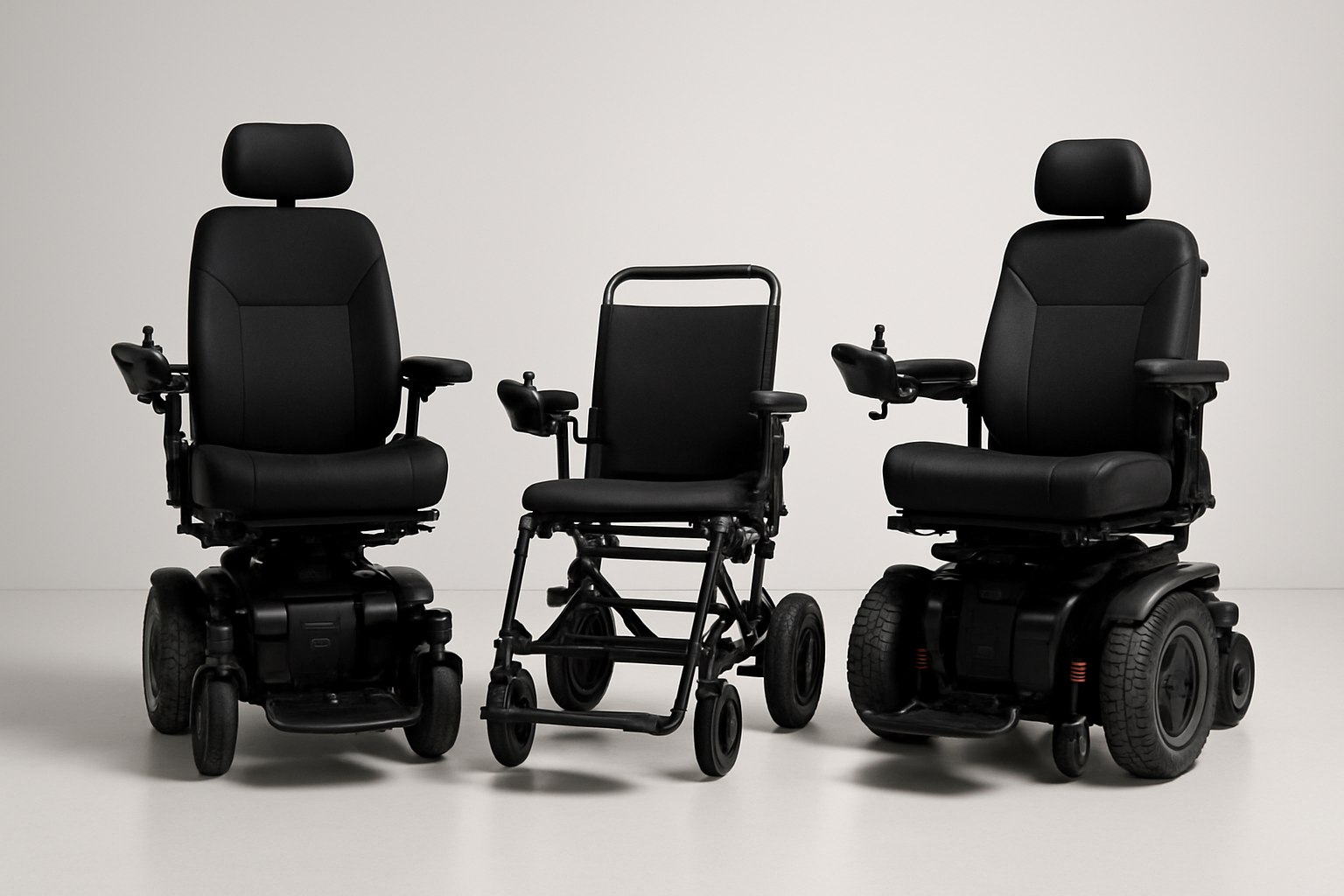
It is easier to visualize your choice when the main categories sit shoulder to shoulder. Standard power wheelchairs focus on all-around capability and comfort, lightweight foldable chairs prioritize portability and storage, and heavy-duty builds emphasize higher weight capacity and rugged terrain. No single category is “best” across the board; each trades something to gain something else. The art is matching your top two priorities to the right platform. If your priority is indoor maneuvering with reliable outdoor errands, a standard mid-wheel chair can be a sweet spot. If you ride in a friend’s sedan often, lightweight foldable frames that lift in sections may be essential. If you want weekend park paths and daily curb-climbs, a heavy-duty front or rear-wheel platform will feel like a trusty truck. Go Wheelchairs stocks all three, so you can compare with your hands, not just your eyes.
| Feature | Standard | Lightweight Foldable | Heavy-Duty |
|---|---|---|---|
| Weight Capacity | 250 to 300 pounds [lbs] | 220 to 265 pounds [lbs] | 300 to 450 pounds [lbs] |
| Turning Radius | 22 to 26 inches | 24 to 27 inches | 26 to 30 inches |
| Typical Range | 10 to 18 miles | 8 to 15 miles | 12 to 25 miles |
| Drive Types | Mid-wheel common; front or rear optional | Rear and front compact designs | Front or rear with robust motors |
| Indoor Maneuverability | Excellent | Good | Good to moderate |
| Outdoor Stability | Good on pavement | Good on smooth paths | Strong on mixed terrain |
| Portability | Moderate | High | Low to moderate |
| Medicare Fit | Common coverage when criteria met | Coverage varies by documentation | Covered when medical need is demonstrated |
| Who It Suits | Balanced indoor and outdoor users | Travelers and small-space dwellers | Riders needing higher capacity and torque |
As you compare, write down your top three non-negotiables. For example: must fit through a 28-inch bathroom doorway, must handle two park hills per week, must lift into a hatchback twice a month. Share that list with a Go Wheelchairs specialist, and you will get tailored picks with pros and cons in writing, not a one-size-fits-all recommendation. Because Go Wheelchairs carries a wide range of standard and heavy-duty motorized wheelchairs along with lightweight foldable designs, you can sit in options that truly feel different. Add in personalized support and guidance, plus Medicare and insurance assistance, and you have a buying path that respects your time and your budget while keeping independence front and center.
Real-World Scenarios: Matching Models to Daily Life
Let us make it concrete. Carlos lives in a studio with a tight galley kitchen and a 27-inch bathroom door. A standard mid-wheel model with a 22-inch turning radius and swing-away footrests fit perfectly, and joystick acceleration was softened to keep mugs safe on the counter. Meanwhile, Dana splits time between a ground-floor condo and her daughter’s townhouse, often loading into a compact car. A lightweight foldable chair that breaks into two manageable pieces solved the lifting challenge, and lithium-ion [Li-ion] batteries kept range steady as she ran errands. And Sam, who wanted to fish at the park and visit grandkids on hilly streets, chose a heavy-duty rear-wheel platform with higher torque and knobbier tires. These stories are typical of Go Wheelchairs customers: three lives, three right answers, each backed by clear documentation and coverage help so the approval letter matched the chosen features.
Industry data points mirror these experiences. Surveys of clinicians and riders suggest most indoor-focused users value turning radius first, while outdoor-focused users rank torque and tire type higher. Average ownership lasts five to seven years, which magnifies the importance of getting fit and controls right on day one. Many riders report that a 10 percent improvement in turning or control feel changes how often they leave home. This is why Go Wheelchairs’ Resources hub includes a printable measurement sheet, a door clearance checklist, and a traveler’s battery guide, along with comparison tools you can use with family or caregivers. With a little structure and a supportive partner, your choice feels less like a gamble and more like a confident, informed decision.
Your next step is simple: take this checklist and your measurements to a demo, ask for two control profiles, and bring a short list of daily trips to test. If you want a friendly co-pilot, Go Wheelchairs will line up models that meet your needs, explain trade-offs clearly, and guide your Medicare or insurance path so paperwork does not become the main event. The result is mobility that feels natural and predictable. And with a wide range of standard and heavy-duty motorized wheelchairs on hand, you will experience the difference in frame geometry, range, and controls in minutes, not weeks of guessing online.
Closing Thoughts
Here is your promise: a clear, 8-step way to choose a chair that fits your body, your routes, and your coverage.
Imagine the next 12 months with a power wheelchair that glides through your doorway, climbs your favorite hill, and gets approved without drama because your documentation was airtight.
When you picture everyday life a year from now, which moments of freedom will matter most as you compare power wheelchair models and features?
Additional Resources
Explore these authoritative resources to dive deeper into compare power wheelchair models and features.
Find Your Match with Go Wheelchairs
Explore a wide range of standard and heavy-duty motorized wheelchairs, plus guidance on insurance and Medicare coverage, so you move forward with confidence and independence.