
If you are torn between two great choices, you are not alone: many shoppers start by trying to compare lightweight vs heavy duty power wheelchairs, only to discover that the “right” chair depends on daily routines, body size, terrain, travel plans, and even insurance rules from the Centers for Medicare & Medicaid Services (CMS), which add their own twists and timelines to the buying process. Think about your week for a moment and picture every door you roll through, every ramp you climb, and every curb cut you use, because a chair that glides through cramped hallways can feel very different from one that muscles over gravel and grass without a hiccup. Over years of helping families choose, I have seen the happiest outcomes happen when people match their chair to the life they actually live, not the life a brochure imagines, and that is exactly why this versus guide focuses on real-world tradeoffs. Along the way, we will show how Go Wheelchairs backs you up with a wide range of standard and heavy-duty motorized wheelchairs, lightweight folding options, and human support for insurance and Medicare coverage so your decision feels confident, not complicated.
Why This Decision Matters More Than Spec Sheets
Spec sheets are helpful, yet the decision you are making is really about energy, independence, and time, because a chair that fits your body and your space can return an hour a day you might otherwise spend wrestling with thresholds, elevators, or vehicle lifts, which quickly adds up across a year. Lightweight power chairs commonly weigh as little as ~33 to 70 pounds (lbs) without batteries and hold users up to roughly 220 to 300 pounds (lbs), while heavy-duty or bariatric models typically support approximately 350 to 450 pounds (lbs), with reinforced frames and wider seats up to about 24 inches, all of which change how the chair turns, climbs, and fits through doors. Portability matters as much as capacity, especially if you travel or rideshare, because compact folding frames, lithium-ion (Li-ion) batteries under airline watt-hours (Wh) limits, and split-frame designs can be the difference between spontaneous plans and staying home, and surveys of mobility users consistently rank portability among the top purchase priorities. Because cost and coverage also shape the choice, this guide weaves in Medicare durable medical equipment (DME) basics, realistic out-of-pocket ranges, and a simple seven-step process that Go Wheelchairs uses to help customers trade off features without trading away freedom.
Compare Lightweight vs Heavy Duty Power Wheelchairs: Quick Side-by-Side Snapshot
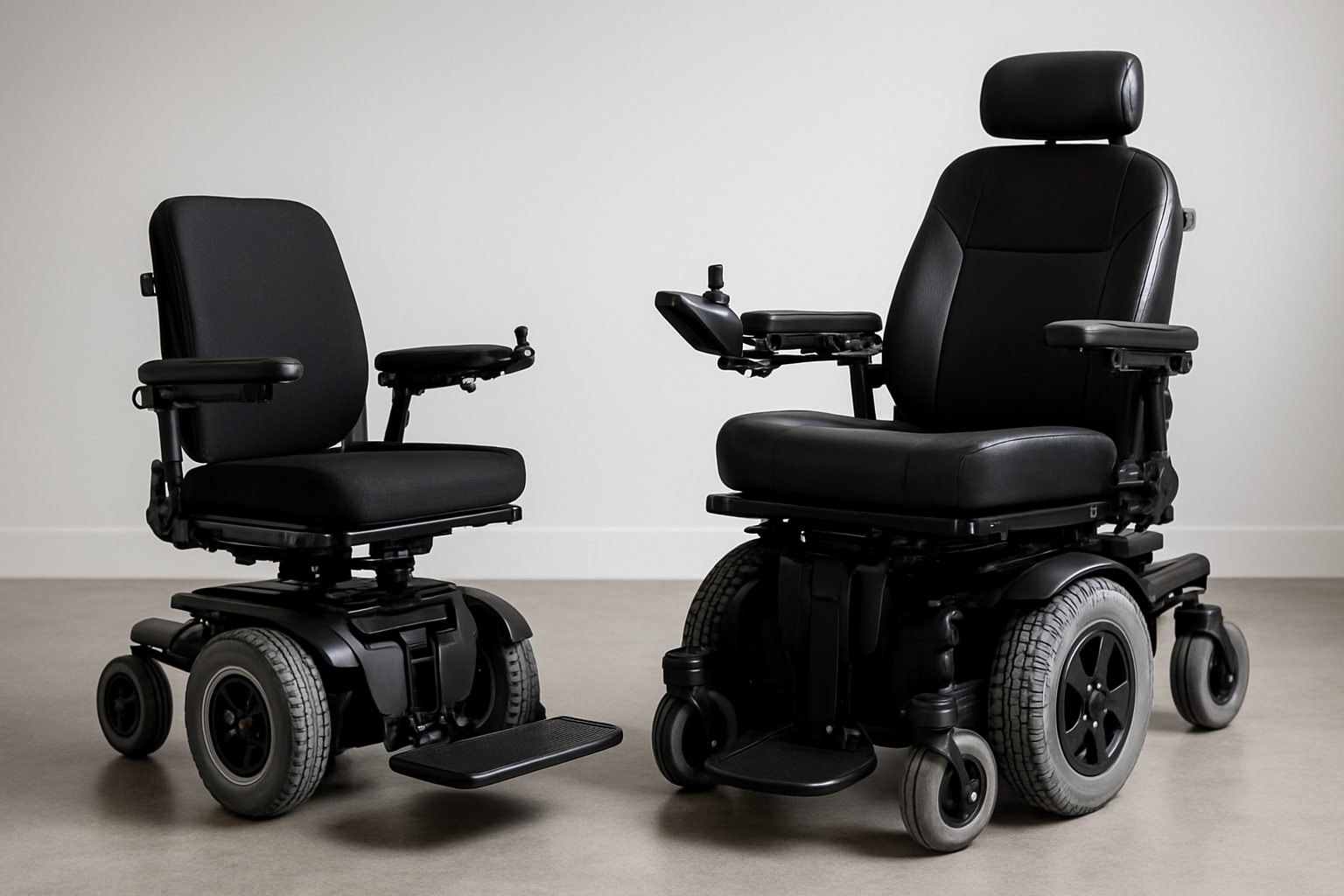
Before we dive into the seven steps, a quick overview helps you visualize the fit, because the two categories are engineered for different jobs: lightweight models highlight compact frames, travel-readiness, and ease of lifting into a car trunk, while heavy-duty chairs prioritize higher weight capacity, stability on uneven ground, and durability under daily, demanding use. Imagine a two-column sketch on your kitchen table: one side shows a nimble city runabout that folds small and sips power, the other a confident SUV-like platform that carries more, tracks straighter outdoors, and welcomes broader cushions and reinforced components, and neither is “better” in a vacuum, only better for a specific person and place. With that mindset, use the table below to compare typical ranges you will see while shopping, knowing that individual models can land on either side of these averages, and that Go Wheelchairs stocks both lightweight and heavy-duty power wheelchairs so you can try the feel rather than guessing from numbers.
Watch This Helpful Video
To help you better understand compare lightweight vs heavy duty power wheelchairs, we’ve included this informative video from Techs You Can’t Live Without. It provides valuable insights and visual demonstrations that complement the written content.
| Feature | Lightweight Power Wheelchairs | Heavy Duty Power Wheelchairs |
|---|---|---|
| User Weight Capacity | Up to ~220–300 pounds (lbs) | ~350–450 pounds (lbs) |
| Chair Weight (without batteries) | ~33–70 pounds (lbs) | ~90–250 pounds (lbs) |
| Seat Width Range | ~16–20 inches | ~20–24 inches |
| Turning Radius | Small to medium, great indoors | Medium to larger, better straight tracking |
| Portability | Foldable, disassembles, trunk-friendly | Requires vehicle lift or ramp |
| Battery Type | Often lithium-ion (Li-ion) with airline-compliant watt-hours (Wh) | Larger sealed lead-acid or lithium-ion (Li-ion) packs |
| Range per Charge | ~8–15 miles (miles) depending on terrain | ~10–20 miles (miles) depending on load and terrain |
| Best For | Apartment living, travel, rideshare, tight spaces | Outdoor use, rough ground, larger bodies, long days |
| Medicare Fit | Covered if medically necessary for in-home mobility | Covered if medically necessary and capacity is justified |
Think of the lightweight category like a carry-on suitcase that slips into an overhead bin, because the true magic is how quickly it pivots, folds, and fits your life, while the heavy-duty category is closer to checked luggage that brings everything you need without compromise, yet asks for a little more planning to transport. If you split your time between small indoor spaces and frequent car trips, light and foldable will feel like a gift you enjoy daily, but if your week includes lawns, trails, or longer stretches outside, the confidence of higher torque motors, wider tires, and reinforced frames in heavy-duty models can save energy and extend comfort, which is why Go Wheelchairs encourages test drives in scenarios that mirror your real routine.
The 7-Step Buyer’s Guide to Weight Limits, Portability, and Coverage
Use this seven-step framework to turn a big decision into a set of small, clear choices, and feel free to jot notes as you go because each step builds on the last and you will end with a shortlist that matches your body, your home, and your budget. I have walked countless families through these same steps at Go Wheelchairs, and the pattern is consistent: when we measure, map, and reality-check, the right chair practically picks itself, and insurance or Medicare paperwork gets smoother because your documentation tells a coherent story of medical need and daily function. Keep in mind that while general rules apply, your therapist, physician, or assistive technology professional may add specific recommendations, and that is good because Medicare durable medical equipment (DME) approvals depend on clinical notes that connect your diagnosis to your daily environment. Ready to move from browsing to choosing with purpose, and ready to compare lightweight and heavy-duty options using the same yardstick for both?
- Confirm Weight and Fit: Note your weight with clothing and common carry items, pick a seat width that leaves roughly 1 inch of clearance on each side, and consider seat-to-floor height so your feet rest flat on the footplate, because comfort equals longer, safer use.
- Map Your Spaces: Measure narrowest doorways and hallway turns at home, list elevator dimensions at work, and note vehicle trunk openings, then compare those numbers to each chair’s turning radius and folded size, because geometry decides more than marketing does.
- Choose Your Drive and Tires: Mid-wheel drive turns tightly indoors, rear-wheel drive tracks straighter outdoors, and front-wheel drive handles curbs well; pair that with pneumatic or foam-filled flat-free tires based on your terrain and tolerance for maintenance.
- Right-Size Power and Batteries: Heavier users and rough ground need higher torque motors and larger ampere-hour (Ah) battery packs, while frequent flyers may prefer airline-compliant lithium-ion (Li-ion) batteries under common watt-hours (Wh) limits; ask about real-world range, not just lab numbers.
- Transport Plan: If you lift into a trunk, verify individual component weights and grips; if you drive a van or SUV, price a hitch lift or ramp, because transport friction determines whether you actually go out as often as you hope.
- Budget and Coverage: Expect wide retail ranges from under one thousand dollars to several thousand dollars, and remember that Medicare Part B may cover 80 percent of the allowed amount after the deductible if the chair is medically necessary as a power mobility device (PMD), ordered by your clinician, and primarily used in the home.
- Trial and Tune: Test chairs on your real routes, tweak joystick mount and armrests, and lock in a cushion that supports skin health, because small adjustments to posture and control position can transform your day, your energy levels, and your smile.
As you work these steps, document your findings in plain language, and bring them to your face-to-face visit so the clinician’s notes can reflect your lived environment, which speeds approval for Healthcare Common Procedure Coding System (HCPCS) power chair codes when appropriate, and helps justify features like elevating leg rests, specialty cushions, or heavy-duty frames for higher weight capacity. Go Wheelchairs offers a free resources hub with printable measuring templates, comparison worksheets, and airline travel tips, plus one-on-one guidance that turns acronyms into clarity, so when you submit your paperwork you know which box each detail goes in and why it matters, and that calm confidence tends to ripple through the entire process. For families juggling work, appointments, and caregiving, that kind of structure is not just convenient but protective, because it reduces repeat appointments, rescheduled fittings, and delivery delays that would otherwise sap time and energy you could spend on better things. If you want a hand right now, a Go Wheelchairs specialist can help pre-qualify options that match your measurements and coverage path in minutes over the phone or chat, leaving you with two or three excellent candidates to test.
Real-World Scenarios: When Lightweight Wins and When Heavy Duty Shines
Let us put skin on the numbers with stories I see weekly at Go Wheelchairs, because lives are not spec sheets, and the feel of a chair in a real kitchen or parking lot often settles the debate faster than any catalog page. Picture Mia, who lives in a second-floor apartment without an elevator and carpools to the office three days a week; for her, a 45 pound (lbs) foldable chair with a 28-inch folded length and a 25 inch turning radius means she can manage stairs with help, lift the frame into a rideshare trunk when needed, and still zip through slim doorways without bruising knuckles, which is a lightweight win all day. Now meet David, who gardens, visits grandkids at soccer fields, and weighs 360 pounds (lbs); what he needs is a heavy-duty platform with 22 inch seat width, reinforced suspension, and torquey motors, because soft grass, sloped sidewalks, and long days call for stability, traction, and comfort rather than a tiny fold size he will never use. In both scenarios, the “best” chair is the one that conserves energy and expands life, and that is the same test I suggest you apply, because whether you end up in a compact travel chair or a rugged heavy-duty model, the priority is hours of freedom, not minutes saved on paper.
- Choose lightweight if you frequently rideshare, travel, or live where doorways are narrow and elevator corners are tight.
- Choose heavy duty if you need higher weight capacity, wider seating, or routinely cross grass, gravel, ramps, and uneven paths.
- Choose a hybrid approach if a second chair makes sense: a light folding chair for trips and a heavy-duty chair for home base.
Medicare and Insurance: What to Know Before You Apply
Coverage can feel complex until you translate the rules into plain English, and the core idea is simple: Medicare Part B considers a power wheelchair a durable medical equipment (DME) item when it is medically necessary, prescribed after a face-to-face examination, and primarily used inside your home to perform essential activities of daily living, nothing more mysterious than that. Practically speaking, your clinician’s notes must document why a manual wheelchair, cane, or walker will not work, and why a power mobility device (PMD) is the reasonable, necessary solution, while supplier documentation must match the Healthcare Common Procedure Coding System (HCPCS) code to the features you need, such as a heavy-duty frame for higher weight capacity or a specialized joystick; when the paperwork aligns, approvals become far less dramatic. Expect Medicare to cover 80 percent of the allowed amount after the annual deductible, with secondary insurance possibly covering the balance, and expect timelines that include evaluation, order entry, delivery, and a potential in-home fit check. Because details vary, treat the table below as a helpful checklist, not legal or medical advice, and let Go Wheelchairs guide you through insurer specifics in your state.
| Coverage Element | What It Means | Your Action | How Go Wheelchairs Helps |
|---|---|---|---|
| Medical Necessity | Chair is needed to perform in-home daily activities | Schedule face-to-face exam and discuss daily barriers | Prep question lists and examples for your visit |
| Documentation | Clinician notes, seven-element order, matching HCPCS code | Share measurements, home layout, prior devices tried | Coordinate with your clinic to align notes and codes |
| Capacity Justification | Higher weight capacity or heavy-duty frame must be explained | Provide current weight and comfort risks if under-supported | Template letters that support heavy-duty criteria |
| Supplier Enrollment | DME supplier must be Medicare-enrolled and compliant | Verify supplier status before ordering | Go Wheelchairs checks enrollment and handles submissions |
| Cost Share | Medicare Part B covers 80 percent after deductible | Confirm secondary coverage and expected copay | Transparent quotes and insurance coordination |
| Follow-Up | Delivery, fitting, and training documented for compliance | Attend fitting and practice safe operation | Home delivery, training, and documentation support |
Two practical tips can speed things up and avoid redo loops that cost you time and energy: first, bring photos and measurements of tight spots in your home so your clinician’s notes paint a vivid picture that justifies the chair and features you need, and second, keep a simple diary of mobility challenges for a week that mentions distance, time, and surfaces because details turn opinions into evidence. Airline travel adds another layer if you fly with your chair, and while rules vary by carrier, many allow lithium-ion (Li-ion) batteries up to 300 watt-hours (Wh) or two smaller packs carried on the plane, so ask your airline for its written policy before booking and keep your battery label readable, two small steps that turn worries into smooth boarding. If this sounds like a lot to juggle, you are not wrong, which is why Go Wheelchairs offers Medicare and insurance assistance, from pre-qualifying your documentation to selecting models with the right Healthcare Common Procedure Coding System (HCPCS) codes, so your approval is not tripped up by an avoidable mismatch. As always, treat this as general information and consult your clinician and insurer for specifics about your case.
How Go Wheelchairs Helps You Decide with Confidence

When your world gets complicated, you deserve a partner that simplifies, and that is the role Go Wheelchairs plays by offering a wide range of standard and heavy-duty motorized wheelchairs, lightweight foldable designs for travel, and hands-on guidance that keeps your priorities at the center rather than the margins. Start with our resources hub, where you will find buying guides, comparison tools, and travel checklists, then connect with a specialist who will translate your measurements, medical notes, and coverage path into a few clear choices, and who will explain tradeoffs in plain English so you can decide confidently without second-guessing later. In-store or at-home trials let you test turning radiuses in your own hallway, check component weights against your lifting comfort, and compare cushions and joystick mounts for posture and control, because the right fit is felt, not just read. From first call to first roll, our team coordinates with your clinician, helps align documentation for durable medical equipment (DME) coverage, and schedules delivery and training that fit your calendar, so the day your chair arrives feels like a beginning, not another bureaucratic hurdle.
Because price matters, we keep options at fair levels across both categories, with transparent quotes that show how Medicare Part B coverage and any secondary plan may affect your out-of-pocket costs, which reduces financial anxiety and lets you focus on features and fit. Customers tell us that the biggest relief is simply having a guide who knows the road, someone who can say “this model’s turning radius will clear your bedroom corner” or “this heavy-duty frame adds the capacity your clinician wants without forcing a vehicle change,” which is knowledge we build from thousands of fittings across apartments, townhomes, and rural properties. If you are still on the fence, consider starting with our side-by-side comparison worksheet and a quick call, because in 20 minutes we can usually narrow choices to a short list that makes sense for your body, home, and coverage landscape. Whether you land on a compact folding power chair or a rugged heavy-duty platform, our goal is the same as yours: dependable mobility that expands your day and preserves your energy.
Case-By-Case Extras That Can Tip the Scale
Sometimes one small feature decides a whole category, and that is okay because your life is unique, so look at swing-away joysticks for tight dining tables, elevating leg rests for edema management under clinical guidance, and seat-back storage for oxygen bottles or bags that you carry daily, each of which may be easier to implement on one platform than the other. Speed is another nuance, not just top miles per hour (mph) but how steadily a chair holds low speeds indoors, because control at gentle speed prevents bumps and scrapes, and some heavy-duty models shine here thanks to stronger motor control, while certain lightweight chairs win with smooth joystick tuning. If skin protection is a concern, budget for a clinically appropriate cushion and backrest, because pressure management saves discomfort and doctor visits, and consider that a heavy-duty frame’s extra width might better host specialty seating without feeling cramped, though many modern lightweight frames accommodate these upgrades too. Finally, test loading and unloading three times in a row, because what feels fine once can feel tedious by the third try, and the “will I actually do this every day” test has saved many buyers from regret.
Here is a quick checklist you can print before a showroom visit or at-home trial, and do not worry if you cannot answer every line on the spot because a Go Wheelchairs specialist will guide you step by step until the blanks are filled with confidence.
- My weight and target seat width/seat-to-floor height are written down.
- Doorway, hallway, and elevator measurements are recorded.
- Daily terrain list: tile, carpet, thresholds, ramps, grass, gravel.
- Transport plan chosen: trunk lift, ramp, hitch lift, or disassembly.
- Battery preferences: airline-compliant lithium-ion (Li-ion) or larger capacity.
- Comfort priorities: cushion type, armrest style, joystick position.
- Coverage path: Medicare Part B with durable medical equipment (DME), secondary insurance, or private pay.
One more thought for families who share care: assign roles early so someone tracks documentation, someone measures spaces, and someone schedules trials, because dividing the labor reduces stress, and because approvals often move faster when responses to insurer requests are complete and prompt. And if you are solo, that is okay too, because this is exactly why Go Wheelchairs pairs every buyer with a point person who knows coverage language, model specs, and fit tricks like the back of their hand, so you never feel that you must be your own expert while also being your own advocate. The market can feel noisy, yet a simple process cuts the noise, and that is what you now have: steps you can follow, tables you can reference, and a team ready to help. Take a breath, pick your top two candidates, and let us help you try them where it counts most, in your real life.
Final Thoughts You Can Act On Today
Pick the chair that preserves your energy, fits your spaces, and aligns with your coverage, and the rest of the specs will fall into place as a means to that end, not a distraction. Imagine the next 12 months with shorter getting-ready time, smoother errands, and weekend plans that feel spontaneous again because your chair works with you, not against you, and imagine a support team that has your back when paperwork gets picky. What will you gain when you confidently compare lightweight vs heavy duty power wheelchairs and choose the one that makes every day easier?
Additional Resources
Explore these authoritative resources to dive deeper into compare lightweight vs heavy duty power wheelchairs.
Compare Lightweight vs Heavy Duty Power Wheelchairs with Go Wheelchairs
Compare options with Go Wheelchairs’ wide range of standard and heavy-duty motorized wheelchairs, plus Medicare and insurance guidance, so individuals gain reliable mobility, confidence, and independence.