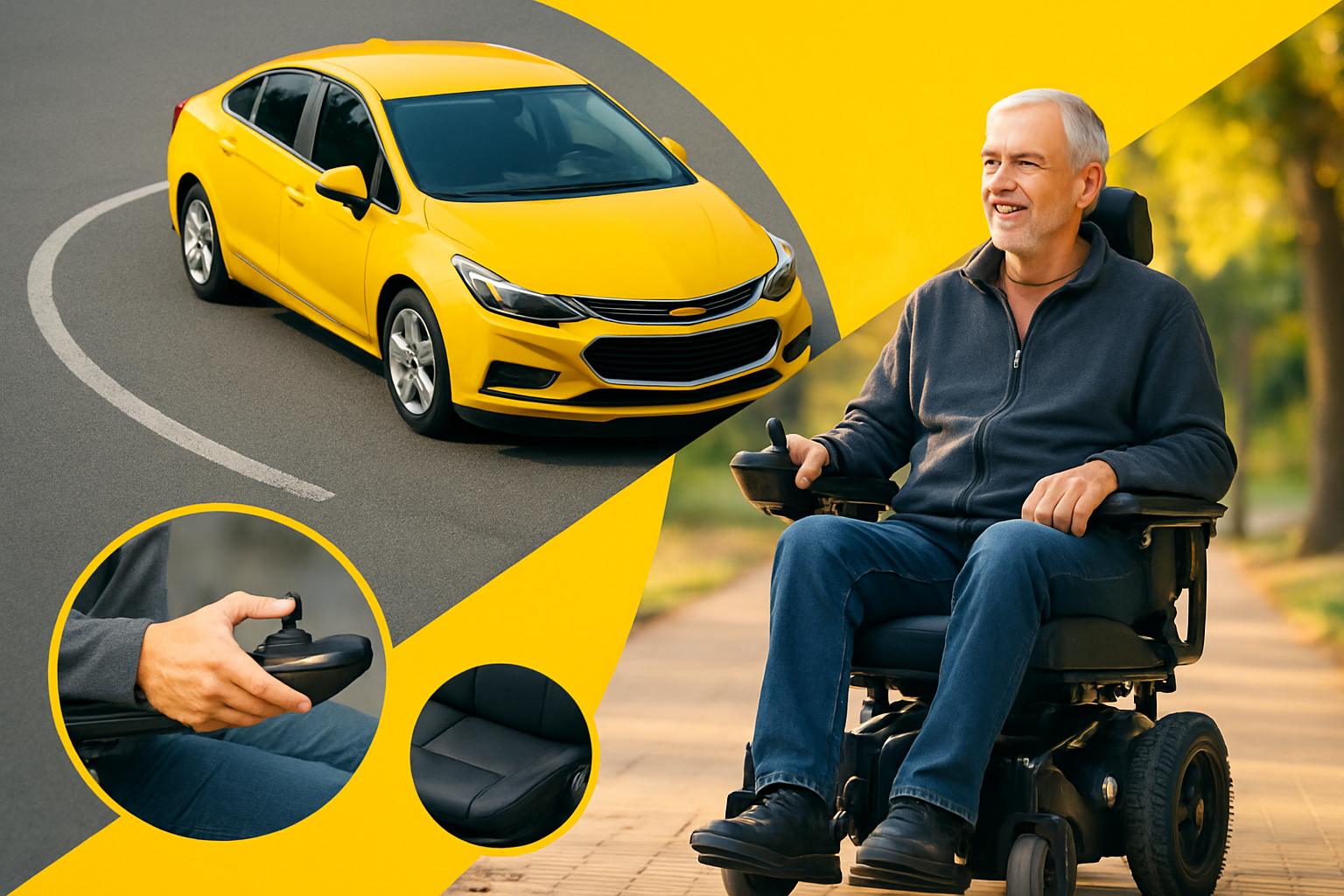
If you have ever tried to snake a compact sedan into a tight parking space or back out of a crowded driveway, you know that turning radius can be the difference between smooth and stressful. The chevy cruze turning radius is often reported in the mid-30s in feet [ft], which sounds tidy until you try a U-turn on a narrow two-lane street. Meanwhile, many power wheelchairs spin on a dime by comparison, pivoting within a circle measured in inches [in]. So which number actually matters when you are planning everyday mobility, whether you are driving a Chevrolet Cruze to a medical appointment or navigating a hallway at home? In this friendly guide, I will translate specifications into real-life moves, use relatable spaces like grocery aisles and elevator cabs, and share tips from Go Wheelchairs on choosing—and getting coverage for—the right chair. By the end, you will know how to measure, compare, and make confident choices that match your lifestyle and budget.
Why Turning Radius Matters in Real Life
Turning radius is not just a line in a brochure; it is how your day flows. It determines whether you can swing into a parallel spot in one clean arc, rotate in a cramped kitchen, or glide through a pharmacy aisle without a three-point shuffle. At its simplest, turning radius describes the tightest circle a vehicle or power wheelchair can complete. For cars, specifications usually cite curb-to-curb, which is the diameter needed to spin the front wheels without hitting anything. For wheelchairs, manufacturers typically list a turning radius measured from the center of the device to the outermost point as it pivots. Practically speaking, that means a chair with a 22-inch [in] turning radius needs about a 44-inch [in] circle to complete a full 360-degree rotation without bumping into walls.
Context matters too. Americans with Disabilities Act [ADA] guidelines call for at least 36 inches [in] of clear hallway width and recommend a 60-inch [in] turning space for comfortable 180-degree maneuvers. Many elevators offer between 51 and 60 inches [in] of usable interior depth, depending on building age. Most supermarket aisles are in the 48 to 60 inches [in] range. The upshot: the numbers on paper translate directly to yes-or-no moments in everyday spaces. Add in human factors—like caregiver assistance, bags on the rear of the chair, or the wheel-to-wall margin you prefer—and those inches can make or break your confidence. This is exactly why Go Wheelchairs spends so much time on personalized fit and space planning: the “spec” is only the start; how you live with it is the win.
Chevy Cruze Turning Radius: What the Numbers Mean
When you see a turning radius or turning circle for the Chevrolet Cruze quoted around 10.9 meters [m]—roughly 35.8 feet [ft]—that is a solid reference point for many model years and trims, with small variations due to tire size and steering stop settings. Some publications list figures in the neighborhood of 34 to 37 feet [ft], which puts the Cruze squarely in compact-sedan territory. Translating that to real life, a single-lane residential street that is about 18 to 20 feet [ft] wide will not let a Cruze complete a clean U-turn; you will likely need a three-point turn unless you have the extra width of a parking bay or driveway entry. Parking lots, on the other hand, are often designed with 24-foot [ft] two-way drive aisles, so a Cruze can usually swing into or out of a space with one correction, assuming cars on either side are centered.
Watch This Helpful Video
To help you better understand chevy cruze turning radius, we’ve included this informative video from Indian Drives. It provides valuable insights and visual demonstrations that complement the written content.
Two more nuances are worth knowing. First, curb-to-curb numbers are measured in an empty, flat scenario; real-world factors like a slight slope, snow berms, or a roof rack can effectively increase the “practical” circle. Second, wall-to-wall turning circles are naturally larger than curb-to-curb because they include clearance for the vehicle’s corners and mirrors. If you are comparing against interior spaces, wall-to-wall is the more realistic yardstick. With those caveats in mind, here is a quick cheat sheet to keep the Cruze’s geometry in perspective.
| Item | Typical Value | What It Means |
|---|---|---|
| Turning circle (curb-to-curb) | Approx. 10.7–11.2 meters [m] (35–37 feet [ft]) | Baseline geometry for many trims; check your specific model year. |
| Wall-to-wall estimate | Typically +0.3–0.6 meters [m] (+1–2 feet [ft]) | Accounts for body corners and mirror clearance indoors. |
| Two-lane road U-turn | Often requires 3-point turn on 24-foot [ft] roads | Extra width from driveways or intersections helps complete a single arc. |
| Parking lot maneuvers | Works well in 24-foot [ft] aisles | Expect 1–2 small corrections when spaces are tight or crowded. |
Note: Values are approximate and vary by year, trim, tires, and measurement method. Always verify your vehicle’s specification before making space modifications.
Power Wheelchair Turning Radius: Mid-, Front-, and Rear-Wheel Drive Explained
Power wheelchairs handle turning in a completely different way from cars. Many mid-wheel drive chairs can pivot almost in place, because the drive wheels are near the center of gravity. This design keeps the turning radius small and predictable, which is a gift in narrow hallways and kitchens. Front-wheel drive chairs often climb thresholds well and track smoothly outdoors, but their turning radius can be slightly larger indoors because the rear swings wide. Rear-wheel drive chairs can feel very stable at faster walking speeds and on inclines, though they usually need more room to rotate in tight spaces. For heavy-duty models built to carry higher weight or handle rugged surfaces, you trade a bit of indoor nimbleness for durability and confidence outdoors. Go Wheelchairs carries a wide range of standard and heavy-duty motorized wheelchairs across these drive types, and we walk you through the trade-offs in plain language.
Here is a simple way to compare typical turning radius ranges. Your actual results will depend on seating configuration, footplate style, and accessories like oxygen tank holders or a rear storage bag. If you prefer more elbow room or have a busy hallway, add a few inches [in] of buffer to the numbers below for stress-free turning.
| Drive Type | Typical Turning Radius | Best For | Trade-Offs |
|---|---|---|---|
| Mid-wheel drive | 20–22 inches [in] | Tight indoor spaces, small kitchens, elevators | Can feel “busy” over bumpy sidewalks |
| Front-wheel drive | 22–26 inches [in] | Thresholds, curb cuts, mixed indoor-outdoor use | Rear swing requires awareness near walls |
| Rear-wheel drive | 25–28 inches [in] | Outdoor tracking, straight-line stability | Larger indoor rotation circle |
| Heavy-duty models | 26–30 inches [in] | Higher weight, rougher terrain | Wider turns inside, larger footprint |
| Lightweight, foldable designs | 28–33 inches [in] | Travel, car trunk loading, tight storage | Balance of portability and ultra-tight turning |
Note: Figures reflect industry averages from manufacturer data. Your home layout, accessory selection, and seating can change effective turning needs by several inches.
Side-by-Side: Everyday Spaces Where Cars and Chairs Meet
Now let us put the Chevrolet Cruze and a modern power wheelchair in the same world you move through every week. Think of your driveway, the apartment hallway, the pharmacy checkout area, and the medical building elevator. If you have ever thought, “Can I turn there without backing up?” this table is for you. It translates typical dimensions into yes, maybe, or nope scenarios. You will see why cars shine outdoors and chairs shine indoors, and where the overlap lives. Use it as a quick planning map, then fine-tune with actual measurements at your home or workplace.
| Space | Typical Clear Width/Area | Chevy Cruze | Power Wheelchair | Notes |
|---|---|---|---|---|
| Residential two-lane street | Approx. 24 feet [ft] wide | Usually needs 3-point turn | N/A | Street width short of car’s full turning circle |
| Parking lot drive aisle | 24 feet [ft] | Comfortable with minor corrections | N/A | Aisles are designed around car geometry |
| Apartment hallway | 36–48 inches [in] | Not applicable | Mid-wheel drive shines | Americans with Disabilities Act [ADA] route minimum is 36 inches [in] |
| Small elevator | 51–60 inches [in] interior | Not applicable | Mid or front-wheel turns with care | Allow extra room for caregiver |
| Grocery aisle | 48–60 inches [in] | Fits as a parked vehicle space only | Comfortable turning for mid-wheel | Peak hours add dynamic obstacles |
| Bathroom turning space | 60-inch [in] circle recommended | Not applicable | Mid-wheel rotates cleanly | Plan for footrests and knee clearance |
| Kitchen galley | 42–48 inches [in] between counters | Not applicable | Front-wheel manageable with planning | Pull handles and toe kicks matter |
Practical Planning: From Measuring Tape to Confident Moves
Numbers are helpful, but a measuring tape and five minutes can save headaches for years. Start by mapping your personal “pinch points”: the front door threshold, the inside turn into the bathroom, that tight corner by the fridge, and the elevator lobby at your clinic. Measure the usable width, not the wall-to-wall dimension. Usable means from the narrowest fixed obstruction to the other, which might be a handrail, a radiator, or the protruding latch side of a door. If you already own a chair, compare the measured spaces to your chair’s turning radius doubled. If you are shopping, let those measurements guide which models you shortlist. Pro tip from the Go Wheelchairs team: tape a circle on the floor equal to the chair’s turning diameter and practice “walking” that circle with your feet to visualize swings and door clearances.
Beyond your home, map out your travel routes. Many navigation apps using Global Positioning System [GPS] give you options to avoid U-turns or left turns across traffic. For parking, favor end spaces or those next to a curb cut, so you can deploy a ramp or transfer with privacy. Keep a mental inventory of buildings with friendly elevator dimensions, and note peak times when aisles are crowded. If you are transitioning from driving a Cruze most of the time to using a chair more often, expect a short adjustment period. The good news is that once you match your chair to your spaces, you will glide through a typical day with less guesswork and more energy left for the good stuff.
How Go Wheelchairs Helps You Choose the Right Fit
Finding a power wheelchair that nails your turning needs without busting your budget or insurance limits can feel like trying to parallel park on a hill at night. Go Wheelchairs exists to change that experience. We carry a wide range of standard and heavy-duty motorized wheelchairs so you can compare tight-turning mid-wheel models with rugged outdoor performers in one place. Our lightweight, foldable wheelchair designs help if you need to stow a chair in a car trunk or closet. Even better, you are not doing the math alone. Our team offers personalized support and guidance to translate your hallway measurements, elevator realities, and lifestyle goals into a shortlist of right-sized chairs. Then we help with insurance and Medicare assistance, including documentation and communication with your provider, so you spend less time chasing forms and more time moving forward.
To make research simple, our Resources hub offers buying guides, comparison tools, and travel tips you can use today. Want to see how a mid-wheel model’s turning radius compares to your bathroom’s 60-inch [in] circle? Use our comparison charts. Curious about transferring from a Chevrolet Cruze to your chair smoothly in a tight garage? Our travel tips break down ramp angles and door swing tricks. We have even helped clients match their car’s seat height to a chair’s transfer height for safer, smoother moves. If coverage is a worry, we will walk you through options under plans administered by the Centers for Medicare & Medicaid Services [CMS] and private insurers, always in plain language. The goal is not just a device; it is daily independence that fits your actual spaces and routines.
Real-World Example: From Compact Car Driver to Confident Chair User
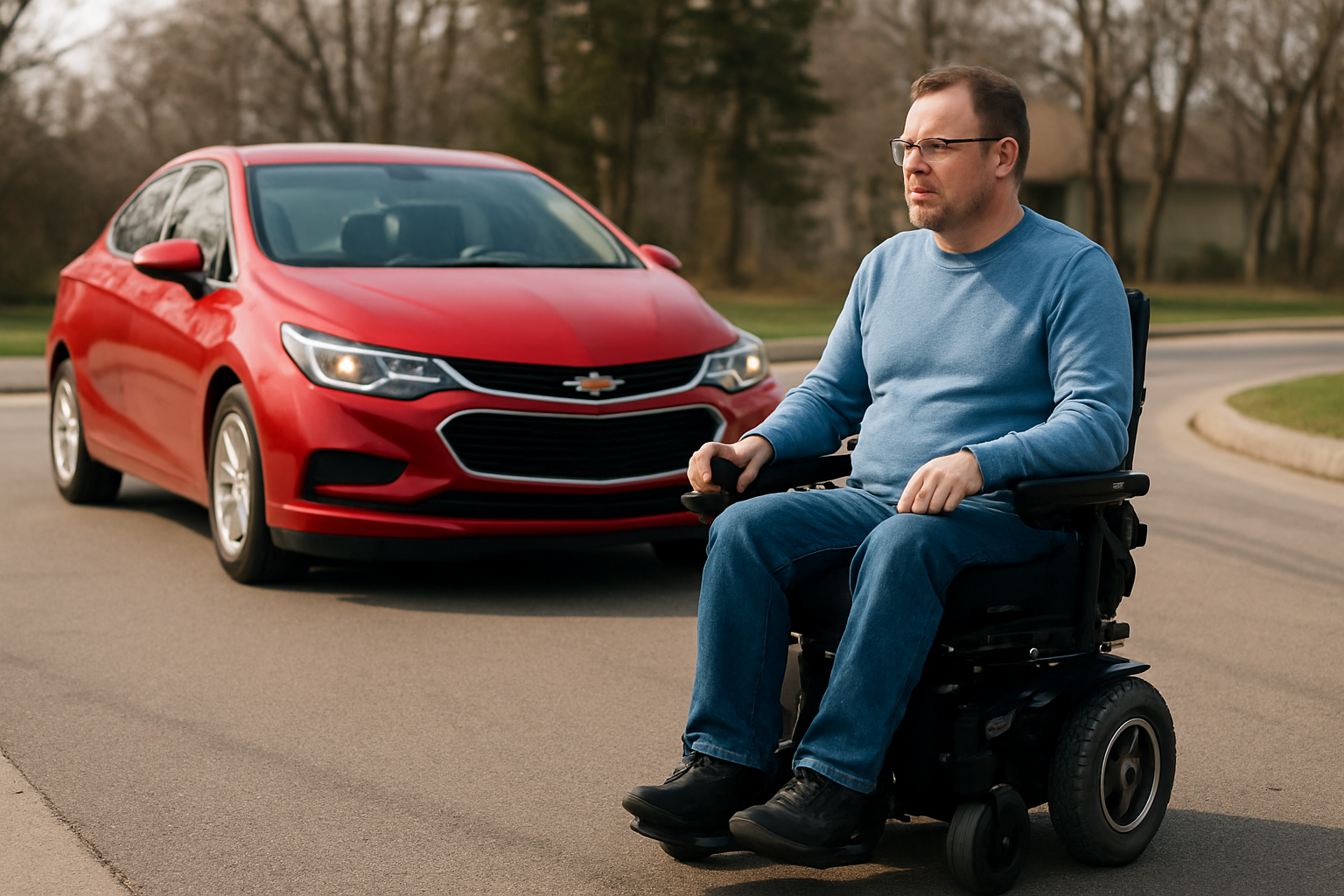
Let me share a quick story we see often. A client in a compact sedan wanted to keep driving to a community center but struggled with a tight elevator and a narrow hallway outside the therapy room. Their car, with a turning circle similar to the Cruze’s mid-30s feet [ft] spec, was fine in the lot. Inside, though, a chair that once looked great on paper felt clumsy near the elevator doors. We measured the critical spots together and discovered the elevator interior was 54 inches [in] deep, with a short staging area outside. The switch to a mid-wheel drive chair with a 21-inch [in] turning radius gave them a comfortable 42-inch [in] turning diameter, leaving extra inches for hand positioning and a small bag on the back. In a week, their three-point wiggle turned into a single smooth pivot, and their confidence skyrocketed.
Could a different chair have worked? Sure. But the winning move was matching the turning geometry to the real spaces and coverage constraints. Because Go Wheelchairs offers multiple configurations—standard, heavy-duty, and lightweight foldable—we could optimize for both maneuverability and durability, then coordinate documentation with Medicare when needed. That is the kind of practical, life-sized problem solving we bring to every conversation, including how your chevy cruze turning radius thinking translates beautifully into choosing the right power wheelchair.
Key Takeaways and Quick Reference
Before you head out, here is a concise checklist you can use as a reality filter. It works whether you drive a compact car to appointments or primarily travel by chair. The aim is simple: fewer surprise stop-and-turn moments and more graceful, first-try moves. Keep it on your phone, or stick it on the fridge, and tweak it to match your home and routines.
- Measure the tightest hallway, doorway, and turning spot in your home in inches [in], and add a 2–4-inch [in] comfort buffer.
- Match chair drive type to your spaces: mid-wheel for tight indoors, front-wheel for mixed use, rear-wheel for outdoor stability, heavy-duty for higher loads.
- Translate specs to circles: turning radius x 2 equals the turning diameter you need to rotate cleanly.
- Plan travel routes with Global Positioning System [GPS] preferences that reduce U-turns and difficult left turns.
- Pick parking spaces that give you ramp or transfer room at one side, ideally near curb cuts.
- Lean on Go Wheelchairs for model comparisons, insurance and Medicare guidance, and real-world testing ideas.
You do not have to be an engineer to make sense of steering geometry. With a few measurements and the right partner, you can turn specs into smooth, low-stress days. And if you like how the chevy cruze turning radius helps you imagine arcs and clearances, you will love how that same mindset makes choosing a power wheelchair downright simple.
FAQs: Quick Answers to Common Questions
Is a smaller turning radius always better? Indoors, often yes, but not at the cost of stability or seating needs. Outdoors, you might prefer a chair with slightly larger turning needs but better tracking and ground clearance. Can I bring these measurements to my doctor or therapist? Absolutely. A quick sketch with widths and turning spots speeds up medical documentation and coverage discussions. Will insurance or Medicare cover a power wheelchair? Coverage varies by medical necessity and plan specifics. Go Wheelchairs helps you navigate documentation and communicates with your provider to make the process clearer. How fast do power chairs go? Many are designed for about 3–5 miles per hour [mph], which balances safety and pace in pedestrian environments. One more pro tip: when in doubt, measure twice, then call us to compare models against your real spaces.
One-line recap: you learned how to compare car and chair turning geometry so everyday maneuvers feel easier and safer. Imagine the next 12 months with fewer three-point turns, smoother elevator pivots, and more energy for what you love. What would your days look like if every tricky corner felt designed for you—and which first space will you measure this week using the chevy cruze turning radius as your guide?
Additional Resources
Explore these authoritative resources to dive deeper into chevy cruze turning radius.
Compare Chevy Cruze Turning Radius with Go Wheelchairs
Match models to your spaces and coverage with a wide range of standard and heavy-duty motorized wheelchairs, plus personalized support and Medicare guidance so you move confidently and independently.