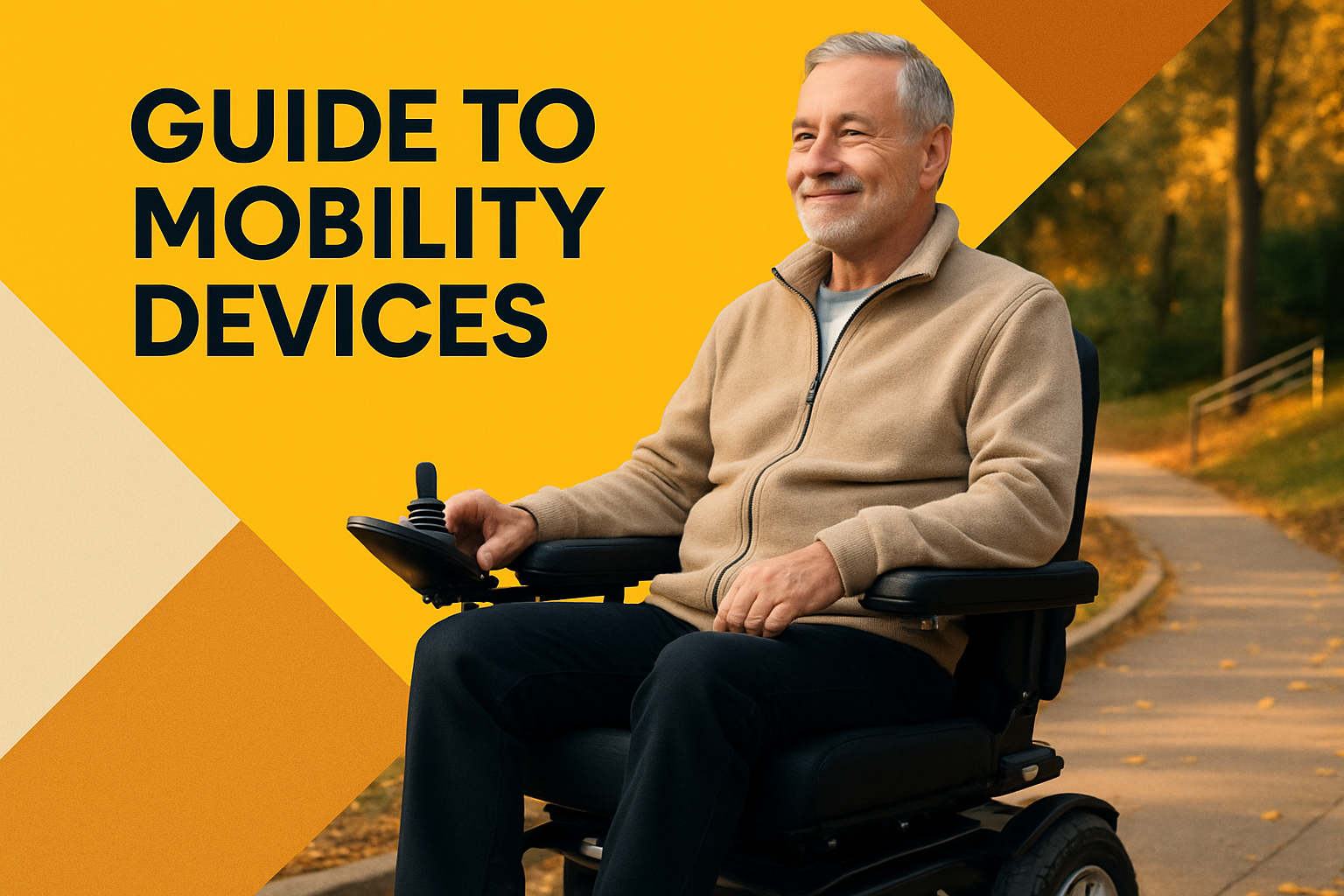
If you are researching personal mobility devices, the choices can feel overwhelming at first glance. Three wheels or four, folding or full-size, lithium-ion (Li-ion) or sealed lead acid (SLA) batteries—where do you even start? A close friend once told me choosing a mobility device felt like picking a new roommate: you will live with it every day, so it needs to fit your routines, your space, and your personality. In this guide, we will walk through the essentials step by step, so you can find a great match without second-guessing yourself.
We will compare common device types, decode features like turning radius and ground clearance, talk real-world range and charging, and cover costs and coverage, including Medicare and private insurance basics under Centers for Medicare & Medicaid Services (CMS) rules for durable medical equipment (DME). Along the way, we will spotlight when a power wheelchair might actually serve you better—and make clear that Go Wheelchairs primarily retails powered wheelchairs (not mobility scooters), offering personalized guidance, insurance help, and a curated selection of standard and heavy-duty motorized wheelchairs. Ready to make an informed, confident choice?
Mobility Devices 101: Types, Ranges, and Use Cases
Think of personal mobility device categories as three neighborhoods on the same map. Travel or folding scooters prioritize portability, often breaking into manageable pieces that fit in a trunk, trading high speed for convenience. Mid-size or full-size models add comfort features, longer wheelbases, and stability for mixed indoor and outdoor use, ideal if you regularly traverse sidewalks and store aisles. Heavy-duty and all-terrain options up the ante with stronger motors, higher weight capacities, and bigger tires, giving you confidence on grass, gravel, and long daily routes.
Most manufacturers list speeds around 3 to 6 miles per hour (mph), which is brisk walking pace, and ranges that vary widely based on conditions. Range labels are often measured with a rider around 165 pounds (lbs) on flat pavement at a steady pace, so hills, wind, and stop-and-go riding reduce real-life distance. Turning radius, ground clearance, and tire type are the trio that determines how a device behaves indoors versus outdoors. The table below distills the basics so you can instantly see where your needs land. Note: Go Wheelchairs’ online catalog focuses on powered wheelchairs; the information below is general guidance on mobility scooter categories for comparison purposes.
| Type | Typical Speed (miles per hour [mph]) | Turning Radius (inches) | Range per Charge (miles) | Weight Capacity (pounds [lbs]) | Portability | Best For |
|---|---|---|---|---|---|---|
| Travel/Folding | 3.5–4.5 | 30–40 | 7–12 | 250–300 | Excellent; disassembles or folds | Short errands, air travel, apartments |
| Mid-Size/Full-Size | 4–5.5 | 40–55 | 10–18 | 300–350 | Good; often disassembles into larger pieces | Daily mixed indoor/outdoor use |
| Heavy-Duty/All-Terrain | 5–7 | 55–70 | 15–25 | 350–500+ | Fair; may require vehicle lift | Long distances, hills, grass, gravel |
As a quick rule of thumb, tighter turning radius and smaller footprints help inside, while higher ground clearance and pneumatic tires shine outside. If you are balancing both, a mid-size model with solid battery capacity and comfort upgrades is a sweet spot for many riders. Not sure where your daily routes fall? Sketch a simple map of your common paths—kitchen to driveway, driveway to bus stop, bus stop to market—and note any door widths, thresholds, elevators, ramps, or curb cuts you rely on.
The Features That Actually Matter Day-to-Day
Specs are useful, but the daily feel is what you will notice most. Turning radius affects how easily you pivot in kitchens or bathrooms, while wheelbase and width determine whether narrow aisles work for you. Ground clearance and suspension soften potholes, sidewalk seams, and curb cuts; if your wrists or back are sensitive, do not skimp here. Three-wheel designs usually turn tighter and feel nimble, while four-wheel designs typically provide greater lateral stability, especially on uneven surfaces and longer rides.
Watch This Helpful Video
To help you better understand mobility mobility scooters, we’ve included this informative video from Vive Health. It provides valuable insights and visual demonstrations that complement the written content.
Comfort features are more than nice-to-haves. Look for adjustable seats with good foam density, armrests you can flip back for side transfers, and a delta tiller that lets you steer with a relaxed grip if arthritis is a factor. For portability, ask the weight of the heaviest piece after disassembly—knowing that number is the difference between easy trunk loading and needing a lift. Battery chemistry matters too: sealed lead acid (SLA) batteries cost less up front but are heavier, while lithium-ion (Li-ion) batteries weigh less, charge faster, and often last through more cycles.
- Test the controls in a figure-eight in a parking lot; if you oversteer, adjust the tiller angle before judging the fit.
- Bring your everyday bag or oxygen tank to check basket space and stability with your real loadout.
- Practice ramps at various slopes; most devices are rated for around 6 to 10 degrees—know your steepest route.
- Time a full stop from top speed; predictable, smooth braking is essential in crowded aisles and crosswalks.
Real-World Scenarios: Match Your Life to the Right Ride

Let’s translate specs into real life. If you live in an apartment with an elevator and narrow hallways, a nimble travel device can make tight turns and stash neatly by the door. If weekends mean farmers’ markets and neighborhood strolls, a mid-size option with suspension will feel planted on cracked sidewalks. Do you often roll across grass to see the grandkids’ soccer games? Heavy-duty options with larger tires will reduce vibration and keep you moving when paths get bumpy.
Upper-body comfort and lifting limits matter just as much. If hand strength is limited, prioritize a delta tiller and throttle levers you can feather without strain. If your car trunk lip is high, verify the heaviest disassembled piece weight and practice a lift before committing. Travelers should also check airline guidelines; many carriers allow battery-powered mobility devices, but acceptance rules differ by battery type, and you must comply with Federal Aviation Administration (FAA) requirements for lithium-ion (Li-ion) batteries.
- The Apartment Navigator: compact footprint, 30 to 40 inch turning radius, lightest piece under 35 pounds (lbs) for easy stowing.
- The Suburban Explorer: mid-size device with 4 to 5.5 miles per hour (mph) speed, comfort seat, and 10 to 18 mile range for errands and parks.
- The Weekend Traveler: folding design, airline-friendly battery labeling, and a charger that fits your suitcase.
- The Country Cruiser: heavy-duty torque, 15+ mile range, and good ground clearance for gravel lanes and lawn cut-throughs.
- The Arthritic Hands Rider: delta tiller, soft-touch controls, and armrests that flip for easy transfers.
Costs, Batteries, and Coverage: Budget Without Surprises
Budgeting well means considering the full picture: purchase price, accessories, maintenance, and future batteries. As industry averages, travel devices commonly run around 800 to 1,500 dollars, mid-size models 1,200 to 2,500 dollars, and heavy-duty models 2,500 to 4,000+ dollars depending on range, suspension, and weight capacity. Accessories like rear baskets, cane holders, or weather canopies can add 50 to 300 dollars. Battery replacements vary: sealed lead acid (SLA) packs can be around 150 to 400 dollars per set, while lithium-ion (Li-ion) packs can run 300 to 900 dollars or more, with the tradeoff of lower weight and longer lifespans measured in charge cycles.
Coverage can offset costs if the device is medically necessary primarily for home use. Under Centers for Medicare & Medicaid Services (CMS) rules, Medicare Part B may cover a power-operated vehicle—often called a scooter—when it is prescribed by your clinician for mobility within the home, and when you meet durable medical equipment (DME) criteria. That typically involves a face-to-face exam, a detailed written order, and working with an enrolled supplier; once approved, Medicare generally pays 80 percent of the approved amount after the Part B deductible, and you pay the remaining 20 percent. Private insurance plans vary but often adopt similar medical necessity standards; always ask the plan for exact documentation requirements and preauthorization steps.
| Battery Type | Weight | Charge Time | Typical Lifespan | Pros | Considerations |
|---|---|---|---|---|---|
| Sealed Lead Acid (SLA) | Heavier | 6–10 hours | ~200–300 cycles | Lower upfront cost; widely available | Heavier to lift; shorter cycle life |
| Lithium-Ion (Li-ion) | Lighter | 3–6 hours | ~500–1000+ cycles | Lighter; faster charging; longer life | Higher cost; check airline and storage rules |
| Payer | Eligibility Basics | What May Be Covered | Paperwork | Tips |
|---|---|---|---|---|
| Medicare Part B | Medical necessity for in-home mobility under Centers for Medicare & Medicaid Services (CMS) criteria | Portion of device cost as durable medical equipment (DME) | Face-to-face exam, detailed written order, enrolled supplier | Document how the device supports specific in-home tasks |
| Private Insurance | Plan-specific medical necessity; prior authorization often required | Similar to Medicare, but varies by plan | Clinician notes, order, and plan forms | Call plan benefits team for pre-check of coverage criteria |
| Out-of-Pocket | None | All costs | Receipt and warranty docs | Budget for future batteries and routine maintenance |
Two quick money savers: keep your tires properly inflated to preserve range and battery health, and charge the battery after each day’s ride rather than letting it drain deeply. When comparing warranties, look for coverage on the frame, electronics, and batteries—and study the fine print to learn what routine maintenance tasks keep coverage intact. If airline travel is on your horizon, ask your vendor for battery compliance documents to streamline check-in with carriers and the Federal Aviation Administration (FAA).
Scooter or Power Wheelchair? How to Decide

Here is the honest truth: for some riders, a power wheelchair is the better everyday tool. Scooters use handlebars and require more upper-body control and clearance to turn, which can be tiring in tight homes. Power wheelchairs steer by joystick, offer excellent indoor maneuverability with smaller turning circles, and can be customized with seating systems for posture, pressure relief, and transfers. If you need longer daily hours, tighter indoor navigation, or specialized seating, a power wheelchair can be a safer, more comfortable long-term solution.
Outdoors, heavy-duty scooters can be terrific on paths and lawns, but heavy-duty power wheelchairs with robust suspensions and drive options can keep up as well—and sometimes outperform on uneven ground thanks to advanced traction. Think about how often you ride, where you ride most, and how you transfer. The quick matrix below can help you weigh your options before you test-drive.
| Priority | Mobility Scooter | Power Wheelchair |
|---|---|---|
| Tight indoor maneuvering | Fair to Good (3-wheel best) | Best (very small turning radius) |
| Outdoor uneven terrain | Good to Best (heavy-duty models) | Good to Best (rugged models) |
| Transport in small car trunk | Best (travel/folding) | Varies (lightweight foldable chairs exist) |
| Limited hand/arm strength | Varies (delta tiller helps) | Best (easy joystick control) |
| Bariatric support 350+ pounds (lbs) | Good (heavy-duty) | Best (heavy-duty power chairs) |
| Seating/positioning needs | Fair (basic adjustments) | Best (advanced seating options) |
| Insurance likelihood for home use | Good (when medically necessary under durable medical equipment [DME]) | Good (when medically necessary under durable medical equipment [DME]) |
If you are leaning wheelchair, you are not alone. Many riders start with scooters for portability and later choose a power wheelchair for comfort and control as needs evolve. That is precisely where guidance matters—having a team that knows both categories helps you select wisely and avoid costly do-overs.
How Go Wheelchairs Helps You Move Forward
Choosing a device is a mobility decision, but it is also a life decision—a blend of comfort, independence, budget, and coverage. Go Wheelchairs understands that mix and meets it head-on with a wide range of standard and heavy-duty motorized wheelchairs, including lightweight, foldable wheelchair designs for easier transport and storage. The team pairs you with a real expert who listens first, then helps you compare everyday use cases, test-fit options, and navigate insurance and Medicare paperwork under Centers for Medicare & Medicaid Services (CMS) rules. The goal is simple: a dependable solution that fits your life and coverage, so you can move forward with confidence.
- Wide range of standard and heavy-duty motorized wheelchairs, from compact indoor models to rugged outdoor builds.
- Lightweight, foldable wheelchair designs that make car and travel days much simpler.
- Personalized support and guidance that prioritizes your routines, space, and comfort.
- Insurance and Medicare assistance to streamline durable medical equipment (DME) approvals and reduce out-of-pocket surprises.
- Resources hub offering buying guides, comparison tools, and travel tips—including how to evaluate mobility scooters versus power wheelchairs.
Consider Maya, who started with a travel scooter for pharmacy runs but struggled in her narrow kitchen. After a conversation with Go Wheelchairs, she tested a compact power wheelchair with a tiny turning circle, adjustable seating, and a joystick she could manage easily. With help on documentation, her device qualified under durable medical equipment (DME) criteria, and her daily routine now flows without the constant three-point turns. That is the kind of practical, person-first problem-solving every mobility decision deserves.
Where does this leave you if your heart is set on a scooter? You can still use Go Wheelchairs’ resources hub to sharpen your criteria, compare dimensions against your home, and understand coverage. If a power wheelchair ends up better for your body, budget, and routes, you already have a trusted partner with a deep catalog and real support. Either way, you are not navigating alone.
Your best ride is the one that fits your life, not the other way around. Imagine the next 12 months with smoother mornings, easier errands, and spontaneous afternoons because your mobility device does its job without drama. What could you do tomorrow—with the right plan today—for more comfort, confidence, and independence with mobility devices?
Additional Resources
Explore these authoritative resources to dive deeper into mobility mobility scooters.
Navigate Mobility Device Choices with Go Wheelchairs
Exploring mobility devices? Go Wheelchairs offers a wide range of standard and heavy-duty motorized wheelchairs with guidance and coverage help so you move confidently and independently.