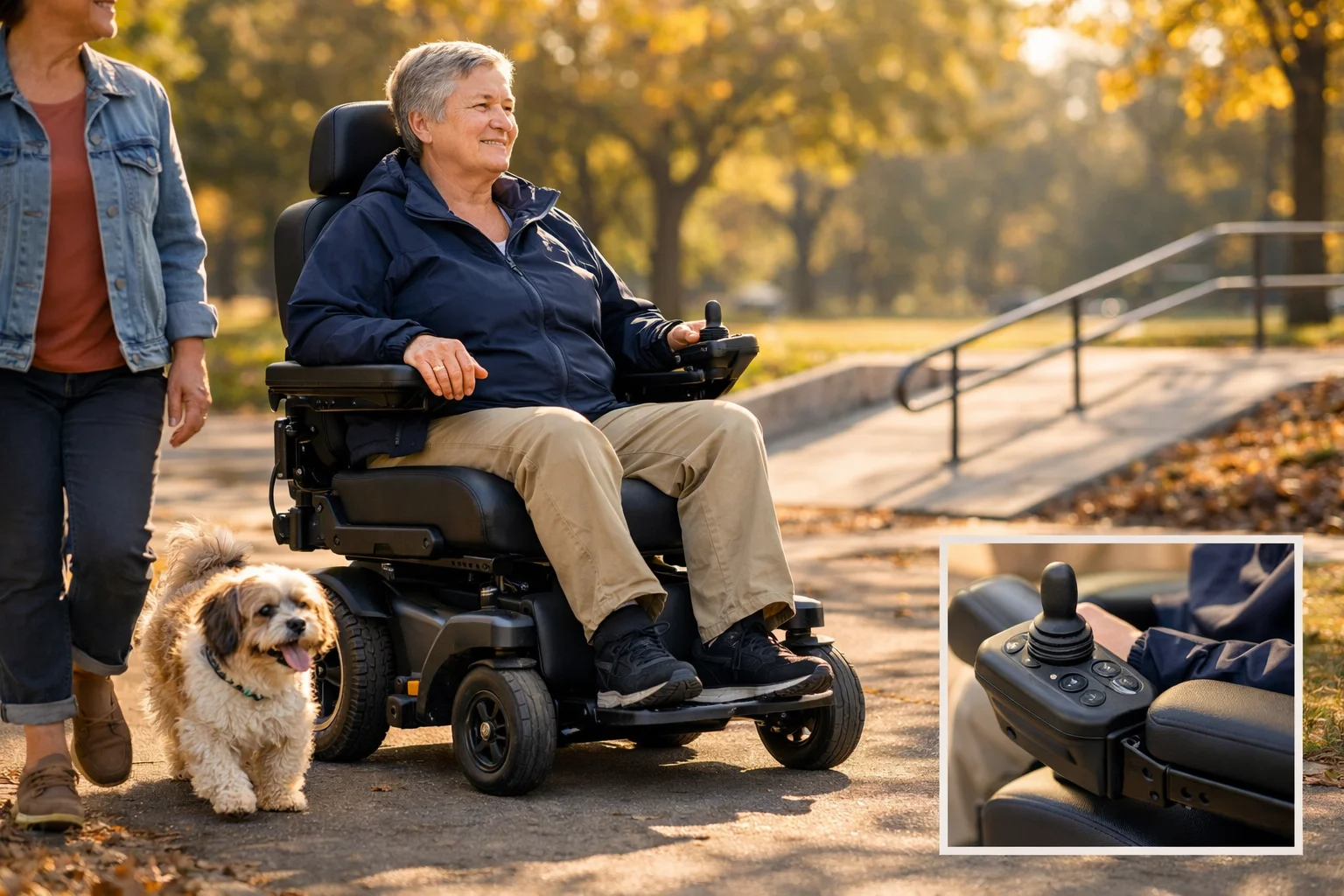
If you are comparing bariatric power wheelchairs, including used options, you are likely balancing three big things: real-world comfort, dependable capacity, and a price that respects your budget. This guide brings together seven proven heavy lifters that shine on stability, safety, and support, so you can roll with confidence at home, at work, and everywhere in between. And because coverage matters, we will also touch on how Go Wheelchairs helps you navigate insurance and Medicare Part B [Medicare Part B] without the guesswork.
Quick story. When my uncle needed a sturdier power chair, we made a checklist and test-drove three models. The winner was not the flashiest; it was the one that turned through his hallway, felt steady over his driveway, and had parts we could easily service. That is the spirit of this guide. Along the way, I will point out what to inspect on a used listing, how to match seat width to your body, and where Go Wheelchairs fits in with personalized support and a range of standard, travel, and heavier-duty motorized wheelchair options.
Selection criteria
Before building this short list, I looked at what actually makes a bariatric power chair a daily win. Not every specification on a brochure matters in real life, right? To stay practical, I weighed stability first, then comfort, then ease of service. Price is always in the mix, but only after safety. Think of it like picking a reliable truck: payload and chassis come before cup holders. Here is the exact lens I used to evaluate each pick.
- Weight capacity and seating: For bariatric options, weight capacity commonly runs higher than standard models—verify the chair’s rated capacity and available seat widths before you buy. Foam quality and cushion options matter too.
- Drive type and handling: MWD [mid-wheel drive] for tight turning, RWD [rear-wheel drive] for outdoor tracking, and FWD [front-wheel drive] for curb climbs and grass. Each has trade-offs you will feel immediately.
- Turning radius and footprint: Hallways and kitchens are unforgiving. While sub-22 inch turning radii feel agile indoors, many heavier-duty or bariatric chairs have larger footprints—measure your space and match accordingly.
- Power and range: Realistic top speeds around 4 to 6 miles per hour [mph], with ranges that depend on terrain and battery age. I favor chairs with proven electronics and easy-to-find parts.
- Serviceability and parts: Availability of tires, batteries, joysticks, and armrest hardware. Bargains vanish fast if you cannot find spares.
- Used condition signals: Verified motor hours, recent batteries, tight caster forks, and a seat that is not listing to one side. A quick test of straight-line tracking tells you a lot.
- Coverage path: Whether the chair model commonly appears in durable medical equipment claims with Medicare and private insurance. Paperwork and documentation are half the journey.
Top Picks at a Glance: Used Bariatric Power Wheelchairs Comparison
The table below summarizes the essentials. Specifications refer to typical configurations and may vary by model year and options. Always confirm the seller’s exact listing before you decide.
Watch This Helpful Video
To help you better understand used bariatric power wheelchairs, we’ve included this informative video from Mobility Scooters Direct. It provides valuable insights and visual demonstrations that complement the written content.
| Model | Capacity (pounds [lbs]) | Drive Type | Turning Radius (inches) | Top Speed (miles per hour [mph]) | Typical Range (miles) | Seat Width Options (inches) | Best For |
|---|---|---|---|---|---|---|---|
| Quantum 1450 | 600 | RWD [rear-wheel drive] | About 26.5 | About 4.5 | Up to 15 | Often 24 to 30 | Maximum capacity, outdoor tracking |
| Merits P710 Atlantis | 600 | RWD [rear-wheel drive] | About 31 | About 5 | Up to 32 | 24 to 32 | Open spaces, long days |
| Invacare TDX SP2 HD | 450 | MWD [mid-wheel drive] | About 20 | Up to 6 | 10 to 15 | 20 to 28 | Mixed indoor and outdoor |
| Pride Jazzy 614 HD | 450 | MWD [mid-wheel drive] | About 22 | About 4.25 | Up to 11 | 20 to 24 | Tight indoor spaces |
| Golden Compass HD | 450 | MWD [mid-wheel drive] | About 20 | About 4 | Up to 12 | 20 to 24 | Comfort-focused everyday use |
| Shoprider 6Runner 14 | 450 | MWD [mid-wheel drive] | About 18.5 | About 5 | Up to 17 | 20 to 22 | Agile maneuvering, carpet |
| Drive Trident HD | 450 | FWD [front-wheel drive] | About 29 | About 4 | Up to 15 | 22 to 24 | Curbs, grass, threshold bumps |
#1 Quantum 1450 — Big-Capacity Confidence
If you want a chair that simply feels planted, the Quantum 1450 is a favorite for a reason. With a 600 pounds [lbs] capacity and RWD [rear-wheel drive] traction, it tracks straight on sidewalks and chews up driveway transitions without drama. Indoors, the turning radius is not tiny, so you will want some open space, but the trade-off is confidence over uneven ground. On the used market, you will often find bariatric seating kits and reinforced foot platforms that make this platform a genuine long-haul partner.
- Best for: Maximum stability, taller users, mixed indoor and outdoor routes.
- Key specs to confirm: Capacity 600 pounds [lbs], RWD [rear-wheel drive], about 26.5 inch turning radius, about 4.5 miles per hour [mph] top speed, up to 15 miles range, seat widths commonly 24 to 30 inches.
- Used buyer checklist: Listen for gear noise in reverse, inspect rear tires for cupping, confirm joystick calibration tracks straight hands-off for five feet.
#2 Merits P710 Atlantis — Range and Ruggedness
The Merits P710 Atlantis is a workhorse built for open layouts. Its 600 pounds [lbs] rating pairs with a stout frame and one of the better real-world ranges you will find in a bariatric class. If your day involves longer errands or outdoor paths, the Atlantis keeps its poise and does not feel nervous on ramps. The turning circle is broader, so it helps to measure your kitchen and bathroom turns before committing, but many users call it their all-day cruiser.
- Best for: Maximum capacity with longer range days and wide hallways.
- Key specs to confirm: Capacity 600 pounds [lbs], RWD [rear-wheel drive], about 31 inch turning radius, about 5 miles per hour [mph] top speed, up to 32 miles range, seat widths 24 to 32 inches.
- Used buyer checklist: Check anti-tip wheels for cracks, look for rust on battery trays, verify charger is matched to the battery chemistry.
#3 Invacare TDX SP2 HD — Indoor Agility, Outdoor Calm
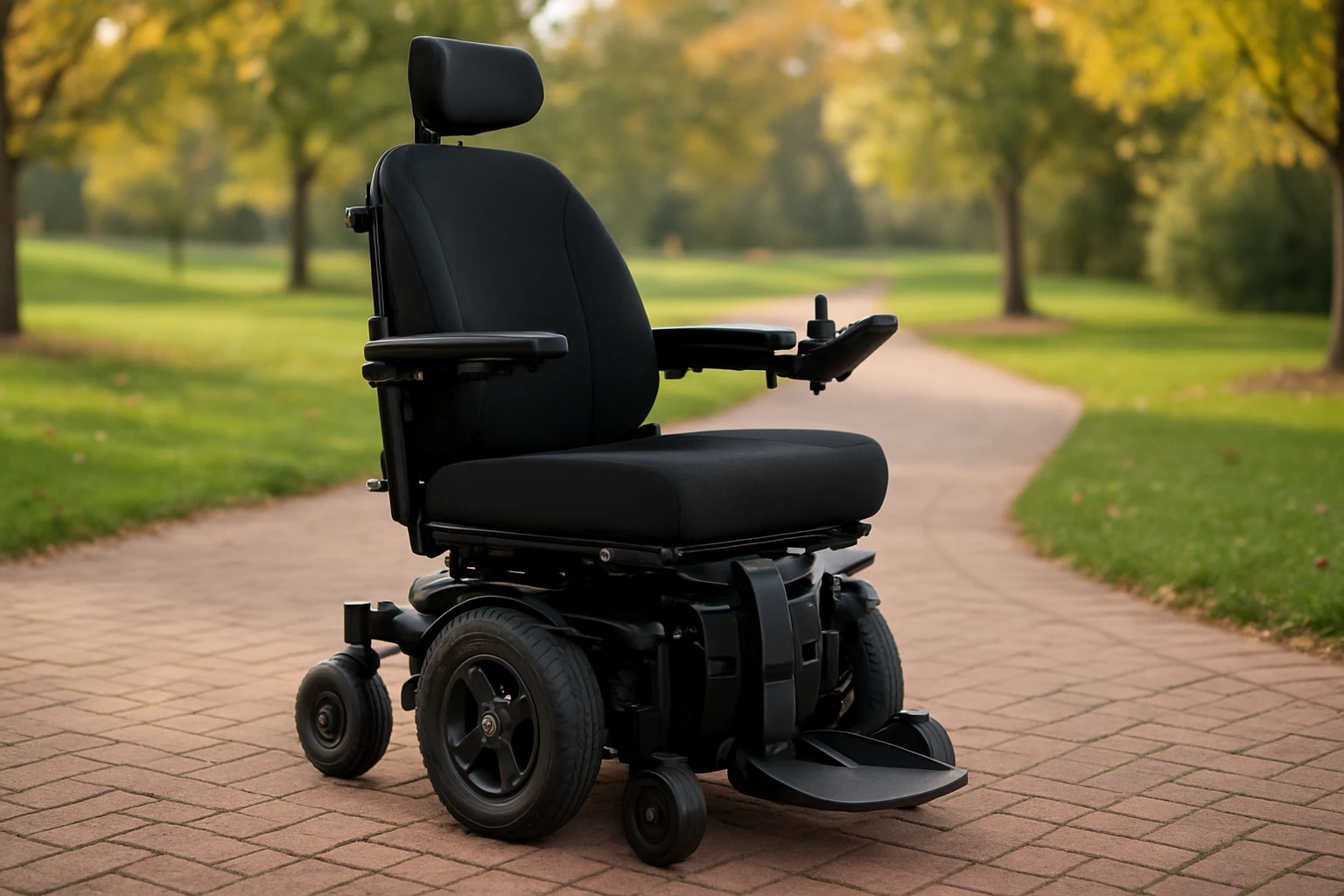
Invacare’s TDX SP2 HD blends MWD [mid-wheel drive] agility with a surprisingly composed ride outside. The design keeps your center of gravity inside the wheelbase, which builds confidence when you pivot in tight bathrooms or thread between furniture. Outdoors, the suspension does respectable work across small bumps, and many rehab clinics outfit this model with tilt and power legs. On the used market, parts are widely available, which reduces long-term stress and repair downtime.
- Best for: Mixed indoor and outdoor use, users who value precise turning.
- Key specs to confirm: Capacity 450 pounds [lbs], MWD [mid-wheel drive], about 20 inch turning radius, up to 6 miles per hour [mph], 10 to 15 miles range, seat widths 20 to 28 inches.
- Used buyer checklist: Inspect mid casters for wobble, cycle tilt or leg actuators through full travel, confirm armrest locking knobs are not stripped.
#4 Pride Jazzy 614 HD — Tight-Turn Specialist
When space is tight, the Pride Jazzy 614 HD shines. Its compact MWD [mid-wheel drive] layout delivers nimble spins in hallways and kitchens, while the heavy-duty suspension helps keep the ride settled on tile or wood floors. Outdoors, it is happiest on smooth surfaces and short grass. If your home has narrow passages but you still want a bariatric-rated chair with a friendly footprint, the 614 HD checks a lot of boxes.
- Best for: Apartments, small homes, frequent indoor navigation.
- Key specs to confirm: Capacity 450 pounds [lbs], MWD [mid-wheel drive], about 22 inch turning radius, about 4.25 miles per hour [mph], up to 11 miles range, seat widths 20 to 24 inches.
- Used buyer checklist: Test pivot turns on carpet for chatter, verify caster bolts are tight, inspect seat base for flex or creaks.
#5 Golden Compass HD — Comfort-First Daily Driver
The Golden Compass HD leans into comfort with a plush seat and a forgiving ride. If you value all-day cushioning and predictable controls over outright speed, this chair deserves a spot on your shortlist. The MWD [mid-wheel drive] geometry works well in living areas, and you can usually source arm pads, tires, and electronics quickly. Many users say it requires the least “getting used to” of the bunch, which makes it a solid first bariatric powerchair.
- Best for: Comfort-focused everyday use, first-time powerchair owners.
- Key specs to confirm: Capacity 450 pounds [lbs], MWD [mid-wheel drive], about 20 inch turning radius, about 4 miles per hour [mph], up to 12 miles range, seat widths 20 to 24 inches.
- Used buyer checklist: Sit for five minutes and check hot spots, verify joystick throw feels smooth, look for even tire wear left to right.
#6 Shoprider 6Runner 14 — Agile and Assertive
The Shoprider 6Runner 14 feels quick on its feet without being twitchy. MWD [mid-wheel drive] plus the larger 14 inch drive wheels help it maintain traction on carpet and over threshold bumps. If you do a lot of close-quarters moves but still want a bit more zip, this one strikes a pleasant balance. On the used scene, you will find a lot of lightly used units from short-term rentals, which can be a value if the batteries are fresh.
- Best for: Agile maneuvering in mixed flooring, quicker starts from a stop.
- Key specs to confirm: Capacity 450 pounds [lbs], MWD [mid-wheel drive], about 18.5 inch turning radius, about 5 miles per hour [mph], up to 17 miles range, seat widths 20 to 22 inches.
- Used buyer checklist: Check joystick for drift, inspect drive wheel treads for cracks, confirm seat post height locks firmly.
#7 Drive Trident HD — Front-Drive Grip for Real-World Obstacles
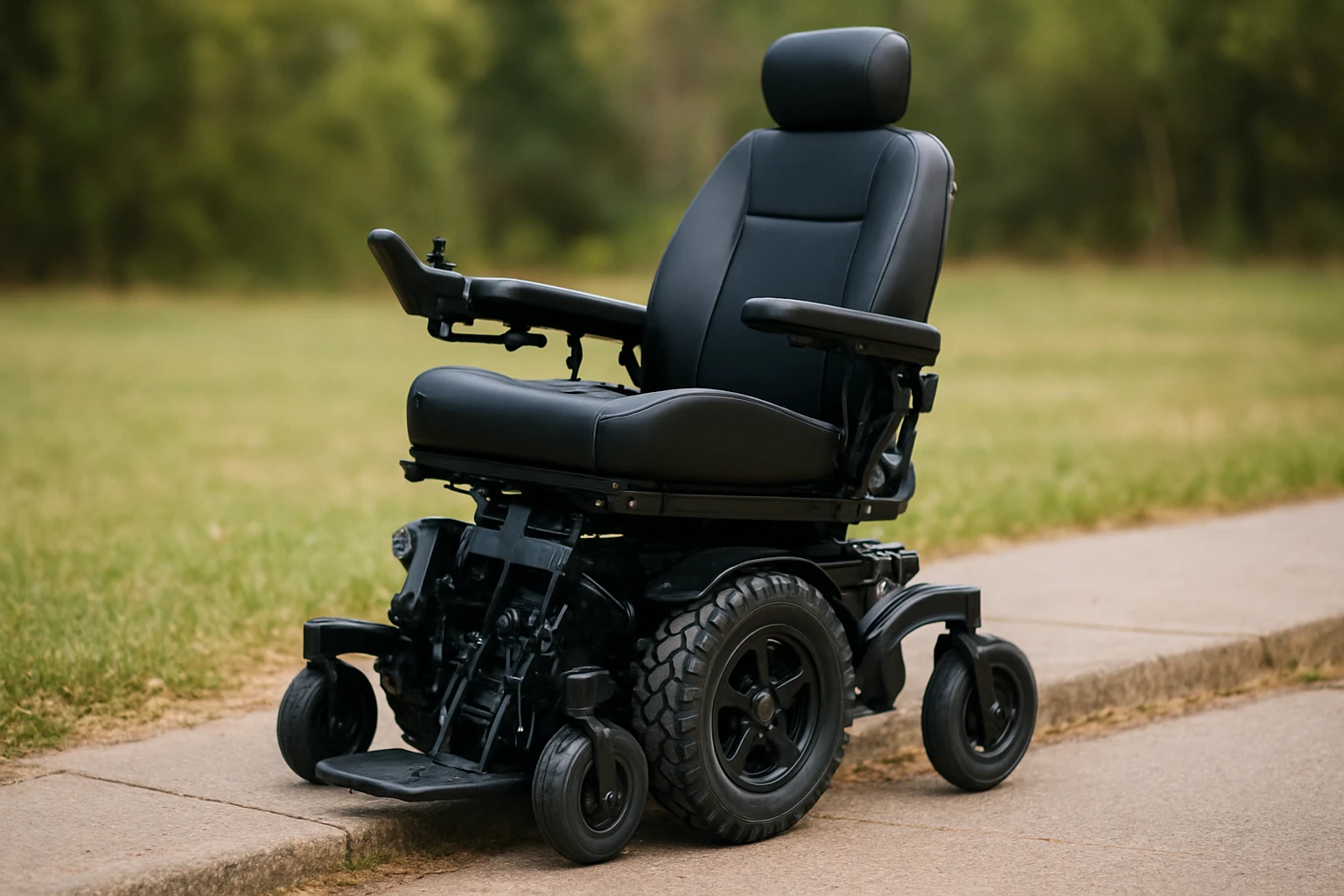
Front-wheel drive [FWD] changes how a chair meets curbs, slopes, and grass, and the Drive Trident HD uses that to your advantage. With the drive wheels leading, it climbs small obstacles with less seesawing. It will not turn as tightly as MWD [mid-wheel drive] alternatives, but if your route includes curb cuts, rougher sidewalks, or lawns, this trade may be worth it. Replacement parts are easy to source, and the frame is built for daily knocks.
- Best for: Thresholds, curb cuts, short grass, mixed outdoor surfaces.
- Key specs to confirm: Capacity 450 pounds [lbs], FWD [front-wheel drive], about 29 inch turning radius, about 4 miles per hour [mph], up to 15 miles range, seat widths 22 to 24 inches.
- Used buyer checklist: Inspect front shrouds for scuffs that hint at curb hits, listen for creaks from the front suspension, confirm footplate clearance at full turn.
How to choose the right option
Start with the route you take every day. Measure your tightest doorway and your narrowest turn, and note the steepest ramp you face. Then consider how you feel after two hours in a chair: do you need more cushion, a wider seat, or armrests that adjust higher? Finally, think about who will service your chair and how easily you can get consumables like tires and batteries. This order keeps you focused on what pays off every single day.
- Match capacity and seat size: Choose a chair rated comfortably above your body weight and target a seat width that is your hip width plus one to two inches. Test cushion firmness.
- Pick a drive type for your home: MWD [mid-wheel drive] excels in tight turns, RWD [rear-wheel drive] tracks straighter outdoors, and FWD [front-wheel drive] handles curbs best.
- Confirm the footprint: Compare turning radius to your home’s layout. Tape outlines on the floor to simulate turns and check clearances near appliances.
- Verify used condition: Ask for motor hours, battery age, and a video showing the chair driving straight and pivoting in place. Look for level seating and quiet casters.
- Plan service up front: Identify a local technician and price common parts. Chairs with widely available components reduce downtime and cost surprises.
- Prepare coverage documents: For Medicare Part B [Medicare Part B] or private insurance, your supplier will typically need a clinician’s prescription, face-to-face evaluation notes, and proof the chair is medically necessary for home use.
| Step | What to Prepare | Why It Matters |
|---|---|---|
| 1. Clinician visit | Prescription and mobility evaluation notes | Establishes medical necessity required by many plans including Medicare Part B [Medicare Part B] |
| 2. Supplier coordination | Work with a DME [durable medical equipment] supplier | Ensures correct coding and documentation for claims |
| 3. Home assessment | Measurements and photos of tight areas | Shows the chair is suitable for in-home use |
| 4. Prior authorization | Plan-specific forms and signatures | Reduces claim denials and delays |
| 5. Delivery and training | Final fitting and driving instruction | Documents receipt and functional use |
This is where Go Wheelchairs can be a true partner. The team offers personalized guidance, helps you collect the right paperwork, and explains how different policies handle repairs and replacement parts. Even better, their Resources hub includes buying guides, comparison tools, and travel tips for flights and road trips, plus advice on lightweight, foldable wheelchair designs if a secondary travel chair would simplify your life. And because they stock a range of standard, travel, and heavier‑duty configurations from trusted brands, you can compare models side by side instead of hopping between vendors.
Need a few practical tips from the repair bench? Bring a level to your test drive and check that the seat base sits flat on a flat floor. Try a hands-off straight-line test for five to ten feet. Pivot in place both clockwise and counterclockwise and listen for grinding that hints at bearing wear. Finally, switch the joystick to low speed and see if you can inch control around obstacles; smooth low-speed control signals healthy electronics and good long-term manners.
One last thought on budget. The used market can save meaningful money compared to new, especially on bariatric frames. Focus on condition and support over small price differences. An extra few dollars for a chair with fresh batteries, clean motor sound, and a local service path is almost always the better lifetime value.
Go Wheelchairs ties these threads together: clear comparisons, hands-on help with insurance and Medicare, and access to a range of everyday and heavier‑duty options. Whether you end up with a compact MWD [mid-wheel drive] turner or a road-stable RWD [rear-wheel drive] cruiser, a guided process beats guesswork every time.
You have now seen the strengths of seven dependable platforms, plus the checklists and coverage steps that keep your purchase low-stress. The only thing left is a test drive, a tape measure, and a short call to confirm parts and paperwork. When those three line up, your chair will feel like it was built just for your route and your body.
Used bariatric power wheelchairs: how we help you decide
Let us connect the dots. If your top priority is the highest capacity, start with the Quantum 1450 and Merits P710 Atlantis. For mixed indoor and outdoor use, the Invacare TDX SP2 HD gives you that centered, confident feel in tight rooms and outside walks. Tight apartment turns make the Pride Jazzy 614 HD and Golden Compass HD worth a look first, while the Shoprider 6Runner 14 adds extra agility on carpet. If your world includes curbs and lawns, the Drive Trident HD’s front-drive bite can be a daily difference-maker.
Whichever path you take, Go Wheelchairs will walk with you step by step. Their advisors translate clinician notes, help you request prior authorization, and answer the unglamorous but crucial questions about battery care and transport. And if later you want a travel-friendly backup, the team can pair your daily driver with a lightweight, foldable wheelchair that fits in your trunk for weekends and flights.
How to choose the right option
Ready to shortlist two or three chairs to test? Start with your home map and your comfort priorities. Sketch your tightest turns, grab a measuring tape, and note any ramps or lips that challenge you now. Next, match models to your daily route, not the other way around. If your day is 80 percent indoors, give turning radius more weight; if it is mostly sidewalks and parking lots, think tracking, curb approach, and seat stability. With that logic, your final pick almost chooses itself.
- Measure you first: Hip width, thigh length, and preferred armrest height. Add one to two inches to hip width for seat width.
- Measure your space: Doorways, bathroom turns, elevator dimensions, and vehicle lift capacity if you transport your chair.
- Prioritize three must-haves: For example, higher capacity, a preferred seat width, and a comfortable turning radius.
- Test on low speed: Smooth control at the slowest setting predicts safety in kitchens and crowded aisles.
- Check support: Confirm who services the model locally and the cost of batteries and tires in your area.
- Plan coverage: Call your insurer with the model name and ask what documentation they need. Go Wheelchairs can help you script that call.
Want a simple decision path? If you need very high capacity, start with platforms known for reinforced frames. If your home is tight, start with a mid-wheel design noted for a compact footprint. If curbs and grass rule your route, test a front-drive option. From there, let comfort and control decide the tie-breaker in a 15-minute test drive across your real-world path.
If you are feeling stuck, lean on the Go Wheelchairs Resources hub. It has seat-sizing worksheets, comparison tools that line up specs side by side, and travel tips that demystify flying with a power chair. And if paperwork gives you hives, their insurance and Medicare assistance removes friction so you spend less time on forms and more time rolling where you want to go.
Manufacturers iterate models over the years, so always verify the specific listing’s configuration. Used chairs often have upgraded cushions, power legs, or aftermarket seating that changes weight and handling. This is normal and not a red flag; it just means you should test and measure the actual chair you intend to buy, not a brochure version of it.
Finally, remember this: the right chair makes hard days easier and good days longer. A smart used choice plus responsive support beats chasing the absolute lowest price every time. With Go Wheelchairs in your corner, you get both guidance and options under one roof.
Closing thoughts
Seven proven heavy-duty picks, one clear goal: a safer, smoother ride that fits your life and budget.
Imagine the next 12 months with a chair that slips through your hall, rolls over your driveway without a wobble, and has parts you can actually get when you need them. Which of these bariatric power wheelchairs will carry you further, with fewer trade-offs and more everyday wins?
Discover Bariatric Power Freedom with Go Wheelchairs
Explore Go Wheelchairs’ range of standard, travel, and heavier‑duty motorized wheelchair options with guidance on insurance and Medicare to secure reliable mobility and confident coverage.