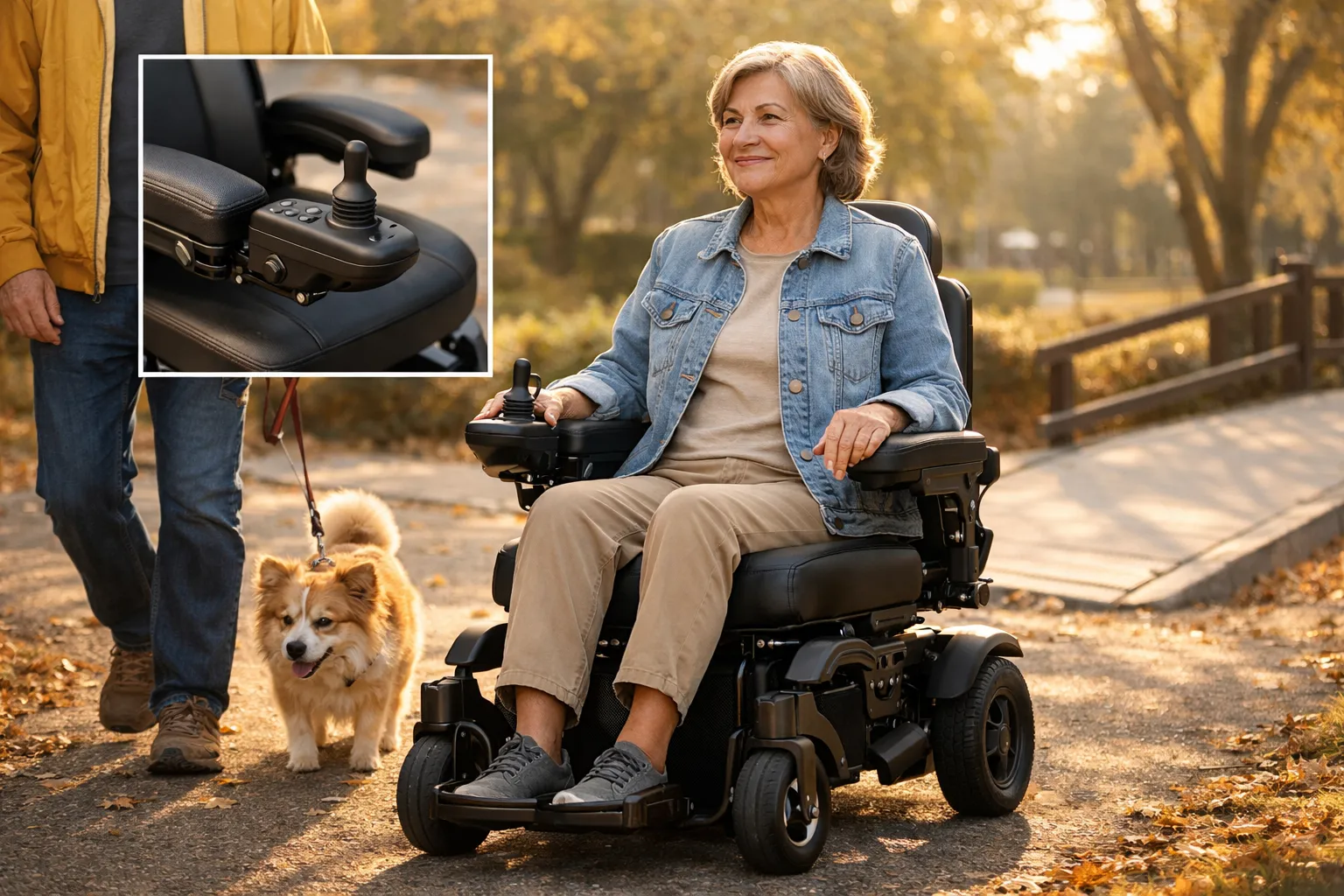
Top Travel Power Wheelchair Picks & Travel-Friendly Alternatives: Prices, Airline Rules & Medicare Buyer’s Tips
If you are weighing a Pride Go Chair® travel power chair or Pride Jazzy® folding options against newer folding choices, you are in the right place. I have helped dozens of travelers figure out what actually works when airports are crowded, elevators are tiny, and budgets are tight. This friendly roundup brings together the best Go Chair and travel-friendly alternatives, with prices you can use for planning, practical airline battery rules, and Medicare tips that cut through the noise. And because real life is messy, I will share the small details that make a huge difference—like which chairs fit in a compact trunk and which ones win the slow-queue slalom at security.
Whether you are buying through Medicare Part B (Medical Insurance), using private insurance, or paying cash and looking for a fair deal, Go Wheelchairs makes the process simpler with a wide range of standard and heavy-duty motorized wheelchairs, lightweight, foldable designs, and step-by-step guidance. Think of this as your travel toolkit: clear comparisons, candid pros and cons, and the confidence to pick a chair you will actually love using.
Selection Criteria for Your Travel Power Wheelchair
Before we jump into the picks, let us align on how we chose them. I looked at how each chair performs in the real world—busy terminals, hotel carpets, restaurant aisles, and curb ramps—then tested that against what insurers and airlines expect. The goal was to balance portability, comfort, reliability, and coverage possibilities, all without breaking the bank. If you have ever wondered why one chair “feels” easier to travel with than another, it usually comes down to a few measurable traits below.
- Portability and packability: Total weight, whether it folds or disassembles, heaviest piece you need to lift, and trunk fit.
- Airline readiness: Battery type and capacity in watt-hours (Wh [watt-hour]), how securely the battery mounts, and how fast you can prep it for gate-check under Federal Aviation Administration (FAA [Federal Aviation Administration]) and Air Carrier Access Act (ACAA [Air Carrier Access Act]) rules.
- Indoor agility: Turning radius and wheelbase for elevators, hotel rooms, and narrow retail spaces.
- Range and reliability: Battery range estimates, easy-to-service parts, and a proven track record for daily use.
- Comfort and fit: Seat width/depth choices, armrest adjustability, and posture support for long days out.
- Coverage path: Medicare Part B (Medical Insurance) and private insurance considerations, including medical necessity, documentation, and supplier participation verification or benefit checks (Go Wheelchairs assists with benefit verification and documentation preparation).
- Price and value: Transparent ranges with notes on what tends to be included vs. add-ons, plus warranty strength.
| Feature | Disassembling Chairs | Folding Chairs | Fixed-Frame Compacts |
|---|---|---|---|
| Packing Speed | Moderate — break into 3-5 pieces | Fast — fold like a stroller | Fast — if it fits your trunk |
| Heaviest Lift | Usually 25-40 lb (pounds) per piece | One piece, often 35-60 lb (pounds) | One piece, may be heavier |
| Airline Battery Steps | Sealed lead-acid often stays installed | Lithium-ion usually removed to cabin | Varies by battery mount |
| Best For | Those who prefer lighter lifts | Those who want the fastest pack-up | Those with larger vehicles |
#1 Pride Go Chair — Best for Everyday Travel and Tight Spaces
The classic Pride Go Chair is popular for a reason: it is nimble in grocery aisles, quick to take apart, and friendly to car trunks without needing a weightlifter on standby. In real use, it shines in places like museum galleries and curbside pickups where you want to glide, pivot, and go. If you prefer a no-drama chair that just works, the Go Chair is like that favorite suitcase you grab first—dependable, familiar, and surprisingly roomy for its size.
Watch This Helpful Video
To help you better understand pride go-chair travel power wheelchair, we’ve included this informative video from BHM University. It provides valuable insights and visual demonstrations that complement the written content.
- Best for: Daily travel where you need compact agility and easy disassembly.
- Why it stands out: Tight turning, proven reliability, and a heaviest piece that many users can manage with a simple lift-and-place motion.
- Key travel specs: Disassembles into multiple pieces; sealed lead-acid batteries that are typically airline-approved when properly secured.
- Typical price range: About 1,699 to 2,299 United States dollars depending on options and promotions.
- Medicare and insurance notes: Coverage depends on medical necessity, seating, and in-home mobility needs; portability alone usually is not the deciding factor. Go Wheelchairs can help verify billing codes and benefits.
Real-world tip: If you are loading into a sedan, place a light towel or small mat on the trunk sill to reduce scratches and friction. Your back and your car will both thank you.
#2 Pride Go Chair MED — Best for Medicare-Friendly Coding
Think Go Chair, with a focus on coding that may align better with certain Healthcare Common Procedure Coding System (HCPCS [Healthcare Common Procedure Coding System]) pathways. If your clinician documents a qualifying in-home mobility limitation and the setup matches coverage policy, this version can create a clearer road map for Medicare Part B (Medical Insurance) discussion. The ride and handling feel familiar—stable, compact, and friendly in crowded spaces—while the paperwork and features may better match what an auditor expects to see.
- Best for: Shoppers who want Go Chair maneuverability with a configuration aligned to Medicare documentation standards.
- Why it stands out: Same easy-to-manage size with features intended to meet common coverage criteria when medically necessary.
- Key travel specs: Disassembles in minutes; sealed batteries often qualify for checked transport when properly installed and disconnected per airline guidance.
- Typical price range: About 1,899 to 2,499 United States dollars before insurance; final out-of-pocket varies with supplier participation and deductibles.
- Medicare and insurance notes: Prior authorization may apply for some power wheelchair categories; Go Wheelchairs walks you through orders, face-to-face exam timing, and documentation checklists.
Heads-up: Coverage decisions are always individualized. Bring your daily-living examples—like bathing, dressing, and safe in-home ambulation—to your evaluation. Specific, functional examples help clinicians craft strong medical-necessity notes.
#3 Pride Jazzy Passport — Best Folding Travel Companion
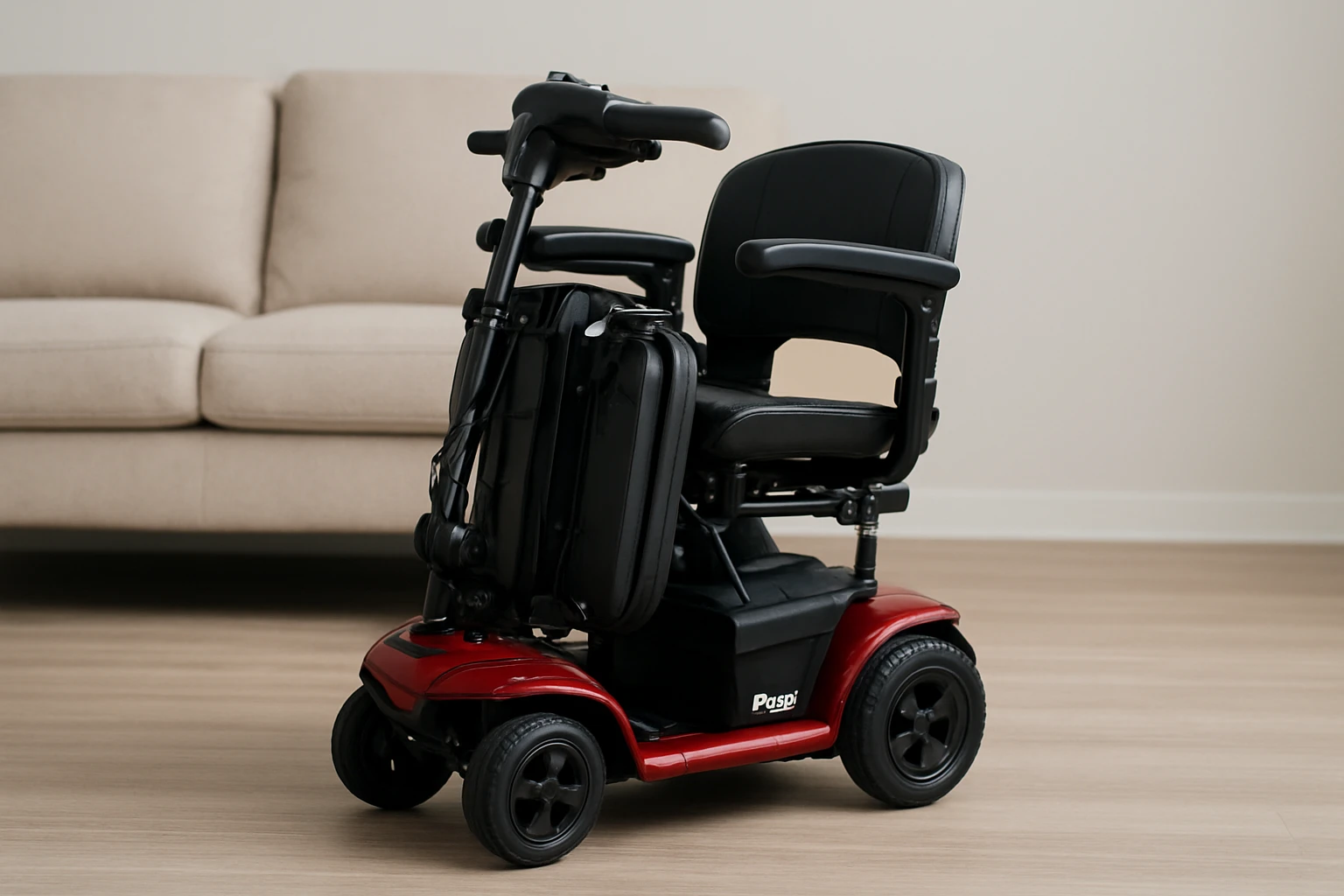
If you crave the fold-and-go life, the Pride Jazzy Passport is a proven crowd-pleaser. It folds like a big stroller, slides easily into ride-shares or taxi trunks, and is comfortable enough for a day downtown. Around airports, the folding design makes gate-check conversations simple, and the lithium-ion battery capacity is typically under common airline thresholds when properly labeled—more on those rules below.
- Best for: Travelers who prioritize a quick fold over multi-piece disassembly.
- Why it stands out: One-piece fold, intuitive levers, and a travel-friendly lithium-ion battery sized for carry-on handling when approved.
- Key travel specs: Folds flat; lithium-ion battery often around 240 to 260 Wh (watt-hour), which many airlines allow in the cabin when secured and terminals covered.
- Typical price range: About 2,099 to 2,699 United States dollars depending on configuration.
- Medicare and insurance notes: Folding travel chairs are less commonly covered because portability alone does not establish medical necessity for in-home use. Ask Go Wheelchairs to check benefits and alternatives.
Airport hack: Print your battery label details and airline policy snippet, then keep them in a zip bag with your charger. Confidence at the counter goes a long way.
#4 Pride Jazzy Carbon — Best Ultralight Feel
The Pride Jazzy Carbon leans into featherweight convenience. If your daily routine includes stairs or you often lift the chair into a hatchback by yourself, that weight savings can be a game changer. The frame feels modern, it tracks smoothly on polished floors, and it packs down fast. I have watched a friend pop it into a compact hatch in less time than it took me to fold a sweater—no joke.
- Best for: Users who want an ultralight chair they or a companion can lift with minimal strain.
- Why it stands out: Light frame, quick fold, and a lithium-ion battery designed with travel in mind.
- Key travel specs: One-piece fold; lithium-ion battery typically under 300 Wh (watt-hour), removable for cabin transport when approved.
- Typical price range: About 2,299 to 3,099 United States dollars based on seat and battery options.
- Medicare and insurance notes: Similar to other folding chairs, this tends to be a cash or private insurance purchase unless medical necessity criteria are clearly met for in-home mobility.
Pro tip: If you have a history of shoulder or wrist strain, test the lift height from your trunk. A small portable ramp can cut awkward angles by half.
#5 Golden LiteRider Envy (GP162) — Best Budget-Friendly Disassembly
Golden Technologies’ LiteRider Envy is a popular “value” travel power chair that disassembles into manageable pieces. It is not the lightest on paper, but the pieces are balanced and practical to handle. On city sidewalks and store aisles, it holds its own, and the sealed lead-acid batteries make airline calls less stressful for many travelers.
- Best for: Budget-conscious buyers who prefer disassembly over a fold.
- Why it stands out: Sensible pricing, accessible components, and parts availability that service techs appreciate.
- Key travel specs: Breaks into several pieces; sealed batteries typically acceptable for checked transport when secured and terminals protected.
- Typical price range: About 1,499 to 2,199 United States dollars.
- Medicare and insurance notes: Coverage can be possible when medical necessity criteria are met; Go Wheelchairs can verify coding and benefits.
What to know: Many users load the base first, then stack the seat and batteries. A simple plastic bin can keep small parts together so nothing rolls under the bumper.
#6 WHILL Model F — Best Design-Forward Portability
The WHILL Model F folds cleanly, looks sleek, and maneuvers with a predictable feel that inspires confidence in crowded venues. If style matters to you—and why should it not—this chair blends design and function without shouting “medical device.” For air travel, the lithium-ion battery is sized with airline acceptance in mind when properly documented.
- Best for: Travelers who want modern aesthetics and a tidy fold.
- Why it stands out: Polished design, steady handling, and intuitive controls that are easy to master in ten minutes.
- Key travel specs: Folding frame; removable lithium-ion battery typically in the 250 to 300 Wh (watt-hour) range, verifiable on the label.
- Typical price range: About 2,899 to 3,699 United States dollars.
- Medicare and insurance notes: Often purchased out of pocket; ask Go Wheelchairs about payment plans or comparing covered alternatives if eligibility exists.
Style meets substance: The fold sits nicely against a wall in tight hotel rooms, which is one of those tiny travel wins you feel every night.
#7 Feather Power Chair — Best Ultra-Lightweight Alternative
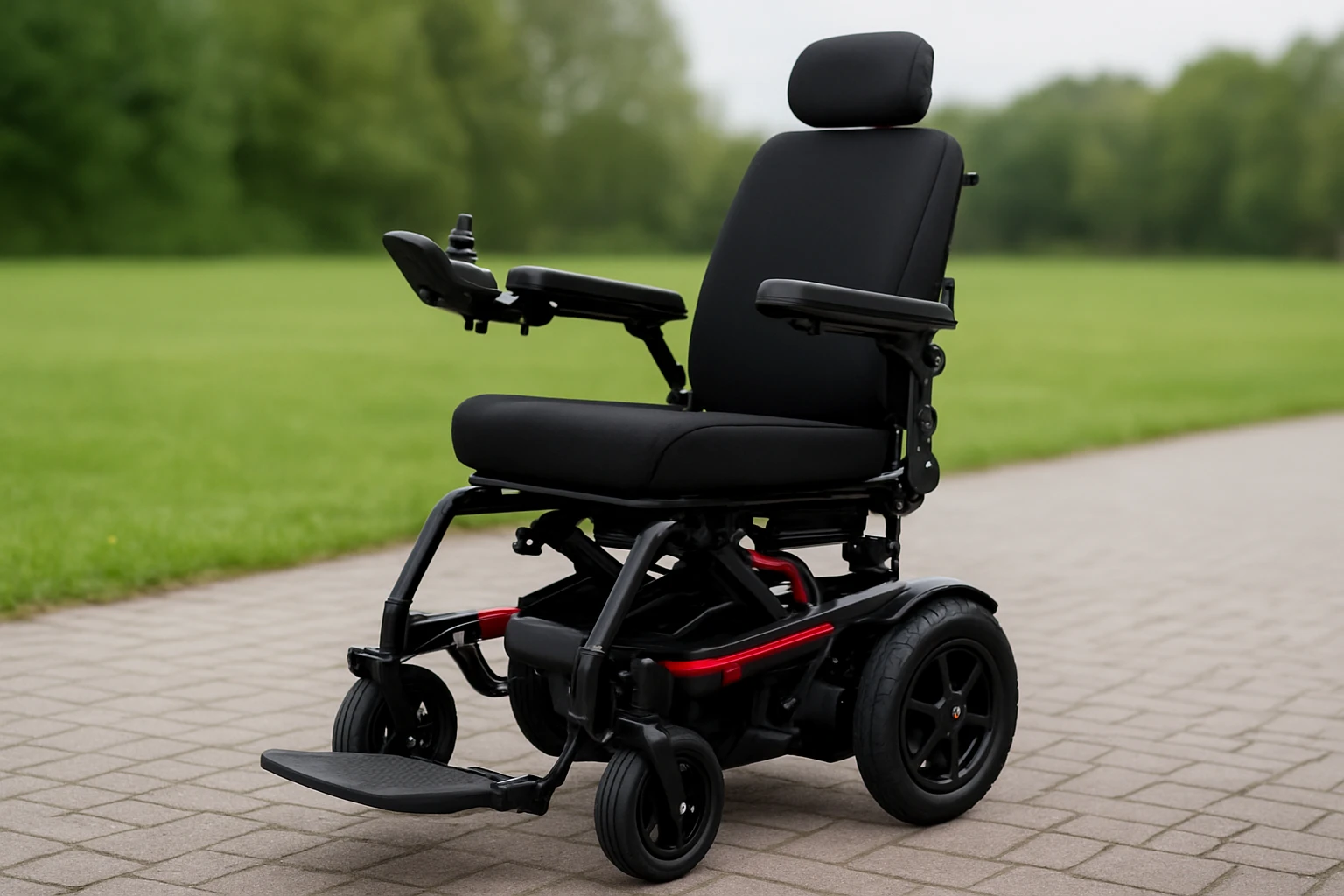
At roughly the weight of a checked suitcase, the Feather Power Chair lives up to its name. If lifting more than 40 lb (pounds) feels daunting, this one can be a relief. It is not a mountain goat—bigger outdoor hills will tax it—but for city errands, museums, and airports, the combination of liftability and practicality is downright liberating.
- Best for: Maximum portability when every pound matters during loading and unloading.
- Why it stands out: Very light frame, straightforward controls, and a battery designed with travel rules in mind.
- Key travel specs: One-piece fold; lithium-ion battery typically under 300 Wh (watt-hour), removable for cabin carry when permitted.
- Typical price range: About 2,199 to 2,799 United States dollars.
- Medicare and insurance notes: Commonly a cash purchase; Go Wheelchairs can explore insurance-friendly alternatives if you prefer.
Loading tip: Use a two-hand suitcase lift with a slight knee bend—not a straight-arm deadlift—and place it upright in the trunk before pivoting it flat.
At-a-Glance Comparison Table
| Model | Portability Style | Approx. Capacity | Heaviest Lift | Battery Type | Airline Readiness | Typical Price (USD) |
|---|---|---|---|---|---|---|
| Pride Go Chair | Disassembles | Up to about 300 lb (pounds) | About 30 to 40 lb (pounds) | Sealed lead-acid | Checked with terminals protected | 1,699 to 2,299 |
| Pride Go Chair MED | Disassembles | Up to about 300 lb (pounds) | About 30 to 40 lb (pounds) | Sealed lead-acid | Checked with terminals protected | 1,899 to 2,499 |
| Pride Jazzy Passport | Folds | About 250 lb (pounds) | One piece, often 50 to 60 lb (pounds) | Lithium-ion | Carry battery in cabin when approved | 2,099 to 2,699 |
| Pride Jazzy Carbon | Folds | About 250 to 300 lb (pounds) | One piece, often under 45 lb (pounds) without battery | Lithium-ion | Carry battery in cabin when approved | 2,299 to 3,099 |
| Golden LiteRider Envy (GP162) | Disassembles | About 300 lb (pounds) | About 30 to 40 lb (pounds) per piece | Sealed lead-acid | Checked with terminals protected | 1,499 to 2,199 |
| WHILL Model F | Folds | About 250 lb (pounds) | One piece, about 50 to 60 lb (pounds) | Lithium-ion | Carry battery in cabin when approved | 2,899 to 3,699 |
| Feather Power Chair | Folds | About 250 lb (pounds) | One piece, about 33 lb (pounds) | Lithium-ion | Carry battery in cabin when approved | 2,199 to 2,799 |
Notes: Specifications vary by configuration and model year. Confirm exact measurements, battery labels, and airline documentation with your dealer before travel.
How to Choose the Right Option
Start with the life you live, not the chair you saw in an ad. Do you road-trip every other weekend, or is your biggest challenge a two-story townhouse and a small elevator? Will you file for Medicare Part B (Medical Insurance) coverage, use private insurance, or shop cash with a travel-first mindset? Matching your realities to these decision pillars will keep you from overbuying—or underbuying—and regretting it later.
1) Decide How You Pack and Lift
- If you or a partner can lift 30 to 40 lb (pounds) safely, a disassembling model like the Pride Go Chair is low-fuss and trunk-friendly.
- If you want the fastest pack-up with the fewest steps, a folding model like the Jazzy Passport, Jazzy Carbon, WHILL Model F, or Feather Power Chair may feel effortless.
- Measure your trunk opening height and depth. A 1-inch miss becomes a 30-minute headache in a hotel driveway.
2) Understand Airline Battery Rules
Airline policies flow from the Federal Aviation Administration (FAA [Federal Aviation Administration]) and the International Air Transport Association (IATA [International Air Transport Association]), and are enforced by carriers under the Air Carrier Access Act (ACAA [Air Carrier Access Act]). The short version: sealed lead-acid batteries generally stay installed and disconnected for checked chairs, while lithium-ion batteries usually must be removed and travel in the cabin with protected terminals. Always notify your airline at booking and again 48 hours prior to flying.
| Battery Type | Typical Rule | Your Action |
|---|---|---|
| Sealed Lead-Acid (VRLA [Valve-Regulated Lead-Acid]) | May remain installed if securely attached; chair checked at gate or counter | Switch off power, disconnect if required, protect terminals, provide handling instructions |
| Lithium-Ion ≤ 300 Wh (watt-hour) | Must usually be removed and carried in the cabin | Bring battery in a protective case; tape or cap terminals; carry documentation showing Wh rating |
| Lithium-Ion > 300 Wh (watt-hour) | Often not accepted on passenger flights | Contact airline special assistance well in advance for alternatives |
| Spare Lithium-Ion Batteries | Limited number allowed in cabin only | Confirm limits per carrier; keep spares individually protected |
Traveler stats to keep in mind: According to the United States Department of Transportation (DOT [Department of Transportation]) air travel consumer reports, airlines mishandle a noticeable number of mobility devices each month, historically around one to two out of every hundred checked. Photograph your chair and battery label before check-in, remove detachable accessories, and hand staff your printed handling instructions. Small steps, big peace of mind.
3) Medicare Buyer’s Tips That Actually Help
Medicare Part B (Medical Insurance) may cover a power wheelchair when it is medically necessary for in-home mobility and you meet all documentation requirements. Portable features by themselves typically do not drive approval. Here is a plain-English roadmap that many successful applicants follow with Go Wheelchairs’ guidance:
- Start with your clinician: Schedule a face-to-face mobility assessment. Bring real examples of daily tasks you cannot safely perform with a cane or walker.
- Get a detailed written order: Include your diagnosis, functional limitations, and why a power wheelchair is reasonable and necessary in your home.
- Work with a supplier: Go Wheelchairs can help verify supplier participation with your plan, verify benefits, outline prior authorization steps, and coordinate paperwork.
- Expect a home assessment: Insurers want to see that the chair can be used inside your residence to accomplish daily living activities.
- Keep timelines tight: Documentation often has date windows. Go Wheelchairs maintains checklists so signatures and forms do not expire mid-process.
| Factor | What Reviewers Look For |
|---|---|
| Medical Necessity | Detailed clinical notes tying your condition to in-home mobility needs |
| Home Use | Chair fits and functions inside the home for daily activities |
| Prior Authorization | Applies to some codes; supplier submits documentation before delivery |
| Supplier Status | Participating and accredited Durable Medical Equipment (DME [Durable Medical Equipment]) providers are often required—verify supplier participation with your plan |
Reality check: Even if a specific folding travel model is not covered, Go Wheelchairs can often propose a covered in-home chair plus a discounted or payment-plan travel chair. Flexibility helps you match the right tool to each environment without waiting months.
4) Budget, Warranties, and Long-Term Value
Sticker price is only the start. Consider battery replacement cycles, tire wear, and whether nearby service technicians can get parts quickly. A slightly higher upfront cost can be the cheaper choice if it saves a single missed flight or a month of downtime. Go Wheelchairs’ resources hub offers buyer’s guides, comparison tools, and travel checklists so you can map total cost of ownership—not just the tag on day one.
| Category | Price Range (USD) | Often Includes |
|---|---|---|
| Disassembling Travel Chairs | 1,499 to 2,499 | Sealed batteries, basic charger, standard seating |
| Folding Travel Chairs | 2,099 to 3,699 | Lithium-ion battery, compact charger, travel-friendly frame |
| Heavy-Duty Compact Chairs | 2,799 to 5,499 | Higher weight capacity, reinforced frames, upgraded seating |
Good-to-know: Many private plans allow Health Savings Account (HSA [Health Savings Account]) or Flexible Spending Account (FSA [Flexible Spending Account]) funds for qualifying expenses. Ask Go Wheelchairs to help you document medical necessity, itemize invoices, and time purchases around benefits windows.
5) Why Partner with Go Wheelchairs
- Wide range of standard and heavy-duty motorized wheelchairs, plus lightweight, foldable travel designs to test-drive side by side.
- Personalized support: A human who listens to your daily routine, then tailors options, fit, and financing.
- Insurance and Medicare assistance: Benefit checks, documentation coaching, and prior authorization support.
- Resources hub: Buying guides, spec comparisons, airline prep checklists, and maintenance tips.
- Fair, transparent pricing and trustworthy follow-up—because support after the sale matters just as much as day one.
Final Thoughts
Here is the promise: you will leave with a clear path to the right chair, airline-ready battery know-how, and Medicare buyer confidence.
Imagine the next 12 months with fewer travel scrambles—hotels that finally feel accessible, airport days that feel routine, and weekends where your chair simply keeps up. Matching the chair to your real life is the unlock.
Which moment would matter most to you right now—conquering that crowded market, breezing through gate-check, or bringing home a Pride Go Chair® travel power chair that fits your budget and your calendar?
Find Your Travel-Ready Fit with Go Wheelchairs
Explore a Wide range of standard and heavy-duty motorized wheelchairs with expert guidance on Medicare and insurance so you move confidently and independently.