
8 Motorized Wheelchairs: Model-by-Model Comparisons for Travel, Home & Heavy-Duty (Medicare-Friendly Picks)
Motorized wheelchairs have come a long way from clunky frames and short battery life. Today, you can choose compact travel chairs that fold for car trunks, mid-wheel drive models that pivot on a dime in tight kitchens, and heavy-duty powerhouses that keep pace outdoors. If you are also weighing Medicare Part B and private insurance rules, picking the right ride can feel like decoding a puzzle.
That is why I built this friendly, plain-English comparison covering eight widely loved models across travel, home, and heavy-duty categories. I will highlight what each chair is, why it matters, and a real-life example for fast clarity. Throughout, I will flag Medicare-friendly cues and point out where coverage is more likely or where it is typically not available, so you do not waste time chasing dead ends.
And if you want a partner to walk you through sizing, coordinating demos or trials, and coverage paperwork, Go Wheelchairs offers a wide range of standard and heavy-duty motorized wheelchairs, plus dedicated guidance on insurance and Medicare coverage. Before we dive in, here is a quick snapshot of the lineup. Specifications may vary by configuration and battery choice, so confirm final details before you buy.
| Model | Category | Drive Type | Capacity (pounds) | Turning Radius (inches) | Top Speed (miles per hour) | Range (miles) | Medicare-Friendly Note | Notable Perks |
|---|---|---|---|---|---|---|---|---|
| Jazzy Select® | Home/Everyday | Mid-wheel | 300 | Varies by configuration; see product page | Approx. 4 | Varies by battery; see product page | Coverage varies; may be covered with documented medical necessity | Active‑Trac suspension option, comfortable high‑back seat |
| Go Chair® | Travel/Portable | Varies by assembly; see product page | 300 | Varies; compact when disassembled | About 3.8 | About 11.2 (typical) | Coverage varies; may be eligible when medically necessary and configured appropriately | Feather-touch disassembly into 5 pieces; lightweight and portable |
| Jazzy Air® 2 | Elevating Mid-Wheel | Mid-wheel (elevating) | 300 | Varies by configuration; see product page | Up to around 4 (while elevated) | Approx. 19.2 (typical) | Coverage varies; elevation features may affect benefit decisions—documentation required | Seat elevates up to 12″, improves reach and eye‑level interaction |
| Jazzy® Carbon | Ultra‑light Travel | Varies; see product page | 300 | Compact fold; see product page | Approx. 4 | Varies by battery; typical travel battery specs listed on product page | Often not covered when selected purely for travel; coverage depends on documented in‑home need | Carbon‑fiber frame, airline‑compliant battery option |
| Jazzy® Ultra Light | Travel/Ultra-Light | Varies; see product page | 300 | Very compact; see product page | Approx. 4 | Varies; optional larger batteries available | Coverage varies; travel-focused features are less likely to be sufficient alone | All‑carbon‑fiber frame, ~33 lb without battery (model-dependent) |
| Jazzy® Elite HD | Heavy‑Duty | Varies by configuration; see product page | Up to 450 | Varies; see product page | Approx. 4 | Approx. 14.4 (typical, varies by config) | May be covered when there is clinical need for higher capacity and documentation supports it | Higher weight rating, knobby 14″ drive wheels, increased ground clearance |
| Jazzy Elite 14® | Mid‑Wheel/Everyday | Mid-wheel | 300 | Varies; see product page | Approx. 4 | Varies by battery; see product page | Coverage varies; may be covered with proper documentation and supplier process | Balanced mid‑wheel performance and familiar Jazzy features |
| Jazzy® / Jazzy® 600 ES | Mid‑Wheel Lineup | Varies by specific model; see product page | Varies by model (see product page) | Varies by model; see product page | Approx. 4 | Varies by battery/configuration | Coverage varies by model and documented need; Go Wheelchairs can assist with benefit checks | Multiple configurations available across the Jazzy lineup |
#1 Jazzy Select® — The Indoor-Outdoor Everyday Powerhouse
What it is: A classic mid-wheel drive chair known for stability and maneuverability, the Jazzy Select blends indoor agility with enough tire, suspension, and battery to handle daily errands. Think tight kitchen turns without sacrificing curb-cut confidence. It is a go-to for many first-time power chair users who want one chair to do most things well.
Why it matters: Mid-wheel drive naturally centers your weight, helping the chair pivot almost in place while feeling surefooted. The Select’s design supports predictable handling on common household surfaces and modest outdoor terrain, which is where most day-to-day trips happen. For Medicare Part B coverage, it may qualify when your clinician documents medical necessity and a Medicare-enrolled supplier processes the claim; coverage depends on documentation and the insurer.
Quick example: One Go Wheelchairs client with neuropathy needed to turn through a 30-inch bathroom door and still ride to a corner store a few blocks away. The Select checked both boxes, and with proper documentation and a supplier claim, coinsurance became manageable after the deductible. The result felt like winning back both space and spontaneity.
#2 Go Chair® — Lightweight, Portable, Everyday Travel
What it is: Go Wheelchairs’ in-house Go Chair® is a lightweight, portable power wheelchair designed for travel and everyday use. It disassembles into five feather-touch pieces, is easy to lift into car trunks, and aims to reduce the friction of daily outings without a bulky ramp or lift.
Watch This Helpful Video
To help you better understand motorized wheelchairs, we’ve included this informative video from Mobility Scooters Direct. It provides valuable insights and visual demonstrations that complement the written content.
Why it matters: Portability is a powerful accessibility factor. If your routine includes car travel, cafes, or short trips where a heavy chair would be a barrier, a travel-focused power chair like the Go Chair can expand your practical range. Coverage for travel‑focused chairs varies; when in‑home mobility needs are the primary justification, suppliers and clinicians must document medical necessity.
Quick example: A customer who wanted an easy-to-stow chair for weekend visits chose the Go Chair. With a lightweight breakdown and help from the Go Wheelchairs team to prepare model specs for their insurer, they found a balance of portability and routine utility that fit their life.
#3 Jazzy Air® 2 — Elevated Reach for Everyday Interaction
What it is: The Jazzy Air® 2 is an elevating mid-wheel drive power wheelchair whose seat raises roughly 12 inches to help with tasks at counter height and social interaction. It’s designed to keep the benefits of mid-wheel maneuverability while adding vertical reach.
Why it matters: Elevation can be more than convenience — it can restore independent access to shelves, counters, and eye-level conversation. Elevating functions are evaluated carefully by insurers, and documentation showing functional need is important. Go Wheelchairs can help explain what clinical evidence is typically required and assist with benefit checks.
Quick example: A user who struggled to reach kitchen counters found the Jazzy Air 2’s elevation transformative. With coordinated paperwork and clear documentation of functional goals, the user and their clinician worked with Go Wheelchairs to pursue reimbursement options while planning for a successful setup.
#4 Jazzy® Carbon — Ultra-Light Travel Without Compromise
What it is: The Jazzy® Carbon is an ultra-light carbon-fiber travel power wheelchair with an airline‑compliant 24V 12Ah lithium battery option and a compact fold for transit. It’s aimed at travelers who need a lighter, durable frame for frequent transit.
Why it matters: For people who fly or frequently transfer the chair into vehicles, an ultra-light frame and airline-friendly battery options significantly reduce friction. Because Medicare centers on in-home mobility needs, travel-specific features alone may not qualify for coverage; Go Wheelchairs will help you weigh travel benefits against coverage likelihood and suggest alternatives if needed.
Quick example: A frequent traveler selected the Carbon for its low weight and compact packing. Go Wheelchairs provided detailed battery documentation and travel tips to make airline travel smoother and explained coverage implications up front.
#5 Jazzy® Ultra Light — Minimal Weight, Maximum Convenience
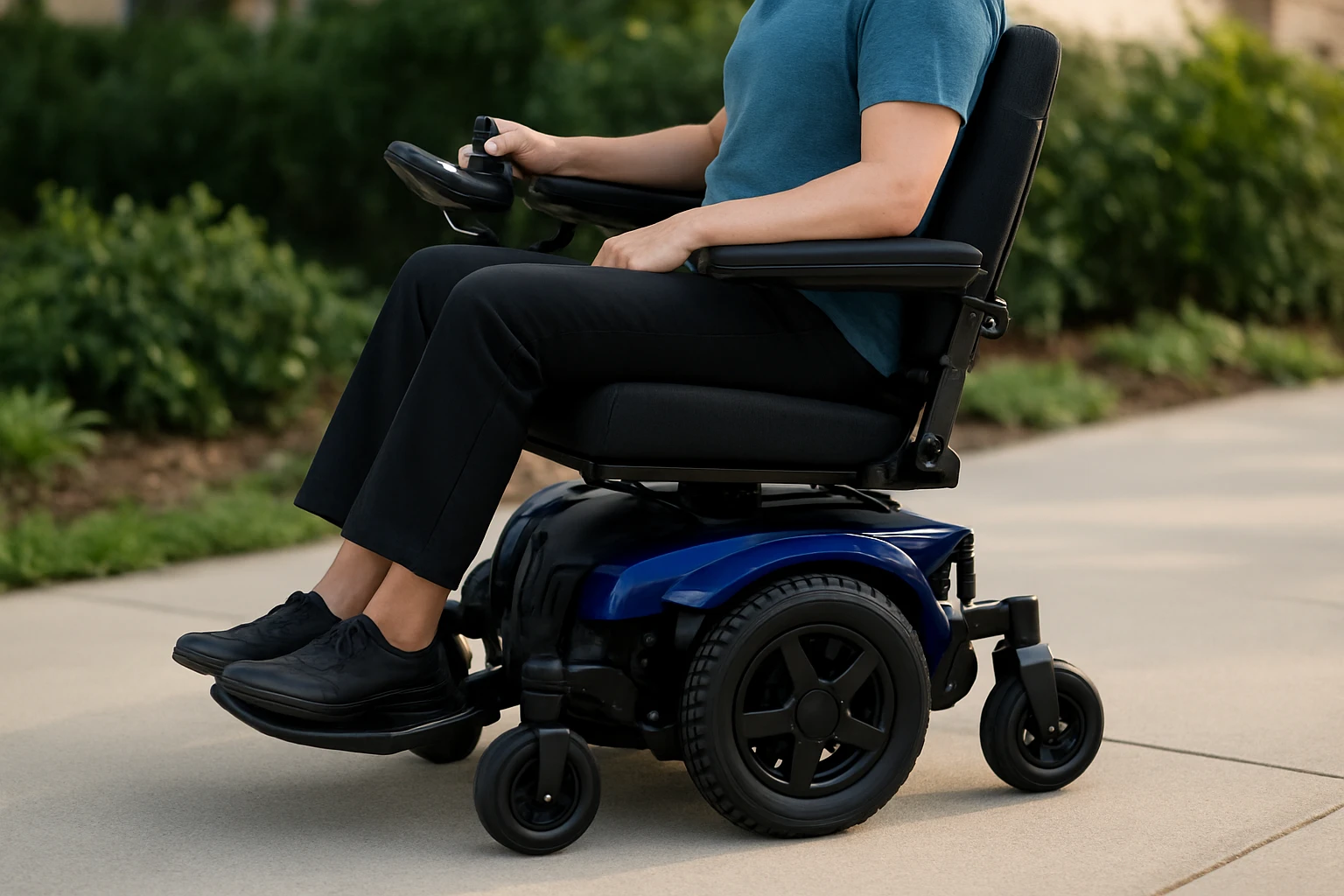
What it is: The Jazzy® Ultra Light is an all-carbon-fiber travel model that can weigh roughly 33 pounds without a battery (model-dependent) and offers airline‑compliant battery options as well as optional higher‑capacity batteries for extended range.
Why it matters: When weight and portability are priorities, the Ultra Light reduces the physical burden of moving a power chair. Like other travel-focused models, coverage by Medicare depends on demonstrating an in‑home medical need rather than travel convenience alone. Go Wheelchairs can help you compare battery options and document function for insurers.
Quick example: Someone who needed a lightweight option for weekend trips chose the Ultra Light and added a larger battery for longer days. Go Wheelchairs guided the buyer on airline paperwork, battery labels, and how to present the setup to their clinician for coverage conversations.
#6 Jazzy® Elite HD — Heavy‑Duty Confidence
What it is: The Jazzy Elite HD is a heavy‑duty power wheelchair with higher weight capacity and a robust build for users who need reinforced frames and stronger motors. It features knobby 14″ drive wheels and increased ground clearance on some configurations.
Why it matters: A power chair should fit your body today and tomorrow. Heavier-duty frames, reinforced seating, and torquey motors help maintain independence with fewer limits. Coverage for higher-capacity chairs often hinges on clinical documentation showing that a standard-capacity chair is insufficient; Go Wheelchairs can assist with the required paperwork and benefit checks.
Quick example: A customer who gardens and visits grandkids needed a chair that handled uneven pavers. The Elite HD managed patio edges and grassy patches while staying compact enough for the living room. Go Wheelchairs coordinated the supplier process and advised on documentation to support coverage discussions.
#7 Jazzy Elite 14® — Mid‑Wheel Reliability
What it is: The Jazzy Elite 14® is a mid‑wheel power wheelchair designed for everyday indoor and neighborhood use, offering a balance of maneuverability and familiarity for users who prefer a straightforward, comfortable base.
Why it matters: Balanced handling, predictable controls, and proven components make this model a sensible choice for many buyers. As with other standard power chairs, Medicare coverage depends on medical necessity and proper supplier and clinical documentation; Go Wheelchairs helps organize those steps.
Quick example: A buyer who wanted a reliable mid‑wheel chair for daily errands chose the Elite 14. With Go Wheelchairs’ product guidance and documentation support, they felt confident in both the fit and the steps toward filing a claim.
#8 Jazzy® / Jazzy® 600 ES — Flexible Lineup Options
What it is: The Jazzy family includes multiple models under the Jazzy® and Jazzy® 600 ES naming, offering a variety of mid‑wheel configurations, seating options, and features across the lineup. Go Wheelchairs lists many of these variants and provides product pages with full specifications for each model.
Why it matters: The Jazzy lineup’s breadth means you can often find a model that aligns with your home layout, weight capacity, and seating needs without stepping into specialized complex‑rehab equipment. Coverage and model suitability depend on individual clinical documentation and insurer rules.
Quick example: A customer compared two Jazzy variants with slightly different seating packages. Go Wheelchairs provided itemized spec sheets for each model to share with the clinician and insurer, which streamlined the review process and clarified the final selection.
How to Choose the Right Option

Use this quick framework to focus on fit before features. A great power chair should match your body, your home, and your typical day, then your insurance situation.
- Start with where you will use it most. If 80 percent of time is inside, favor mid-wheel drive and a tight turning radius. If you roll outdoors often, look for traction and suspension.
- Measure your spaces. Note doorway widths, hallways, and the tightest turn you make. Bring those numbers to your Go Wheelchairs advisor so you can check models against them.
- Decide on portability versus coverage. Travel chairs shine for car trunks and flights but are often not covered by Medicare. Standard home chairs are more coverage-friendly.
- Match weight capacity with headroom. Choose a capacity that comfortably exceeds your current weight and typical cargo, allowing room for future changes.
- Think about seating and skin protection. If you spend long hours seated or have a history of pressure injuries, explore cushions, tilt, and recline—possibly in complex rehab.
- Plan your documentation. For Medicare, you will need a face-to-face exam with your clinician, a detailed written order, and a Medicare-enrolled supplier. Go Wheelchairs can coordinate each step.
| Your Priority | Lean Toward | Why |
|---|---|---|
| Apartment maneuvering | Mid-wheel drive, tight turning radius | Pivots close to center, easier in hallways and small rooms |
| Frequent car or air travel | Lightweight or modular travel chair | Faster to disassemble; some batteries meet airline rules |
| Higher weight capacity | Heavy-duty standard chair | Reinforced frame and motors for confidence and longevity |
| Advanced seating needs | Complex rehab model | Power positioning and custom components for health and comfort |
Pro tip: Many standard power chairs top out around four miles per hour and often offer roughly ten to fifteen miles per charge in typical use; exact numbers depend on batteries, terrain, temperature, and weight. Test on the type of routes you actually take, and where available, arrange demos or short trials to see how a model performs in your real-world conditions. Go Wheelchairs can help arrange demos or provide spec-matching so your choice is grounded in reality, not a brochure.
Medicare and Insurance Essentials (Short Guide)
Coverage rules can feel opaque, but a few principles help. Medicare Part B may cover a power wheelchair as Durable Medical Equipment when medically necessary for use inside the home, after a face-to-face exam and a detailed written order. You must work with a Medicare-enrolled supplier. After the annual deductible, the typical coinsurance is twenty percent of the Medicare-approved amount.
Quick pointers:
- Coverage focuses on in-home needs first. Travel features alone are not a qualifying reason.
- Document functional limits: why a cane, walker, or manual chair will not safely meet your in-home mobility needs.
- Complex rehab chairs often require evaluations with a clinician and an Assistive Technology Professional; coverage can include power positioning for qualifying conditions.
- Medicare Advantage and private plans may have different processes or networks. Go Wheelchairs can help verify benefits and coordinate authorizations.
Go Wheelchairs’ resources hub includes buying guides, comparison tools, and travel tips, plus checklists you can bring to your medical appointment. The goal is simple: less friction, more freedom.
Where Go Wheelchairs Fits In
Finding the right chair is part science, part storytelling. Your body, your home layout, your commute, and your coverage all matter, and they change over time. Go Wheelchairs offers a wide range of standard and heavy-duty motorized wheelchairs, lightweight foldable designs, and human support to connect each dot. From picking drive type to gathering medical notes and filing claims, you get a clear path forward.
Want specifics? Expect one-to-one guidance, transparent pricing, help with Medicare and private insurance paperwork, and after-care that keeps your chair dialed in. Customers often start with two to three model evaluations or demos (where available) against their real-world spaces, then finalize the choice with confidence. That is what it looks like when a mobility company measures success in miles of your life reclaimed.
FAQ: Quick Clarifiers
Are travel chairs usually covered by Medicare? Typically no, because Medicare centers decisions on in-home medical necessity. Some Medicare Advantage or secondary plans may help. A Go Wheelchairs advisor can check.
Mid-wheel, front-wheel, or rear-wheel drive—which is best? Mid-wheel excels indoors with tight turning. Front-wheel offers good curb approach and traction. Rear-wheel can feel stable at higher speeds outside. Your usage determines the winner.
How much maintenance do power chairs need? Think tire wear, battery health, joystick calibration, and routine checks. Go Wheelchairs sets a simple maintenance cadence and can schedule periodic tune-ups to prevent surprises.
Final Comparison Notes
Specifications, configurations, and seating options change over time. Treat published ranges and speeds as starting points, then test with the exact batteries, cushions, and controls you will use. When in doubt, ask Go Wheelchairs to simulate your daily routes and household turns where demo options exist. Better data equals a better decision.
How to choose the right option
If you are torn between two or three favorites, map them to your top three must-haves: indoor turning, outdoor stability, and coverage likelihood. Choose the model that wins at two of the three, then confirm comfort with a demo or trial (where available). Bring your doorway measurements, the tightest corner in your home, and a list of routine outings.
Everything here reduces to one promise: with the right match, your chair should disappear into your day while your life comes forward.
In the next 12 months, features like smarter battery management and easier airline prep will keep shrinking tradeoffs between portability and comfort. Imagine sliding through your morning routine and then rolling out for dinner without a second thought.
What would feel different in your week if your chair fit like a tailored jacket—and if comparing motorized wheelchairs felt simple instead of stressful?
Find Your Fit with Go Wheelchairs
Explore a wide range of standard and heavy-duty motorized wheelchairs with personalized guidance and Medicare support, so you move forward confidently with a covered, dependable fit.