
Travel-Friendly Power Wheelchair — 20 Travel Questions Answered: Airline Rules, Battery Safety & Medicare Coverage
If you are packing for a flight with a travel-friendly power wheelchair and you are wondering whether the airline, battery rules, and insurance paperwork will play nice, you are in the right place. Over the years I have rolled through crowded terminals, gate-checked in a hurry, and learned the hard way how to label a lithium battery correctly. You should not have to guess. So let us walk through the essentials, step by step, and make your next trip smoother from curb to cabin.
In this friendly guide, we will decode airline policies, simplify battery math, and clarify what Medicare Part B [Centers for Medicare & Medicaid Services (CMS) Medicare Part B] typically covers. You will also find real-world tips, compact checklists, and tables you can screenshot for travel day. And because choosing the right chair matters just as much as the rules, we will highlight how Go Wheelchairs supports you with a wide range of standard and heavy-duty motorized wheelchairs, lightweight travel-focused models, and hands-on help with insurance and Medicare paperwork.
What is a travel-friendly power wheelchair?
A travel-friendly power wheelchair is a powered mobility chair designed to be easier to transport for car trunks, ride-shares, train racks, and gate-check handling. Models achieve portability in different ways — some offer compact folding bases, others use ultra-light frames or travel-focused designs, and some disassemble into multiple pieces for liftable segments. These chairs aim to keep key comforts such as a responsive joystick and cushioned seating, though specific components (motors, brakes, and other hardware) vary by model and manufacturer. Weights range from ultra-light travel options (for example, some models near the low 30s of pounds without battery) to heavier mid-wheel and heavy-duty models; many core models listed by Go Wheelchairs have around a 300 lb capacity, with heavy‑duty options offering higher capacities where needed.
Construction varies by model. You will see aluminum frames for a strong, light base, and in some premium cases magnesium or carbon fiber for extra weight savings. Most run on lithium-ion packs measured in Wh [watt-hours] and feature solid or pneumatic tires and anti-tip wheels. Turning radius and maneuverability depend on drive configuration — mid-wheel drive models typically offer tighter turning radii than front- or rear-wheel drive bases. Speeds typically land between 3.5–4 mph [miles per hour], ideal for keeping pace through terminals and sidewalks without feeling rushed.
Because portability is the goal, a travel-friendly chair should be easy to stow or disassemble and have clear lifting points and protected wiring. Portability can mean a compact folding base, feather-touch disassembly into pieces, or an ultra-light travel frame — each approach has trade-offs. Look for protected joysticks, secure battery labels, and travel-friendly accessories. A small bit of forethought here can save you twenty minutes of back-and-forth with a gate agent on a busy morning.
- Core travel features to expect: travel-friendly portability via compact folding or disassembly, removable or protected joystick, airline-friendly battery labeling, and anti-tip stability.
- Comfort features to consider: adjustable armrests, suspension or shock absorption, and seat width options from 17–22 in [inches] [43–56 cm [centimeters]].
- Durability cues: rigid hinge design where applicable, sealed connectors, puncture-resistant tires, and a reinforced footplate.
Go Wheelchairs curates lightweight, travel-focused and portable wheelchair designs and a wide range of standard and heavy-duty motorized wheelchairs, so you can match fit, terrain, and travel plans without guesswork. Their resources hub also offers buying guides, comparison tools, and practical travel tips you can use before you book.
Why does a travel-friendly power wheelchair matter when you travel?
Airports reward simplicity, and a travel-friendly power wheelchair keeps your day simple. You can ride independently to the aircraft door, ask for a gate-check tag, and stow or disassemble the chair there without a bulky, multi-piece teardown. That matters when a tight connection or a crowded jet bridge would otherwise add stress. It also reduces lifting for caregivers and minimizes the risk of bent parts, because fewer loose pieces means fewer chances for damage when the design is compact or intentionally segmentable.
Watch This Helpful Video
To help you better understand folding electric wheelchair, we’ve included this informative video from Mobility Scooters Direct. It provides valuable insights and visual demonstrations that complement the written content.
There is a freedom factor too. With a compact or disassemblable power chair, spontaneous detours feel doable. If a museum is two blocks farther than planned or a hotel elevator is smaller than advertised, a compact footprint or travel-oriented design usually fits the moment. For many of us, that flexibility turns a cautious itinerary into a confident one and helps conserve energy for the fun parts of the day.
And while convenience sells the chair, the real payoff is continuity: the ability to use the same familiar device at home, on the road, and in the air. That consistency can reduce falls, cuts down on learning curves, and supports therapy goals. Go Wheelchairs leans into this continuity by helping you choose a model that matches your daily terrain and your travel style, including heavy-duty options for higher weight capacities and rougher ground.
- Less wait time: breeze past baggage counters with gate-check, not oversize claims.
- More control: avoid last-minute wheelchair swaps that can feel uncomfortable or unsafe.
- Better budgeting: one device for home and travel can lower total lifetime cost.
- Insurance clarity: guidance on Medicare and health plans helps align features to coverage rules.
How does a travel-friendly power wheelchair work on the road and in the air?
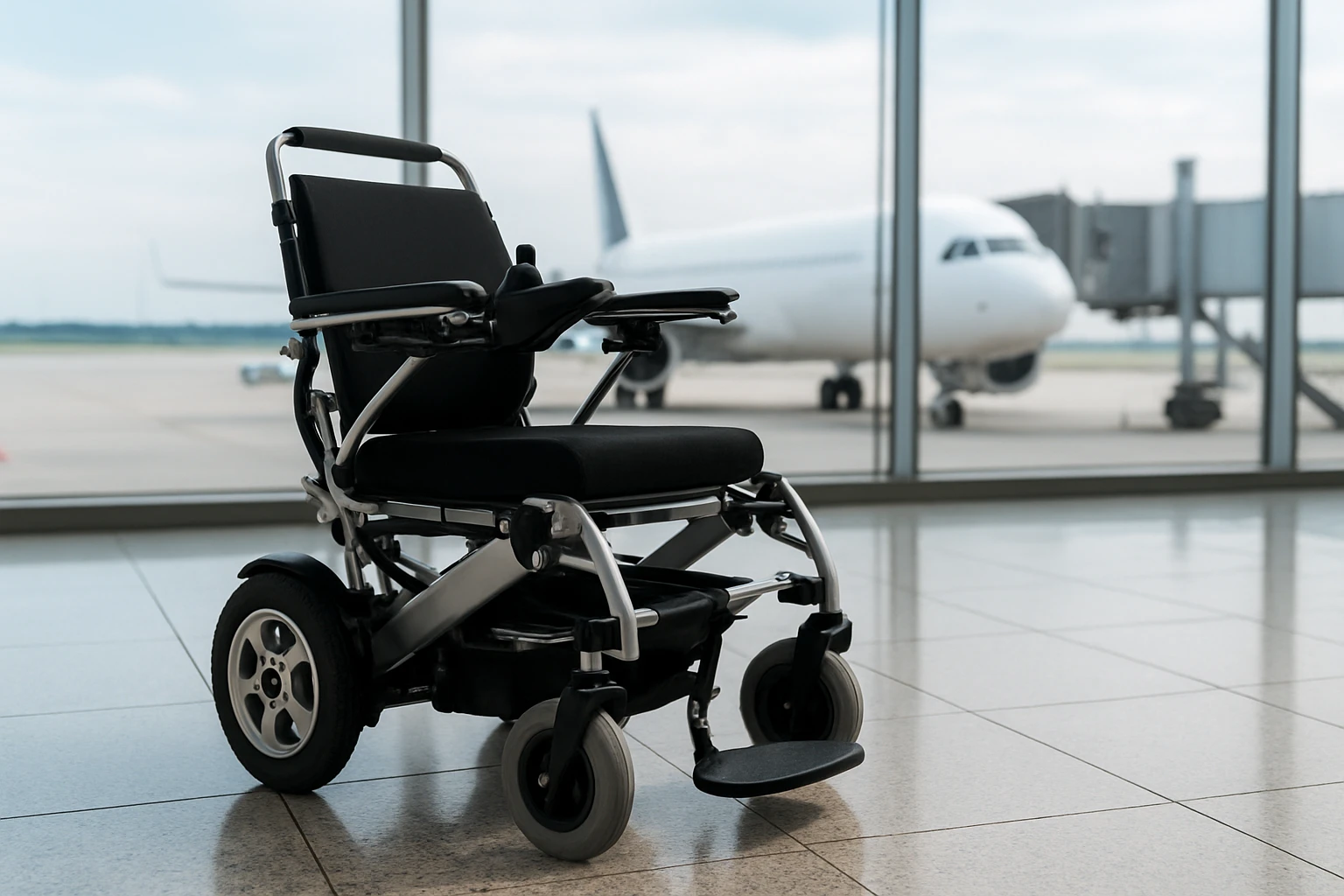
Mechanically, your chair runs on a battery powering compact, high-torque motors with a joystick that modulates speed and direction. Most modern packs are lithium-ion, labeled in Wh [watt-hours], with a battery management system to prevent overcharge and short circuits. Component details — such as motor type and braking system — vary by manufacturer and model; many models use electromagnetic brakes that engage when you release the joystick, and some include a manual brake release to let ground crew roll the chair gently when powered off.
For flights, airlines largely follow FAA [Federal Aviation Administration] and IATA [International Air Transport Association] guidance. In practice, that means the battery must be securely attached, protected from activation, and labeled with Wh [watt-hours]. Spares go in carry-on only, with terminals taped or capped. At check-in, tell the agent you will gate-check a powered wheelchair and need preboarding for disconnecting or protecting parts. The TSA [Transportation Security Administration] security lane is used as usual, and officers typically swab components, not disassemble them.
Preparation is your superpower. The night before, print the chair’s spec sheet and the battery SDS [Safety Data Sheet]. Add a luggage tag with your name, phone, and destination. Bring two zip ties and painter’s tape to secure cables and wrap the joystick. If the chair uses a quick-release battery, practice removing and reinstalling it so you can do it calmly in a crowded jet bridge. That smooth, two-minute ritual reassures crews and keeps your device safe.
| Battery Type | Typical Capacity | Common Allowance Under FAA [Federal Aviation Administration] | Checked vs Carry-on | Prep Tips |
|---|---|---|---|---|
| Lithium-ion (removable pack) | 180–300 Wh [watt-hours] | Up to 300 Wh [watt-hours] installed; up to two spares ≤160 Wh [watt-hours] each | Installed: attached to device; Spares: carry-on only | Label Wh [watt-hours]; cap or tape terminals; bring SDS [Safety Data Sheet] |
| Lithium-ion (internal, not user-removable) | 200–300 Wh [watt-hours] | Allowed when securely attached and deactivated per airline procedure | Device checked at gate; no loose spares | Show manual; engage power cut-off; protect joystick |
| Sealed lead-acid or gel | Varies (often listed in Ah [amp-hours]) | Non-spillable types typically allowed when secured upright | Usually okay as installed; spares often not permitted | Mark “non-spillable”; cover terminals; carry spec sheet |
Note: Always confirm details with your airline, because policies can differ by carrier and country, even under the same FAA [Federal Aviation Administration] or IATA [International Air Transport Association] framework.
20 Common Travel Questions Answered
1) Are travel-friendly power wheelchairs “airline approved”?
There is no single universal “stamp.” Airlines follow FAA [Federal Aviation Administration] and IATA [International Air Transport Association] rules that allow powered mobility devices with proper battery handling. If your chair’s battery labeling is clear and you follow airline procedures, it is typically accepted for gate-check.
2) What battery size is allowed on planes?
Most carriers allow up to 300 Wh [watt-hours] installed in the device, plus up to two spare batteries at 160 Wh [watt-hours] or less each in carry-on. Some airlines accept a single spare 300 Wh [watt-hours] pack. Always verify specifics with your airline.
3) How do I calculate Wh [watt-hours] if my label shows only V [volts] and Ah [amp-hours]?
Use the formula: Wh [watt-hours] = V [volts] × Ah [amp-hours]. Example: a 24 V [volts], 12 Ah [amp-hours] battery equals 288 Wh [watt-hours]. Print this math and keep it with your travel documents to speed up conversations with staff.
4) Can I leave a lithium battery installed?
Yes, if it is firmly attached, protected against activation, and the airline accepts installed batteries. For removable packs, many carriers prefer you detach and keep them in carry-on with terminals taped. Bring the SDS [Safety Data Sheet] and the manual page that describes the transport switch or disconnection point.
5) Are spare batteries allowed in checked baggage?
No. Lithium-ion spares must go in carry-on per FAA [Federal Aviation Administration] rules. Tape or cap terminals and place each spare in its own protective pouch to prevent short circuits.
6) What paperwork helps at the counter and gate?
Carry the chair’s spec sheet, the battery SDS [Safety Data Sheet], and a one-page summary with your name, flight details, battery Wh [watt-hours], and a short note: “Powered wheelchair — lithium-ion battery — safe for air transport per FAA [Federal Aviation Administration] guidance.” Attach a visible tag with your contact info.
7) How do I protect the joystick and wiring?
Power down, rotate inward or remove the joystick if possible, wrap it in soft padding, and secure cables with painter’s tape or Velcro ties. A small “Do Not Lift Here” sticker near the joystick helps ground crews avoid grabbing the wrong spot.
8) Do I get preboarding?
Yes. Request preboarding when you book, again at check-in, and once more at the gate. Preboarding gives you time to stow or disassemble the chair, remove the battery if needed, and brief the crew without a rush. The TSA [Transportation Security Administration] can also provide passenger support specialists if you ask in advance.
9) What if my chair is damaged by the airline?
Under the Air Carrier Access Act [Air Carrier Access Act] enforced by the DOT [Department of Transportation], airlines must repair or replace damaged mobility devices and provide a loaner in the interim. Report issues immediately at the gate or baggage office and file a written claim the same day.
10) Gate-check or check at the counter — which is better?
Gate-check is usually safer because your chair travels less distance without you. You ride all the way to the aircraft door, stow or disassemble there, and receive the chair back at the jet bridge on arrival. Counter check can work for very large models but adds handling steps.
11) Are international rules different?
Airlines worldwide generally align with IATA [International Air Transport Association] guidance, but carriers and airports apply it differently. Print documents in English plus the local language if possible, and allow extra connection time when flying abroad.
12) What about cruises?
Cruise lines welcome mobility devices, but cabin doors and bathrooms vary. Stowed width and turning radius matter in tighter cabins. Bring a compact charger and a plug adapter for international itineraries, and confirm gangway policies before sailing.
13) Can I bring my chair on trains and buses?
In the United States, ADA [Americans with Disabilities Act] standards support accessible boarding on most intercity trains and many buses. Travel-friendly power wheelchairs fit well in designated spaces, and compact or disassemblable frames are easier in older coaches with narrower aisles.
14) How heavy is “too heavy” for travel?
Lightweight chairs in the low 30s to mid‑60s lbs [pounds] are easiest to lift when gate-checking. Heavy-duty models for larger weight capacities can still travel, but you will want clear lifting points, a sturdy travel cover, and extra preboarding time.
15) Should I choose lightweight or heavy-duty?
Match the chair to your daily life first, then optimize for trips. If you regularly navigate hills, curbs, or gravel, a heavy-duty frame and larger tires pay off. If you lift into a compact car daily, prioritize low weight and travel-focused portability such as an ultra-light frame or easy disassembly.
16) Does Medicare cover travel-friendly power chairs?
Medicare Part B [Centers for Medicare & Medicaid Services (CMS) Medicare Part B] covers power wheelchairs when they are medically necessary for in-home use and you meet documentation requirements. Highly portable or travel-only features may not be covered. Many people use Medicare for a primary chair and choose a separate travel model out of pocket.
17) What do I need to qualify for Medicare coverage?
You typically need a face-to-face exam, a detailed prescription, evidence that a cane, walker, or manual chair will not meet your in-home needs, and an approved supplier. Prior authorization is required for certain power wheelchair categories. Go Wheelchairs can help organize paperwork and coordinate with your clinician and insurer.
18) Will my private insurance cover a travel-friendly model?
Often, yes, but criteria mirror Medicare: medical necessity, in-home function, and approved suppliers. Policies vary widely. Bring a benefits summary to a Go Wheelchairs consultation and ask for a coverage check before you fall in love with a specific model.
19) How do I keep batteries healthy on vacation?
Charge nightly, avoid full depletions, and keep packs between 20–80 percent when storing a few days. Do not leave chargers on soft bedding where heat builds. Use 110–240 V [volts] compatible chargers and quality plug adapters for international trips.
20) What if my chair is delayed on arrival?
Ask the airline for a loaner and assistance moving through the airport under ACAA rights [Air Carrier Access Act]. File a mishandling report immediately and get a claim number. Keep a compact backup mobility device or a rollator as a backup when feasible.
Medicare Coverage, Documentation, and Support: A Quick Guide
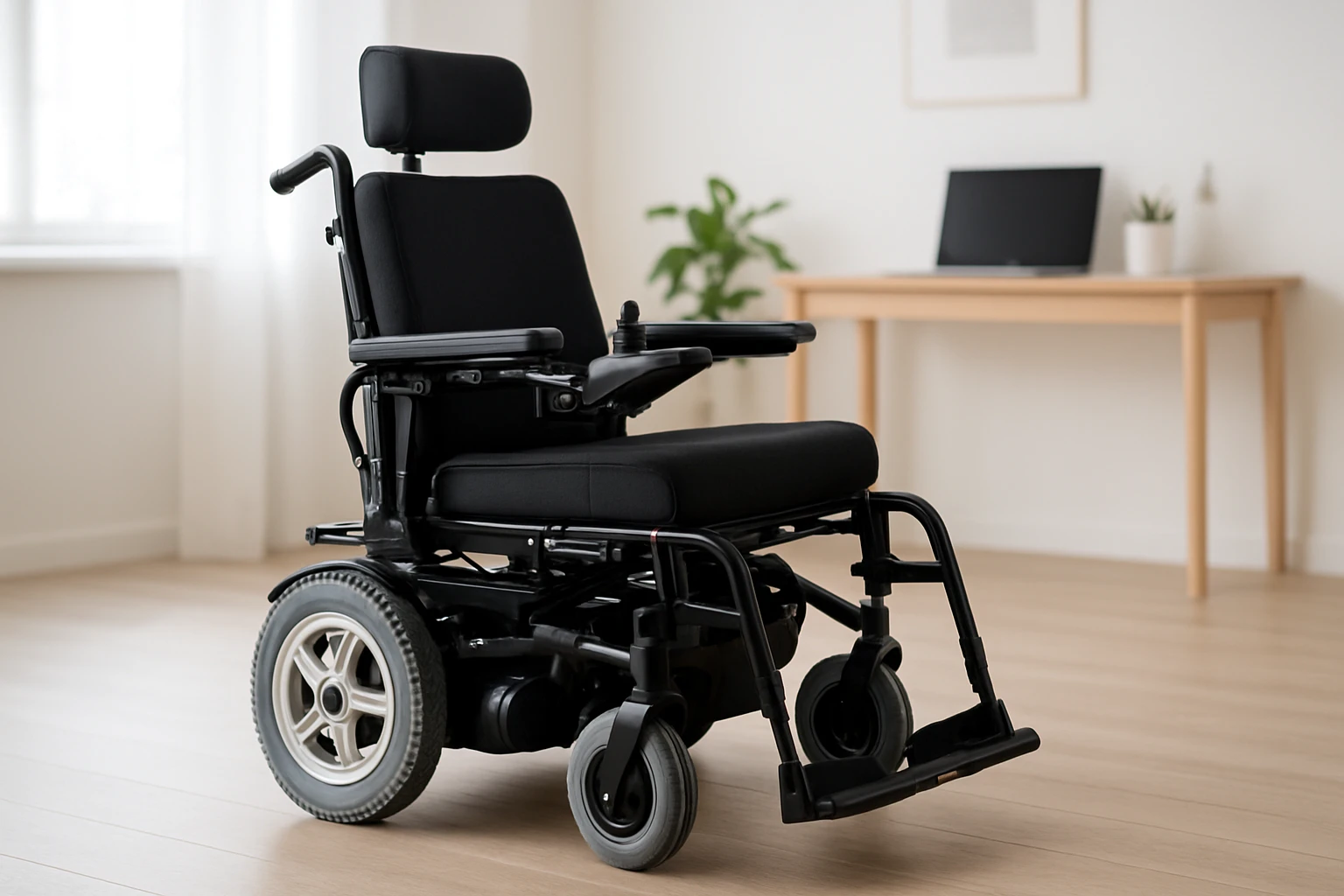
Coverage rules evolve, but the essentials stay steady: medical necessity, correct documentation, and approved suppliers. The table below streamlines the path many travelers follow. Use it as a checklist with your clinician, and consider printing it for appointments. If any step feels confusing, Go Wheelchairs offers personalized support and Medicare guidance to keep you moving forward confidently.
| Requirement | What It Means | How Go Wheelchairs Helps |
|---|---|---|
| Face-to-face exam | Your clinician documents in-home mobility needs and why lesser devices are insufficient | Provides templates and checklists to simplify notes |
| Detailed prescription | Includes chair type, features, and justification for each component | Aligns model options with medical necessity language |
| Supplier enrollment | Doctor and supplier must be enrolled with Medicare Part B [Centers for Medicare & Medicaid Services (CMS) Medicare Part B] | Confirms enrollment and handles submission logistics |
| Prior authorization | Required for certain power wheelchair categories before delivery | Tracks forms, status, and timelines; keeps you updated |
| Coinsurance | Typically 20 percent of the Medicare-approved amount after deductible | Explores secondary insurance to reduce out-of-pocket costs |
| In-home use standard | Coverage focuses on function inside the home environment | Matches features to in-home layout and terrain |
Practical note: Travel-oriented features like ultra-compact folds, disassembly options, or carbon fiber upgrades can be incredible on the road, but they may not be deemed medically necessary for in-home use. Many customers select a covered primary chair that fits Medicare’s criteria and then choose a separate travel model for trips. With Go Wheelchairs, you can review side-by-side comparisons, test drive options, and get honest guidance on what insurance will and will not do.
What should you do before packing for the airport?
A short routine makes a big difference. Two days before departure, text or call the airline’s special assistance line to add your mobility device details and request preboarding. The night before, print your battery SDS [Safety Data Sheet] and spec sheet, label Wh [watt-hours] clearly on the pack, and assemble a small kit: painter’s tape, two zip ties, a permanent marker, and a soft wrap for the joystick.
- At check-in: declare the powered wheelchair and confirm gate-check and return to jet bridge.
- At security: tell TSA [Transportation Security Administration] you have a powered mobility device; expect a swab test, not disassembly.
- At the gate: preboard, power down, remove or secure the battery per airline guidance, wrap the joystick, and stow or disassemble the chair as required.
- On arrival: wait at the aircraft door for return; inspect the chair before leaving the jet bridge and report issues immediately.
One last travel insight: The United States Department of Transportation reports that airlines mishandle roughly 1.5–2 percent of wheelchairs and scooters in recent years. That number is small, but not zero. Preparation, documentation, and polite, clear requests usually tilt the odds in your favor, and a compact or travel‑friendly design reduces handling risk along the way.
What is the bottom line for travelers?
Here is the promise: with the right prep and the right chair, air travel with a travel-friendly power wheelchair can be straightforward, safe, and even pleasantly uneventful.
Imagine the next 12 months with weekend hops, family visits, or a bucket-list city you used to avoid because of logistics. Each smooth trip builds confidence, and the checklists you keep today become automatic tomorrow.
So the only question is, where will your travel-friendly power wheelchair take you first — and what support would make that journey feel effortless?
Go Wheelchairs: Explore Standard and Heavy-Duty Motorized Choices
Go Wheelchairs helps individuals seeking reliable mobility, including Medicare or insurance needs, with a wide range of standard and heavy-duty motorized wheelchairs and personalized guidance.