
Which Heavy-Duty Power Wheelchairs Are Right for Me? 12 Questions Answered About Capacity, Terrain & Medicare
If you are comparing heavy-duty power wheelchairs, you are probably juggling comfort, capacity, terrain, and Medicare coverage all at once. I have been there as a caregiver helping a family member pick a chair, and I remember measuring doorways with a tape measure and a lot of hope. The right choice is not just about specs on a page; it is your daily freedom. In this guide, we will answer the big questions clearly, show you what matters most, and share how Go Wheelchairs helps you match a chair to your body, your home, and your life without breaking your budget.
You will find plain-English explanations, quick comparisons, and practical tips you can use today. We will cover capacity and fit, terrain and drive types, batteries and range, plus Medicare Part B coverage steps. Along the way, you will see how a curated selection of standard and select heavy-duty motorized wheelchairs from Go Wheelchairs, along with personalized support and insurance guidance, can turn a confusing search into a confident decision.
What are heavy-duty power wheelchairs?
Heavy-duty power wheelchairs are motorized wheelchairs engineered with reinforced frames, stronger motors, and wider seating to support higher weight capacities and tougher terrain than standard models. Typical heavy-duty capacities often start around 300 pounds; some industry models are rated higher, though Go Wheelchairs’ current lineup predominantly features models rated around 300 pounds. You will often see sturdier armrests and foot platforms, upgraded suspension, and heavier-gauge components that reduce flex and increase durability for daily use indoors and outdoors. Some models are called bariatric power wheelchairs, which generally serve the highest weight capacities with broader seat widths and even more robust frames.
Beyond strength, heavy-duty designs aim for stability and comfort over longer distances. Think of them as the sport-utility vehicles of the power wheelchair world: better on grass and gravel, more sure-footed on sloped driveways, and less rattly over sidewalk seams. That said, a heavy-duty build may be wider and heavier, so it is smart to balance your body’s support needs with your home’s tight spaces and your vehicle’s transport limits. At Go Wheelchairs, we help you compare heavy-duty and standard motorized options side by side, including lightweight foldable choices if portability is high on your list.
| Category | Typical Capacity | Seat Width Range | Primary Strength | Tradeoff to Note |
|---|---|---|---|---|
| Standard Power Wheelchair | Up to about 300 pounds | 16 to 20 inches | Compact size, tight turning | Less robust on uneven terrain |
| Heavy-Duty Power Wheelchair | About 300 pounds (varies by model) | 18 to 24 inches | Stronger frame, better stability | Heavier and sometimes wider |
| Bariatric Power Wheelchair | Often 450 pounds and higher (specialized/bariatric models) | 24 inches and up | Maximum support and durability | Largest footprint, transport is harder |
Why does choosing the right heavy-duty power wheelchair matter?
Because the right match protects your body, your independence, and your wallet. A chair that fits your body distributes pressure properly, helps you maintain posture, and reduces strain on shoulders and hips when transferring. Rehabilitation research consistently links proper seating and mobility device fit with fewer pain flares and lower risk of skin breakdown. From a daily comfort standpoint, the right chair can mean you say yes to an evening outing rather than worrying about fatigue or hills on the route home.
Watch This Helpful Video
To help you better understand heavy-duty power wheelchairs, we’ve included this informative video from Mobility Scooters Direct. It provides valuable insights and visual demonstrations that complement the written content.
There is also a real-world cost angle. Getting a chair that is underbuilt for your needs can lead to premature wear, more service visits, and a faster need to upgrade. Medicare Part B may help with coverage when medical necessity is documented, but swapping chairs too soon can add out-of-pocket costs and time. Picking a chair that aligns with your terrain, doorway widths, seating needs, and transport plan gives you longer service life and fewer headaches. This is why Go Wheelchairs pairs you with a specialist who walks through your body measurements, home layout, and funding requirements before recommending any model.
How do heavy-duty power wheelchairs work, and which drive is best for your terrain?
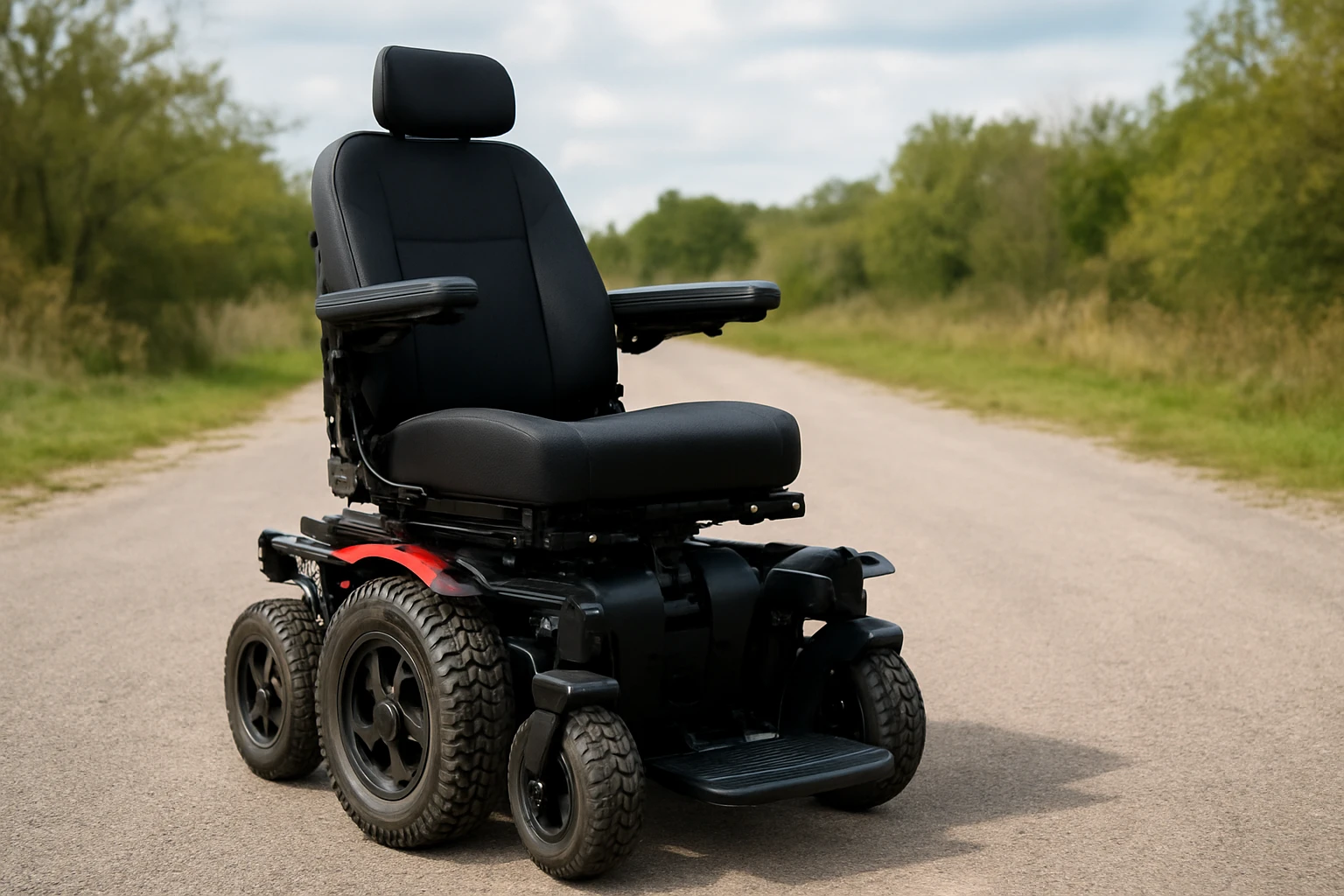
At their core, power wheelchairs use electric motors, a battery pack, and a controller to translate your joystick or alternative input into smooth movement. Most heavy-duty models use either sealed lead-acid batteries or lithium-ion batteries. Sealed lead-acid batteries are proven and widely serviceable, while lithium-ion batteries are lighter and may recharge faster. Range depends on motor efficiency, terrain, total load, and battery capacity measured in ampere hours. Suspension, tire type, and wheel layout round out the ride quality.
Drive layout makes a big difference outdoors and indoors. Here is how the three common layouts compare so you can picture their personality on your streets and in your living room.
| Drive Type | Turning Radius | Stability on Slopes | Obstacle Handling | Best For |
|---|---|---|---|---|
| Mid-wheel drive | Smallest, very tight indoors | Excellent, balanced center | Good with proper suspension | Homes with narrow hallways, active indoor use |
| Front-wheel drive | Moderate, pivots well | Very good, pulls over bumps | Strong on curbs and grass | Mixed indoor-outdoor, grass and gravel paths |
| Rear-wheel drive | Larger radius | Very good at higher speeds | Stable on straight climbs | Outdoor cruising, long driveways, open spaces |
Real-world example: Maria lives in a townhouse with tight hallways and a narrow galley kitchen. A mid-wheel drive heavy-duty chair with upgraded suspension keeps her turns smooth without scuffing walls. Meanwhile, James manages a long gravel driveway and weekend farmers’ market trips. A front-wheel drive or rear-wheel drive heavy-duty chair with deeper tread tires and higher ground clearance helps him track straight and stay comfortable over mixed surfaces. If you want help picturing how each layout behaves in your world, Go Wheelchairs can map your common routes and doorway widths during a quick consult.
Which specs and features should you compare before you buy?
Numbers tell a story, but the plot is your daily routine. Start with weight capacity and seat dimensions, then factor in turning radius, overall width, ground clearance, incline rating, battery range, and transport weight if you plan to travel. Next, look at comfort and clinical features like adjustable back height, power tilt or recline, seat cushioning, and armrest style. Finally, consider service factors: warranty length, local technician availability, and parts turnaround times. Here is a simple comparison framework you can use to shortlist models confidently.
| Spec | Typical Heavy-Duty Range | What It Means for You |
|---|---|---|
| Weight capacity | 300 to 400 pounds, depending on model | Choose capacity that exceeds your current weight by a comfortable margin for clothing, bags, and future changes |
| Seat width and depth | 18 to 24 inches wide, 16 to 22 inches deep | Match hip width plus room for pressure relief; proper depth supports your thighs without pressing the back of knees |
| Turning radius | 20 to 30 inches depending on drive type | Smaller is easier in tight kitchens and bathrooms; check your narrowest doorway and hallway turns |
| Ground clearance | 2 to 5 inches | Higher clearance helps with thresholds, tree roots, and rougher sidewalks |
| Incline rating | 6 to 10 degrees | Match to your steepest ramp or driveway for safety and confidence |
| Range per charge | 10 to 20 miles, sometimes more | Estimate your longest day, add a buffer, and remember hills and grass reduce range |
| Overall width | 24 to 28 inches for many heavy-duty models | Measure your narrowest doorway; allow at least an extra inch or two for comfortable clearance |
| Transport weight or disassembly | Varies widely | If you lift or ramp into a vehicle, ask about lift compatibility and removable components |
A quick pro tip: bring real measurements to your consult. Doorways, hallway turns, the height of your vehicle hatch, your steepest ramp, even the lip of your front door threshold. These details transform guessing into a targeted recommendation. The Go Wheelchairs resources hub includes printable checklists, comparison tools, and travel tips so you can gather this info in minutes.
What are the 12 most common questions about capacity, terrain, and Medicare—answered fast?
-
How much weight capacity should I choose?
Pick a chair rated comfortably above your current body weight. Many clinicians suggest a cushion of at least 15 to 20 percent to account for clothing layers, bags, and future changes. A capacity margin helps the motors work in their efficiency zone and supports long-term durability. -
Does seat width really matter that much?
Yes. Seat width should match your hip width with a bit of space for easy transfers and winter wear. Too narrow increases pressure; too wide lets your hips lean and can lead to discomfort. Depth matters too: aim to support your thighs while leaving about two finger widths behind the knees. -
Which drive type is best for grass, gravel, or hills?
Front-wheel drive often pulls smoothly over grass and curb cuts, while rear-wheel drive tracks well on longer outdoor stretches. Mid-wheel drive shines indoors with tight turning and can do outdoor paths with the right suspension and tires. If your routine is mixed, test two drives on your actual routes. -
How important are ground clearance and suspension?
If you cross broken sidewalks, threshold ramps, or tree roots, they are very important. Higher ground clearance avoids hang-ups, and suspension reduces jolts that wear you down over a day. If your surfaces are mostly smooth, you can prioritize turning radius and overall width instead. -
What range should I expect on a heavy-duty model?
Many heavy-duty power wheelchairs list 10 to 20 miles per charge in ideal lab conditions. In the real world, hills, grass, rider weight, and frequent starts reduce that number. Estimate your longest day, then add a safety buffer. Lithium-ion batteries may offer lighter weight and faster charging. -
Will Medicare Part B help pay for a heavy-duty power wheelchair?
Often yes, when it is medically necessary for mobility inside your home and prescribed by your doctor after a face-to-face exam. Medicare Part B typically pays 80 percent of the Medicare-allowed amount after the deductible when your supplier accepts assignment. Your clinical records must show why a power wheelchair is required rather than a cane, walker, or manual chair. -
What paperwork and steps are involved for Medicare?
Your doctor documents the face-to-face mobility exam and writes a detailed prescription. A physical therapist or occupational therapist evaluation may be included to support seating and positioning needs. Your supplier then submits documentation for approval, which can take a few weeks. Timelines vary, and Medicare Advantage plans often require prior authorization. -
How much will I pay out of pocket with Medicare?
If your supplier accepts assignment, you generally pay 20 percent of the allowed amount after your Part B deductible, unless you have a secondary plan like a Medigap policy that covers coinsurance. Heavy-duty power wheelchairs are typically purchased rather than rented under Medicare. Go Wheelchairs can help you estimate costs before you commit. -
Will Medicare cover batteries, cushions, or repairs later?
Medicare Part B may cover medically necessary replacement batteries, essential cushions, and repairs when documentation shows the item is needed and the chair remains medically necessary. Normal wear parts and routine maintenance can be covered in certain cases, but rules vary, so it is best to confirm with your plan and supplier. -
Can I get power seat elevation or tilt covered?
Coverage for power seat elevation has expanded in recent years for certain power wheelchairs when medically necessary. Power tilt and recline features may be covered when they address specific positioning or pressure needs. Your clinician’s documentation is key. Go Wheelchairs can coordinate with your care team to present the right records. -
Are heavy-duty power wheelchairs travel friendly?
Some are, especially newer foldable or modular heavy-duty designs that break down for transport. For air travel, airlines generally accommodate power wheelchairs, and the Federal Aviation Administration has rules around battery transport. Lithium-ion batteries are often allowed when installed, but policies differ by airline, so always check ahead. -
How do I make sure my chair fits through my doors and turns in my kitchen?
Measure your narrowest doorway and hallway turns, then compare to the chair’s overall width and turning radius. If your narrowest door is 28 inches, for example, aim for a chair that is at least an inch or two slimmer for ease. A mid-wheel drive can help in tight layouts; a front-wheel drive may help if you need a bit more outdoor bite without going too wide.
What else should you know about real-world comfort, service, and support?

Comfort is more than a cushion. The seat base, back angle, armrest style, and joystick mount all affect posture and everyday ease. If you sit for long stretches, ask about pressure-relieving cushions, breathable fabrics, and power tilt. If you transfer frequently, a flip-up armrest or swing-away joystick can help. As for service, ask how fast parts arrive and whether mobile technicians can come to your home. Go Wheelchairs partners with reputable brands and provides ongoing support, from delivery and setup to warranty help, so your chair remains road ready.
Finally, consider your life in motion. Do you need to load into a vehicle weekly? A lightweight foldable power wheelchair could be your backup for travel days, while your heavy-duty daily driver handles comfort and range. Do you have seasonal terrain, like snow or beach boardwalks? Swap to more aggressive tires when needed. With a focused selection of standard and select heavy-duty motorized wheelchairs, personalized guidance, and Medicare and insurance assistance, Go Wheelchairs is set up to help you plan for all of it, not just the first week of use.
Common examples: how Go Wheelchairs turns questions into confident choices
Case one: DeAndre’s home has 29-inch interior doors, and he commutes a quarter mile to a bus stop over cracked sidewalks. A mid-wheel drive heavy-duty chair with upgraded suspension, a 20-mile range estimate, and a compact overall width keeps his daily route smooth and his kitchen hassle free. Case two: Priya lives near a park and wheels a mile loop most evenings. A front-wheel drive heavy-duty chair with deeper tread and slightly higher ground clearance handles grass and curb cuts gracefully. In both cases, a Go Wheelchairs specialist mapped real routes, confirmed door and hallway measurements, and coordinated documentation for Medicare Part B coverage.
If you prefer to compare on your own first, visit the Go Wheelchairs resources hub for buying guides, side-by-side comparison tools, and travel tips. Then schedule a quick call to review your measurements, confirm fit, and plan coverage steps. When your decisions are grounded in your body, your home, and your terrain, the right chair becomes obvious.
Ready to feel certain about your next step?
Here is the simplest path: define your must-haves, measure your home, test the right drive types, and line up Medicare or insurance paperwork with a knowledgeable partner. That partner is exactly what Go Wheelchairs aims to be. We carry a catalog focused on popular standard models and select heavy-duty options, including foldable designs for travel days, and we walk you through coverage so you can focus on living, not paperwork.
Your mobility story is unique. When you combine honest answers with a plan that fits your body and your world, heavy-duty power wheelchairs stop being overwhelming and start becoming empowering. If you want help making the choice feel easy, our team is ready to back you up with clear comparisons and real support.
Freedom is a chair that fits your life. Imagine the next 12 months with more spontaneity, fewer detours, and a chair that feels like an extension of you. What would change first when your heavy-duty power wheelchairs match your body, your home, and your favorite places?
Find Your Heavy-Duty Fit with Go Wheelchairs
Explore our selection of standard and select heavy-duty motorized wheelchairs with personal guidance and Medicare and insurance help, so you move confidently and independently.