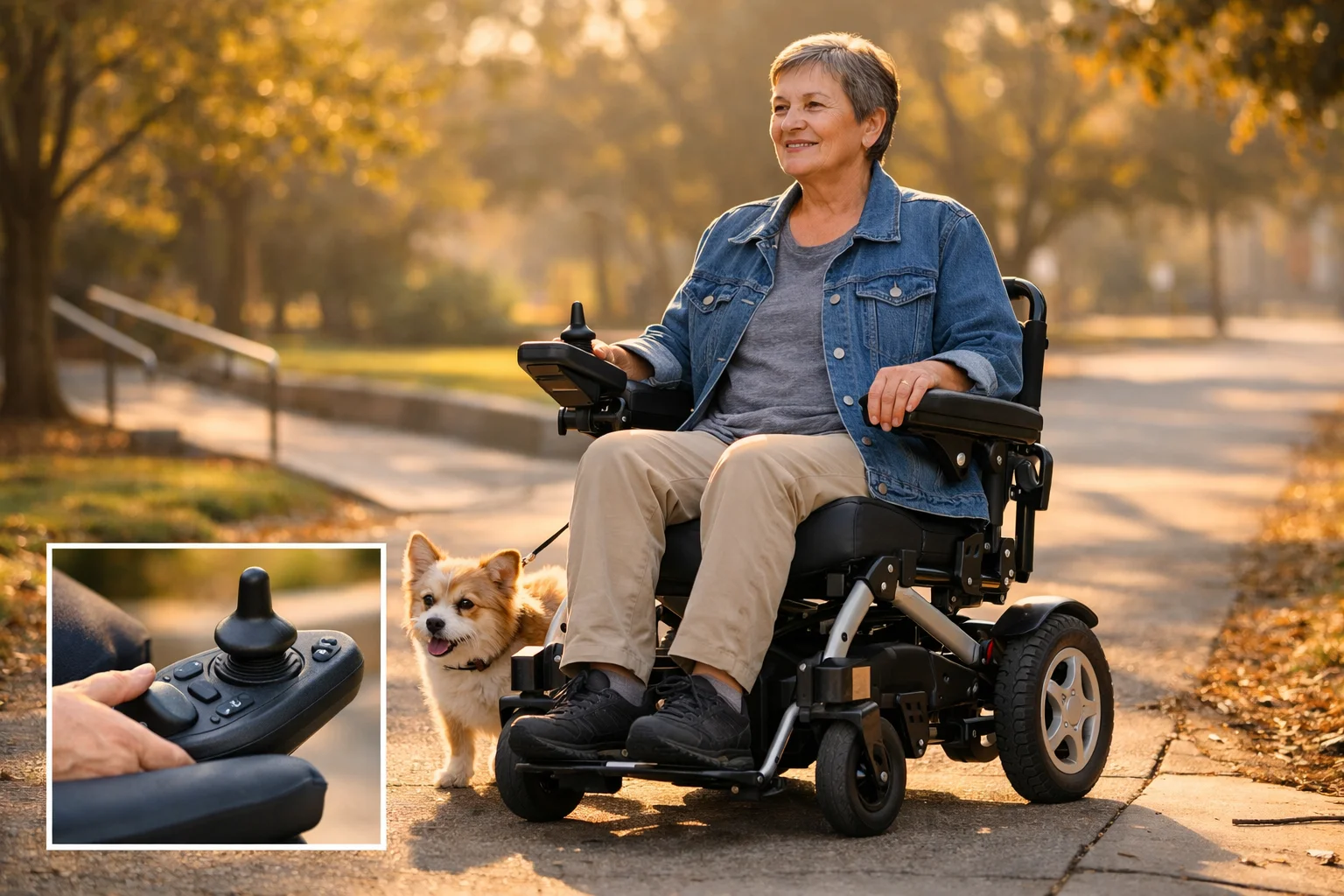
10 Best Lightweight Folding Power Wheelchairs with Airline-Safe Batteries for Stress-Free Air Travel (Airline Guidance & Medicare Support)
If you are hunting for a lightweight folding power wheelchair with airline-safe battery, you are in the right place. Air travel should feel like freedom, not friction. Yet anyone who has waited at the jet bridge while a security officer studies a battery label knows how fast a great trip can turn stressful.
Good news: the right travel-ready power chair plus a simple plan transforms the whole experience. Below are ten third-party travel-ready models commonly discussed by travelers and mobility specialists, clear battery tips aligned with Federal Aviation Administration [FAA] guidance and International Air Transport Association [IATA] practices, and practical insights for Medicare [Centers for Medicare & Medicaid Services] steps. Along the way, I will share real-world examples I have seen in terminals from Atlanta to San Diego, and how Go Wheelchairs helps people navigate choices, paperwork, and peace of mind.
Note: many of the models below are third-party examples that may not be sold by Go Wheelchairs. Go Wheelchairs provides guidance, insurance and Medicare support, and sells its own product lineup; we do not perform formal TSA testing nor can we guarantee airline acceptance or Medicare payment for a specific model. Always verify model availability and specifications with the manufacturer or your dealer.
Quick travel tip before we roll in: print your chair’s battery specifications including watt-hour [Wh], volt [V], and ampere-hour [Ah] ratings, and keep the document in your carry-on. That one sheet often turns a five-minute Transportation Security Administration [TSA] conversation into a friendly nod and a smile.
#1 Third-party example — WHILL Model F
What it is: A high-end, lightweight folding power chair that rides like a premium mobility device yet folds quickly for cabs and gate-checks. Its removable lithium-ion battery is typically labeled with volt [V] and ampere-hour [Ah]; verify watt-hour [Wh] on the battery label and with your airline before travel. It is known for a tight turning radius and intuitive controls that feel natural in busy terminals.
Why it matters: The WHILL Model F balances portability with stability, so you do not feel “tippy” over jet-bridge bumps. Owners regularly report smooth Transportation Security Administration [TSA] screenings when they show the battery label with volt [V] and ampere-hour [Ah] details. For coverage, documentation packets and professional setup can support Medicare [Centers for Medicare & Medicaid Services] evaluations when medical necessity is established, but Go Wheelchairs cannot guarantee coverage decisions.
Quick example: Picture rolling off a rideshare at Dallas–Fort Worth. You unplug the battery, fold in seconds, and hand over your battery spec sheet. A gate agent adds a “Return to Aircraft Door” tag, and you board at ease.
#2 Third-party example — Pride travel folding model
What it is: A third-party Pride folding power chair example often chosen by travelers who want proven reliability. Battery labeling and configuration vary by exact model—verify watt-hour [Wh] on the battery label and with your airline.
Watch This Helpful Video
To help you better understand lightweight folding power wheelchair with airline-safe battery, we’ve included this informative video from MaviGadget. It provides valuable insights and visual demonstrations that complement the written content.
Why it matters: There is comfort in a familiar name when you are far from home. Some Pride folding designs offer an easy fold, supportive seating for longer layovers, and a build that feels solid over tile, carpet, and curb cuts. Dealers often provide documentation that can assist with physician notes and Healthcare Common Procedure Coding System [HCPCS] coding where appropriate; Go Wheelchairs provides Medicare guidance and can help prepare documentation for models we supply or as part of general advisory services, but cannot guarantee coverage for any specific third-party model.
Quick example: At Chicago O’Hare, a traveler shows the battery’s watt-hour [Wh] printout and requests gate-check. The chair meets you on the jet bridge at landing, and you are rolling before the carousel even starts.
#3 Third-party example — EWheels EW-M45
What it is: A popular folding model noted for range and portability. Some configurations use modular lithium packs that may align with many carriers’ modular-battery guidance; always verify the printed watt-hour [Wh] on each module.
Why it matters: Two smaller batteries can be simpler during inspections if they meet airline guidelines. The ride quality holds up on terrazzo floors and jet-bridge joints, and the fold is intuitive.
Quick example: Flying from Phoenix to Seattle with a tight connection? Two modular packs, a printed battery sheet, and an early boarding request keep you cruising past the crowds.
#4 Third-party example — Porto Mobility Ranger D09
What it is: A travel chair example with a robust frame and a quick, compact fold that fits in many car trunks. Battery configuration varies by model; verify watt-hour [Wh] on the battery label.
Why it matters: If your travel is a mix of road and air, the Ranger D09’s durability is a plus. It takes speed bumps, hotel thresholds, and jet-bridge grit in stride. For Medicare [Centers for Medicare & Medicaid Services] steps, your Go Wheelchairs specialist can help compare medical-necessity notes, weight capacity needs, and whether a heavy-duty alternative might earn stronger documentation support.
Quick example: On a cross-country trip, you drive to the airport, fold the chair without tools, and gate-check it. At landing, the chair appears at the door, unfolded by staff, so you can zip to rideshare pickup.
#5 Third-party example — Sentire Med Forza D09
What it is: A folding power chair focused on portability, with armrests and footplate that accommodate cramped boarding areas. Battery options vary; check the label and airline rules before travel.
Why it matters: The Forza D09 aims at travelers who want lighter lifts, smaller folds, and simple joystick controls. It is a versatile pick for hotel corridors and ramps that do not meet perfect angles. Many owners keep a laminated battery sheet in the seatback pouch to speed Transportation Security Administration [TSA] checks.
Quick example: Sunrise departure out of Miami? You roll straight to PreCheck, show your battery letter, and the officer waves you on with a good-luck nod.
Quick At-a-Glance Comparison (Verify Specs Before You Fly)
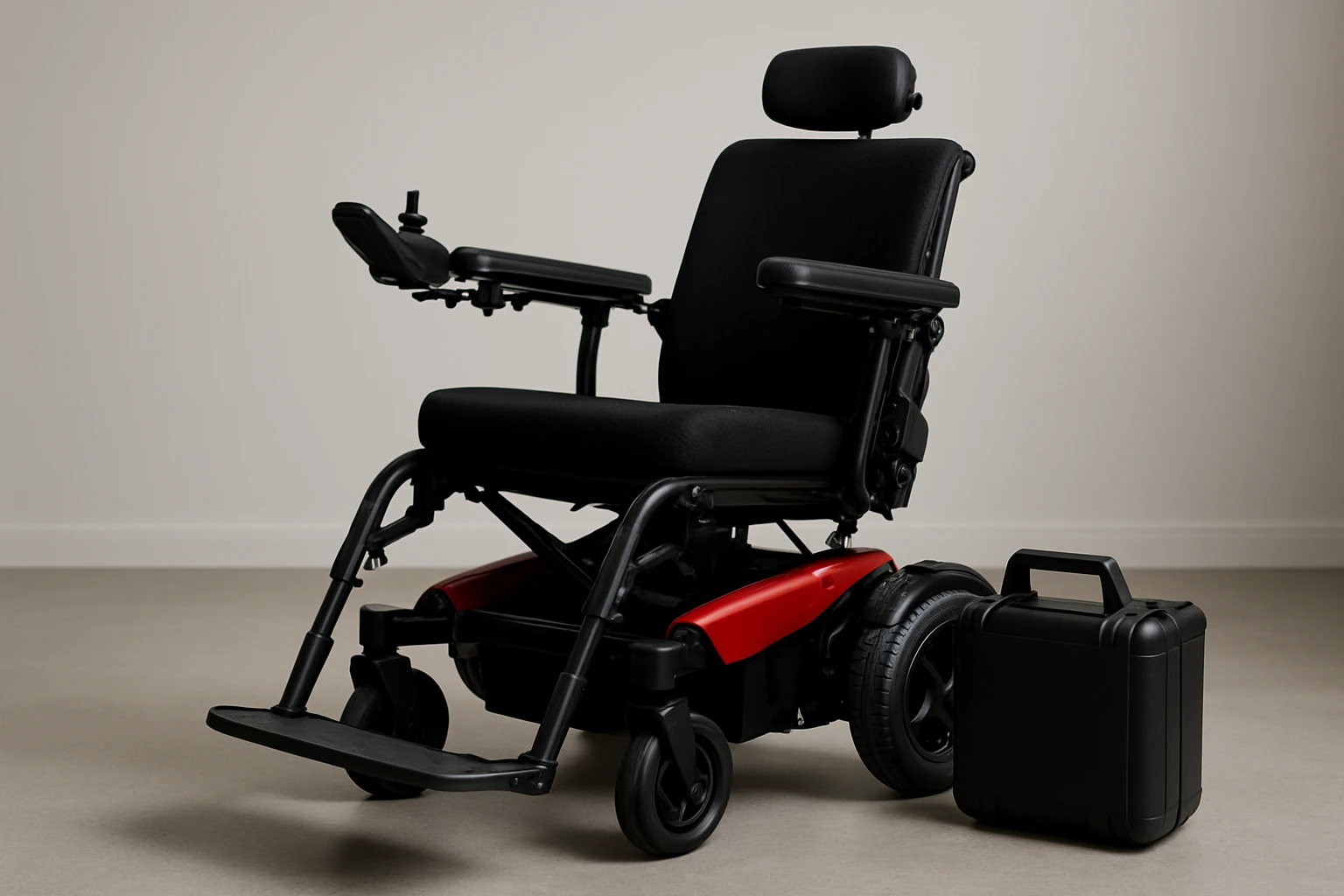
Numbers vary by year and configuration. Always confirm watt-hour [Wh] on your battery label and check your airline’s mobility-device page before purchase or boarding.
| Model | Approx. Weight (pounds) | Fold Style | Battery Setup (Typical) | Range (miles) | Weight Capacity (pounds) | Airline Note |
|---|---|---|---|---|---|---|
| WHILL Model F (third-party example) | ~52 | Compact fold | Varies by configuration — verify watt-hour [Wh] on the battery label | ~12 | ~250 | Clearly labeled pack helps inspections |
| Pride travel folding model (third-party example) | ~60 | Suitcase-style fold | Varies by configuration — verify watt-hour [Wh] on the battery label | ~9–10 | ~250 | Bring printed battery specs |
| EWheels EW-M45 (third-party example) | ~58 | Quick fold | Varies by configuration — verify watt-hour [Wh] on each module | ~10–15 | ~400 | Modular packs often simplify checks |
| Porto Mobility Ranger D09 (third-party example) | ~50 | One-motion fold | Varies by configuration — verify watt-hour [Wh] on the battery label | ~10 | ~265 | Compact size fits many trunks |
| Sentire Med Forza D09 (third-party example) | ~52 | Compact fold | Varies by configuration — verify watt-hour [Wh] on the battery label | ~10–12 | ~360 | Keep the spec sheet handy |
| ComfyGO IQ-7000 (third-party example) | ~58 | Quick fold | Varies by configuration — verify watt-hour [Wh] on each module | ~10–13 | ~265 | Remote features can aid caregivers |
| Vive Mobility Folding Chair (third-party example) | ~59 | Suitcase fold | Varies by configuration — verify watt-hour [Wh] on the battery label | ~12 | ~260 | Budget-friendly travel option |
| Featherweight Power Chair (third-party example) | ~33–37 | Ultra-light fold | Varies by configuration — verify watt-hour [Wh] on the battery label | ~7–11 | ~240 | Very light for car transfers |
| Air Hawk Folding Chair (third-party example) | ~41–43 | Compact fold | Varies by configuration — verify watt-hour [Wh] on each module | ~10–12 | ~265 | Popular among frequent flyers |
| Move Lite Folding Chair (third-party example) | ~50 | Quick fold | Varies by configuration — verify watt-hour [Wh] on the battery label | ~10–15 | ~300 | Versatile, travel-friendly design |
#6 Third-party example — ComfyGO IQ-7000
What it is: A folding chair with practical extras like remote control options, making it easier for family or caregivers to assist in tight spaces. Battery configuration varies by model; always verify watt-hour [Wh] on any removable modules.
Why it matters: If someone often helps you at the gate, remote features can be a game-changer. Modular batteries plus visible watt-hour [Wh] labels often make airline check-ins smoother. Go Wheelchairs can compare this with heavy-duty alternatives if you need higher weight capacity or suspension for daily use and can offer documentation support for insurance submissions.
Quick example: Your partner guides the chair through a crowded terminal into a quiet seating zone, then hands you the joystick. Everyone boards calm and collected.
#7 Third-party example — Vive Mobility Folding Power Wheelchair
What it is: A value-forward folding power chair that keeps the basics simple: reliable joystick, stable frame, and a battery pack that should be clearly labeled with watt-hour [Wh] and volt [V] for quick verification.
Why it matters: Not every traveler needs top-shelf bells and whistles. This model aims at dependable performance you can trust from curb to baggage claim. It is often a practical fit for people balancing budget, portability, and comfort.
Quick example: Think weekend family visits. You roll into ride-hailing, fold in seconds, and your battery sheet is already tucked behind the seat. Low drama, high smiles.
#8 Third-party example — Featherweight Power Chair
What it is: An ultra-light electric chair engineered to be a breeze for vehicle loading. Battery configuration varies; check the label and airline guidance before travel.
Why it matters: If lifting is your limiting factor, shaving pounds matters more than any other spec. Ultra-light designs often trade a bit of range for effortless handling, and many travelers are fine with that exchange when daily mileage is modest.
Quick example: You teach a grandchild how to fold and lift the chair into the trunk in under 20 seconds. At the airport, the Transportation Security Administration [TSA] officer spots the watt-hour [Wh] label, and you are off to your gate.
#9 Third-party example — Air Hawk Folding Power Wheelchair
What it is: A well-known travel chair that has built a community around portability and reliability. Battery options vary; verify watt-hour [Wh] on each module or pack.
Why it matters: It is not just the fold and the ride; it is the predictable routine from curb to cabin. Familiar accessories, easy joystick calibration, and a compact footprint make Air Hawk a frequent-flier staple.
Quick example: You arrive early, request a gate-tag, and have your battery spec sheet ready. The crew returns your chair at the aircraft door in minutes after landing.
#10 Third-party example — Move Lite Folding Power Chair
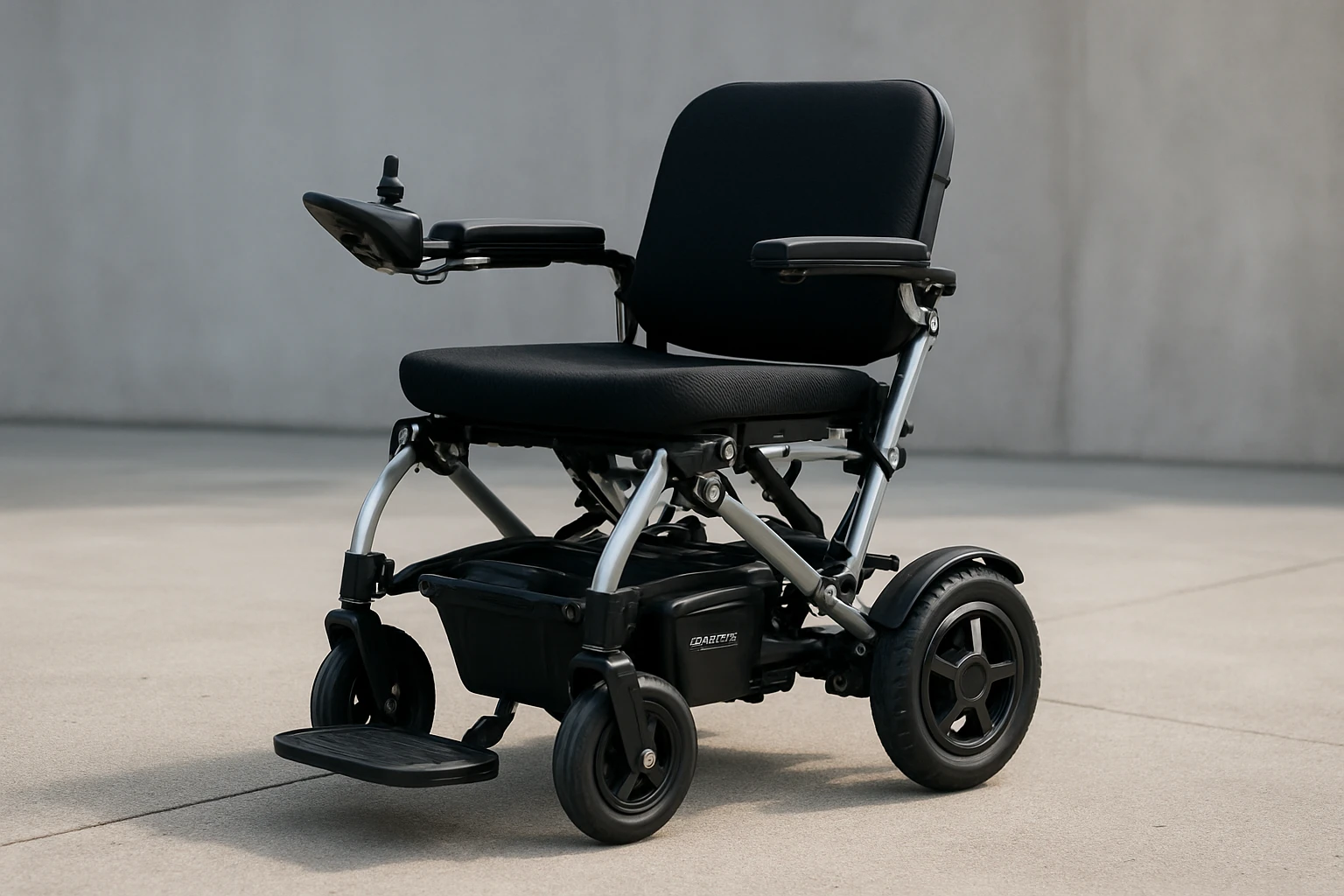
What it is: A folding chair that aims to stretch range while staying compact. Depending on the configuration, battery labeling and capacity vary—always verify watt-hour [Wh] on the battery label.
Why it matters: If your travel days include major terminals and long connections, extra range is welcome. The Move Lite format balances extended battery life with a quick fold for taxis, trains, and tight hotel elevators.
Quick example: A transcontinental itinerary with a long layover? The extra miles mean you can roll from one terminal to another without anxiously scanning for outlets.
Airline Battery Rules, Simplified (Always Check Your Carrier’s Page)
Airline practices generally follow Federal Aviation Administration [FAA] guidance and International Air Transport Association [IATA] rules for mobility aids. These plain-English notes help you prep your paperwork and conversation at the counter.
| Topic | Typical Allowance | What It Means for You |
|---|---|---|
| Installed lithium battery watt-hour [Wh] | Commonly up to 300 watt-hour [Wh] per device | Most travel chair packs are designed to fall at or below this level — verify on the label |
| Removable lithium modules | Often two spares up to 160 watt-hour [Wh] each in carry-on | Check each module’s label and airline policies; some modular setups meet these common limits |
| Battery labeling | Label should show volt [V] and ampere-hour [Ah] or watt-hour [Wh] | Bring a printed spec sheet; protect terminals on any spares |
| Check-in timing | Arrive 30–60 minutes earlier than usual | Allows time for questions and gate-tagging your wheelchair |
| Documentation tip | Carry your manual and a simple one-page battery summary | This turns a long discussion into a two-minute check |
Formula refresher: watt-hour [Wh] = volt [V] × ampere-hour [Ah]. Example: 24 volt [V] × 6 ampere-hour [Ah] = 144 watt-hour [Wh].
Data point: United States Department of Transportation [DOT] reports show that roughly 1 to 2 percent of mobility devices checked by major airlines are mishandled in a typical year. Clear labeling, early check-in, and gate-tagging materially reduce risk, based on airline operations notes.
How to Choose the Right Lightweight Folding Power Wheelchair with Airline-Safe Battery
Use this quick decision framework to match your lifestyle with the right chair and battery configuration. If you want a human to walk you through it live, Go Wheelchairs is happy to help.
- Trip pattern: Do you fly monthly, quarterly, or once a year? Frequent flyers gain from dual modular packs that meet airline guidelines for simpler conversations.
- Body, terrain, and comfort: Match weight capacity and seat width to your measurements, and consider suspension if terminals or sidewalks near you are rough.
- Lift and fold: If car transfers are daily, consider ultra-light designs under 40–45 pounds. If assistance is available, a sturdier 50–60 pound frame could ride smoother.
- Battery math: Verify the exact watt-hour [Wh] printed on the label. If it only lists volt [V] and ampere-hour [Ah], calculate watt-hour [Wh] using the formula and print it.
- Documentation: Ask your clinician for a Letter of Medical Necessity [LMN] and keep it with your travel kit. It helps with Medicare [Centers for Medicare & Medicaid Services] and can also help with airline staff.
- Coverage strategy: Medicare [Centers for Medicare & Medicaid Services] often prioritizes chairs that meet in-home medical-necessity criteria. Some travelers keep a heavy-duty home chair for coverage and a travel chair for trips. Go Wheelchairs can map options for both and help prepare documentation, but cannot guarantee payer decisions.
Where Go Wheelchairs shines: a wide range of standard and heavy-duty motorized wheelchairs, lightweight foldable designs for travel days, side-by-side comparisons, and hands-on help with Medicare [Centers for Medicare & Medicaid Services] and other insurance forms. Visit the Resources Hub at Go Wheelchairs for buying guides, comparison checklists, and printable travel worksheets.
Why Go Wheelchairs Is a Smart Co‑Pilot for Travel and Coverage
Individuals with mobility challenges often face a double bind: find a dependable chair that fits their lifestyle, then figure out what insurance or Medicare [Centers for Medicare & Medicaid Services] will support. Go Wheelchairs solves both by pairing you with a mobility specialist who listens first, then narrows the field to models that fit your body, your travel rhythm, and your budget.
From lightweight folding options for flight days to heavy-duty power chairs built for daily, in-home medical necessity, the team helps you compare specs, decode Healthcare Common Procedure Coding System [HCPCS] notes, and prepare documents like Letters of Medical Necessity [LMN]. When you are ready, they coordinate with your clinician and supplier network so you can move forward with confidence and independence.
Travel Prep Checklist You Can Use Tomorrow
- Print your battery spec sheet with watt-hour [Wh], volt [V], and ampere-hour [Ah]. Keep a second copy with the chair.
- Request a gate-check tag and pre-board if available. Ask for aircraft-door return at your destination.
- Photograph your chair before check-in. Note unique features and existing scuffs.
- Bring a basic toolkit and a spare joystick knob if your model allows. Tape small items to a labeled zip bag.
- Carry your clinician’s Letter of Medical Necessity [LMN] and a one-page travel summary of your chair’s controls and battery removal steps.
Conclusion
These ten travel-ready example picks and simple battery strategies turn air travel from stressful guesswork into a repeatable, smooth routine.
Imagine the next twelve months with spontaneous weekend flights, family holidays, and full confidence at every checkpoint because your paperwork and chair are dialed in. With Go Wheelchairs guiding selections and coverage steps, you will be ready long before boarding begins.
Which lightweight folding power wheelchair with airline-safe battery will you trust for your next takeoff?
Go Wheelchairs: Travel-Ready Power That Fits Your Coverage
Explore a wide range of standard and heavy-duty motorized wheelchairs with personal guidance on Medicare and insurance, helping you move forward with confidence and independence.