
How to Maintain a Power Wheelchair Battery: 9 Essential Care Steps to Maximize Range, Lifespan & Safety
If you depend on a power chair, the battery is the quiet partner that keeps your day moving. In the next few minutes, we will walk through how to maintain a power wheelchair battery so you can travel farther, protect your investment, and avoid stressful surprises. I will share the exact nine care steps I give to family and clients, plus simple charging routines, storage tips, and safety checks. Along the way, I will point out where battery chemistry matters, how temperature steals range, and how small tweaks like tire pressure and route planning make a big impact. And because cost and coverage matter, I will also show how Go Wheelchairs supports you with practical guidance and options that fit Medicare and other insurance paths, so you can focus on living your life, not babysitting your battery.
Why Battery Care Matters: Range, Lifespan, Safety, and Savings
Think of your battery like a pantry. If you stock it well and keep it tidy, meals are easy. If you ignore it, you are stuck improvising. Industry guidance notes that sealed lead acid batteries commonly found in power wheelchairs deliver about 300 to 500 full cycles, while many lithium-ion packs land in the 500 to 1000 cycle range when treated well. Heat and deep discharges shorten those numbers. A common rule of thumb says every 10 degrees Celsius above comfortable room temperature can halve sealed lead acid lifespan, and cold can temporarily shrink range by 20 to 30 percent. Safety matters too. Frayed cables, loose posts, or the wrong charger can cause overheating and shutdowns. The upside is that most range losses are preventable. With a routine that fits your schedule, you can keep the chemistry happy, avoid last-minute scrambles for a charge, and stretch replacement costs over more seasons. That is peace of mind, and it adds up quickly in time and money saved.
Care is not one size fits all. Sealed lead acid types, including absorbed glass mat (AGM) and gel, prefer gentle daily charging to full. Lithium-ion systems rely on a battery management system (BMS) that watches voltage and temperature and usually benefit from avoiding repeated deep discharges. Your charger quality matters more than you might think. Original equipment manufacturer (OEM) units are tuned to the chair and battery. Cheaper lookalikes can overcharge or undercharge, which slowly erodes capacity. Good maintenance blends the right charger, smart charging timing, clean connections, and respectful storage. Add a few driving habits to limit strain, and you will notice trips feel easier and more predictable.
How to Maintain a Power Wheelchair Battery: 9 Essential Care Steps
These nine steps are the backbone of a solid battery routine. They are simple, practical, and easy to adapt whether you ride a lightweight, foldable design or a heavy-duty chair with higher power demands. I will add quick reasons and pro tips under each step so you know the why, not just the what. If you are unsure about your battery chemistry, check your user manual or ask Go Wheelchairs for help. When in doubt, always follow your manufacturer’s guidance, especially for specialty packs with built-in battery management system (BMS) protections.
- Identify your battery type and follow chemistry rules. Most power wheelchairs use sealed lead acid, either absorbed glass mat (AGM) or gel. Some newer models use lithium-ion. Charging rules differ. Sealed lead acid likes full, gentle charges. Lithium-ion does not need to be topped off constantly and dislikes long periods at 0 percent.
- Use the correct charger, ideally the original equipment manufacturer (OEM) unit. Quality chargers taper current as the battery fills, preventing overheat and sulfation. Look for certifications like UL (Underwriters Laboratories). Avoid fast chargers not approved for your chair.
- Charge regularly and avoid deep discharges. For most sealed lead acid systems, nightly charging is best. For lithium-ion, charging after use is fine, and frequent deep dives to empty are not. Try to plug in before you drop below roughly 20 to 30 percent.
- Let full charge cycles finish. Interrupting every time at 70 to 80 percent can leave sealed lead acid batteries undercharged. Allow an uninterrupted overnight session several times per week so the charger can finish its absorption and float stages.
- Respect temperature. Batteries are happiest near room temperature. Avoid charging in freezing garages or hot cars. Extreme heat accelerates wear, and extreme cold trims range in the moment.
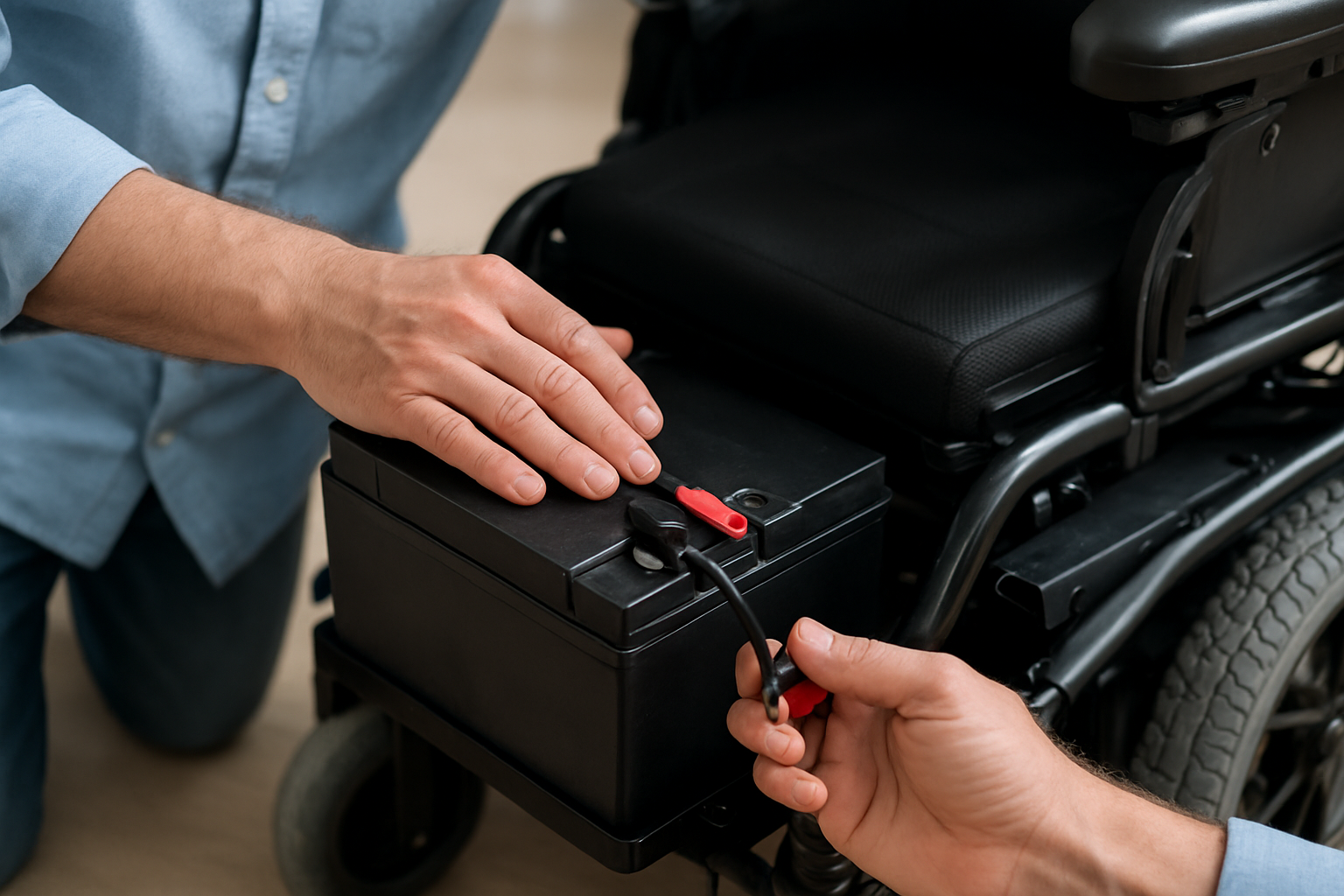
- Keep connections clean and tight. Inspect posts and connectors monthly. Look for corrosion or looseness. Clean gently with a dry cloth and reconnect firmly. Never yank the cable; pull by the plug.
- Mind rolling resistance. Underinflated tires, misaligned casters, and heavy add-ons make the motor work harder and drain charge faster. Check tire pressure as recommended and travel light when possible.
- Store smart when not riding. For breaks longer than a week, store sealed lead acid fully charged in a cool, dry place and top up monthly. Store lithium-ion around half to 80 percent and recharge every one to three months or per the manual.
- Replace wisely and recycle. Replace both batteries together if your chair uses a pair. Mixing old with new drags the new one down. Recycle at a certified facility to keep heavy metals out of landfills.
A quick real-life example. When Jamal switched from charging only when the gauge screamed empty to a nightly routine, he gained roughly 15 to 20 percent more usable range per day on his heavy-duty chair. Combined with correcting low tire pressure and cleaning slightly corroded terminals, he stopped hitting the last bar before getting home. Nothing fancy, just consistent care. If you are unsure which of the nine steps to prioritize, start with regular charging, temperature awareness, and clean connectors. Those three alone solve most range complaints I hear.
Charging Smart: Schedules, Settings, and Real-Life Routines
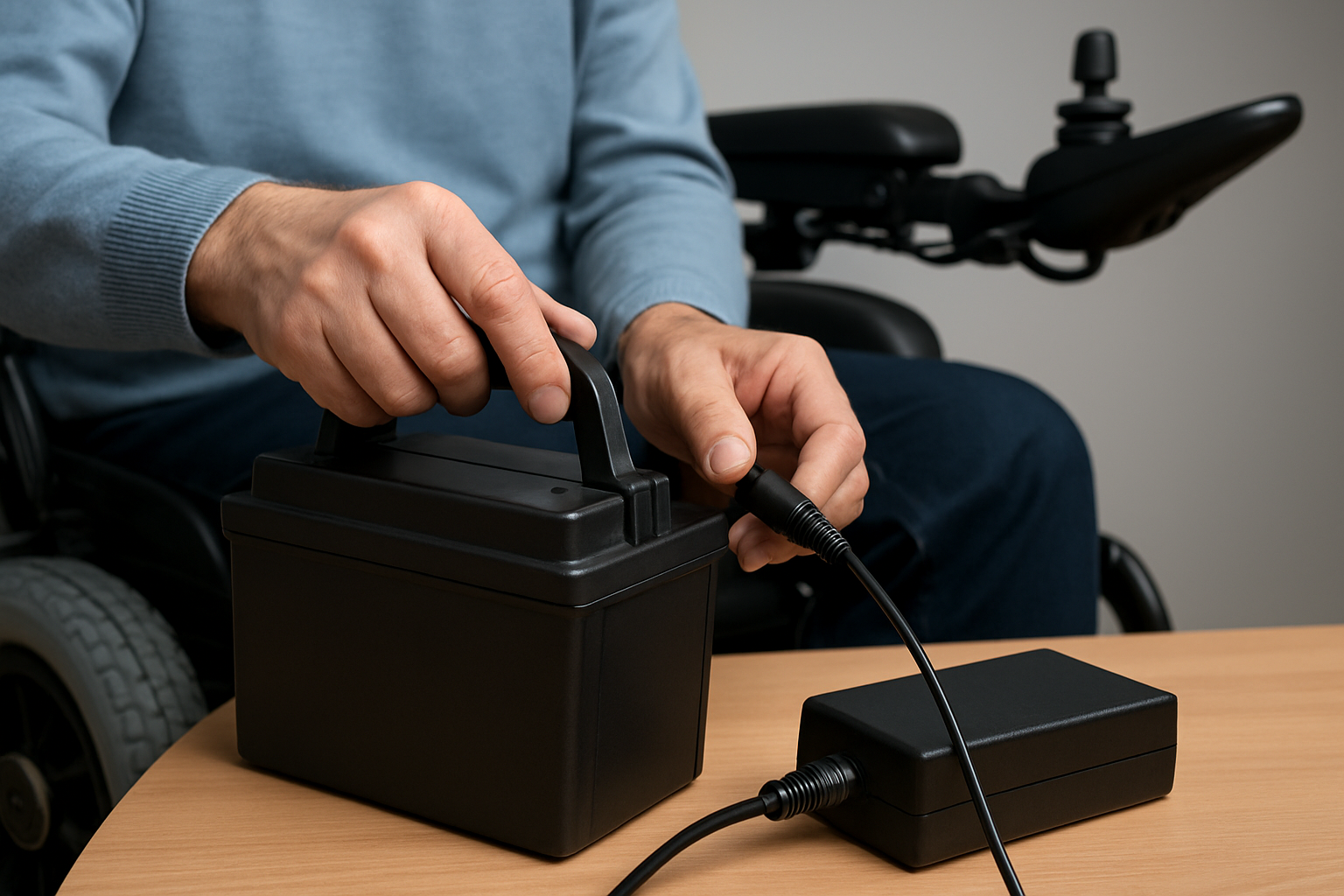
Charging is where most people win or lose battery life. The best routine is the one you can sustain, so pick a schedule that fits your day. For sealed lead acid, think slow and steady. Nightly top-offs let the charger finish properly and reduce the risk of sulfation. For lithium-ion, a similar plug-in-after-use habit works well, but you do not need to chase 100 percent at all times. It is okay to unplug at 90 percent if that covers your routes. Keep charging areas ventilated and dry. Do not set a charger on soft bedding where airflow is poor. And if your home loses power often, consider a surge protector to safeguard the charger electronics. Safety first, convenience second, and the battery will thank you.
Here is a quick reference to help you set expectations for different use patterns. Always verify with your manual, since individual charger profiles vary by brand and model.
| Use Pattern | Battery Type | Typical Daily Charging Guidance | Weekly or Monthly Extras |
|---|---|---|---|
| Daily rider, moderate distance | Sealed lead acid | Charge nightly to full. Leave connected until charger indicates done. | One extended overnight charge each week to ensure full absorption and float. |
| Daily rider, long distance | Sealed lead acid | Charge after each outing and again overnight if gauge drops low. | Check tire pressure twice monthly; verify connectors are tight. |
| Occasional rider | Sealed lead acid | Charge after each use and before the next trip. | Top up monthly during storage; store fully charged in a cool, dry place. |
| Daily rider | Lithium-ion | Plug in after use; 80 to 100 percent is fine depending on next day plans. | Avoid leaving at 0 percent. For long storage, keep around half to 80 percent. |
| Occasional rider | Lithium-ion | Charge before trips; do not leave empty. | Recharge every 1 to 3 months as the manual recommends. |
Two more tips often overlooked. First, gauge accuracy varies. If your display seems to drop quickly from full to three-quarters, then hovers, trust how the chair actually performs over the week, not a single percentage readout. Second, cable management matters. If you repeatedly bend the charger lead sharply at the plug, it can fray internally and cause intermittent charging. Replace worn cords early. When possible, route the cable along a wall, set a small adhesive hook to relieve strain, and make plugging in a single, simple motion that fits your dexterity. Little things lower the friction to charge, and consistency is the whole game.
Inspecting, Cleaning, and Storing: Keep Connections Safe and Strong
A clean, tight connection turns the energy you paid for into reliable miles. Once a month, pop the battery compartment open and check for dust, moisture, or white crust around terminals. That white residue is usually oxidation. Wipe gently with a dry cloth; for stubborn spots on metal connectors, a pencil eraser can lift residue without harsh chemicals. If you see cracks, swelling, dampness, or a rotten-egg odor, stop and call a technician. Do not try to puncture or squeeze a swollen case. That is rare, but if it happens, power down, unplug, ventilate the area, and seek professional support. Safety items you will want nearby include a simple battery mat to keep the area dry, and a smoke detector in rooms where you routinely charge.
Storage is where batteries either nap well or quietly degrade. The goal is to limit time spent at extreme charge levels and keep temperature moderate. For sealed lead acid, charge fully before storage and top up about once a month. For lithium-ion, store closer to half to 80 percent. A cool, dry closet is better than a hot garage or a freezing porch. As a practical check, label your calendar with a monthly reminder. In my home, we name it Battery Day. It takes 10 minutes to scan connectors, tires, and the charger light. Over a year, those ten-minute checkups save hours of hassle. If you need a hand, Go Wheelchairs can walk you through a quick checklist or help you book service, including guidance on coverage paperwork so routine care never turns into a headache.
Troubleshooting and When to Replace: Read the Signs Early
Even with perfect care, all batteries age. The key is to read the signs early so you can plan a swap on your schedule, not when you are trying to catch a ride. If your chair suddenly cuts out under load on a ramp or hill, or if voltage drops quickly in the first few minutes, note the pattern for a week. Some fixes are simple, like tightening a loose connector or swapping a worn charger. Others mean the battery is nearing retirement. Power draw climbs as tires wear and bearings get sticky, so routine chair maintenance also stretches battery life. Replace batteries paired as a set and recycle the old ones through a local shop or municipality program. Many areas accept sealed lead acid and lithium-ion for free or a small fee, and it keeps materials out of landfills.
| Symptom | Likely Cause | What to Do First |
|---|---|---|
| Range dropped 20 to 30 percent in cold weather | Temperature effect on chemistry | Warm the chair indoors before use; keep batteries charged; plan shorter routes on very cold days. |
| Charger light never goes green | Undercharging or faulty charger | Try a different outlet; check cables; contact support to test with a known-good original equipment manufacturer (OEM) charger. |
| Chair cuts out on hills | Voltage sag from aging battery or loose connection | Inspect and tighten connectors; test under load; schedule a battery test. |
| Battery case looks puffy or smells odd | Overheat or internal damage | Power down, ventilate, and call a technician. Do not charge or ride until inspected. |
| One new battery, one old battery installed | Mismatched set causing imbalance | Replace as a pair; recycling the old set together prevents repeat problems. |
If you need a decision-making shortcut, consider age and behavior together. Once sealed lead acid batteries pass two years of daily use or lithium-ion passes three to five years, declining range plus frequent voltage drops usually signal replacement time. If you rely on your chair for work or school, be proactive. Swap a month early rather than risk a bad week. Go Wheelchairs can price options, check whether Medicare or other insurance can help, and recommend the right pack for your model so you get dependable performance without guesswork.
Go Wheelchairs: Practical Support, Coverage Guidance, and the Right Chair for You
Real-world battery care is easier when your chair fits your lifestyle. Go Wheelchairs is dedicated to providing reliable, motorized wheelchairs at fair prices with coverage options through Medicare and other health insurance providers, empowering individuals to move freely and independently. With a wide range of standard and heavy-duty motorized wheelchairs, plus lightweight, foldable wheelchair designs for travel, you can match battery capacity and frame strength to your daily routes. If you are navigating coverage, our team offers personalized support and guidance to help you document medical necessity and select models and batteries that align with Medicare rules and your insurer’s criteria. We help you avoid paying for features you will not use and make sure the power system suits your terrain, body, and schedule.
Need to compare models, learn about sealed lead acid versus lithium-ion, or plan a trip with chargers and outlets in mind? Our resources hub includes buying guides, side-by-side comparison tools, and travel tips written in plain language. If you are crossing town with a heavy-duty chair or heading through an airport with a compact, foldable design, we address load ratings, battery airline rules, and how to pack a charger safely. Go Wheelchairs addresses these challenges by offering a variety of motorized wheelchairs, personalized support, and guidance on insurance and Medicare coverage, ensuring customers can move forward with confidence and independence. If you are curious where to start, we can evaluate your current battery routine and show quick wins that reclaim range right away.
Battery Types and Care at a Glance
Different chemistries behave differently, but the core habits are similar. This quick table can help you remember the big differences that matter day to day. When in doubt, follow the manual for your exact chair and charger combo. If you no longer have it, ask Go Wheelchairs for a digital copy and a quick walkthrough so you can match your routine to your equipment with confidence.
| Battery Type | Common Use | Charging Notes | Typical Cycle Range | Storage Level | Good to Know |
|---|---|---|---|---|---|
| Sealed lead acid, absorbed glass mat (AGM) | Many standard and heavy-duty chairs | Charge nightly to full; let charger finish absorption and float. | About 300 to 500 cycles with good care | Store full; top up monthly | Heat accelerates wear; avoid deep discharge when possible. |
| Sealed lead acid, gel | Common in comfort-focused models | Similar to absorbed glass mat; avoid aggressive fast chargers. | About 300 to 500 cycles with good care | Store full; top up monthly | Charge gently and consistently for best results. |
| Lithium-ion with battery management system (BMS) | Increasingly common in travel and premium chairs | Plug in after use; avoid sitting empty; 80 to 100 percent is fine. | About 500 to 1000 cycles, model dependent | Store around half to 80 percent | Do not open the pack; rely on the battery management system protections. |
As a quick sanity check, watch how your chair responds after a full night charge. If performance still sags, and you have ruled out tires and terrain, it may be time for a professional battery test. Many mobility shops can run a load test in minutes. If you are unsure what test to ask for, simply describe the symptom and your daily route. The technician will know which diagnostic applies. Go Wheelchairs can also coordinate testing and quote verified replacements so you do not end up with mismatched parts or a charger that does not match the battery profile.
Driving Habits That Boost Range Without Buying Anything
Battery care is not only a workshop thing; it is a street habit. Smooth acceleration and steady speed reduce peak current draw. Gentle routes with fewer abrupt climbs sip power rather than gulp it. If your chair has eco or range modes, try them on long days. Plan errand clusters to avoid repeat hills or detours. Keep a small note in your phone with your home’s nearest accessible outlets and the public ones you trust. One client mapped three reliable charging locations near her dialysis clinic and never worried about winter range again. These small strategies complement the nine steps above and compound over months. The result is not just more miles; it is more confidence that your day will go the way you planned.
Before we land this plane, here is a quick micro-checklist you can screenshot for your next week. Charge after use. Keep it cool and dry. Check tires on Sunday. Look at connectors on the first of the month. Store smart during breaks. Drive smoothly when you can. Replace in pairs and recycle the old set. Ask for help when something feels off. And if you want a second set of eyes on your routine, Go Wheelchairs is happy to review your setup and suggest no-cost tweaks that often add noticeable range by next week.
Recap punchline: nine smart habits keep your battery healthy, your rides longer, and your safety sharper. Imagine the next 12 months with predictable range, fewer charging surprises, and a chair that fits your life, not the other way around. Which two steps will you start today to make how to maintain a power wheelchair battery effortless next week?
Additional Resources
Explore these authoritative resources to dive deeper into how to maintain a power wheelchair battery.
Elevate Battery Care and Mobility with Go Wheelchairs
Power your battery care with a wide range of standard and heavy-duty motorized wheelchairs and Medicare or insurance guidance, so individuals gain reliable mobility and independence with a supportive partner.