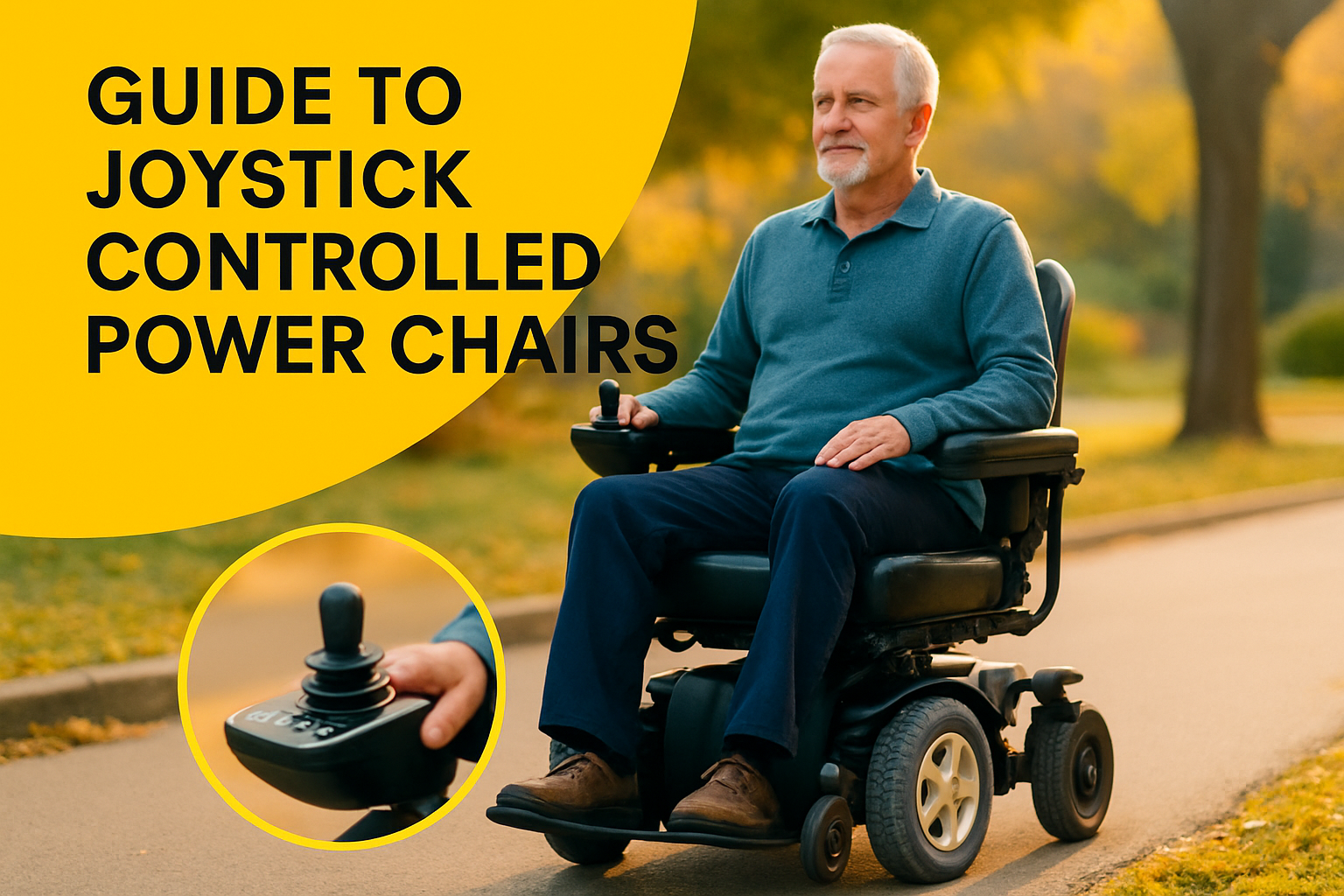
If you are exploring joystick controlled power chairs, you are already on the path to more comfortable, confident mobility. Maybe you are comparing models for your first chair, or you are ready to upgrade because your lifestyle has changed. Either way, the best choice blends intuitive controls, all-day comfort, and insurance-friendly features so you avoid surprises. In this friendly guide, I will walk you through what matters most, share real-world tips from thousands of user journeys, and show how Go Wheelchairs makes the process less stressful by pairing you with the right chair and supporting your Medicare and insurance paperwork so you can get rolling with peace of mind.
What Are Joystick Controlled Power Chairs? How They Work and Who Benefits
At their core, power chairs are compact, motorized wheelchairs that steer with a hand-operated joystick. That little lever is surprisingly smart: it measures direction and pressure, then translates your input into smooth forward, backward, and turning motions. Compared with mobility scooters, power chairs have a tighter turning radius, a more adjustable seating system, and controls that can be fine-tuned for sensitivity and speed. Typical indoor speeds are often in the 2 to 4 mph range, while outdoor-ready models may go a bit faster. Battery capacities and real-world range vary by model; for example, the Go Chair offers about an 11.2-mile range on a charge and the Jazzy Air 2 can reach up to about 19.2 miles, so check specific model specifications for accurate expectations. And because life is not lived in straight lines, modern suspension and programmable acceleration curves help reduce jolts, making doorway pivots and tight kitchen corners feel less like a three-point turn and more like a glide.
- You want independence at home: tight turns in hallways, safe navigation around furniture, and stable transfers.
- You need customizable controls due to limited dexterity, tremors, or fatigue.
- You are seeking a chair that can be configured for pressure relief, posture, or trunk support.
- You prefer a device that may qualify as DME [durable medical equipment] under Medicare Part B [Medical Insurance].
- You value a support team to help with insurance and ongoing service needs.
This is where Go Wheelchairs shines: a focused selection of Pride Mobility’s ‘Jazzy’ lineup alongside travel models such as the Go Chair, Jazzy Carbon, and Jazzy Ultra Light, and personalized guidance so you get a chair that fits your body, your home, your hobbies, and your coverage.
Compare Controls on Joystick Controlled Power Chairs
Not all joysticks feel the same, and that is good news. A classic proportional joystick responds to gentle pressure, where a light nudge equals slow motion and a stronger push means faster travel. Micro-joysticks are smaller, requiring less movement for users with limited range. If hand control is tricky, alternative inputs like chin controls, head arrays, or switch scanning may unlock independence. Add-ons such as attendant control let a caregiver drive when you want a break, and programmable profiles allow you to switch between indoor and outdoor behavior with a button press. Some controllers or accessory packages offer conveniences like a USB charging port or on-screen battery estimators, but availability varies by controller and model. The goal is not merely to move, but to move in a way that feels natural to you. When you test chairs, bring daily-life challenges into the demo: practice pulling up to a table, edging into an elevator, or rolling across a sidewalk seam. If it feels intuitive, you are closer to the right match.
| Control Type | Best For | Advantages | Considerations |
|---|---|---|---|
| Proportional Joystick | Most users with hand control | Precise steering, adjustable sensitivity, common across models | May require grip strength for long outings |
| Micro-Joystick | Limited range of motion | Minimal effort, compact footprint on armrest | Needs careful tuning to prevent drift |
| Chin Control | Little or no hand function | Hands-free navigation, customizable mounts | Positioning and fatigue management are key |
| Head Array | Users with reliable head movement | Intuitive directional pads, programmable | Requires consistent head control and precise setup |
| Switch Control | Single or limited switch access | Simple interface, strong safety logic | Slower navigation, relies on scanning patterns |
| Attendant Control | Caregiver support | Caregiver can drive, seamless override | Must be added and configured correctly |
- Ask for two drive profiles: indoor precision and outdoor responsiveness.
- Test start-stop smoothness; it reduces fatigue and boosts confidence.
- Check that buttons and displays are readable and reachable.
- Confirm the joystick mount adjusts for your posture and transfers.
Comfort, Seating, and Everyday Ergonomics

Comfort is not a luxury; it is the cornerstone of safe, enjoyable mobility. Even a perfect control setup is undermined if your seat height, width, or cushion are off by an inch. Look for adjustability in seat width and depth, swing-away or elevating leg rests, and armrest height that lets shoulders relax. Pressure redistribution cushions are crucial, and tilt-in-space or recline functions can relieve hotspots during longer outings. Most standard power chairs support 250 to 300 lbs [pounds], while heavy-duty models offer 300 to 450 lbs [pounds] or more with reinforced frames and robust motors. Drive configuration also shapes comfort: mid-wheel drive brings the tightest turning radius, front-wheel drive softens curb transitions, and rear-wheel drive can feel more stable at higher speeds. Also, consider your surfaces. Carpets, thresholds, and cracked sidewalks demand different tires and suspension. The right setup turns daily tasks into smooth routines so energy goes to living, not compensating for discomfort.
- Seat fit: you want about 0.5 to 1 inch of space on either side of your hips.
- Back support: try contour options if you lean or slide; posture affects breathing and endurance.
- Footrests: heels supported, knees open at roughly 90 to 100 degrees for circulation.
- Armrests: elbows at approximately 90 degrees; shoulders neutral, not hunched.
- Pressure relief: schedule tilt or micro-shifts every 20 to 30 minutes as advised by your clinician.
- Turning radius: mid-wheel often lands around 20 to 24 inches; test in your tightest doorway.
- Range: typical batteries deliver a practical day’s use; check real-world, not just brochure numbers.
If you are unsure where to begin, Go Wheelchairs offers a resources hub with buying guides, comparison tools, and travel tips that explain these choices in plain language. Their team can help you translate measurements from your home and body into a seating package that fits like your favorite chair, not a one-size-fits-all guess.
Medicare-Friendly Models and Coverage: Step-by-Step Path to Approval
Coverage matters, and the process is smoother when you know the milestones. Medicare Part B [Medical Insurance] may cover power wheelchairs when a doctor documents that you need the device for use in the home and cannot use a cane, walker, or manual chair effectively. The evaluation typically includes a face-to-face exam, a detailed chart note, and a Letter of Medical Necessity that spells out why a specific chair and seating configuration are medically required. According to CMS [Centers for Medicare & Medicaid Services] guidance, suppliers must provide a compliant written order prior to delivery, and the chair must meet coding and feature criteria to qualify as DME [durable medical equipment]. While rules evolve, one constant is that complete, timely documentation prevents delays. Many claims stall not because a person is ineligible, but because a signature or measurement is missing. That is why expert supplier support can be the difference between weeks and months.
| Step | What Happens | Pro Tip |
|---|---|---|
| 1. Clinical Evaluation | Face-to-face visit with your prescriber; mobility needs documented | Bring a list of daily tasks you struggle with at home |
| 2. Supplier Assessment | Measurements, test drives, feature recommendations | Try indoor and outdoor profiles; note comfort after 15 minutes |
| 3. Letter of Medical Necessity | Prescriber details why specific features are required | Ask that seat width, cushion type, and control style be named |
| 4. Prior Authorization | Some regions require approval before delivery | Respond quickly to any info requests to avoid resets |
| 5. Delivery and Training | Setup, fit verification, and driving education | Have a caregiver learn attendant controls, too |
| 6. Follow-Up Support | Adjustments, maintenance, and documentation updates | Schedule a comfort check-in after two weeks of use |
- Documents to gather: prescription, detailed chart note, Letter of Medical Necessity, home accessibility notes, and any trial results.
- Budget planning: under Medicare Part B [Medical Insurance], approved DME [durable medical equipment] is typically covered at 80 percent after deductible; confirm with your plan.
- Service matters: local or mobile technicians shorten downtime; ask about response times.
Go Wheelchairs provides insurance and Medicare assistance, from verifying benefits to coordinating paperwork and follow-ups. Their specialists translate clinical language into a clear to-do list, guide you through signatures and measurements, and keep you updated so you spend less time chasing forms and more time choosing fabrics, cushions, and colors.
Standard vs Heavy-Duty: Which Power Chair Fits Your Life?
Choosing between standard and heavy-duty models is about matching your current needs and your future plans. Standard power chairs are compact, excellent indoors, and often lighter for transport. Many now fold or disassemble to fit in a trunk, which is great if you travel or rideshare. Heavy-duty chairs—often called bariatric models—prioritize higher weight capacities, reinforced seating, and torque for outdoor surfaces. They tend to ride smoother over gaps and grass, but they are larger and heavier to load. Consider your most frequent environments first. Do you weave between kitchen counters daily? Or do you regularly cross uneven sidewalks, visit parks, or carry groceries and a backpack? Measuring your home and routine helps answer this question quickly and confidently.
| Feature | Standard Power Chair | Heavy-Duty Power Chair |
|---|---|---|
| Typical Weight Capacity | 250 to 300 lbs [pounds] | 300 to 450+ lbs [pounds] |
| Turning Radius | Often 20 to 24 inches (mid-wheel) | Often 23 to 30 inches (varies by drive) |
| Top Speed | About 2 to 4 mph [miles per hour] | About 3 to 5 mph [miles per hour] |
| Battery / Range | Varies by model (for example, the Go Chair offers about 11.2 miles of range) | Varies by model; higher-capacity options and longer ranges are available (for example, the Jazzy Air 2 can reach up to about 19.2 miles) |
| Portability | Lightweight or foldable options available | Heavier frames; rarely foldable |
| Best Use Case | Indoor agility, car travel, tight spaces | Outdoor stability, higher support needs |
Because needs evolve, many people choose a primary chair for everyday life and a secondary travel-friendly option for vacations and family visits. Go Wheelchairs curates both: select standard and heavy‑duty Jazzy models as well as lightweight, foldable travel designs. Their team helps you weigh trade-offs like turning radius versus suspension, or portability versus seating complexity, so the chair you pick now still serves you well a year from today.
Field-Test Like a Pro: Real-World Scenarios, Tips, and Measurements
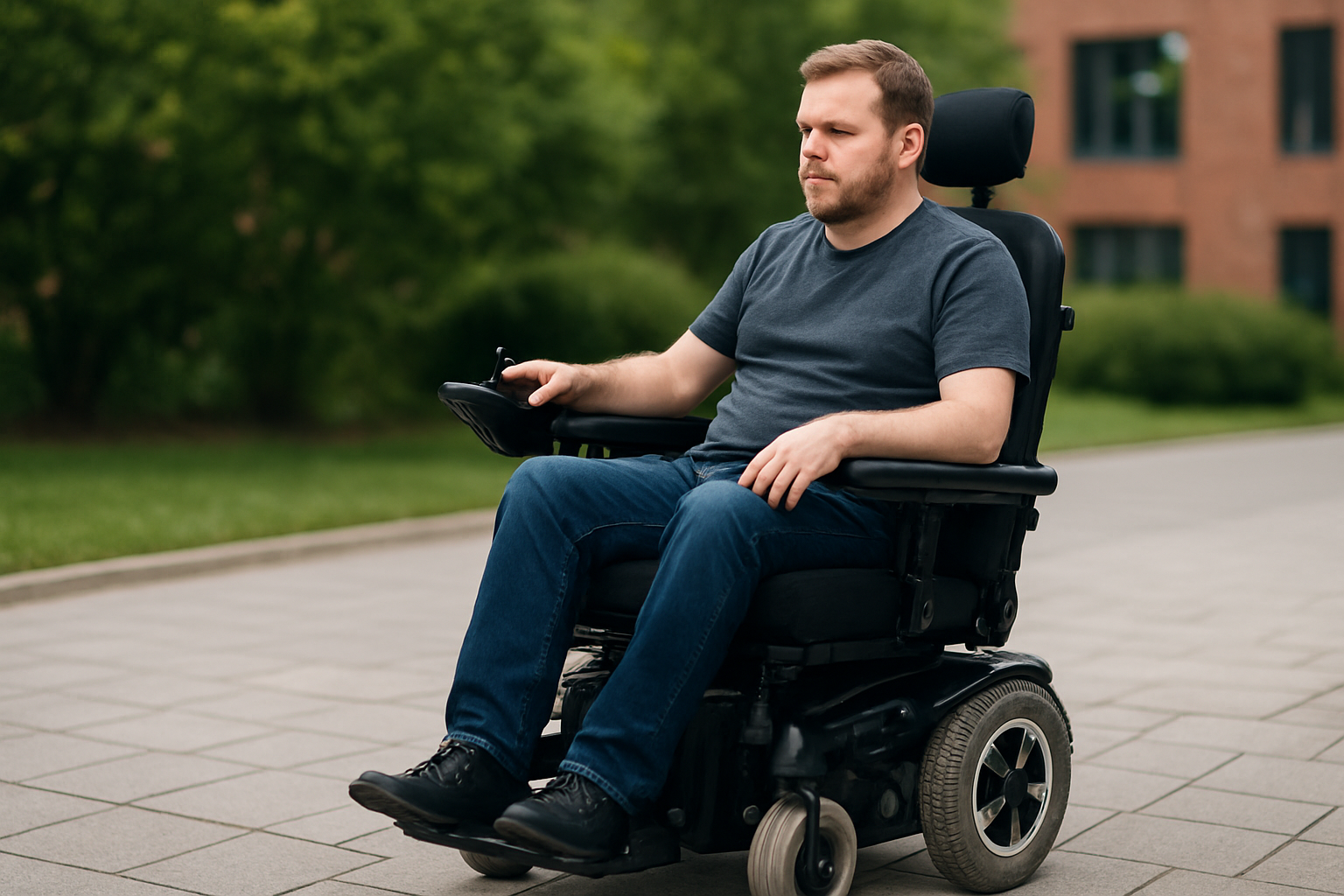
Let us get practical. Maria, who has arthritis, discovered that a micro-joystick with softer spring tension let her steer without hand pain. She also needed swing-away leg rests to make transfers safer in a small bathroom. Darius, a bigger guy who loves weekend markets, preferred a heavy-duty model with front-wheel drive that climbed curb cuts without jolts and supported 375 lbs [pounds] comfortably. And Ava, a frequent flyer, went with a travel-friendly chair whose removable batteries met airline rules from carriers and the FAA [Federal Aviation Administration]. Each success started with a careful field-test: measuring doorways, simulating daily maneuvers, and noting fatigue after 20 minutes, not just five. Imagine a simple top-down sketch of your home: mark door widths, the tightest U-turn, and the steepest ramp. Pair that map with a test drive and you will spot the right model faster than any spec sheet alone.
| Home Fit Item | Target or Note | Your Measurement |
|---|---|---|
| Narrowest Doorway | Door width plus clearance for hands | |
| Tightest Turn | Turning radius needed for 180-degree turn | |
| Ramp or Threshold | Slope and lip height; test with weight onboard | |
| Dining Table Height | Armrest and joystick must slide under | |
| Car Trunk or Lift | Chair folded size and total weight |
- Bring your caregiver to demos; practice using the attendant control.
- Check transport weight, not just total weight, if you will lift the chair.
- Ask about service windows and loaner availability during repairs.
- Save your tuned drive profile to avoid reprogramming later.
- Bookmark the Go Wheelchairs resources hub for travel battery guidance and packing checklists.
When the details feel overwhelming, that is your cue to lean on a partner. Go Wheelchairs offers personalized support and guidance, from measurement walkthroughs to on-the-phone joystick tuning tips, so your real world—not just a showroom—drives the decision.
How Go Wheelchairs Helps You Decide with Confidence
You want a chair that fits your life, a price that respects your budget, and coverage that does not turn into a paperwork maze. Go Wheelchairs exists for exactly those needs. Their catalog focuses on the Pride Mobility ‘Jazzy’ lineup and travel models such as the Go Chair, Jazzy Carbon, and Jazzy Ultra Light. The team pairs you with comparison tools, side-by-side specs, and friendly experts who speak both everyday language and the fine print of CMS [Centers for Medicare & Medicaid Services] policies. They also coordinate insurance and Medicare assistance, guiding you through medical documentation and prior authorization so your application is strong the first time. When you are ready, they help you test controls, refine seating, and schedule follow-ups—because great mobility is not just a delivery date, it is a day-after-day experience you can count on.
Ready to talk features and coverage without the sales pressure? Connect with Go Wheelchairs and explore options tailored to your body, your budget, and your routes around town. Their goal is simple: help you move forward with confidence and independence—because that is the point of a power chair in the first place.
Final Thoughts: Your Next Smooth, Confident Ride
You now know how to compare controls, comfort, and coverage so choosing a power chair feels empowering, not stressful. Imagine gliding through your doorway, rolling up to your favorite cafe table, and finishing the day with energy to spare. Which feature matters most to you right now—control feel, pressure relief, or coverage steps—and how will that shape your shortlist of joystick controlled power chairs?
Additional Resources
Explore these authoritative resources to dive deeper into joystick controlled power chairs.
Move Forward with Go Wheelchairs
Explore the Pride Mobility ‘Jazzy’ lineup and select travel power chairs with caring guidance on Medicare and insurance to achieve reliable mobility and confident independence.