
If you are trying to figure out Medicare and power chairs, wheelchair customer support and guidance can be the difference between weeks of delays and a smooth, confident journey. I have walked through this process with family, and I know how many forms, phone calls, and tiny details pop up. The good news is that a simple roadmap can keep you moving. In this article, we will use a practical 9-step checklist and show how Go Wheelchairs pairs expert help with the right motorized wheelchair so you get coverage and ongoing service without the stress.
Before we dive in, a quick promise: we will keep it friendly, clear, and grounded in real life. You will see how to prepare an LMN [Letter of Medical Necessity], how to handle prior authorization [PA], and what happens after delivery when it is time for tune-ups or repairs. Along the way, I will point to the exact moments when Go Wheelchairs can step in with personalized support, insurance guidance, and product options that fit your body, your home, and your daily routine.
Wheelchair Customer Support and Guidance: Why It Matters Before You Apply
Paperwork does not move itself. Every successful power wheelchair approval starts with clarity on your clinical needs and how they meet Medicare’s medical-necessity rules for durable medical equipment [DME]. That is why early wheelchair customer support and guidance can save you time. It aligns your evaluation, your LMN [Letter of Medical Necessity], and your supplier choice long before the claim is submitted.
Think of the process like a relay race. Your primary care provider [PCP] hands off to your therapist, your therapist hands off to the supplier, and the supplier carries the baton across the insurance finish line. If any runner is out of sync, the team slows down. A support-first approach gets everyone on the same page: which features are necessary, which documents your plan requires, and which timelines you should expect.
At Go Wheelchairs, the team sets expectations up front. You will get a plain-English list of what your plan needs, help scheduling the face-to-face exam, and options that fit your measurements, weight capacity, and terrain. You will also hear about the differences between standard, heavy-duty, and lightweight foldable chairs, so the equipment you receive truly supports your everyday life at home, at work, and out in the community.
A 9-Step Medicare Checklist for Coverage, LMN [Letter of Medical Necessity], and Ongoing Service
Here is the step-by-step path many customers follow, from first conversation to long-term service. Use this as a printable checklist or keep it open as you talk with your clinician and supplier.
Watch This Helpful Video
To help you better understand wheelchair customer support and guidance, we’ve included this informative video from BBC. It provides valuable insights and visual demonstrations that complement the written content.
-
Confirm eligibility and benefits.
Call your plan to verify DME [Durable Medical Equipment] benefits, deductibles, and coinsurance. Ask if your plan requires prior authorization [PA] and whether you must use in-network suppliers. Write down the representative’s name and a reference number for your call. -
Schedule your face-to-face mobility evaluation.
Book with your primary care provider [PCP] or a specialist. Explain your daily challenges, any falls, home layout, and distances you need to travel. Bring a list of medications and prior mobility devices you have tried and why they did or did not work. -
Obtain a detailed LMN [Letter of Medical Necessity].
Ask your clinician to document your diagnosis, functional limits, posture or seating needs, and why a power wheelchair is required compared with a manual chair or scooter. The LMN should cover how the equipment enables safe performance of activities of daily living [ADL] inside your home. -
Get a therapy assessment.
A Physical Therapist [PT] or Occupational Therapist [OT] can measure you for seating, cushion type, and joystick or alternative controls. Their report adds clinical depth to the LMN [Letter of Medical Necessity] and helps justify features like tilt, elevating leg rests, or heavy-duty frames. -
Choose an in-network supplier.
Select a company that knows your plan’s documentation rules and can guide prior authorization [PA]. Go Wheelchairs supports paperwork collection, coordinates with your clinician, and matches you to standard or heavy-duty motorized wheelchairs that meet your medical and lifestyle needs. -
Complete prior authorization [PA] if required.
Your supplier submits all documents, including the LMN [Letter of Medical Necessity], clinical notes, measurements, and a detailed quote. Ask for status updates every 7 to 10 days and keep copies of everything you sign. -
Schedule delivery, fitting, and training.
On delivery day, expect adjustments for seat height, joystick placement, and cushion fit. Learn battery care, safe transfers, and indoor turning. Go Wheelchairs provides setup and one-on-one training so day one feels natural, not overwhelming. -
Confirm claim submission and track the Explanation of Benefits [EOB].
After delivery, ask the supplier to confirm the claim was submitted. Review the Explanation of Benefits [EOB] when it arrives and verify codes, dates, and amounts. If anything looks off, call immediately. -
Plan ongoing maintenance and support.
Put a 6-month tune-up on your calendar and save your supplier’s service line. Go Wheelchairs offers responsive repair scheduling, loaners when available, and guidance if you move or change insurance.
Want a quick snapshot of the path? Use this at-a-glance table to see who does what and how long each stage commonly takes. Timelines vary by plan, medical complexity, and documentation readiness.
| Checklist Step | Primary Owner | Key Documents | Typical Timeline | Pro Tip |
|---|---|---|---|---|
| Verify benefits | You + Supplier | Benefit summary, reference number | 1 to 2 days | Ask about in-network rules and prior authorization [PA]. |
| Face-to-face exam | Clinician | Clinic notes | 3 to 10 days | Describe ADL needs in detail. |
| Therapy assessment | PT [Physical Therapist] or OT [Occupational Therapist] | Measurement sheet | 3 to 14 days | Photograph posture for the LMN [Letter of Medical Necessity] if appropriate. |
| LMN drafted | Clinician | LMN [Letter of Medical Necessity] | 3 to 7 days | Ensure medical necessity is explicit, not implied. |
| Supplier quote | Supplier | Detailed item list | 2 to 5 days | Confirm each feature is tied to a clinical need. |
| Prior authorization [PA] | Supplier + Plan | Full packet | 7 to 30 days | Check status weekly and note case numbers. |
| Delivery & training | Supplier | Delivery ticket | 1 day | Test drive indoors and on your usual surfaces. |
| Claim + Explanation of Benefits [EOB] | Supplier + Plan | Claim, Explanation of Benefits [EOB] | 14 to 30 days | Match dates on the Explanation of Benefits [EOB] with delivery. |
| Ongoing service | Supplier + You | Service logs | Every 6 months | Put tune-ups on your calendar now. |
Medicare Basics for Power Wheelchairs: What to Know Before You Shop
Medicare Part B typically covers 80 percent of the approved amount for medically necessary durable medical equipment [DME] after the annual deductible. You are responsible for the remaining 20 percent unless you have a supplemental plan. Some Medicare Advantage plans require prior authorization [PA] and may have different in-network rules, so it is smart to check before your evaluation.
Coverage hinges on medical necessity. Your clinician must show that a power wheelchair is needed inside the home to perform activities of daily living [ADL] safely and effectively. They will document why a cane, walker, manual chair, or scooter is insufficient. If you need special seating, alternative controls, or a heavy-duty frame because of body size or terrain, those details should be clearly stated in the LMN [Letter of Medical Necessity].
One more practical point: keep a tidy paper trail. Save the LMN [Letter of Medical Necessity], clinic notes, therapy measurements, supplier quotes, and all messages related to prior authorization [PA]. If a plan asks for more information, you can respond quickly. Having every piece at your fingertips shortens the journey and reduces the chance of denials for missing documentation.
Standard vs Heavy-Duty vs Foldable: Picking the Right Ride for Daily Life
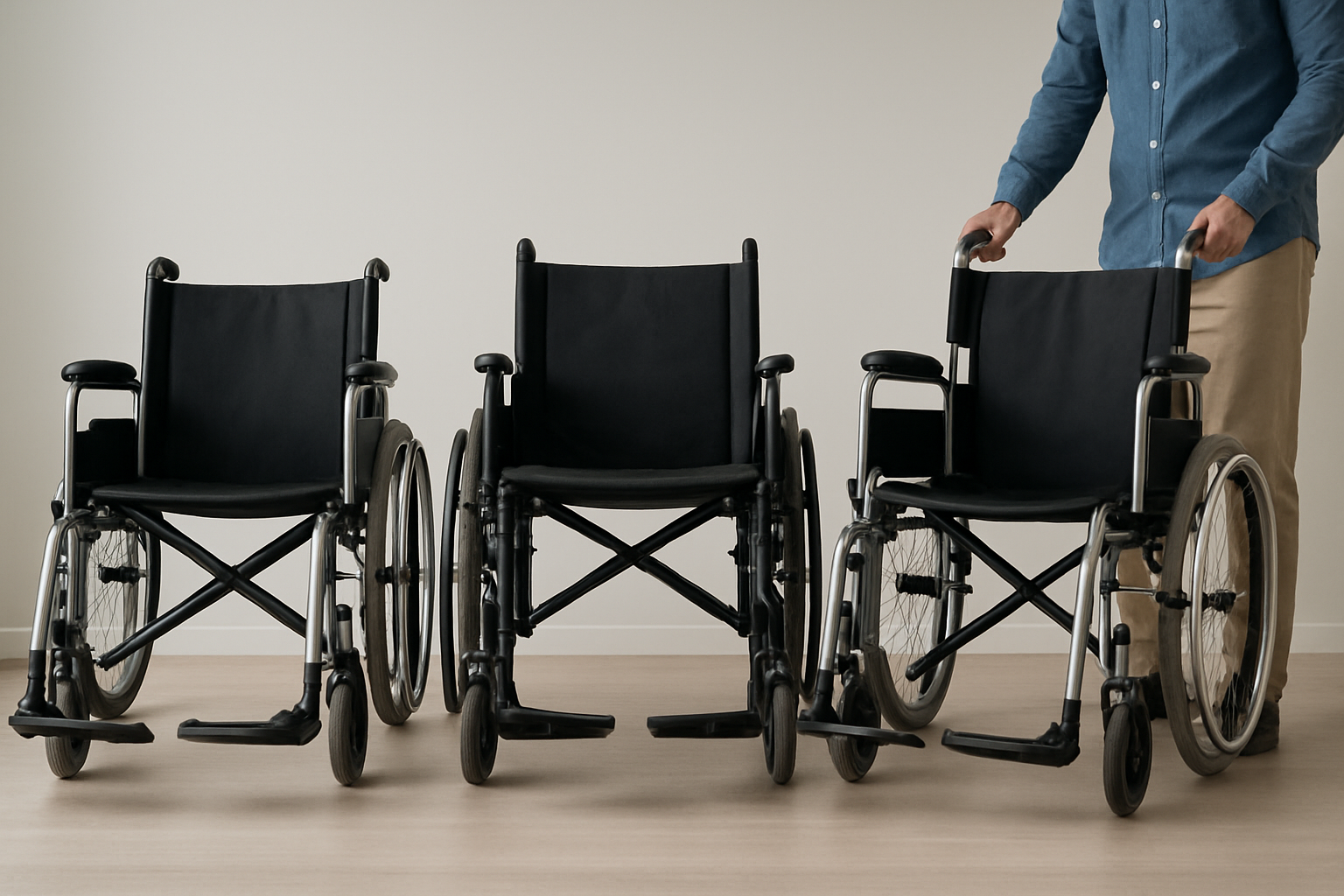
Choosing a chair is about more than a spec sheet. It is about your body, your spaces, and your plans. Standard power chairs fit many homes and offer excellent indoor maneuverability. Heavy-duty models add reinforced frames, larger motors, and higher weight capacities for durability and outdoor stability. Lightweight, foldable designs prioritize travel and storage, making it easier to get in and out of cars, buses, or rideshares.
Go Wheelchairs carries a wide range of standard and heavy-duty motorized wheelchairs alongside lightweight, foldable wheelchair designs. During your fitting, the team considers seat width, turning radius, battery range, and control style. They also review what you do each day: cooking, caregiving, commuting, or campus life. That way, the equipment amplifies your independence instead of adding friction.
If you like quick comparisons, this side-by-side table highlights practical differences that matter in daily use. Use it to match your top priorities with the right build.
| Chair Type | Typical Capacity | Best For | Turning Radius | Battery Range | Transport |
|---|---|---|---|---|---|
| Standard Motorized | Up to 300 lb | Indoor maneuvering, smooth sidewalks | Tight | 8 to 15 miles | Van or ramp, some car lifts |
| Heavy-Duty Motorized | 350 to 450+ lb | Durability, uneven terrain, larger frames | Moderate | 10 to 18 miles | Lift-equipped vehicle |
| Lightweight Foldable | Up to 265 lb | Travel, storage, multi-transport days | Very tight | 7 to 12 miles | Folds into trunk or closet |
Not sure which path to take? Start with where you spend most of your time and the surfaces between your front door and your favorite places. Then weigh independence features: swing-away leg rests for transfers, seat elevation for counters, or enhanced suspension for park paths. With Go Wheelchairs, you can test practical scenarios and adjust features so today’s choice still fits a year from now.
Real-World Service and Repairs: How to Stay Rolling
Eventually, every chair needs attention. Battery performance changes with seasons, tires wear, and cushions compress. The most reliable plan is preventive: short, scheduled tune-ups keep things tight, aligned, and quiet. Go Wheelchairs helps you book service windows ahead of time, and if a repair is urgent, they can guide you through coverage rules and parts ordering so you are not stuck waiting without answers.
Here is a realistic scenario. Maria received a heavy-duty chair last spring. She called Go Wheelchairs when her joystick felt loose. The support team documented the issue, checked warranty status, and sent a technician who replaced the mount and retightened her armrest within a week. Maria kept rolling, and the service log made future calls faster because the history was already there.
- Schedule a 6-month checkup the day you receive your chair.
- Charge batteries regularly, avoiding full depletion to preserve cycle life.
- Wipe down frames and inspect cables so small problems do not become big ones.
- Keep a folder with your LMN [Letter of Medical Necessity], delivery documents, and service notes.
- If you move or change plans, call support first to confirm in-network service options.
When surprises happen, a calm, documented process speeds solutions. And if you bought through Go Wheelchairs, you have a team that knows your model, your fit settings, and your coverage, which means fewer explanations and faster fixes.
How Go Wheelchairs Guides You from First Call to First Ride
Mobility is not one-size-fits-all. Individuals with mobility challenges often struggle to find affordable, dependable wheelchair solutions that fit their lifestyle and coverage needs. Go Wheelchairs addresses these challenges by offering a variety of motorized wheelchairs, personalized support, and guidance on insurance and Medicare coverage, ensuring customers can move forward with confidence and independence. That mission shows up in the way the team listens, documents, and stays with you long after delivery.
From day one, you will talk with a real person who explains how documentation works and which clinicians to loop in for your LMN [Letter of Medical Necessity]. The team will pre-check your benefits, gather the right forms, and coordinate prior authorization [PA] so your packet is complete. Then you will compare models from a wide range of standard and heavy-duty motorized wheelchairs and try lightweight, foldable options if travel is high on your list.
Finally, you will receive training tailored to your home and routines. Think kitchen corners, curb cuts, and public transit. After delivery, Go Wheelchairs keeps a service line open for maintenance and repairs, and a resources hub offers buying guides, comparison tools, and travel tips to make everyday planning easier. When you need help, you will not get bounced between departments. You will get answers.
Quick Answers to Common Coverage Questions

You might be wondering: how long will this take, and what will I owe? Timelines depend on documentation and plan rules, but many approvals complete in a few weeks once the LMN [Letter of Medical Necessity] and therapy notes are in place. Costs vary by deductible and coinsurance, though original Medicare Part B typically covers 80 percent of the approved amount after the deductible. If you have a supplemental policy, your out-of-pocket costs may be lower.
What if my claim is denied? Ask for the reason in writing, then fix exactly what is missing. Often, it is a documentation gap. Add more detail to the LMN [Letter of Medical Necessity], attach therapy measurements, or clarify why a lesser device will not work. Go Wheelchairs can help structure an appeal and resubmit so your second pass is stronger than the first.
And what about trying chairs before you commit? That is where a guided fitting shines. You will feel the difference between standard maneuverability and heavy-duty stability, and you will see how lightweight, foldable designs handle transit. With clear wheelchair customer support and guidance throughout, you will make choices that hold up in real life, not just on paper.
Sample Documentation Checklist You Can Copy
Use this mini list to keep your documentation airtight. Share it with your clinician, therapist, and supplier so everyone knows their part and nothing gets left out.
- Face-to-face clinic notes with diagnosis and functional limits.
- LMN [Letter of Medical Necessity] describing why a power chair is required for activities of daily living [ADL] inside the home.
- Therapy measurements and seating recommendations from a PT [Physical Therapist] or OT [Occupational Therapist].
- Supplier quote linking each feature to a clinical need.
- Prior authorization [PA] approval if your plan requires it.
- Delivery documentation and your first service appointment on the calendar.
If you prefer visuals, print this section and check things off as you go. When you work with Go Wheelchairs, the team keeps a shared list with you and your clinician so the whole group knows what is complete and what is outstanding.
The Bottom Line: Clarity, Confidence, and a Chair That Fits
You deserve a process that feels human, not bureaucratic. With a simple plan, a complete LMN [Letter of Medical Necessity], and a partner that knows Medicare, you can move from confusion to confidence. The right support turns forms into forward motion and transforms coverage into mobility you can count on day after day.
Picture the next 12 months with the chair that truly fits: easier mornings, safer transfers, longer outings, and fewer “not today” moments. With Go Wheelchairs at your side, every step has a guide, from your first question to your first ride and beyond.
Ready to experience wheelchair customer support and guidance that puts you first? What would more freedom and less friction look like in your life this year?
Additional Resources
Explore these authoritative resources to dive deeper into wheelchair customer support and guidance.
Elevate Mobility with Go Wheelchairs Guidance
Go Wheelchairs pairs a wide range of standard and heavy-duty motorized wheelchairs with Medicare-ready support so you gain coverage clarity, confident choices, and daily independence.