
If you are trying to figure out dme medicare part b (DME [Durable Medical Equipment] Medicare Part B), you are not alone. When my neighbor Maria asked me over to glance at her power wheelchair paperwork, we ended up turning the kitchen table into a full-blown claims command center. It was a mix of doctor notes, supplier forms, and the kind of jargon that makes your eyes glaze over. The good news? Once you understand how the rules actually work, the path gets smoother, faster, and a lot less stressful. Below are five common myths that quietly derail approvals and drain wallets, plus clear steps you can take right now to protect your time, your money, and your mobility.
Myth 1: A Doctor’s Note Guarantees a Power Wheelchair
A simple “patient needs a wheelchair” line in the chart is not enough for approval, even if your doctor fully supports you. Medicare looks for specific, functional details that prove a power wheelchair is medically necessary for use inside the home. That includes why a cane or walker is not sufficient, why a manual wheelchair is not feasible, and how the power wheelchair lets you safely perform daily activities like bathing, dressing, and getting to the bathroom. There is also a required face-to-face evaluation, a detailed written order, and often prior authorization for certain models. According to guidance from CMS [Centers for Medicare & Medicaid Services], denials frequently stem from incomplete or vague documentation rather than a true lack of need. Think of it like building a case: your medical story must be clear, consistent, and documented in the right places across the physician record and supplier file to win approval.
- Ask your clinician for a thorough mobility evaluation letter that specifies indoor functional limits and failed trials with lesser aids.
- Include a home assessment: doorway widths, turning space, flooring, and safety issues that support indoor use.
- Confirm your supplier can pre-check the chart, assemble prior authorization, and coach your care team on the required details.
- Go Wheelchairs can coordinate with your clinician to ensure the documentation hits all Medicare criteria, reducing preventable delays.
Myth 2: Medicare Always Buys the Chair Outright
Many power wheelchairs fall under “capped rental,” which typically means Medicare pays monthly and transfers ownership to you after a set rental period when the rules are met. Purchase may be allowed in specific situations or for certain codes, but it is not automatic. Under Part B, Medicare generally pays 80 percent of the Medicare-approved amount after you meet the annual deductible, and you are responsible for the remaining 20 percent coinsurance plus any non-covered upgrades. If you are on a Medicare Advantage plan, the structure can look different with copays, network requirements, and plan-specific prior authorization. This is why people get blindsided by unexpected bills: the path you are on — rental or purchase — drives how much you owe and when you owe it. A transparent supplier will explain your options up front, confirm whether they accept assignment, and put your expected out-of-pocket in writing before you sign.
| Payment Path | What Medicare Pays | What You Pay | Notes |
|---|---|---|---|
| Capped rental (most power wheelchairs) | 80 percent of the Medicare-approved amount each month after the Part B deductible | 20 percent monthly coinsurance; any non-covered upgrades | Ownership typically transfers after 13 months of continuous rental when rules are met |
| Purchase (when allowed or required) | 80 percent of the Medicare-approved purchase price after the Part B deductible | 20 percent of the approved amount; any non-covered extras | Repairs may be covered later if medically necessary |
| Medicare Advantage plan | Plan-defined payment; may mirror Original Medicare or use copays | Plan copay/coinsurance; network and prior authorization rules apply | Check your Evidence of Coverage and call the plan for specifics |
- Ask your supplier to confirm rental vs purchase and give you a written cost estimate before delivery.
- If you have Medigap (Medicare Supplement Insurance), ask how it reduces your 20 percent coinsurance.
- Go Wheelchairs walks you through the payment path that fits your budget and coverage, so there are no surprise balances.
Myth 3: Any Supplier Will Do

Not all suppliers are equal in the eyes of Medicare. You need a Medicare-enrolled supplier, and for cost control and protections, it is smart to choose one that accepts assignment. When a supplier accepts assignment, they agree to the Medicare-approved amount, which usually means you owe only your standard 20 percent coinsurance after the deductible. If they do not accept assignment, you may be billed more than the approved amount, which can spike your out-of-pocket. For Medicare Advantage members, you also need to verify the supplier is in network with your plan, whether it is an HMO [Health Maintenance Organization] or PPO [Preferred Provider Organization]. On top of this, the best suppliers proactively check documentation, coordinate prior authorization, and keep you updated. The difference between a proactive partner and a passive order-taker can be the difference between a fast approval and a frustrating denial.
| Supplier Status | Accepts Assignment? | What You Pay | Risk Level | How Go Wheelchairs Helps |
|---|---|---|---|---|
| Medicare-enrolled | Yes | Typically only 20 percent coinsurance after deductible | Low | We match you with enrolled, assignment-accepting partners whenever possible |
| Medicare-enrolled | No | Potentially above the Medicare-approved amount | Medium | We set expectations and help you compare true total costs upfront |
| Not Medicare-enrolled | N/A | Medicare does not pay; you pay 100 percent | High | We steer you away from non-enrolled sources to protect your benefits |
- Use the official supplier lookup to confirm enrollment and ask, “Do you accept assignment?”
- If you have Medicare Advantage, call your plan to verify in-network status and any prior authorization steps.
- Go Wheelchairs handles enrollment checks and guides your network and authorization confirmations to save time.
Myth 4: Power Scooters and Power Chairs Are Interchangeable
Power scooters and power wheelchairs serve different needs, and Medicare evaluates them differently. A scooter has a tiller-style steering column and generally requires trunk control and upper body strength to drive safely. A power wheelchair uses a joystick and supports users who cannot operate a scooter, offers tighter turning for indoor navigation, and can be configured with advanced seating. If you can safely use a scooter, Medicare may not approve a power wheelchair, and if you cannot use a scooter due to balance or strength limits, your records must say so clearly. The right match is about function, not preference. This is where a detailed evaluation by your clinician — sometimes including a PT [Physical Therapist] or OT [Occupational Therapist] mobility assessment — makes all the difference. Getting the match right is faster than appealing the wrong one later.
| Mobility Option | Typical User Needs | Strengths | Limitations | Coverage Notes |
|---|---|---|---|---|
| Power scooter | Can sit upright and steer with both hands; adequate trunk control | Good for outdoor/longer distances; lower cost | Wider turning radius; less ideal in tight indoor spaces | May be covered if you can use it safely inside the home |
| Standard power wheelchair | Cannot safely use a scooter; needs joystick control and indoor maneuverability | Excellent indoor turning; customizable seating | Heavier; may require vehicle lift for transport | Covered when criteria for medical necessity are met |
| Heavy-duty power wheelchair | Higher weight capacity or extra durability | Robust build and performance | Heavier and larger footprint | Covered when medical need for capacity/durability is documented |
| Lightweight, foldable power wheelchair | In-home maneuverability with portability for travel or tight living spaces | Easy to fold and transport; agile indoors | Not all features available; battery/terrain limits | May be covered if it is the medically necessary solution, not just a convenience |
- Have your clinician document precisely why you can or cannot operate a scooter safely.
- Test-drive both options at Go Wheelchairs to see which device handles your home’s turns and thresholds best.
- Ask for photos or measurements of your hallways and doorways to be included in your documentation packet.
Myth 5: Lightweight or Travel-Friendly Means Not Covered
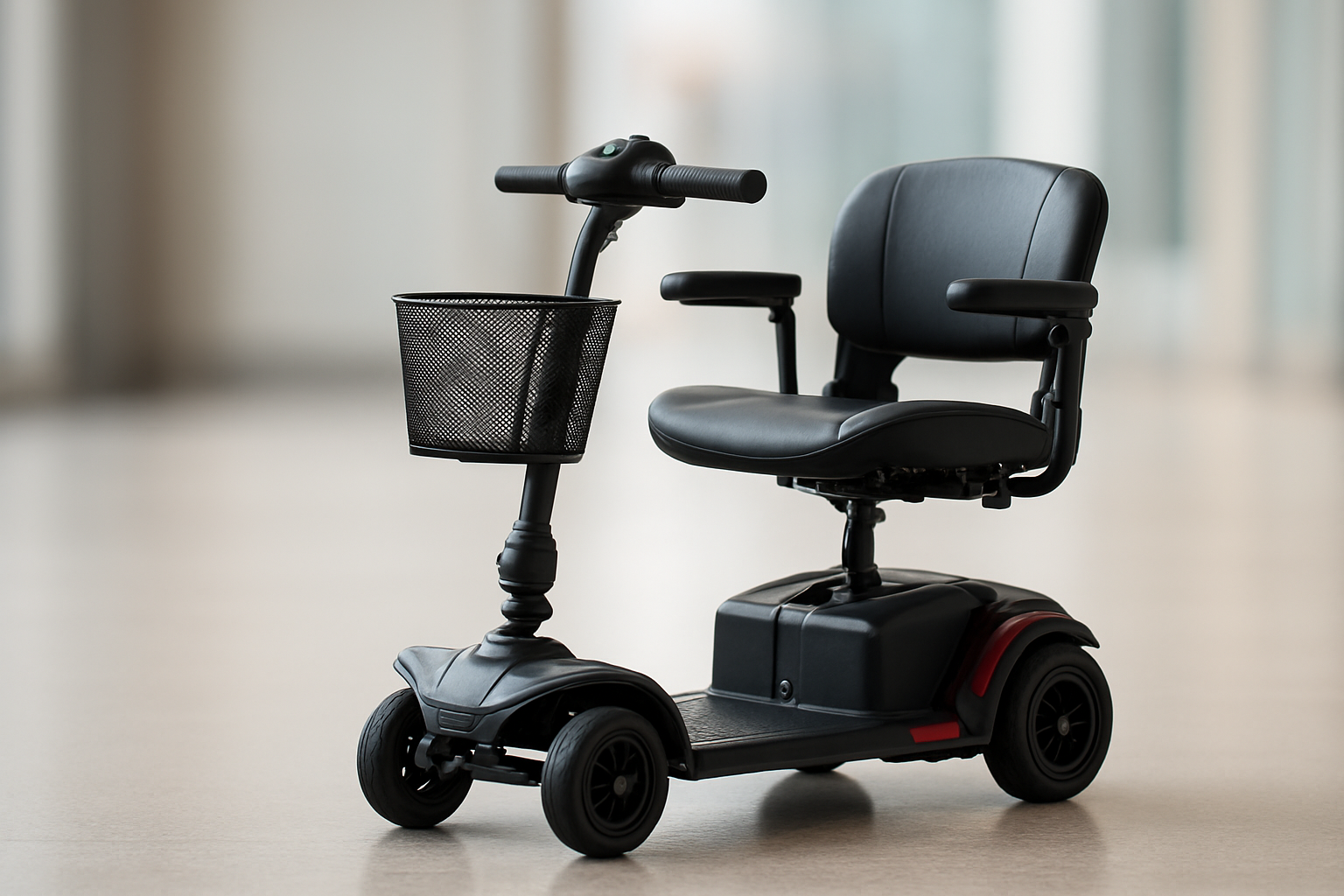
“Lightweight” does not automatically equal “not medically necessary.” What Medicare cares about is whether the chosen device is required for safe, effective mobility inside your home. If your apartment has narrow corridors and a full-size chair will not turn into the bathroom, a compact, foldable power wheelchair may be the only option that lets you complete daily activities. The key is to prove medical necessity, not convenience. That means the evaluation should show why lesser equipment fails, why a compact design solves a safety or function problem, and how you will use it indoors day to day. Plenty of people travel or visit family with their devices — that is a bonus, not the reason for approval. Go Wheelchairs stocks lightweight, foldable wheelchair designs alongside standard and heavy-duty models, so you can compare real-world maneuvering and pick the device that works in your actual home, not just on paper.
- Document failed trials: walker, cane, and manual wheelchair, with reasons each is unsafe or ineffective.
- Include measurements of tight indoor spaces where a foldable design is necessary to access key rooms.
- Have your clinician specify how the compact frame enables essential tasks like toileting and bathing.
- Lean on Go Wheelchairs for side-by-side comparisons and written notes your clinician can reference.
dme medicare part b (DME [Durable Medical Equipment] Medicare Part B): Your Step-by-Step Plan
Winning approval is about sequence, detail, and communication. Start with a face-to-face visit focused on mobility limits inside the home, then line up a detailed order and any supporting notes. Next, collaborate with a Medicare-enrolled supplier that accepts assignment and can preflight your documentation before it goes to the plan for prior authorization. Meanwhile, collect home measurements, fall history, and any PT [Physical Therapist] or OT [Occupational Therapist] assessments that strengthen your case. Throughout, keep a simple tracker of who did what and when. Government reviews repeatedly flag durable medical equipment claims for documentation gaps, so the more you front-load clarity, the faster this goes. At Go Wheelchairs, our team maps each step, checks your plan’s rules, and helps your clinician include the specifics that reviewers expect — because preventing a denial is always easier than appealing one.
- Book a mobility-focused visit with your Primary Care Provider (PCP [Primary Care Provider]) or specialist; bring a list of daily tasks you cannot do safely.
- Ask for a detailed order plus a letter of medical necessity addressing failed trials with lesser equipment and indoor function.
- Measure doorways, hallways, and turning spaces; take notes on flooring, thresholds, and bathroom setups.
- Choose a Medicare-enrolled supplier that accepts assignment and understands prior authorization requirements.
- Sign and date all forms; keep copies and request a timestamped receipt for submissions.
- Track the prior authorization decision; if additional info is requested, respond quickly with your supplier.
- After delivery, review your Explanation of Benefits (EOB [Explanation of Benefits]) and call if anything looks off.
| Step | Who Leads | Typical Timeframe | Pro Tip |
|---|---|---|---|
| Face-to-face mobility evaluation | You and your clinician | Scheduled within a few days to a couple of weeks | Bring examples of unsafe moments and room measurements |
| Documentation assembly | Supplier + clinician | Often 3–10 business days, depending on clinic speed | Ask for a pre-submission checklist |
| Prior authorization | Supplier submits | Varies by plan; commonly 1–2 weeks | Request status updates every 3–4 days |
| Delivery and fitting | Supplier | Usually scheduled within days of approval | Test turning into bathroom and bedroom before sign-off |
- Want a head start? Go Wheelchairs offers a free Resources hub with buying guides, comparison tools, and travel tips you can share with your clinician.
- Prefer hands-on help? Our support team will walk you through coinsurance estimates and plan rules so your budget is clear.
- Need portability? We will compare lightweight, foldable wheelchair designs against standard and heavy-duty options to match your home and your coverage.
Practical Scenarios: Choosing the Right Chair With Confidence
Real life rarely fits a template, so let’s pressure-test a few scenarios. Say you live in a studio with a narrow bathroom door and limited turning space. A standard chair might get stuck, but a compact, foldable power wheelchair could make the turn and let you reach the sink safely. Alternatively, if you spend significant time outdoors on uneven terrain and need higher capacity, a heavy-duty power wheelchair may be the safer choice — as long as your indoor path remains workable. Or imagine you can steer a scooter outdoors but become unstable when turning in tight spaces inside; your medical record should state that a scooter is unsafe for indoor daily activities, pushing you toward a power wheelchair. Go Wheelchairs will help you measure, test, and document these realities, so your claim reflects your home, not a hypothetical one. That alignment is what approval reviewers are looking for.
- Indoor-first decision-making: if it does not work at home, it does not meet Medicare needs.
- Documented safety: unstable transfers, near falls, or bathroom access issues should be noted explicitly.
- Budget clarity: understand coinsurance and rental vs purchase before delivery day.
- Try before you decide: test-drive options to confirm joystick comfort, turning radius, and battery runtime.
Quick coverage checklist
- Face-to-face visit focused on indoor function and safety
- Detailed written order and supportive clinical notes
- Home measurements and layout details
- Medicare-enrolled supplier that accepts assignment
- Prior authorization submitted and tracked
This article is for education, not legal or medical advice. Always confirm benefit details with your plan and clinician.
Bottom line? Busting these five myths keeps your documentation tight, your expectations realistic, and your wallet protected. Imagine choosing a device that fits your home on day one and seeing approval arrive without a flurry of last-minute requests. In the next 12 months, smarter documentation and more electronic prior authorizations could make approvals even faster for prepared patients. What would change in your daily life if the right chair arrived sooner rather than later — and your dme medicare part b (DME [Durable Medical Equipment] Medicare Part B) path felt clear from the start?
Additional Resources
Explore these authoritative resources to dive deeper into dme medicare part b.
Navigate DME [Durable Medical Equipment] Medicare Part B with Go Wheelchairs
Choose lightweight, foldable wheelchair designs and get Medicare guidance so individuals seeking reliable mobility secure coverage, fair pricing, and confident independence.