If you’ve ever wondered whether your chair could feel better, ride smoother, and still get covered, you’re not alone. A personalized wheelchair support plan is the practical blueprint that ties comfort, posture, mobility, and paperwork together so you get the fit you deserve and the funding you need. In my work helping people choose power chairs, I’ve seen the difference a plan makes: fewer pressure spots, less shoulder strain, and a lot more confidence navigating tight kitchens and bumpy sidewalks. Ready to turn guesswork into a 7-step system you can follow, tweak, and actually use?
Why Personalized Wheelchair Support Matters
Let’s be real: no two bodies, homes, or days are the same, and that means a copy-paste chair setup rarely works. Industry data suggests that up to one in three long-term chair users will experience a pressure injury at some point, often linked to poor fit or limited pressure relief. Meanwhile, studies cited by clinical seating specialists show that tailored seating can improve reach and reduce pain reports within weeks. Beyond comfort, a thoughtful setup can support skin integrity, protect your shoulders, and even make daily transfers safer. And here’s the kicker: a clear plan also helps align with what the Centers for Medicare and Medicaid Services (CMS) [Centers for Medicare and Medicaid Services (CMS)] looks for, giving you a stronger path to Medicare Part B [Medicare Part B (Part B)] or private insurance approval. When you combine fit science with smart documentation, you get a chair that feels like it was built for your life, not just your measurements.
Build Your 7-Step Personalized Wheelchair Support Plan
Step 1: Define Your Goals, Routines, and Environments
Watch This Helpful Video
To help you better understand personalized wheelchair support, we’ve included this informative video from Mason Branstrator. It provides valuable insights and visual demonstrations that complement the written content.
Before touching cushions or controls, map a regular day. Where do you transfer? How long do you sit without a break? Which spaces are toughest to navigate? Jot down a few measurable goals, such as reducing hip soreness, turning 180 degrees in the bathroom without scraping knuckles, or increasing the distance you can travel between charges (battery range varies by model—check product specs). Note your surfaces: tile, carpet, gravel, and steep ramps change what “good” feels like. Finally, list your carry-alongs: oxygen, laptop, groceries, or a service dog harness. This snapshot is your design brief, and it will guide your choices, from drive base selection to seating angles.
- Pro tip: Rate each daily task 1-5 for difficulty to spotlight quick wins.
- Ask a partner or caregiver to observe your transfers and posture for hidden friction points.
- If you work or study, note desk height and clearance under tables in inches (in) and centimeters (cm).
Step 2: Capture Key Measurements and Posture Clues
Great seating starts with great data. Measure seat width, depth, and back height while wearing typical clothing and shoes. Check shoulder and pelvic alignment from both sides; look for sacral sitting, pelvic obliquity, or scoliosis patterns that may call for contoured backs or lateral supports. If you have access, pressure mapping—typically performed by clinicians or specialty labs—can reveal hotspots under your ischial tuberosities and sacrum; Go Wheelchairs does not provide clinical pressure‑mapping services. For a clinical seating assessment, consult an occupational therapist (OT) or physical therapist (PT); their evaluation and documentation can strengthen a letter of medical necessity for coverage. Go Wheelchairs provides consultation and documentation guidance, product information, and referrals but does not provide OT/PT clinical seating assessments. Keep everything in a single folder so your vendor, clinician, and insurer see the same story.
| Measurement | How to Take It | Target Range | Common Red Flags |
|---|---|---|---|
| Seat Width | Hips/buttocks at widest point plus 0.5-1 in (1.3-2.5 cm) | Snug with light clearance | Too wide: leaning; Too narrow: skin shear |
| Seat Depth | Back of buttocks to popliteal fossa minus 1-2 in (2.5-5 cm) | Thigh fully supported | Too long: pressure at knees; Too short: less stability |
| Back Height | Seat to inferior angle of scapula or desired support | Supports trunk without blocking shoulder blades | Too tall: limited reach; Too low: trunk fatigue |
| Lower Leg Length | Seat surface to bottom of heel with shoes | Footplates at correct height | Feet hanging or knees too high |
Step 3: Choose the Right Cushion for Pressure Relief
Your cushion is your skin’s best friend. Foam is lightweight and stable, gel disperses heat, air cells excel at immersion, and hybrids blend benefits. Consider your time in seat, history of pressure injuries, and ability to perform pressure shifts. If you cannot offload frequently, higher-immersion air or hybrid cushions may be safer. Match cushion cover materials to your climate: breathable textiles reduce sweat, which lowers shear risk. Ask your clinician about tilt-in-space or power seat functions that offload pressure automatically throughout the day.
| Cushion Type | Pros | Watch Outs | Best For |
|---|---|---|---|
| Foam | Light, stable, affordable | Compresses over time; heat buildup | Short-to-moderate sitting, transfers needing firm base |
| Gel | Good heat dispersion; stable | Heavier; can migrate | Users sensitive to warmth or with mild hotspots |
| Air Cell | Excellent immersion; adjustable | Maintenance; puncture risk | High risk for pressure injury; long sitting times |
| Hybrid | Balanced immersion and stability | Cost; correct setup required | Mixed needs: posture plus pressure relief |
Step 4: Dial In Backrest, Pelvic Positioning, and Supportive Hardware
Backrests do more than “hold you up.” A mildly contoured back can center your trunk, while deep contours and adjustable lateral supports stabilize asymmetries without forcing painful correction. Add a properly placed pelvic belt to reduce sliding, and consider headrests if you use tilt or need cervical support. If one side collapses, a lateral thigh support or adductor wedge may help. The goal is neutral alignment that you can maintain with minimal effort, so you conserve energy for the moments that matter.
- Try incremental lumbar support before big changes; small tweaks often feel huge.
- Set pelvic belts at 45-60 degrees to reduce sliding and shear.
- Re-check tightness after transferring or adjusting clothing layers.
Step 5: Match the Drive Base and Controls to Your Terrain and Strength
Do you cruise hallways, tackle curb cuts, or roll over grass to the mailbox? Mid-wheel drive offers tight turning indoors, rear-wheel drive tracks straight outdoors, and front-wheel drive can climb obstacles smoothly. Control options range from standard joysticks to micro-joysticks, heads, chins, or sip-and-puff (sip-and-puff) inputs. Consider your hand strength, range of motion, and fatigue. Ask your provider or vendor to help program multiple profiles: a “kitchen mode” with gentle acceleration, a “park mode” for rough ground, and a “crowd mode” with slower turns, or use onboard settings if available. The right base paired with thoughtful profile settings can feel like power steering on your best day.
Step 6: Fit the Chair to Your Home, Car, and Community
A beautiful chair that doesn’t fit your world is just expensive furniture. Measure doorways, hallways, elevator thresholds, and trunk openings. A turning radius difference of 2 inches (5 cm) can be the gap between bumping walls and smooth spins. If ramps are in your life, the Americans with Disabilities Act (ADA) [Americans with Disabilities Act (ADA)] slope guideline of 1:12 is a safe planning target. For vehicles, consider a lightweight, foldable frame if you self-load, or plan for a vehicle lift. The more your chair fits your real spaces, the less you’ll wrestle with daily logistics.
- Doorway target: 32 in (81 cm) clear opening; 36 in (91 cm) is luxurious.
- Kitchen test: perform a full prep cycle with the chair you plan to buy.
- Transit: confirm tie-down points meet relevant safety standards like International Organization for Standardization (ISO) [International Organization for Standardization (ISO)].
Step 7: Document, Trial, and Tune for Medicare Approval
Strong documentation translates your needs into insurer language. Schedule a face-to-face evaluation with your clinician and be specific about mobility-related activities of daily living (MRADLs) [Mobility Related Activities of Daily Living (MRADLs)] like toileting and meal prep. Request a written letter of medical necessity and keep test-drive notes: pain ratings, transfer ease, and battery performance. Bring your vendor’s detailed quote with Healthcare Common Procedure Coding System (HCPCS) [Healthcare Common Procedure Coding System (HCPCS)] codes and part numbers. Finally, trial the setup at home if possible and adjust before finalizing. Small tweaks in seat depth or joystick sensitivity can seal the comfort deal and support approval.
Pressure Relief, Cushioning, and Posture: What the Science Says
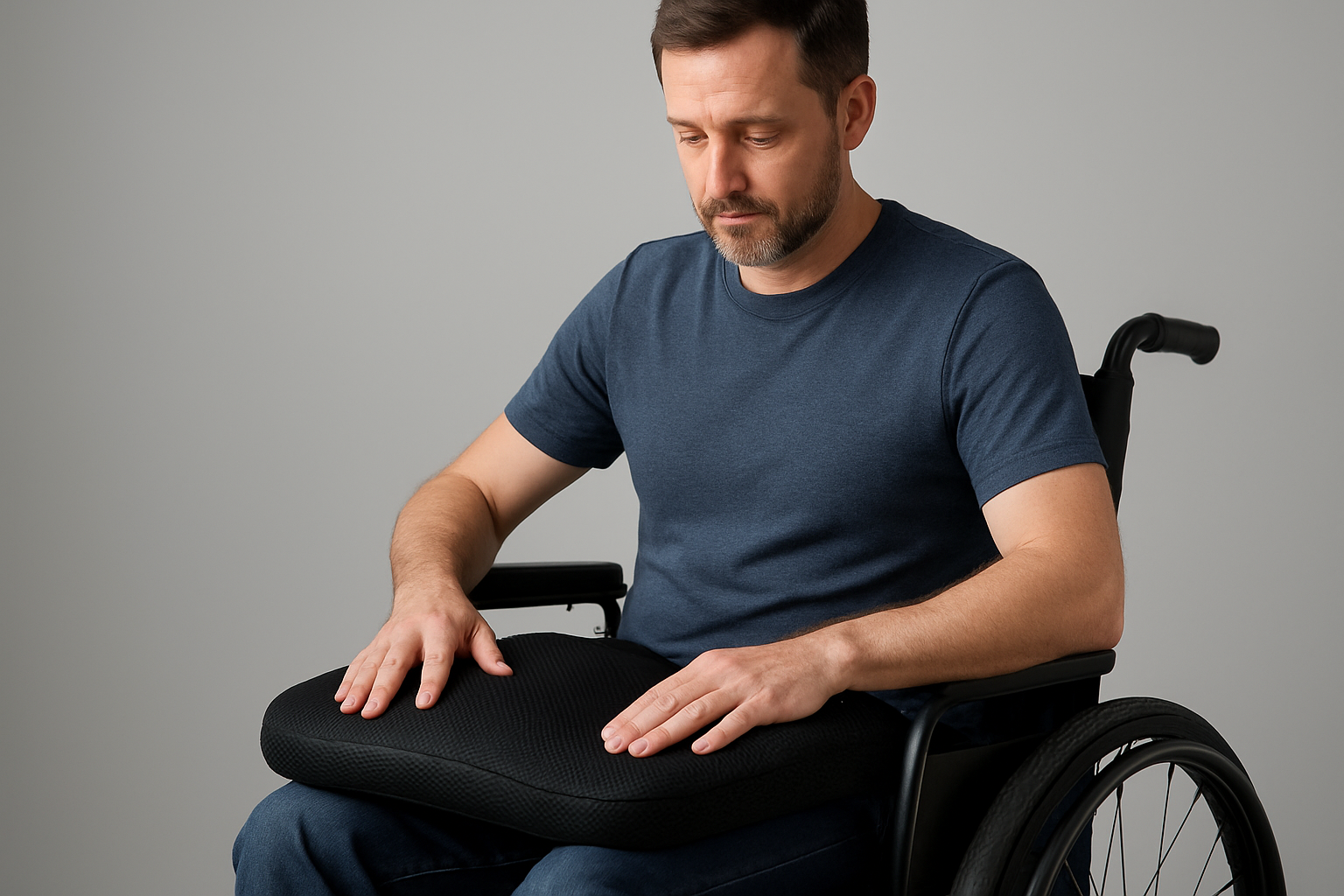
Skin likes two things: pressure spread and pressure breaks. Research often cited by rehab clinicians shows that immersion plus envelopment reduces peak pressures under the sitting bones, while regular tilt or weight shifts refresh tissue perfusion. If you can, schedule pressure offloading every 30 minutes for at least 1-2 minutes; power tilt makes this easier when fatigue hits. Postural alignment matters too: when the pelvis slides, shear forces increase, which raises injury risk. Meanwhile, temperature and moisture can compound problems, so breathable covers and microclimate fabrics pay off, especially in hot weather. While every body is different, combining an appropriate cushion with a tilt routine and a stable backrest is a proven trio for comfort and skin safety.
| Goal | What Helps | How to Check Progress | Typical Timeline |
|---|---|---|---|
| Lower Peak Pressures | High-immersion cushion; tilt 20-30 degrees | Pressure map comparisons; hotspot relief notes | 1-3 weeks of daily use |
| Reduce Pain | Adjust seat depth; add lumbar; change cushion material | Pain scale logs before/after adjustments | 2-4 weeks with follow-up |
| Improve Endurance | Optimize posture; program softer acceleration | Track hours in seat and activity distance | 2-6 weeks adaptation |
Medicare and Insurance Approval Essentials, Simplified
Medicare Part B [Medicare Part B (Part B)] and many insurers cover medically necessary mobility equipment when it enables safe performance of activities in the home. The common thread in approvals is clarity: a face-to-face exam, a letter of medical necessity that ties features to deficits, and a quote that matches the Local Coverage Determination (LCD) [Local Coverage Determination (LCD)] language. Your clinician should document why a cane, walker, or manual chair won’t meet your mobility-related activities of daily living (MRADLs) [Mobility Related Activities of Daily Living (MRADLs)] and why a specific power chair feature is required. Keep dates consistent and signatures legible. And yes, your voice matters: personal notes describe real consequences like missed meals or unsafe transfers, which can strengthen the case.
| Required Item | Who Completes It | Key Details Insurers Expect | Common Pitfall |
|---|---|---|---|
| Face-to-Face Exam | Physician, nurse practitioner, or physician assistant | Home-based needs; why lesser devices fail | Missing or mismatched dates |
| Letter of Medical Necessity | Physician with occupational therapist (OT)/physical therapist (PT) input | Function limits; exact features justified | Generic wording; no link to MRADLs |
| Vendor Quote with HCPCS Codes | Durable medical equipment (DME) provider [durable medical equipment (DME)] | Part numbers; configured options; pricing | Missing modifiers; code mismatches |
| Home Assessment | Clinician or qualified assessor; vendor can provide measurement or remote guidance | Door widths; ramp needs; turning space | No documentation of barriers |
| Trial/Verification | User with vendor support | Fit notes; safety observations; battery range | No real-world test data |
While rules evolve, aligning your story with the Centers for Medicare and Medicaid Services (CMS) [Centers for Medicare and Medicaid Services (CMS)] framework stays timeless: show need, show benefit, and show why this configuration is the least costly medically appropriate option. If private insurance is your route, similar logic applies, but plan-specific criteria may add steps. When in doubt, ask your provider to cite policy text in your documentation to reduce back-and-forth. You deserve a yes that sticks the first time.
Choose the Right Motorized Wheelchair: Standard, Heavy-Duty, or Lightweight Foldable
Once your seating and goals are clear, it is time to match a drive platform. Standard power chairs balance indoor maneuverability with everyday outdoor use. Heavy-duty models widen the seat options, boost weight capacity, and use beefier motors and batteries for hills and uneven paths. Lightweight, foldable designs prioritize portability, apartment living, and quick trips in compact cars. Consider your body mass, height, typical terrain, and whether you or a caregiver loads the chair. Then weigh battery range, turning radius, suspension, and service access. A good fit is part dimensions, part environment, and part lifestyle.
| Category | Typical Capacity | Strengths | Watch Outs | Great For |
|---|---|---|---|---|
| Standard Motorized | Up to 300 lb (136 kg) | Tight turns; balanced range; versatile options | May struggle on steep grass or gravel | Apartments, offices, smooth neighborhood routes |
| Heavy-Duty Motorized | 300-450 lb (136-204 kg)+ | Powerful torque; wider seats; robust frames | Larger footprint; heavier to transport | Rural paths, hills, larger riders, extended outings |
| Lightweight Foldable | Up to 250-300 lb (113-136 kg) | Easy transport; quick storage; travel-friendly | Shorter range; less suspension | Car travel, small homes, frequent folding |
At Go Wheelchairs, you can compare a wide range of standard and heavy-duty motorized wheelchairs side-by-side, filter by seat width and battery range, and even see estimated turning clearance for common rooms. If you need something nimble, their lightweight, foldable wheelchair designs can be paired with pressure-relieving cushions and supportive backs just like larger chairs. Because selection is just the beginning, their team helps you test-drive, offers guidance on setting up profiles, and assists with planning service intervals, so performance stays consistent over time.
How Go Wheelchairs Helps You Put This Plan in Motion

Choosing a chair can feel like juggling comfort, terrain, and policy fine print. Go Wheelchairs is dedicated to providing reliable, motorized wheelchairs at fair prices with coverage options through Medicare and other health insurance providers. That includes personalized support and guidance, a resources hub offering buying guides, comparison tools, and travel tips, and assistance with insurance and Medicare documentation. You get a partner who can translate your day-to-day goals into seating choices and Healthcare Common Procedure Coding System (HCPCS) [Healthcare Common Procedure Coding System (HCPCS)] codes that make sense to reviewers. And because they carry a wide range of standard and heavy-duty motorized wheelchairs, you are not forced into a compromise that fails six months later.
- Personalized wheelchair support from first call to delivery and follow-up.
- Insurance navigation that aligns documentation with Local Coverage Determination (LCD) [Local Coverage Determination (LCD)] criteria.
- Lightweight, foldable wheelchair options for travelers and apartment dwellers.
- Real-world test-drives, guidance on profile setup, and pressure relief education and resources.
Two quick stories: Maria wanted a compact mid-wheel power chair that could pivot in a narrow galley kitchen without losing skin protection. With a hybrid cushion, 25-degree tilt, and “kitchen mode,” her wrist pain dropped within weeks. Dante, a weekend park explorer, needed heavy-duty torque and wider seating, plus a breathable back for hot days. After a curb test and programming tweaks, he gained the hill-climbing power he wanted and the documentation clarity his insurer needed. Different lives, one process: a plan that fits the person first.
Putting It All Together: Your Action Checklist
You do not have to do everything at once. Start by writing your goals, schedule your clinical evaluation, and gather measurements. Then shortlist two cushions and two drive bases to trial. Ask your vendor to provide a clear quote with codes and to explain why each feature exists. Finally, loop in a clinician for a strong letter of medical necessity that ties features to function at home. This is the fast lane to comfort you can feel and approval you can count on.
- List top three goals and toughest spaces you navigate daily.
- Book a seating evaluation with a clinician and bring your notes.
- Measure seat width, depth, back height, and lower leg length.
- Trial two cushion types and record pressure relief results.
- Test-drive two drive bases and program at least two profiles.
- Collect documentation: face-to-face exam, letter, vendor quote with codes.
- Submit, follow up weekly, and keep a log of outcome dates and calls.
As you work through this, remember: a strong plan is as much about your voice as it is about measurements. Keep describing how changes feel in your body and your day. The clearer the picture, the better your personalized wheelchair support becomes.
Final Thoughts Before You Roll
Comfort, pressure relief, and coverage can live in the same plan when you build deliberately. Imagine the next 12 months with fewer pressure scares, smoother transfers, and a chair that handles your favorite places without drama. If you could change one daily struggle first, which part of your personalized wheelchair support would you upgrade today?
Additional Resources
Explore these authoritative resources to dive deeper into personalized wheelchair support.
Elevate Personalized Wheelchair Support with Go Wheelchairs
Access a wide range of standard and heavy-duty motorized wheelchairs plus guidance on Medicare approval, so you gain reliable mobility, real coverage, and everyday independence.