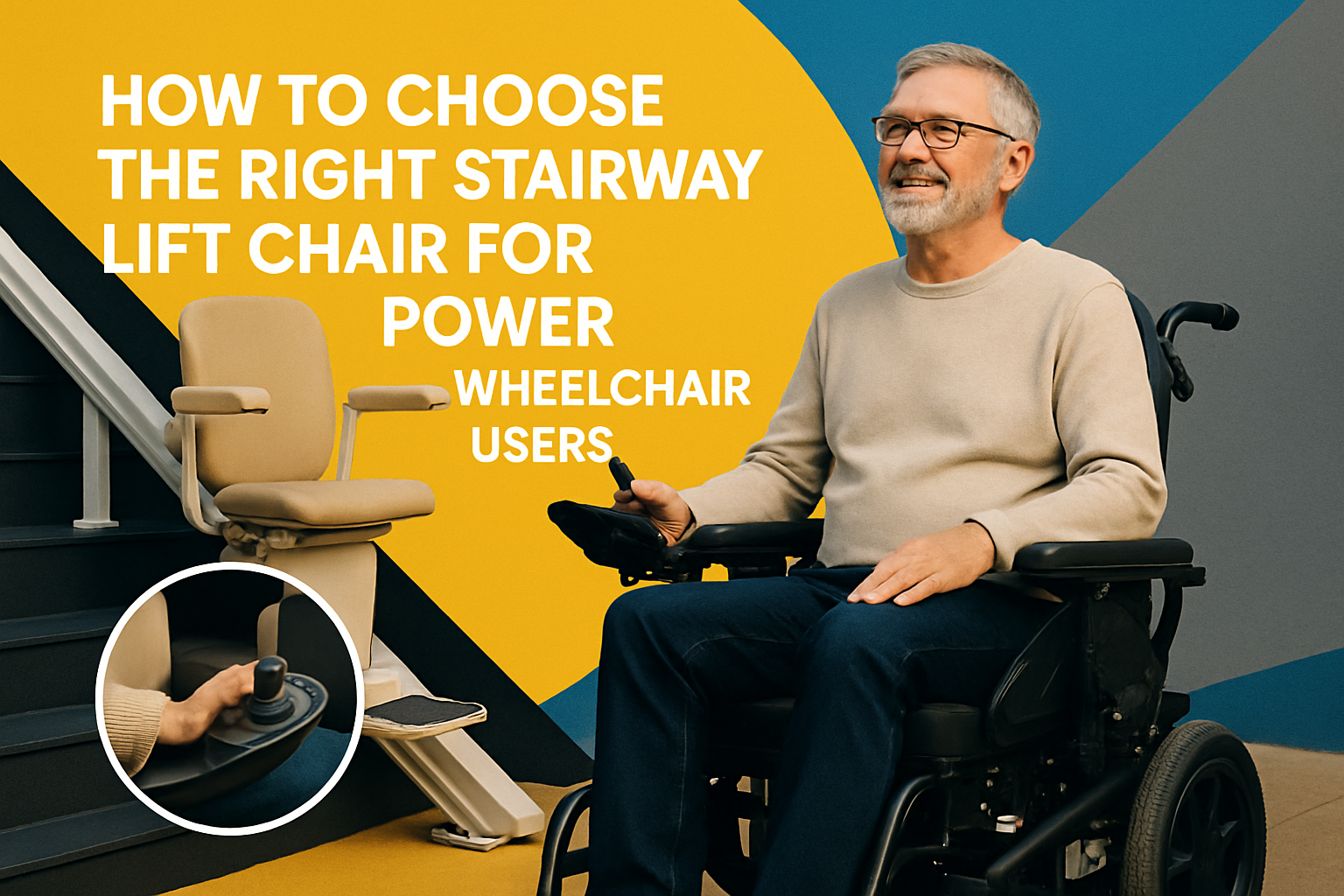
If you use a power wheelchair, a stairway lift chair can unlock your whole home without marathon transfers or risky climbs. The tricky part is figuring out compatibility, real-world costs, and whether Medicare [Centers for Medicare & Medicaid Services (CMS)] will help. I learned this firsthand when my neighbor, Sam, tried a bargain model that looked perfect online but pinched his staircase, snagged the landing, and left him stranded between floors during an outage. There is a better way. In this guide, we will demystify the key choices, show you how to measure once and buy right, and explain the coverage puzzle so you can move confidently.
Before we dive in, a quick note on where Go Wheelchairs fits into your journey. We specialize in reliable motorized wheelchairs at fair prices, with insurance and Medicare guidance baked in, plus a resources hub full of buying guides and comparison tools. That matters because the best stair solution starts with the right chair: seat heights, turning radii, and weight all affect stairway safety. This guide focuses on compatibility considerations between wheelchairs and stair solutions; Go Wheelchairs does not manufacture or install stair lifts or vertical platform lifts (VPLs). We provide guidance on chair selection, point you to vetted lift dealers and local installers, and support you with a wide range of standard and heavy‑duty motorized wheelchairs, personalized support, and step‑by‑step coverage help.
Stairway Lift Chair Basics: What It Can and Can’t Do for Power Wheelchair Users
A traditional stairway lift chair is a seat that rides on a rail up your stairs. It is brilliant for moving a person, not the power wheelchair itself. That means you typically transfer from your power chair to the stair lift seat at the bottom, ride up, then transfer to a second mobility device at the top. If you have good transfer ability or caregiver support, this can be smooth and safe. However, if independent transfers are difficult, consider alternatives such as a vertical platform lift, often called a VPL [Vertical Platform Lift], which carries you and your chair together. Note: Go Wheelchairs does not sell or install stair lifts or VPLs; we can advise on chair compatibility and refer you to qualified local installers.
It also helps to distinguish between rail-mounted stair lifts and portable stair-climbing chairs. Portable models can be great for travel or temporary use, but they usually require a trained helper and may not fit narrow steps. Rail-mounted lifts are permanently installed, feel stable, and include safety features like swivel seats, footrests, and seat belts. Most straight stair lift models support roughly 300–350 pounds; heavy‑duty models and VPLs can offer higher capacities (often 400+ pounds). Meanwhile, curved lifts are custom-built to follow turns and landings. Knowing these basics prevents the most common mismatch: buying for price, not for your body, home, and transfer style. These descriptions are general information — for purchase, installation, or rentals you should consult a qualified installer or dealer.
- Best fits for a fixed stairway lift chair:
- You can transfer with or without a slide board, or have caregiver assistance.
- Stairs are at least moderately wide, with clear landings at top and bottom.
- Your daily routine benefits from quick, stable seated rides between floors.
- Consider a VPL [Vertical Platform Lift] or a first-floor living plan if:
- Transfers are not safe or realistic day to day.
- Your home has very tight stairs or multiple severe turns.
- You need to remain in your power wheelchair throughout the ride.
Compatibility Checklist: Measurements, Transfers, and Weight Ratings
Great choices start with a tape measure. First, measure stair width from wall to railing or rail to rail. Many lifts can work with 29 inches of clear width, but some need more, so confirm model specs. Next, measure the run and rise of your staircase, count steps, and note any landings or turns. At the top and bottom, measure landing depth to ensure safe mounting and dismounting. Finally, note doorways near the stairs that could impede swiveling. Write everything down, take photos, and sketch your staircase. Those little details prevent surprise change orders later.
Then, look at your transfer method. Do you pivot-stand and sit, use a slide board, or prefer a caregiver-assisted transfer? A powered swivel seat, flip-up armrests, and a folding footrest can make transfers smoother. Seat height should align with your wheelchair cushion height so you are not transferring uphill. Confirm the combined weight of you and any carry-on items against the lift’s rated capacity, adding at least a 15 percent buffer for safety. If you are near the upper limit, prioritize heavy-duty lift models or VPL options and consider whether a VPL will better serve you over time. For specifics on matching seats and heights, consult your clinician and a reputable lift dealer.
| Item | How to Measure | Target/Notes |
|---|---|---|
| Stair width | Wall to railing or rail to rail at multiple points | Typically 29 inches minimum for many models; wider is better |
| Total run and rise | Count steps, measure tread depth and riser height | Needed to size rail length and ride time |
| Top landing | Depth from last nosing to nearest obstacle | Preferably 36 inches or more for safe swiveling |
| Bottom landing | Depth from first tread to obstacle or doorway | Enough space to approach, transfer, and park wheelchair |
| Power source | Location of nearest outlet | Lifts recharge via household alternating current [AC]; battery backup rides during outages |
Costs, Financing, and What Medicare [Centers for Medicare & Medicaid Services (CMS)] Really Covers
Let’s talk money, because sticker shock is real. Industry averages show that straight stair lifts often land between 2,000 and 4,000 dollars installed, while curved lifts that navigate turns can range from 8,000 to 15,000 dollars. Outdoor models usually run 4,000 to 7,000 dollars due to weatherproofing. Expect annual maintenance of 200 to 400 dollars and battery replacement every two to five years for 200 to 500 dollars. If you need construction to widen a stair or add an outlet, plan a separate line item. Good news: a careful in-home assessment and accurate measurements can remove up to 80 percent of surprise costs, according to dealer surveys.
Now, coverage. Traditional Medicare Part B does not classify a stairway lift chair as DME [Durable Medical Equipment], so it generally is not covered. Some MA [Medicare Advantage] plans offer home modification stipends or allowances that can apply to stair lifts, but details vary by plan and state. Medicaid programs, especially HCBS [Home and Community Based Services] waivers, can sometimes fund lifts when they prevent institutional care. The VA [United States Department of Veterans Affairs] may assist through grants such as HISA, SAH, or SHA when service-related conditions apply. Local non-profits and state assistive technology programs sometimes provide loans or grants. The big takeaway: verify your exact plan benefits in writing before you commit.
| Program | Typical Position | What to Ask |
|---|---|---|
| Medicare Part B | Generally does not cover stair lifts as DME [Durable Medical Equipment] | Confirm denial policy and any exceptions in your region |
| MA [Medicare Advantage] | Some plans include supplemental home modification benefits | Ask about annual allowance, eligible vendors, prior authorization |
| Medicaid and HCBS [Home and Community Based Services] Waivers | May cover lifts when enabling home-based living | Request waiver eligibility, caps, waiting lists, and approved installers |
| VA [United States Department of Veterans Affairs] Grants | Possible support via HISA, SAH, or SHA | Check eligibility, required medical documentation, and scope of modifications |
| State/Local Programs | Low-interest loans or targeted grants | Search assistive technology programs and aging services |
To stretch your dollars, bundle decisions. If your current power chair is heavy or tall and complicates transfers, talk with Go Wheelchairs about a compact, heavy-duty option with adjustable seat height that simplifies both ends of the ride. Ask your clinician, such as an occupational therapist [OT] or physical therapist [PT], to document mobility-related needs and transfer safety. For MA [Medicare Advantage] plans, call member services and request the policy page for home modifications. For Medicaid HCBS [Home and Community Based Services], speak to your case manager early, since approvals can take months. And always keep quotes, measurements, and medical notes organized in a single folder for quick authorizations.
Feature Comparison: Choosing the Right Configuration
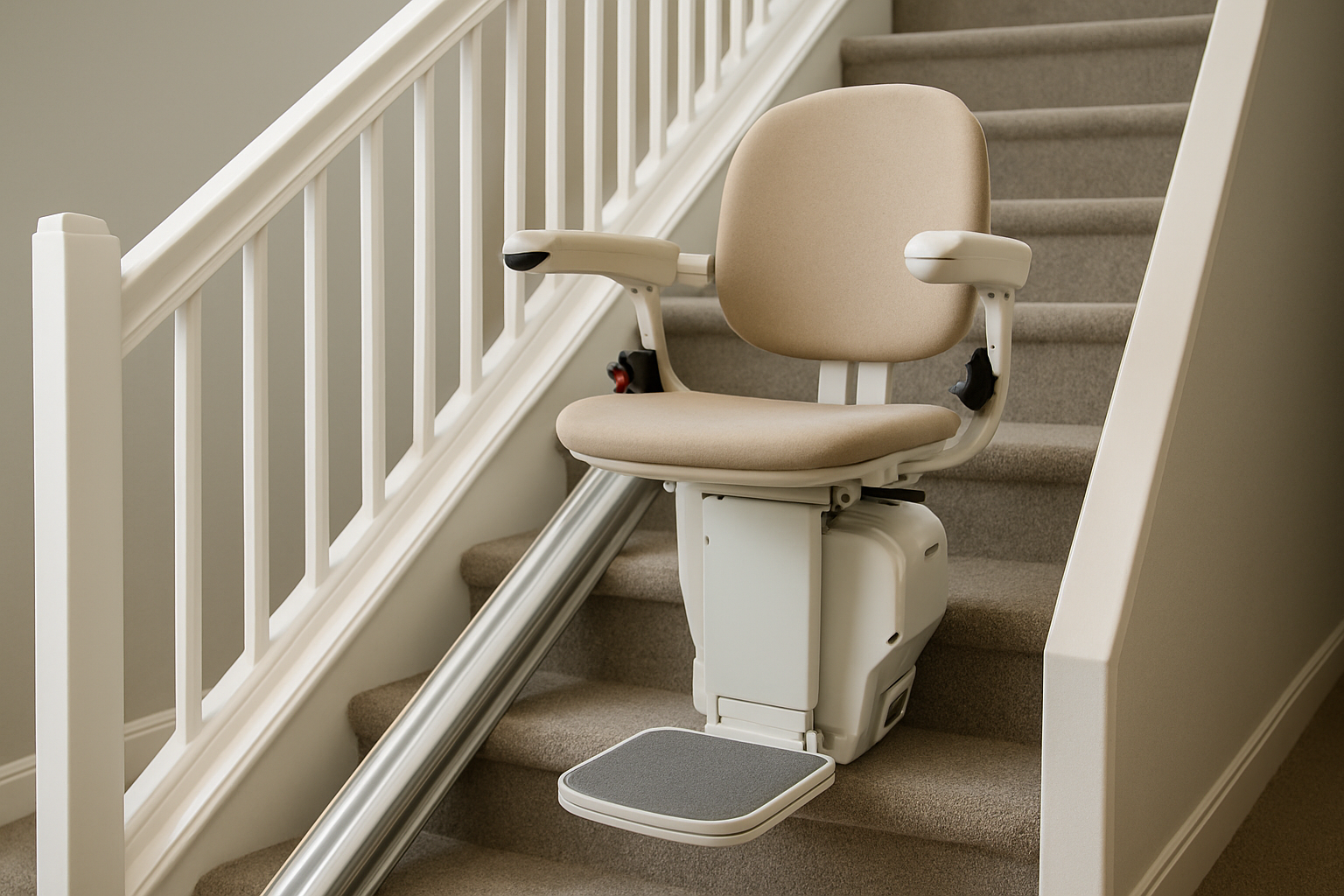
Once you know your measurements and transfer style, features become your best friend. On straight stairs, a compact rail minimizes hallway pinch points. On curved stairs, a park position at the top landing keeps the seat out of the walkway. Consider powered options like a motorized swivel seat or folding footrest if shoulder strength is limited. Battery backup is non-negotiable for most homes, letting you ride several trips during a power outage. Outdoor models need sealed electronics and weather covers. And if multiple people will use the lift, adjustable seat heights and armrests are worth their weight in peace of mind.
| Type | Typical Installed Cost | Weight Capacity | Lead Time | Best For | Considerations |
|---|---|---|---|---|---|
| Straight | 2,000–4,000 dollars | 300–350 pounds (heavy-duty up to 400 pounds) | 1–2 weeks | Single-run stairs with no turns | Compact rail, quick install, verify stair width |
| Curved (custom) | 8,000–15,000 dollars | 300–350 pounds (some heavy-duty options) | 3–6 weeks | Stairs with turns or landings | Custom rail, longer lead time, plan park positions |
| Outdoor | 4,000–7,000 dollars | 300–350 pounds | 2–4 weeks | Exterior steps and porches | Weatherproofing, covers, regular cleaning |
| VPL [Vertical Platform Lift] | 9,000–20,000 dollars+ | Higher capacities (often 400+ pounds) | 4–10 weeks | Riding while seated in your wheelchair | Requires more space, permits, higher budget |
Real-World Scenarios: How Go Wheelchairs Helps You Match Wheelchair and Stairs
Here is where the rubber meets the rail. Maya lives in a 1950s home with narrow stairs and a sharp top landing. She uses a compact power chair from Go Wheelchairs with adjustable seat height and a tight turning radius. By aligning her cushion height with the lift seat and adding a powered swivel, transfers clicked. The installer trimmed a handrail bracket to gain an extra inch, and Maya practices a three-step transfer routine coached by her OT. The result is consistency she can count on, with battery backup rides for storm season.
Rodrigo, on the other hand, needed a heavy-duty solution. He weighs 380 pounds and uses a robust motorized wheelchair for long days at work. Go Wheelchairs suggested he consult with a lift installer about a heavy-duty stair lift rated for roughly 400 pounds and recommended a wheelchair model with a slightly lower seat-to-floor height, making transfers level at both landings. He used an MA [Medicare Advantage] home modification allowance to offset costs and added a folding rail at the bottom to keep a hallway clear. Meanwhile, Evelyn opted for a VPL [Vertical Platform Lift] through a local installer because her transfers were inconsistent. The ability to remain in her chair made daily life safer and faster, a win confirmed by her PT and covered through a Medicaid HCBS [Home and Community Based Services] waiver.
With every scenario, the wheelchair and lift act as a team. That is why Go Wheelchairs offers a wide range of standard and heavy-duty motorized wheelchairs, lightweight foldable designs for travel, and personalized support that includes insurance and Medicare assistance. We help you compare turning radii, seat heights, joystick placement, and cushion thickness against your staircase profile. Then we point you to vetted installers, share measurement worksheets, and organize documentation for MA [Medicare Advantage], Medicaid, or VA [United States Department of Veterans Affairs] benefits. The outcome is not just a purchase, but a plan you can live with.
Installation, Maintenance, and Safety Checklist
Installation is usually a single-day process for straight lifts and a bit longer for curved rails. Reputable installers anchor the rail to stair treads rather than the wall, which keeps loads where they belong. Ask for a demo ride with you transferring both directions while the installer is present. Verify the seat belt fits comfortably, the armrests lock, and the swivel clears your landing. Also confirm the charger location, test battery backup rides, and practice folding the footrest and arms to keep hallways usable for others. Note that Go Wheelchairs does not perform lift installations — we recommend using a qualified local installer for purchase and installation work.
After install, maintenance is your friend. Schedule an annual checkup to lubricate rails, verify batteries, and check safety sensors. Keep the rail free of dust, pet hair, and spilled drinks, and avoid hanging bags that could interfere with sensors. If you live near the coast or use an outdoor lift, expect more frequent cleaning and inspections. For safety, keep a second mobility device at the top landing if you rely on a stairway lift chair, and consider a transfer pole or grab bar where you mount and dismount. Finally, review household evacuation plans with both the lift and stairs in mind, just in case.
The Smart Shopping Sequence: Step-by-Step Path to the Right Fit
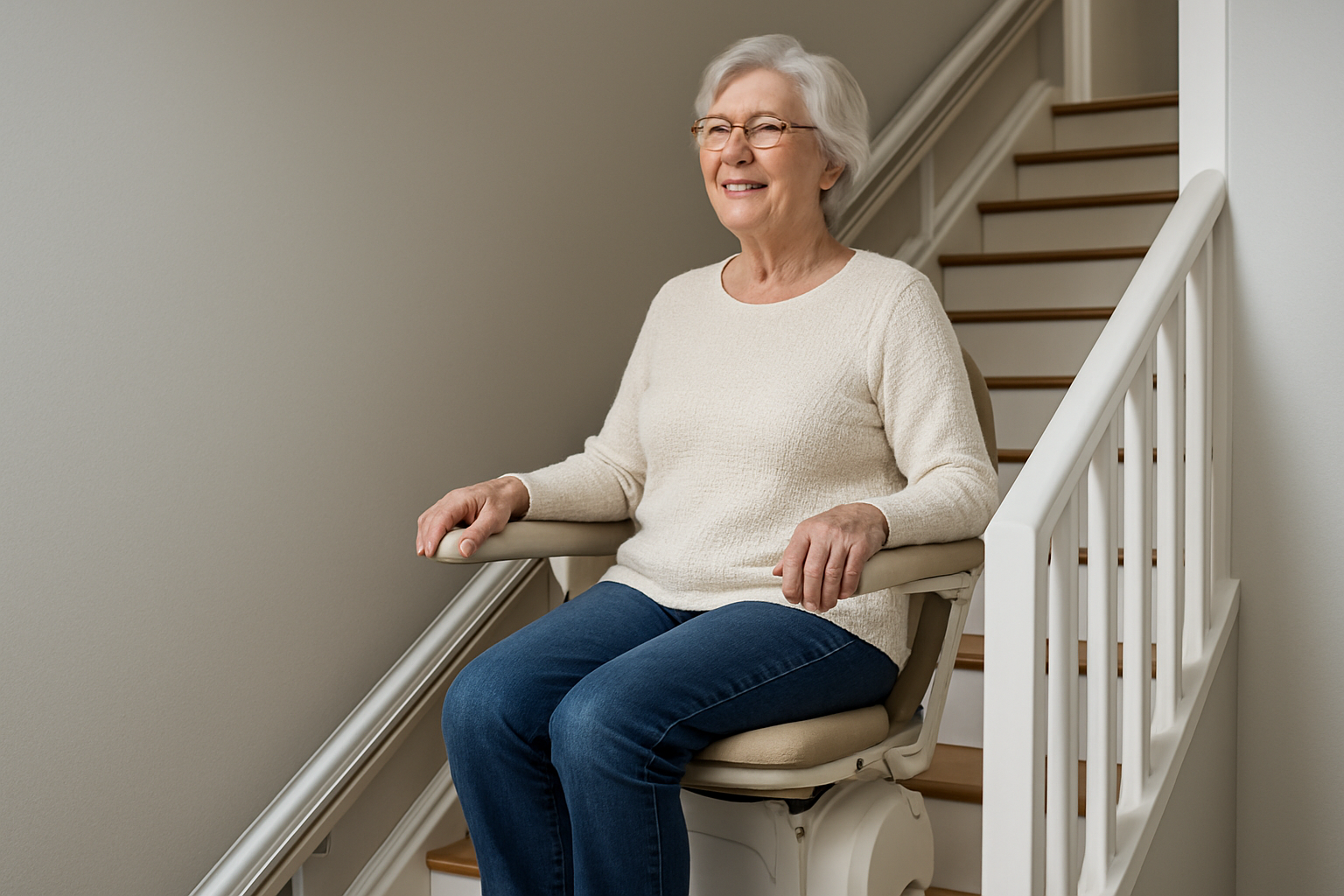
Want a process you can trust? Start with a wheelchair review. Confirm your seat height, cushion thickness, turning radius, and overall width. If you are due for a chair refresh, book a consult with Go Wheelchairs to explore models that improve transfers while meeting coverage requirements. Next, complete the measurement checklist in this article and take photos. Share those with both your clinician and a reputable lift dealer or installer. Ask dealers for a written scope, installation plan, and specific model numbers with capacities.
Then, line up coverage. For MA [Medicare Advantage], request documentation that explicitly lists home modification benefits and prior authorization steps. For Medicaid HCBS [Home and Community Based Services], involve your case manager early and gather any clinical letters. If you are a veteran, speak to the VA [United States Department of Veterans Affairs] about HISA, SAH, or SHA. Finally, select features that match your transfer method: powered swivel, folding rail, key lock for child safety, and battery backup. With those boxes checked, you will feel the clear difference between a guess and a grounded plan.
| Your Situation | Likely Best Option | Top Features to Prioritize |
|---|---|---|
| Narrow straight stairs, good transfers | Straight stairway lift chair | Compact rail, powered swivel, folding footrest |
| Curved stairs, caregiver assistance | Custom curved lift | Park position at landings, seat belt, call/send remotes |
| Transfers unsafe or inconsistent | VPL [Vertical Platform Lift] | High capacity, gated platform, permit support |
| Outdoor steps to porch | Outdoor lift or VPL [Vertical Platform Lift] | Weatherproofing, cover, corrosion-resistant hardware |
Go Wheelchairs: Guidance That Connects Wheelchairs, Coverage, and Your Stairs
People often ask, who coordinates all of this? At Go Wheelchairs, we take the lead on the parts that make everything else easier. Our wide range of standard and heavy-duty motorized wheelchairs means you can select a model that makes transfers simpler, including lightweight, foldable designs for travel days and tighter homes. Our team offers personalized support, paperwork checklists, and insurance and Medicare assistance, plus a resources hub with buying guides, comparison tools, and travel tips. We do not hard-sell stair lifts. Instead, we help you make a connected plan that respects your budget, your coverage, and your daily routine.
Because individuals with mobility challenges often struggle to find dependable, affordable solutions that match lifestyle and coverage, our mission is to be that steady partner. We map your wheelchair details to your staircase, introduce vetted installers, and help you document medical need for MA [Medicare Advantage], Medicaid HCBS [Home and Community Based Services], or VA [United States Department of Veterans Affairs] programs. Along the way, we explain trade-offs clearly: When a straight lift beats a curved, when a VPL [Vertical Platform Lift] saves transfers, and how a small change in seat height rewrites your daily comfort. The end result is greater independence with fewer surprises and a stairway lift chair setup you can trust.
Frequently Asked Questions
Note: This FAQ provides general information about stair lifts and VPLs. Go Wheelchairs does not sell or install stair lifts or VPLs; consult a licensed installer for purchases and code questions.
Do stair lifts damage walls? Most rails mount into stair treads, not walls. Can I use it during an outage? Yes, battery backup usually offers several rides; confirm the exact rating. What about building codes? Requirements vary by location and the authority having jurisdiction, so ask your installer to verify permits. Will insurance cover maintenance? Rarely. Most plans consider maintenance a homeowner expense. How long do batteries last? Typically two to five years with regular charging and clean rails; avoid letting the unit sit uncharged for long periods.
What if my stairs are too narrow? Some ultra-slim models exist, but safety comes first. Consider a VPL [Vertical Platform Lift] or a first-floor living plan if clearances are not safe. Should I buy used? You can save, but measure carefully and check parts availability, warranty transfer, and installation costs, which can erase initial savings. Can one lift serve two users? Yes, but match seat height to both, or choose an adjustable model and keep a second mobility device on each floor. Finally, should I choose powered or manual swivel? If transfers are tight or strength varies day to day, powered swivels are worth it.
Now that you have the lay of the land, here is a compact summary that ties it all together: get measurements, match features to transfers, verify capacity with room to spare, and confirm coverage in writing. Then, coordinate wheelchair specifics with your chosen lift or VPL [Vertical Platform Lift] installed by a qualified professional. With the right plan, your home can feel easy again, one level at a time.
Final Thoughts
Measure smart, match features to your body and home, and verify benefits before you buy.
Imagine gliding between floors on a schedule that suits you, with transfers that feel automatic and gear that just works. In the next 12 months, a few intentional choices could add hours of freedom to every week.
What would change for you if each ride felt effortless on the perfect stairway lift chair?
Additional Resources
Explore these authoritative resources to dive deeper into stairway lift chair.
Plan Your Stairway Lift Chair Strategy with Go Wheelchairs
Go Wheelchairs delivers a wide range of standard and heavy-duty motorized wheelchairs with expert guidance and Medicare [Centers for Medicare & Medicaid Services (CMS)] support so you move confidently and independently.