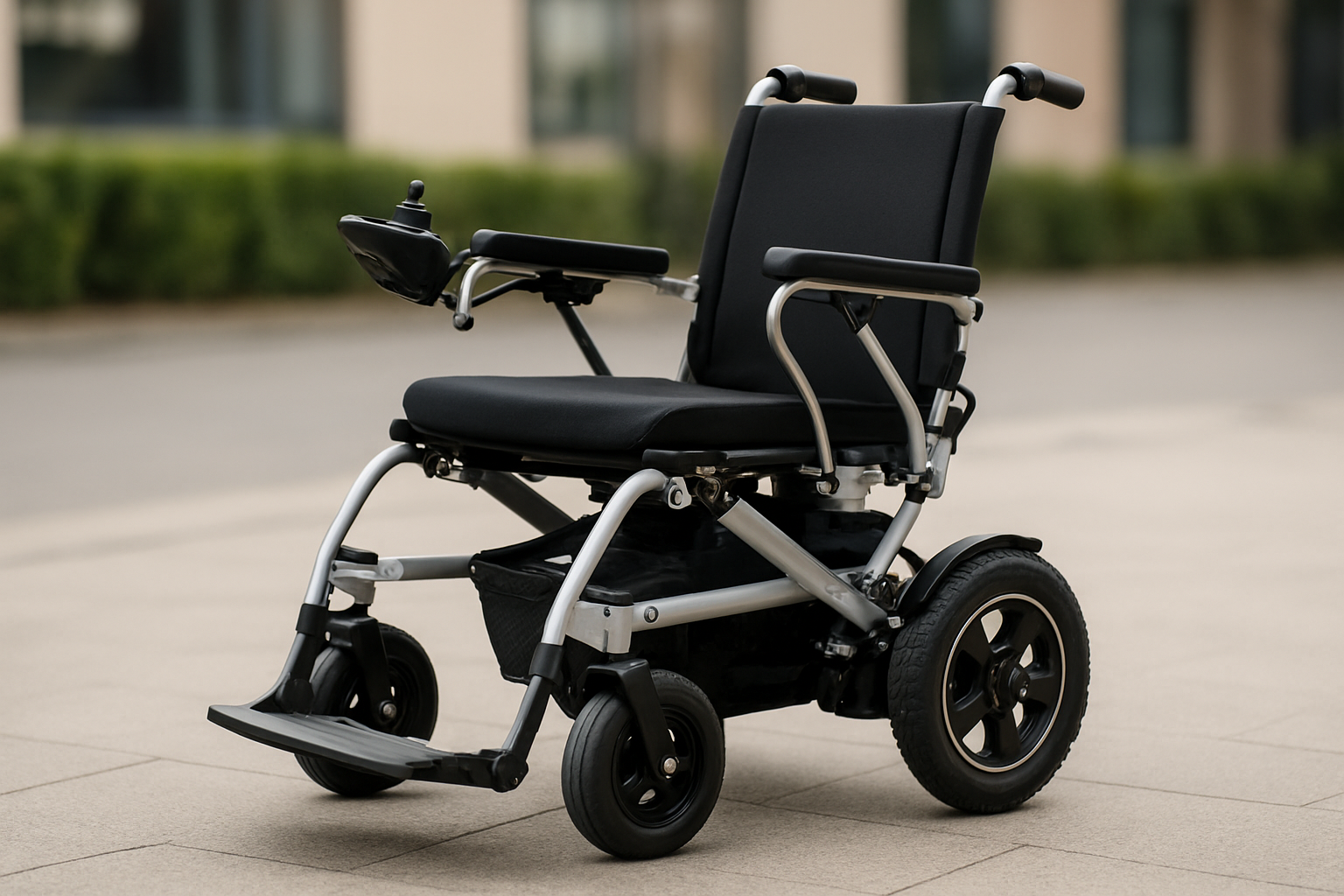
If you have ever juggled a gate check tag, a carry-on, and a folded chair at the same time, you know the right gear changes everything. Choosing a lightweight folding electric wheelchair for travel is about more than a number on a scale. It is about confidence that your chair will slide into a car trunk, spin through tight hotel hallways, and clear airline battery checks without drama. In this guide, I will walk you through my favorite airline-ready, narrow-turn options and share practical Medicare insights, so you can decide with clarity and travel with ease.
I still remember helping a client the night before a cross-country flight. We measured the folded footprint against a small hatchback trunk and printed the lithium-ion battery letter. Ten minutes later, the stress melted away because the plan was clear. That is the magic of pairing the right chair with the right prep. You will find model picks below, side-by-side comparisons, and checklists you can actually use at 5 a.m. in a busy terminal. And when you want a partner who will walk the last mile with you, Go Wheelchairs is set up to help with personalized guidance and insurance support.
What to Look for in a Lightweight Folding Electric Wheelchair for Travel
The best travel chairs strike a sweet balance of strength, compactness, and comfort. Weight matters, of course, but so do folded dimensions and how quickly you can collapse and secure the chair. Look for a frame that folds in one motion and fits in a mid-size trunk or the back seat without a wrestling match. As a rule of thumb, a folded footprint around the size of a large suitcase makes travel life easier. Beyond that, prioritize a responsive joystick, dependable electromagnetic brakes, and batteries that meet airline rules with clearly labeled watt-hours and a printed test certificate from the United Nations [UN] 38.3 standard.
Turning ability is the other half of the travel equation. Hotels, cruise cabins, and family homes often have narrow doorways in the 28 to 32 inch range, so a compact chair width and tight turning radius help you move without three-point turns. Pay attention to seat height and width as well, because comfort on the plane and at your destination comes from a fit that supports your posture without pressure points. Finally, consider range and terrain. If your days include museum floors, tourist sidewalks, and the occasional cobblestone, pick grippy tires, a stable wheelbase, and a battery that comfortably exceeds your longest daily outing.
- Target folded size: similar to a large checked suitcase, with the heaviest piece under about 45 pounds for easier lifting.
- Airline readiness: lithium-ion battery labeled with watt-hours, removable, and tested to United Nations [UN] 38.3; carry a printed battery letter.
- Narrow-turn comfort: compact overall width and a design that pivots smoothly in tight hallways and elevators.
- Ride quality: supportive cushion, adjustable armrests, and a joystick you can place left or right without tools.
- Reliability: brushless motors, electromagnetic braking, and accessible service through an authorized supplier.
8 Best Airline-Ready, Narrow-Turn Picks You Can Trust
Below are eight traveler favorites that fold quickly, handle tight spaces, and offer battery options airlines typically accept when documented correctly. Specifications vary by configuration, so treat this list as a practical starting point and confirm details before you fly. I chose models that mix ultra-light frames with thoughtful ergonomics and strong service reputations, so you can match your destinations and daily routines to a chair that truly fits. After the list, you will find a comparison table to scan weights, fold sizes, and best-use notes side by side.
Watch This Helpful Video
To help you better understand lightweight folding electric wheelchair for travel, we’ve included this informative video from Mobility Scooters Direct. It provides valuable insights and visual demonstrations that complement the written content.
- Pride Jazzy Carbon – Carbon fiber meets portability. It folds fast, feels solid under pressure, and rides smoothly indoors. Great for city breaks and hotel corridors where every inch counts. Best for travelers who want a familiar brand with established support.
- WHILL Model F – A smart folding design with a confident, almost scooter-like stance. It maneuvers gracefully in tight spaces and keeps the controls intuitive. Ideal if you value a sleek look and easy boarding at the gate.
- Journey Air Elite – Impressively light for quick lifts into the trunk. It is one of those chairs that makes spontaneous day trips feel possible again. Choose this if burden-free loading is your top priority.
- ComfyGO IQ-7000 Series – Folds compactly and offers travel-friendly lithium-ion battery options. You get a comfortable seat and responsive joystick without overcomplicating the design. A good balance of features and value.
- Porto Mobility Ranger D09 – A popular foldable pick with a steady ride and useful travel accessories. It is airline-friendly when you follow battery procedures and pack the paperwork. Nice for mixed indoor and outdoor use.
- Miracle Mobility 8000 Series – Emphasizes portability with a straightforward fold and supportive seating. The compact footprint behaves well in narrow hallways and small elevators. Solid for cruise cabins and boutique hotels.
- Forcemech Navigator – A rugged feel in a foldable form factor. It handles varied sidewalks while staying compact for airline check-in. Consider it if you need a sturdier travel chair with simple controls.
- Feather Power Chair – As the name suggests, it is all about lightness and everyday convenience. The slim profile is a friend to tight doorways and crowded terminals. Best if minimal weight is your non-negotiable.
Choosing among these often comes down to your lifting routine, your typical door widths, and how much time you spend indoors versus outdoors. If you regularly ride in tight spaces and want the smallest feel, short wheelbases and compact widths pay off. If you will tackle uneven paths, prioritize tires and stability over a few saved pounds. And remember, airlines care about battery labeling and documentation. Any of these chairs can be “airline ready” when you pack the right papers and follow crew instructions calmly and confidently.
| Model | Approx. Chair Weight | Typical Folded Size | Narrow-Turn Notes | Airline Battery Readiness | Weight Capacity | Best For |
|---|---|---|---|---|---|---|
| Pride Jazzy Carbon | About 40 to mid 40s pounds | Suitcase-like, compact thickness | Confident indoors, slim profile | Lithium-ion, removable, labeled watt-hours | Commonly around 300 pounds | Frequent flyers wanting brand support |
| WHILL Model F | About low to mid 50s pounds | Folds vertically, easy upright roll | Smooth pivoting in tight hallways | Lithium-ion, airline documentation included | Often around 250 to 300 pounds | Style-forward city and airport travel |
| Journey Air Elite | High 20s to low 30s pounds | Very compact, quick one-hand fold | Excellent for narrow doors | Airline-friendly battery options | Commonly around 240 to 250 pounds | Minimal lifting effort |
| ComfyGO IQ-7000 Series | Mid 40s to low 50s pounds | Compact suitcase-style fold | Responsive joystick control | UN 38.3 tested lithium-ion battery | Often 265 to 300 pounds | Balanced comfort and value |
| Porto Mobility Ranger D09 | Low to mid 50s pounds | Flat fold for trunks | Short wheelbase helps inside | Battery label and letter available | Commonly around 265 to 300 pounds | Mixed indoor and outdoor trips |
| Miracle Mobility 8000 Series | Low 40s to low 50s pounds | Compact, simple latch fold | Easy in small elevators | Airline-friendly with prep | Around 240 to 300 pounds | Cruise cabins and hotels |
| Forcemech Navigator | Low to mid 50s pounds | Flat fold, sturdy frame | Stable turning at low speeds | Clearly labeled lithium-ion battery | About 265 to 300 pounds | Outdoor sidewalks and parks |
| Feather Power Chair | Low 30s pounds | Ultra-compact fold | Great for narrow doorways | Airline-ready battery options | Often around 240 to 250 pounds | Lightest possible lifting |
Note: We list broad ranges because exact specifications vary by configuration and production year. Always confirm dimensions, weight, and battery details with your supplier before booking travel.
Airline Rules Made Simple: Batteries, Forms, and Handling

Airlines follow safety standards that center on your battery. Most carriers allow installed lithium-ion batteries up to about 300 watt-hours, with spare batteries commonly restricted to about 160 watt-hours each in carry-on. Your best friend here is paperwork: bring a printed spec sheet stating the battery’s watt-hours, confirmation that it is tested to United Nations [UN] 38.3, and a brief “airline letter” describing how to remove or isolate the battery if asked. Ask the gate agent for a gate check tag, keep your joystick and cushion with you if they detach, and request manual handling rather than conveyor belts whenever possible.
| Item | General Guidance | What To Carry |
|---|---|---|
| Installed lithium-ion battery | Often allowed up to about 300 watt-hours | Spec sheet with watt-hours, UN 38.3 proof, airline letter |
| Spare lithium-ion batteries | Commonly up to about 160 watt-hours each, carry-on only | Terminals taped, in protective bag or case |
| Battery removal | Some airlines ask to remove or isolate power | Small tool if needed, quick-disconnect know-how |
| Damage prevention | Request gate check and manual handling | Bright “handle with care” note, remove joystick and cushion |
| Rights and support | Air Carrier Access Act [ACAA] protects passengers with disabilities | Customer service contacts and your reservation number |
- Call the airline 48 to 72 hours ahead to note the chair type and battery details; ask for written confirmation by email.
- Arrive early and speak calmly with the gate agent; present your battery letter before they ask.
- At the aircraft door, fold the chair and keep small parts with you; take a photo of the chair pre-check to document condition.
- According to recent reports from the Department of Transportation [DOT], airlines mishandle a small portion of mobility devices; photos and receipts speed up resolution if something goes wrong.
Tight Spaces, Smooth Turns: Real-World Maneuvering Tips
Travel rarely looks like a showroom. It looks like a hotel doorway that opens right against a bed or a restaurant aisle where servers thread the needle. This is where a compact footprint and responsive joystick shine. As a comfortable rule of thumb, many homes and hotels have doors between 28 and 32 inches wide, so chairs with slimmer arm-to-arm width will simply feel easier. You will also notice that shorter wheelbases need less space to pivot, which reduces those multi-point maneuvers that can tire your hands and patience. Aim for a chair that turns predictably at low speeds and does not surge when you feather the joystick.
Let me share a quick story. Maya, a client who loves boutique hotels, kept bumping a narrow hallway corner on the way to breakfast. We moved her joystick inward slightly, lowered her speed setting indoors, and practiced pivoting in a taped circle on her living room floor. The change was instant: fewer taps on the trim, more flow in the morning. If you want a fast home test, tape a 60 inch circle on the floor, drive inside it slowly, and notice where you clip the line. This is a simple take on the Americans with Disabilities Act [ADA] turning space guideline, and it tells you a lot about whether a chair will feel effortless in tight quarters.
- Measure your narrowest doorway, then pick a chair at least two inches slimmer than that number for hassle-free entries.
- Set a lower indoor speed profile for fine control; save the faster setting for open promenades.
- Practice pivot turns in a taped circle before your trip; confidence at home pays off in busy hallways.
- Consider adjustable armrests; sometimes flipping them up gives you the final inch you need to clear a tight spot.
Medicare and Insurance: Practical Coverage Tips That Work
Here is the honest truth most retailers will not lead with: the lightest folding travel chairs are often not covered by Medicare because they are designed for portability rather than everyday medical necessity inside the home. Medicare Part B typically covers Durable Medical Equipment [DME] when your doctor documents that you need a power wheelchair to perform mobility-related daily activities inside your home, and when you obtain the chair from an enrolled Durable Medical Equipment, Prosthetics, Orthotics, and Supplies [DMEPOS] supplier. After you meet the annual deductible, Medicare usually pays 80 percent of the approved amount if the claim is approved, and you are responsible for the remaining 20 percent unless you have supplemental coverage.
So what can you do if you want a travel chair and also need cost help? Many customers pursue a two-chair strategy: use Medicare for a primary, medically necessary standard or heavy-duty power chair that meets Healthcare Common Procedure Coding System [HCPCS] coding and home-use requirements, then self-pay a lightweight folder for travel. Others use Health Savings Account [HSA] or Flexible Spending Account [FSA] dollars, or explore Medicare Advantage plans that sometimes offer allowances for over-the-counter style items. The key is documentation and sequencing. Have a face-to-face exam, ensure your medical records show why a power chair is required at home, work with a supplier that accepts Medicare assignment, and ask for prior authorization when applicable. Go Wheelchairs can guide you through each step and help you avoid common paperwork pitfalls.
| Pathway | What It Typically Covers | Who It Fits | Action Steps |
|---|---|---|---|
| Medicare Part B | Medically necessary DME for in-home mobility needs | People who need a daily power chair at home | Doctor visit, documentation, enrolled DMEPOS supplier, prior authorization if required |
| Medicare Advantage | Medicare benefits plus plan-specific extras | Those willing to follow plan networks and rules | Call plan, confirm benefits, get pre-approvals in writing |
| Medicaid (state programs) | Varies by state; can assist with mobility devices | Eligible individuals based on state criteria | Check state rules, coordinate benefits with your clinic |
| HSA and FSA | Pre-tax dollars for eligible medical purchases | People with employer or individual accounts | Save itemized receipts; verify eligibility with your plan |
| Department of Veterans Affairs [VA] | Mobility benefits for eligible veterans | Veterans with qualifying service and need | Consult VA clinician, confirm device criteria and process |
| Self-Pay + Financing | Full choice of travel models and timelines | Travelers who want the lightest fold now | Compare total cost of ownership, consider protection plans |
- Pro tip: Ask your supplier if the chair has a Healthcare Common Procedure Coding System [HCPCS] code and if they accept assignment; this can lower your out-of-pocket cost on covered items.
- Always keep copies of your prescription, detailed product description, and any prior-authorization approvals to speed claims.
- If coverage is denied, you have appeal rights; request a written explanation and submit supporting clinical notes.
Why Go Wheelchairs + A 5-Minute Fit Checklist
Go Wheelchairs was built to solve a real problem: individuals with mobility challenges often struggle to find affordable, dependable wheelchair solutions that actually match their lifestyle and coverage needs. That is why the team curates a wide range of standard and heavy-duty motorized wheelchairs alongside lightweight, foldable designs for travel. You get more than a shopping cart. You get personalized support, step-by-step help with Medicare and other insurance, and a resources hub filled with buying guides, comparison tools, and real-world travel tips. The goal is simple: you move forward with confidence and independence, backed by people who pick up the phone when it matters.
If you are deciding today, try this five-minute fit checklist. First, measure your narrowest doorway at home and your trunk opening. Second, pick two chairs you can lift comfortably and compare their folded footprints. Third, print the airline battery letter and place it in your travel folder. Fourth, ask a Go Wheelchairs specialist to review your medical notes to see whether a standard or heavy-duty motorized chair may qualify under Medicare while you self-pay a travel folder. Finally, practice a slow pivot in a taped circle at home and dial in the speed settings. These tiny steps unlock smooth trips and less stress from curb to cabin.
| Step | What To Do | Outcome |
|---|---|---|
| Measure | Doorway width and trunk opening | Confirms chair will fit your daily path |
| Lift Test | Try lifting the heaviest piece safely | Prevents surprises on travel day |
| Battery Docs | Print UN 38.3 and watt-hour details | Smoother airline conversations |
| Coverage Plan | Discuss Medicare strategy with a specialist | Maximize benefits, minimize cost |
| Practice | Pivot in a 60 inch taped circle | Sharper control in tight spaces |
FAQs: Quick Answers for Confident Travel
Are these chairs truly airline approved? Airlines do not “approve” specific brands, but they follow safety rules that your chair can meet when the lithium-ion battery is properly labeled and tested to United Nations [UN] 38.3. Bring documentation and ask for a gate check.
What is a good weight target? If you or your travel partner are lifting without ramps, many people aim to keep the heaviest piece under about 45 pounds. If you need heavier-duty capacity, consider portable ramps or two-piece battery setups.
Will Medicare buy my travel chair? Usually not. Medicare focuses on medical necessity inside the home. A common strategy is using Medicare for a standard or heavy-duty power chair, then self-paying a lightweight folding electric wheelchair for travel.
Ready to think about your first trip with the right chair? You have airline rules simplified, eight narrow-turn picks to consider, and a coverage roadmap that respects both your needs and your budget. Imagine slipping down a hotel hallway without a single awkward shuffle and rolling onto the jet bridge with your paperwork ready. What would change about your next twelve months if your chair felt like a travel companion instead of a chore?
The next step is yours, and it can be small. Try the five-minute fit checklist, jot down your doorway width, and shortlist two favorites. When you are ready, Go Wheelchairs can help you compare models, review coverage, and choose the best lightweight folding electric wheelchair for travel.
Additional Resources
Explore these authoritative resources to dive deeper into lightweight folding electric wheelchair for travel.
Travel Lighter With Go Wheelchairs: Standard and Heavy-Duty Power Options
Go Wheelchairs offers a wide range of standard and heavy-duty motorized wheelchairs with personalized guidance and Medicare or insurance help, so more people travel confidently and live independently.