If you are researching insurance-covered electric wheelchairs, you are in the right place. Whether you are navigating Medicare Part B [Medical Insurance], a state Medicaid program [Medical Assistance], or a private plan, the rules can feel like a maze. I remember helping a family friend after a knee injury; the paperwork stack looked taller than the chair she wanted. This guide untangles the process so you can qualify faster, pay less out of pocket, and choose a chair that genuinely matches your daily life.
Along the way, you will see what documentation insurers expect, how claims and prior authorization [PA] decisions move, and which chair features often receive approval. You will also learn where people slip up, plus practical moves that save weeks. Because you should spend your energy getting around, not getting approvals.
Fundamentals of insurance-covered electric wheelchairs
Let us start with the basics, because one clear definition can save a dozen phone calls. An electric wheelchair, often called a power chair, is classified by insurers as DME [Durable Medical Equipment]. Coverage typically depends on medical necessity, safe use inside your home, and your ability to operate the device. Insurers will review documentation from your physician and allied clinicians, such as a PT [Physical Therapist] or OT [Occupational Therapist], to confirm that a manual chair or cane will not meet your needs.
Key terms you will meet again and again include LMN [Letter of Medical Necessity], HCPCS [Healthcare Common Procedure Coding System] codes for power chairs, PA [Prior Authorization] where required, EOB [Explanation of Benefits] after the claim is processed, and CRT [Complex Rehab Technology] for advanced seating and positioning needs. According to Medicare.gov summaries and common payer policies, Medicare Part B [Medical Insurance] usually covers 80 percent of the Medicare-approved amount after the annual deductible, while you are responsible for the remaining 20 percent unless another plan picks it up. Private plans vary more, but if your policy includes DME [Durable Medical Equipment] benefits, you likely have a path to coverage.
It is also worth noting the difference between mobility devices. Insurers differentiate between scooters and power wheelchairs, and the criteria for in-home use are stricter for wheelchairs. If you can perform essential daily activities at home only with a power chair, documentation should say so clearly. When needs become more complex, such as bariatric support or tilt-in-space, CRT [Complex Rehab Technology] codes and assessments will come into play. Clinical expertise and an experienced supplier can help navigate those requirements; Go Wheelchairs offers clinical and coverage guidance to support CRT evaluations and documentation.
| Coverage Type | Who Qualifies | Typical Patient Costs | Key Steps | Notes |
|---|---|---|---|---|
| Medicare Part B [Medical Insurance] | 65+ or eligible due to disability | Deductible, then 20 percent coinsurance of approved amount | Face-to-face exam, LMN [Letter of Medical Necessity], PA [Prior Authorization] for certain HCPCS [Healthcare Common Procedure Coding System] codes | Confirm supplier enrollment and whether they accept assignment; verify with your supplier |
| Medicaid [Medical Assistance] | Low-income eligibility, varies by state | Often minimal, but depends on state policy | State-specific forms, clinical notes, PA [Prior Authorization] | Criteria and timelines can differ significantly by state |
| Private Insurance (HMO [Health Maintenance Organization]/PPO [Preferred Provider Organization]) | Active plan with DME [Durable Medical Equipment] benefits | Copay or coinsurance per plan; deductible likely applies | In-network provider, LMN, benefit verification, PA if required | Check in-network supplier status and rental vs purchase rules |
| VA [United States Department of Veterans Affairs] | Eligible Veterans | Often no out-of-pocket cost | Referral through VA clinician, assessment, eligibility review | Special programs for complex rehab and home modifications |
How it works: from evaluation to delivery
Think of the process like a relay, where each handoff must be clean. It starts with your PCP [Primary Care Provider] or specialist visit and ends with delivery and training, but the middle stretch is where most delays hide. You will need a comprehensive clinical evaluation that documents your current mobility limits, past attempts with simpler devices, and your ability to safely operate a power chair inside the home. The more specific the notes, the faster the authorization.
Watch This Helpful Video
To help you better understand insurance-covered electric wheelchairs, we’ve included this informative video from CBS Chicago. It provides valuable insights and visual demonstrations that complement the written content.
After your visit, the supplier helps translate clinical needs into the correct HCPCS [Healthcare Common Procedure Coding System] code and features. For some chair categories, a PA [Prior Authorization] is required before delivery. Insurers typically respond within 7 to 14 business days, although timelines vary by payer and case complexity. Once approved, the supplier schedules delivery, adjusts the fit, and trains you on safe use and charging. Final claim submission is handled by the supplying/billing entity; you will receive your EOB [Explanation of Benefits].
| Step | Action | Who Does It | Typical Timeframe | Key Documents |
|---|---|---|---|---|
| 1 | Benefit verification | Supplier/billing entity (Go Wheelchairs can assist) | 1 to 2 business days | Insurance card, plan details |
| 2 | Face-to-face exam | PCP [Primary Care Provider]/Specialist | Varies | Clinical notes, history of mobility aids |
| 3 | LMN [Letter of Medical Necessity] | Clinician (with PT [Physical Therapist]/OT [Occupational Therapist] input) | 2 to 5 days after exam | LMN, standardized assessment forms |
| 4 | Product selection and fitting | Supplier/billing entity (Go Wheelchairs can assist) | 1 to 3 days | Measurements, environment notes |
| 5 | PA [Prior Authorization] submission | Supplier/billing entity (Go Wheelchairs can assist) | Same day to 2 days | LMN, HCPCS [Healthcare Common Procedure Coding System] code, photos if needed |
| 6 | Insurer decision | Insurance | 7 to 14 business days | Approval or denial letter |
| 7 | Delivery and training | Supplier/billing entity (Go Wheelchairs can assist) | 2 to 5 days after approval | User manual, safety checklist |
| 8 | Claim billed and EOB [Explanation of Benefits] | Supplier/billing entity + Insurance (Go Wheelchairs can assist) | 2 to 6 weeks | EOB, invoice, receipts |
Here is a quick example. Maria, a high school counselor with multiple sclerosis, had a PPO [Preferred Provider Organization] plan with robust DME [Durable Medical Equipment] benefits. Her clinician wrote an LMN [Letter of Medical Necessity] documenting falls at home and inability to propel a manual chair. Go Wheelchairs verified benefits, helped match her to a lightweight, foldable power chair that fit in her apartment elevator, and assisted with the PA [Prior Authorization] process. Her plan covered 80 percent after the deductible, and a flexible payment plan plus her HSA [Health Savings Account] handled the remainder.
Best practices to secure the right chair and the right coverage

Start with your home. Insurers focus on in-home mobility needs, so ask your clinician to document doorway widths, flooring, and your daily routines like transferring to the bathroom or kitchen. If a heavy-duty frame or elevating seat is essential for safe transfers, that should be explicit in the LMN [Letter of Medical Necessity]. Photos of tight spaces or thresholds, when allowed, can strengthen your case and speed approvals.
Choose features that align with both your medical needs and your coverage rules. For example, bariatric users may require heavy-duty motorized wheelchairs with higher weight capacities and reinforced frames, while frequent travelers might prefer lightweight, foldable designs that still meet in-home use criteria. Work with a supplier who can translate clinical needs to the correct HCPCS [Healthcare Common Procedure Coding System] category and who also knows when a plan prefers rental first. Go Wheelchairs offers a wide range of standard and heavy-duty motorized wheelchairs, plus hands-on insurance and Medicare assistance, so you can compare models without second-guessing coverage.
| Category | Typical Capacity | Best For | Insurance Fit | Common Features |
|---|---|---|---|---|
| Standard power chair | Up to 300 lb | Daily indoor mobility and short outdoor trips | Strong when in-home need is documented | Tight turning radius, adjustable armrests |
| Heavy-duty motorized wheelchair | 300 to 450+ lb | Higher weight support, rougher terrain | Approved when medically necessary for safety and support | Reinforced frame, larger wheels, higher torque motors |
| Lightweight, foldable power chair | Up to 265 to 300 lb | Portability, smaller homes, travel | Good if it still meets in-home need and safety criteria | Compact folding, airline-friendly batteries per rules |
| CRT [Complex Rehab Technology] power chair | Varies | Advanced seating, positioning, or specialty controls | Requires detailed evaluation and documentation | Power tilt, custom seating, alternate drive controls |
Three more moves that help. First, ask for a seating and mobility evaluation with a PT [Physical Therapist] or OT [Occupational Therapist] who has experience in power chairs, especially if you need CRT [Complex Rehab Technology] features. Second, document prior device trials and failures, such as a manual chair you could not propel or a scooter you could not control indoors. Third, confirm your supplier’s enrollment and whether they accept assignment for Medicare Part B [Medical Insurance], because that directly affects what you pay.
| Line Item | Amount | Notes |
|---|---|---|
| MSRP [Manufacturer’s Suggested Retail Price] | $4,200 | Retail sticker price |
| Medicare-approved amount | $2,600 | Based on HCPCS [Healthcare Common Procedure Coding System] code |
| Annual deductible (if not met) | $240 | Varies each year |
| 20 percent coinsurance | $472 | 20 percent of remaining approved amount |
| Secondary insurance payment | $472 | If you have a Medigap or secondary plan |
| Estimated patient responsibility | $240 to $712 | Depends on deductible status and secondary coverage |
Go Wheelchairs brings these numbers into focus before you decide. Their team will verify your benefits, explain whether rental or purchase applies, and map out expected out-of-pocket totals line by line. You then compare models from a wide range of standard and heavy-duty motorized wheelchairs, including lightweight, foldable designs, using the company’s resources hub with buying guides and comparison tools. Confidence replaces guesswork when the math and the fit are clear.
Common mistakes that slow approvals or raise costs
Using a supplier who is not enrolled or out of network is the fastest way to pay more than you expected. Always confirm that your doctor and your supplier are enrolled with Medicare Part B [Medical Insurance] and in network for private plans. Ask whether the supplier accepts assignment, because that determines whether they will charge only the plan’s allowed amount or try to bill you extra. A 30-second eligibility call can prevent weeks of appeal hassle.
Submitting a vague LMN [Letter of Medical Necessity] is another common snag. Generic phrases like “mobility impairment” do not show why a power chair is necessary inside your home. Instead, your clinician should describe distances you cannot manage, failed trials with canes or manual chairs, transfers you cannot safely perform, and the features required to mitigate those risks. If prior devices caused falls or pressure injuries, that detail matters and should be noted.
Skipping PA [Prior Authorization] for codes that require it can result in denials that take months to unwind. Similarly, forgetting to keep receipts or to review your EOB [Explanation of Benefits] can lead to missed billing errors, such as incorrect HCPCS [Healthcare Common Procedure Coding System] codes or duplicate charges. When in doubt, ask your supplier to walk through the claim line by line. Many reputable providers will do this proactively; Go Wheelchairs offers documentation assistance and guidance for appeals and insurer communications.
- Do not assume all batteries or accessories are covered. Some items, like certain elevating seats, may require additional justification.
- Do not delay maintenance. Many plans cover necessary repairs for approved equipment, and postponing small fixes can create costlier issues later.
- Do not toss paperwork. Keep a folder with LMN [Letter of Medical Necessity], PA [Prior Authorization] letters, delivery tickets, and your warranty.
Tools and resources to make the process easier
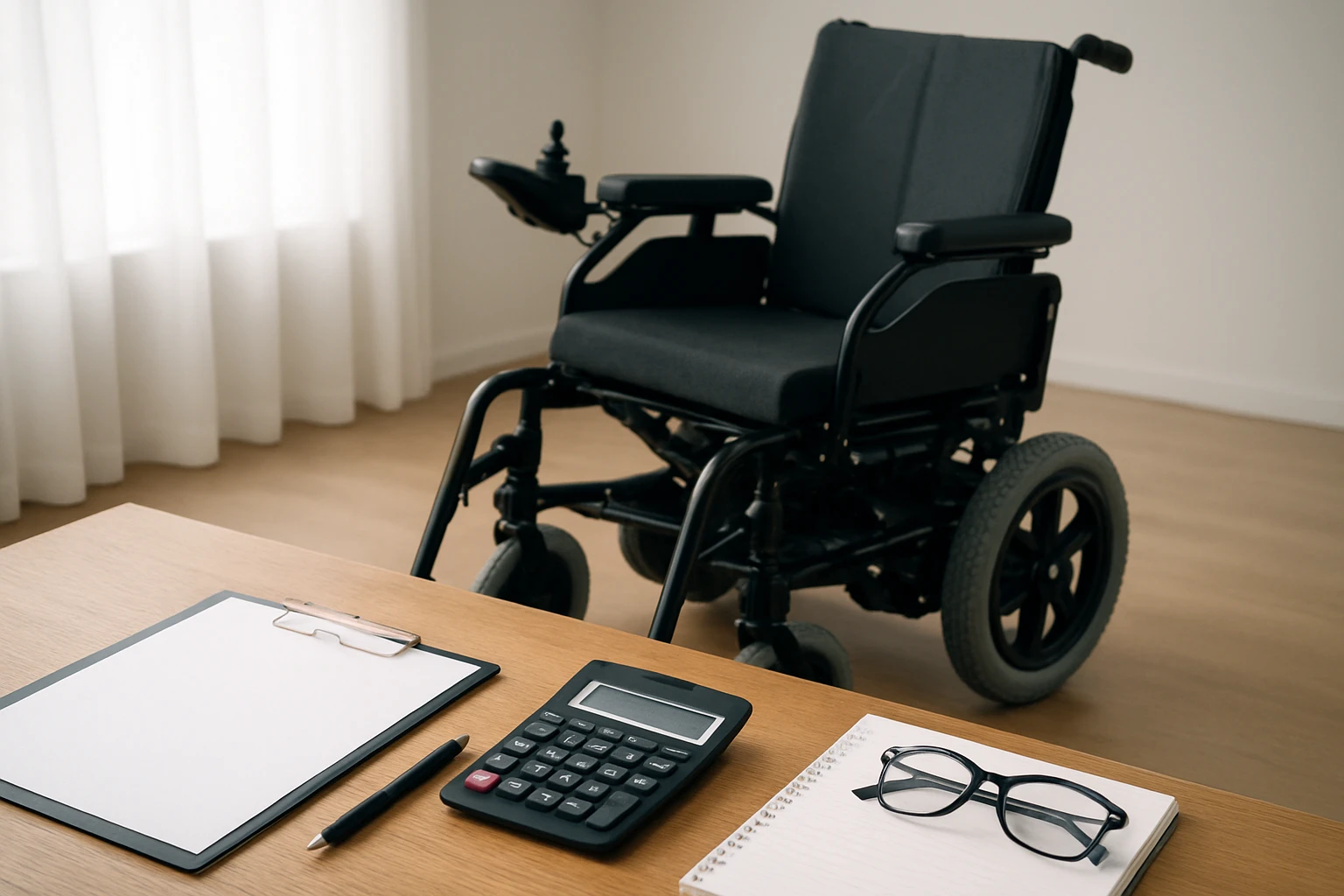
The right tools speed decisions and lower stress. Start with a simple checklist so your documentation is airtight, then lean on reliable resources for plan rules, forms, and travel tips. Go Wheelchairs maintains a resources hub with buying guides, comparison tools, and practical travel advice for batteries and airline rules, which can be invaluable if you are choosing between a heavy-duty frame or a lightweight, foldable design. Bookmark these and you will always know the next step.
| Item | Why It Matters | Who Provides It |
|---|---|---|
| Face-to-face exam notes | Establishes medical necessity and in-home need | PCP [Primary Care Provider]/Specialist |
| LMN [Letter of Medical Necessity] | Summarizes need, failed trials, and required features | Clinician with PT [Physical Therapist]/OT [Occupational Therapist] |
| Measurement and home environment details | Supports fit, safety, and turning radius inside home | Supplier + You |
| HCPCS [Healthcare Common Procedure Coding System] code selection | Determines coverage criteria and allowed amount | Supplier (Go Wheelchairs can assist) |
| PA [Prior Authorization] packet | Required for certain codes before delivery | Supplier (Go Wheelchairs can assist) |
| Insurance verification printout | Confirms deductible, coinsurance, network rules | Supplier + Insurance |
- Medicare resources: Coverage details for DME [Durable Medical Equipment] and power wheelchairs on Medicare.gov and CMS [Centers for Medicare & Medicaid Services] fact sheets.
- State Medicaid [Medical Assistance]: Your state’s Medicaid portal lists DME policies and PA [Prior Authorization] rules.
- VA [United States Department of Veterans Affairs]: Information about mobility devices and eligibility for Veterans.
- Consumer protection: ADA [Americans with Disabilities Act] guidance and your state’s health consumer assistance program for appeals support.
- Budgeting: FSA [Flexible Spending Account] and HSA [Health Savings Account] portals for reimbursement steps and deadlines.
How Go Wheelchairs fits in: the team verifies benefits across Medicare Part B [Medical Insurance], Medicaid [Medical Assistance], and private insurers, then pairs your clinical needs with the right model. You can compare a wide range of standard and heavy-duty motorized wheelchairs side by side with lightweight, foldable options, and Go Wheelchairs provides personalized support with PA documentation, coordination for delivery and training, and guidance for repairs. Their experts know the forms, the timelines, and the fine print, so you can focus on living your life, not learning insurance jargon.
One more tip for travelers. Airlines have clear rules on lithium-ion batteries, and many lightweight, foldable power chairs use them. Print the battery specifications and keep them with your boarding documents, and ask your supplier for a travel letter. Go Wheelchairs includes practical travel tips in its resources hub so you can plan stress-free trips without guessing at the gate.
Conclusion
This guide showed you exactly how to qualify, choose, and save on insurance-covered electric wheelchairs without getting lost in red tape. In the next 12 months, expect faster digital authorizations and clearer portals, which means a smoother path from exam to delivery. What new places will you reach when mobility is reliable, affordable, and completely yours?
Picture the first week with the right chair: quiet mornings, easy transfers, and confident errands. When the process is simple and the fit is perfect, independence follows.
Navigate Insurance-Covered Electric Wheelchairs with Go Wheelchairs
Choose from a wide range of standard and heavy-duty motorized wheelchairs with personal insurance guidance, so you move affordably and independently with confidence.