
If you are starting your search for a motorized wheelchair or other mobility device, you probably want something that fits your routine, not the other way around. Maybe you picture quick grocery runs, smooth park paths, or a reliable ride for doctor visits. I get it — the best choice is the one that keeps your day simple and steady. In this step-by-step guide, we will break down how to match the right size, range, comfort, and coverage to the way you live, with practical examples and easy checklists along the way. You will also see where Go Wheelchairs can help with expert guidance and coverage support, especially if you decide a motorized wheelchair is the better fit for your needs.
Step 1: Map Your Day-to-Day — Where Will Your Motorized Wheelchair Go?
Before you compare models, map your everyday routes. Do you glide through tight apartment hallways, ride across mixed sidewalks, or cross grassy fields at the park? Terrain matters more than most spec sheets admit. Indoors or smooth pavement pushes you toward compact, nimble power chairs with smaller turning radiuses. Rougher surfaces, curb cutouts, and hills ask for larger tires, better suspension, and higher ground clearance that resists scrapes and stalls. A quick rule of thumb I share with friends: the rougher the route, the beefier the frame and tires you will want, even if it means a little more weight.
Distance is next. Add up your longest round trip, then add a 20 to 30 percent buffer to cover weather, rider weight, hills, and battery age. Industry data suggests many users travel 5 to 12 miles per day, yet typical travel power chairs deliver 8 to 15 miles per charge and full-size units can reach 15 to 25 miles. Heavy-duty powerchair models often push beyond that, but do you actually need it? If you usually make short hops with occasional long days, a mid-range model plus a spare battery pack can be smarter than overspending on maximum range you rarely use.
- Quick Terrain Checklist: doors and elevators, curb cuts, cracks and potholes, hills, grass or gravel, and average daily distance.
- Weather Watch: rain and cold reduce range; consider splash guards and a rain cape if you ride year-round.
- Home Fit: measure hallway width, doorway clearances, and the tightest turn you must make in your living space.
Step 2: Size, Wheels, and Stability — Drive Types and Configurations
Choosing between drive types and configurations is a balance of indoor maneuverability versus outdoor stability. Mid-wheel drive chairs offer an exceptionally tight turning radius for indoor use and many of the Jazzy lineup are mid-wheel by design. Front-wheel and rear-wheel drive chairs tend to track more predictably outdoors and can handle rougher terrain or higher top speeds more comfortably. Travel power chairs typically disassemble into manageable pieces for transport (for example, some travel chairs disassemble rather than folding), while full-size chairs emphasize comfort and range. Heavy-duty designs increase weight capacity and ruggedness for larger riders or rough terrain. Think of it like choosing footwear: flip-flops for the beach, sneakers for everyday movement, and hiking boots for trails.
Watch This Helpful Video
To help you better understand mobility scooter, we’ve included this informative video from Vive Health. It provides valuable insights and visual demonstrations that complement the written content.
To make the trade-offs visible at a glance, use the table below as a baseline. Actual specifications vary by brand, but these ranges reflect common options you will encounter while shopping and asking questions.
| Type | Best For | Typical Range (miles) | Top Speed (miles per hour) | Turning Radius (inches) | Weight Capacity (pounds) | Portability Notes |
|---|---|---|---|---|---|---|
| Travel Power Chair | Indoor spaces, smooth sidewalks, tight turns, travel-friendly users | 6 to 15 | 3.5 to 5 | 30 to 40 | 250 to 325 | Often disassembles into light pieces for car trunks |
| Mid-Wheel Indoor Chair | Tight indoor maneuvering, clinics, smaller homes | 8 to 18 | 4 to 5 | 30 to 38 | 250 to 325 | Designed for tight turning radius and indoor agility |
| Full-Size Power Chair | Daily errands, comfort, longer rides | 15 to 25 | 4 to 7 | 45 to 60 | 300 to 350 | May fit ramps or lifts; not ideal for small trunks |
| Heavy-Duty Power Chair | Rougher terrain, higher weight capacity | 20 to 35 | 6 to 10 | 50 to 70 | 350 to 500+ | Best with vehicle lift, hitch carrier, or van |
Two small details that make a big difference: control interface and suspension. Most modern powerchairs use a joystick but many offer alternative control options for limited hand function (e.g., touchpad, chin, or sip-and-puff systems) — try what works best for your mobility and dexterity. Suspension helps when you encounter sidewalk seams or speed humps, reducing jolts to your back and neck. If you have hand pain, ask to test different joystick styles and control positions. If you ride over bumpy routes, prioritize models with visible suspension and higher ground clearance.
Step 3: Batteries, Range, and Charging — No More Guesswork
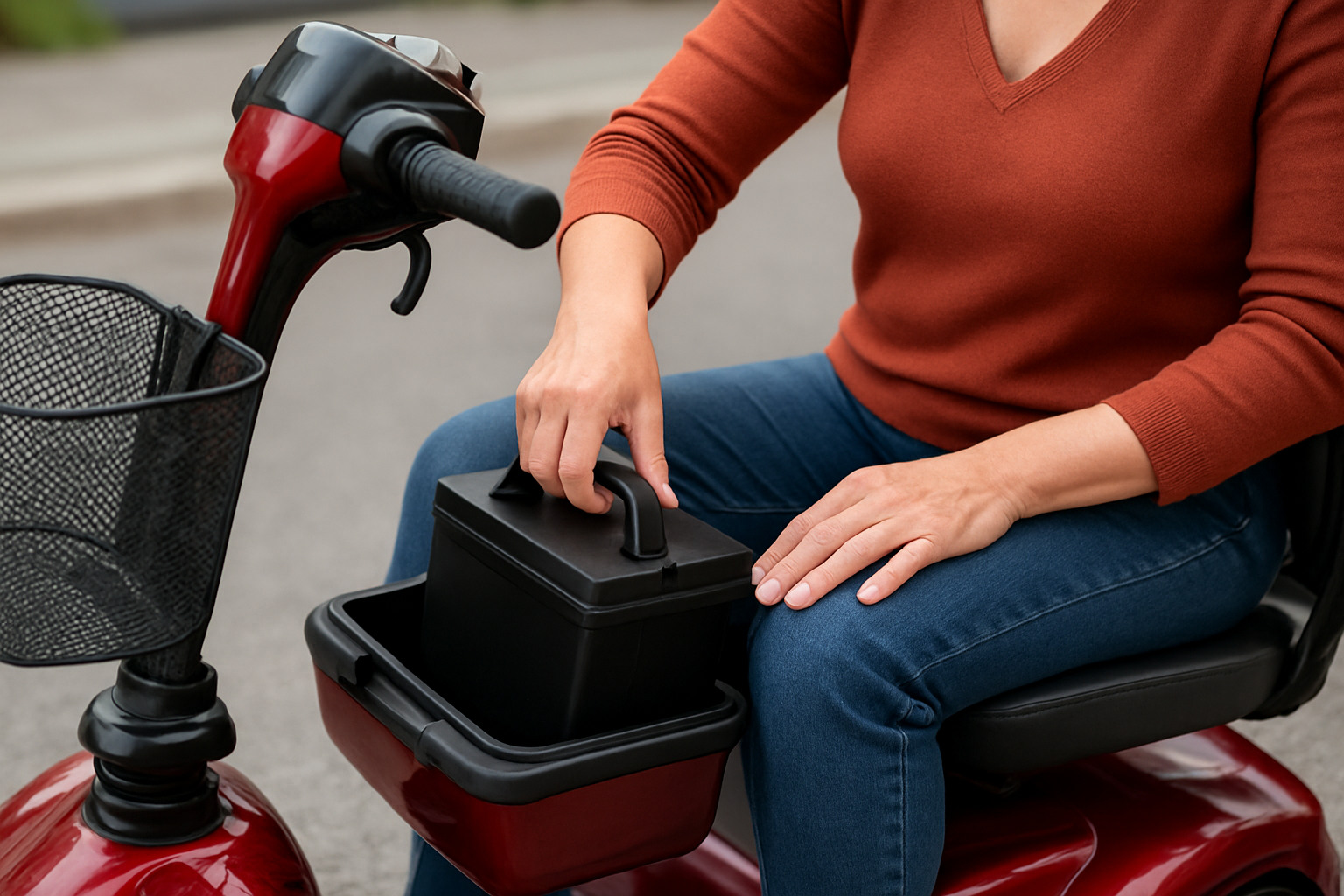
Battery chemistry drives range, weight, and charge time. Most power wheelchairs ship with sealed lead-acid batteries because they are affordable and predictable. They are heavier, charge more slowly, and typically last 12 to 24 months with regular use. Lithium-ion [Li-ion] packs are lighter, charge faster, and often last 3 to 5 years, though they raise the purchase price and may require special handling for airline travel. Capacity is usually listed in ampere-hours [Ah] or watt-hours [Wh]. As a simple yardstick, higher numbers mean longer range, but ask how those lab numbers translate into real miles with your body weight, the hills you face, and your average speed.
Charging should fit your routine without stress. On-board chargers plug in directly to the chair and are convenient in a garage. Off-board chargers let you bring the battery indoors, handy for apartments or shared spaces. Many riders charge overnight and top off during lunch on long days. A good habit is to keep the battery between 20 and 80 percent whenever possible for longevity. Also, verify charging port location, and whether there is a Universal Serial Bus [USB] port for phones or a bright light emitting diode [LED] headlight that helps with dusk rides.
| Battery Type | Weight | Typical Charge Time | Estimated Lifespan | Pros | Considerations |
|---|---|---|---|---|---|
| Sealed Lead-Acid | Heavy | 6 to 8 hours | 12 to 24 months | Lower cost, widely available, predictable | Heavier, slower charging, range drops in cold weather |
| Lithium-Ion [Li-ion] | Light | 3 to 5 hours | 3 to 5 years | Lighter weight, faster charging, longer life | Higher cost, airline rules may require removal and carry-on |
Case in point: Maria rides three miles to her community center and back, twice a week, with small hills. Her first chair was rated at 12 miles, but on chilly days it dipped to 8 or 9. By moving to a lithium-ion pack and planning a midday top-up, she eliminated range anxiety without paying for a heavy-duty platform she did not need. Small tweaks, big peace of mind.
Step 4: Comfort, Fit, and Safety — Your Body Knows Best
Comfort is not a luxury — it is how you stay independent. Start with seat width and depth so you sit stable without pressure points. Adjustable armrests that flip up make transfers easier, and a swivel seat can turn simple errands into smooth experiences. Foot platform length and width should let your feet rest naturally, not bunched together. If possible, sit on the chair for at least 10 minutes, shifting positions, and pretend to reach for a shelf at home. Your back and shoulders will tell you more than a specification sheet ever will.
Safety features are worth listing out. Look for anti-tip wheels, responsive electromagnetic brakes, and a bright light emitting diode [LED] headlight or reflectors for low light. Ground clearance of 2.5 inches or more helps on rougher sidewalks. A wider wheelbase increases stability, especially on larger outdoor models. If you frequently ride near doorways and ramps, check the turning radius and practice controlled stops and starts. For shared paths, a horn and a modest top speed are not just nice — they keep you and everyone else relaxed and safe.
- Fit Tips: measure your hips seated, add one inch for seat width comfort, and confirm armrest height supports your forearms without raising your shoulders.
- Doorway Reality: many homes have 28 to 32 inch doorways; verify the chair fits with accessories adjusted if needed.
- Accessibility Context: public routes often follow Americans with Disabilities Act [ADA] guidelines, but curb cuts and slopes can vary in the real world.
Step 5: Transport, Storage, and Travel — Make Every Trip Easy
How will the wheelchair move when you are not riding it? Disassembling makes trunk loading possible for travel-friendly models, but check the heaviest piece weight you are comfortable lifting. Ramps and vehicle lifts help with full-size or heavy-duty chairs. If you live in an apartment, confirm you can park and charge without blocking hallways. Outdoor storage demands a waterproof cover and, ideally, a locking cable in a well-lit area. The simpler it is to store and charge, the more you will use it without friction.
For air travel, plan ahead. The Transportation Security Administration [TSA] and the Federal Aviation Administration [FAA] have specific rules for batteries, especially lithium-ion [Li-ion] packs that may need to be removed and carried on. Airlines often ask for battery watt-hours [Wh] and secure terminals with tape. Ask for an aisle chair and gate-check tag at the ticket counter, and carry a printed manual page that shows battery type. For trains and buses, check carrier policies on ramp weight limits. Travel is absolutely doable — it just rewards preparation.
- Weigh the heaviest disassembled piece you can safely lift or manage with a helper.
- Measure trunk opening height and width, and compare with folded or disassembled dimensions.
- If flying, call the airline 48 hours ahead and note battery watt-hours [Wh] on your reservation.
Step 6: Budget, Coverage, and Real Ownership Costs — Spend Smart, Not More

Let us talk numbers. New motorized wheelchairs often range from budget travel models near the low thousands to premium full-size or heavy-duty designs that can cost more. Your long-term costs include batteries, tires, service, and accessories. Sealed lead-acid battery pairs might need replacing every 12 to 24 months, while lithium-ion [Li-ion] packs can last 3 to 5 years. Expect a tune-up schedule similar to a bicycle — bolts, brakes, and tire pressure checks — and put aside a modest annual maintenance fund. A strong seat cushion and a weather cover pay for themselves in comfort and fewer service calls.
Coverage can offset costs when medical necessity is documented. Medicare Part B sometimes covers a power-operated vehicle when it is medically necessary for in-home mobility, but requirements are specific. You will hear terms like DME [durable medical equipment], HCPCS [Healthcare Common Procedure Coding System], and a face-to-face exam with your PCP [primary care physician]. Plans vary, so use this table as a conversation starter — then verify with your insurer or a specialist who handles paperwork every day.
| Program | What Is Often Covered | Common Requirements | Out-of-Pocket Notes |
|---|---|---|---|
| Medicare Part B | Power-operated vehicle for necessary in-home mobility | PCP face-to-face exam, written order, DME supplier enrolled with Centers for Medicare & Medicaid Services [CMS] | After deductible, 20 percent coinsurance; coverage rules can change each year |
| Medicare Advantage [Medicare Part C] | Plan-specific equipment benefits | Prior authorization, network supplier, medical necessity | Copays and limits vary by plan — call member services |
| Medicaid | May cover when medically necessary | State-specific rules, prior authorization | Varies by state and managed care organization |
| Private Insurance | Plan-dependent mobility benefits | Documentation, prior authorization, in-network DME | Check your explanation of benefits [EOB] for exact copays and deductibles |
| United States Department of Veterans Affairs [VA] | Equipment when clinically appropriate | Evaluation with VA clinician and approval process | Benefits vary by eligibility category — ask your VA team |
| Tax-Advantaged Accounts | Reimbursement through health savings account [HSA] or flexible spending account [FSA] | Keep itemized receipts and documentation | Confirm eligible expense rules with your plan |
Real-world example: Ray’s plan would not cover a scooter for his narrow home layout, but a compact motorized wheelchair qualified under his in-home needs. With guidance, he compared both options, sat on each, and realized the wheelchair’s tighter turning radius made morning routines safer. That is where a knowledgeable partner changes everything — not by pushing a product, but by aligning the right tool to the right life.
Where Go Wheelchairs Fits In When You Are Choosing
Go Wheelchairs specializes in reliable, motorized wheelchairs, including a wide range of standard and heavy-duty options, plus lightweight, travel-friendly designs that disassemble for transport. If you are comparing a scooter with a power chair or weighing different mobility device classes, their team offers personalized support and guidance, from sizing and test-ride checklists to insurance and Medicare paperwork. Their resources hub includes buying guides, comparison tools, and travel tips that demystify the process and help you weigh total cost of ownership. For many people, the choice is not scooter versus wheelchair forever — it is selecting the right mobility solution for today and reevaluating as life evolves.
The 7-Minute Step-by-Step Checklist
- List your top three routes and surfaces — home, neighborhood, errands.
- Measure doorways and the tightest indoor turn you need to make.
- Pick your class: travel, full-size, or heavy-duty, plus a drive type such as mid-wheel, front-wheel, or rear-wheel.
- Choose battery type and range with a 20 to 30 percent buffer.
- Check comfort: seat width, armrest adjustments, control interface, and lighting.
- Decide transport plan: lift, ramp, trunk disassembly, or compact travel configuration.
- Review budget and coverage with a specialist who handles DME [durable medical equipment] every day.
Expert Tips and Small Upgrades That Pay Off
- Start slow in a parking lot to learn smooth braking and tight turns.
- Use reflective decals and a bright light emitting diode [LED] headlight for dusk rides.
- Add a seat cushion for pressure relief — your back will thank you on longer trips.
- Carry a compact pump and a multi-tool; a two-minute tire check prevents late arrivals.
- Keep a charging routine and avoid storing batteries in extreme heat or cold.
You have now walked through the core steps, looked at comparisons, and seen how coverage can support your budget. If you are thinking, this feels manageable now, that is the point. The right mobility choice should bring ease to your day — not a stack of guesswork.
FAQs: Quick Answers While You Compare
Do I need a heavy-duty model? Only if your routes demand higher ground clearance, bigger tires, or if you need a higher weight capacity. Otherwise, a full-size power chair may be more comfortable and cost-effective. Do power chairs work well indoors? Compact travel and mid-wheel designs excel in tight spaces. If you live in a smaller home or have narrow hallways, test turning in a space that mimics your layout. Can I ride in the rain? Light drizzle is typically fine with caution, but standing water and deep puddles risk electrical issues. A simple rain cape and fenders extend your riding season safely.
Will Medicare help me pay? Medicare Part B may help when medical necessity is met and documented for in-home use, but many people ultimately choose a motorized wheelchair instead because of turning radius and clinical criteria. The best next step is to have your PCP [primary care physician] document needs, then ask a coverage specialist to translate those notes into what your plan requires. What if I start with a scooter and later need a wheelchair? That happens. A good partner will help you plan for today and tomorrow without paying for features you do not need right now.
A Quick Word on Independence and Support
Mobility decisions are about freedom, time, and confidence. Whether you land on a scooter or choose a motorized wheelchair, the goal is the same — a ride that feels like an extension of you. Go Wheelchairs positions itself as a supportive guide for people who struggle to find dependable, affordable solutions that meet lifestyle and coverage needs. That means real conversations, personalized fit guidance, insurance and Medicare assistance, and a resources hub that turns confusion into a clear plan. When you have that kind of partner, you get to focus on living — not on decoding acronyms or arguing with forms.
If you are still undecided, set up a simple side-by-side comparison at a local showroom or community center. Bring your measurements, your longest route, and this checklist. Sit, steer, turn, and simulate your most common tasks. Within a few minutes, your body will tell you what your brain has been negotiating. From there, the rest is just fine-tuning — and that is the easy part with the right support.
You now have a practical roadmap to select a motorized wheelchair that fits your lifestyle and budget. Imagine the next 12 months: smoother mornings, easier errands, and spontaneous visits that do not require a second thought. What could your days look like when your ride simply works and your confidence sets the pace?
When you are ready to decide, test your routes, verify coverage, and choose a motorized wheelchair that keeps you moving with ease. What is the first place you will go when your ride feels effortless?
Additional Resources
Explore these authoritative resources to dive deeper into mobility scooter.
Plan Your Powered Wheelchair Path with Go Wheelchairs
Discover a wide range of standard and heavy-duty motorized wheelchairs with personal guidance and Medicare or insurance support, so you move confidently and independently.