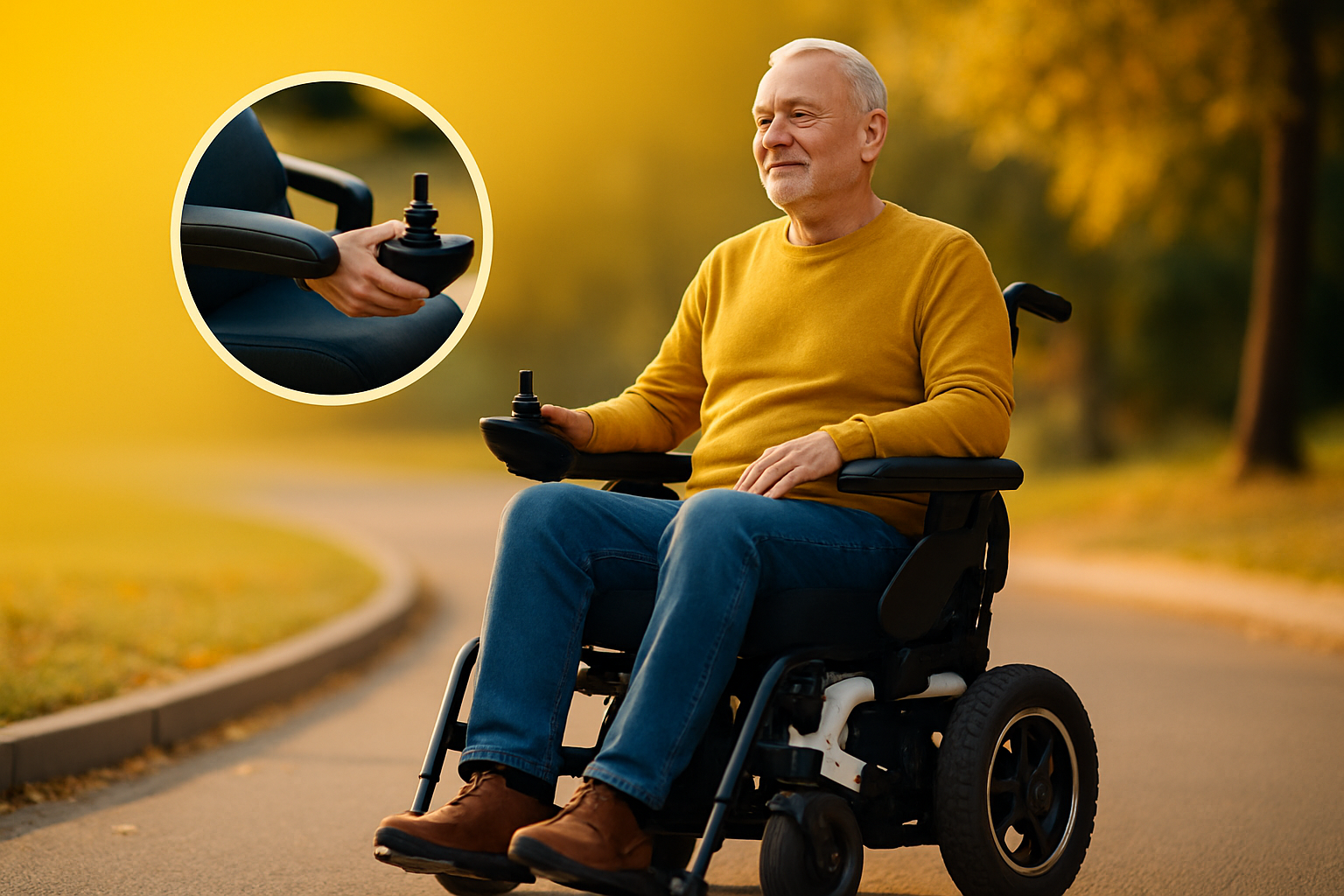
Flying with a power chair can feel like juggling batteries, boarding passes, and policies all at once. The good news is that the right travel friendly electric wheelchair accessories turn a stressful travel day into a smooth routine. I have watched countless travelers breeze through a gate simply because they packed smarter, not heavier. In this guide, you will find compact, airline-compliant gear that protects your chair, keeps your battery within airline rules, and even lines up with possible Medicare (Centers for Medicare & Medicaid Services) coverage. Ready to feel prepared and calm the moment you roll into the terminal?
Flight-Ready Starts With the Right Criteria
Before we dive into specific gear, let’s align on what makes an accessory truly travel friendly. Airlines follow standards from the International Air Transport Association (IATA) and the Federal Aviation Administration (FAA), and security follows the Transportation Security Administration (TSA). That sounds like a lot of rules, but a simple checklist keeps you on track. If an accessory is compact, clearly labeled, easy to remove, and durable under rough handling, it is likely a keeper. Plus, accessories that support your health goals, like positioning cushions, can sometimes interact with Medicare (CMS) benefits.
Also, consider the bigger picture. The U.S. Department of Transportation (DOT) publishes reports on mishandled mobility devices and related complaints, which is a helpful reminder to protect your chair and document settings. Meanwhile, carry what must not be lost in your cabin bag, label everything, and keep instructions visible for airline teams. A little prep now saves a lot of improvising later.
| Battery Type | Typical Watt-hour Limit | Carry-On Allowed | Checked Allowed | Key Notes |
|---|---|---|---|---|
| Lithium-ion | Installed batteries: commonly up to 300 Wh; Spare batteries: <100 Wh generally allowed in carry-on without airline approval; 100–160 Wh typically require airline approval and are often limited to two spares; >160 Wh generally prohibited as spares | Generally: spares <100 Wh allowed in cabin. 100–160 Wh usually require airline approval; >160 Wh generally not allowed as spares. | Varies by airline — many carriers do not permit lithium-ion batteries in checked baggage. Installed batteries may remain with the chair per airline policy and manufacturer guidance. | Terminals must be protected. Label Wh clearly. Confirm the specific airline policy before travel; procedures differ across carriers. |
| Sealed lead-acid or gel | Not rated by Wh the same way | Not typically carried as spares | Yes, often left installed and secured upright | Airline secures chair per manufacturer instructions. Bring printed instructions. |
Important: Always confirm current airline policy. Carry printed battery specs, a manufacturer travel letter, and the chair’s handling instructions. Security and gate agents appreciate clear documentation.
11 Travel Friendly Electric Wheelchair Accessories You Can Fly With
Here are the compact workhorses I reach for every time. Each one solves a specific in-flight or airport challenge, and several have Medicare (CMS) angles worth noting. Which ones would make your next trip easier?
Watch This Helpful Video
To help you better understand travel friendly electric wheelchair accessories, we’ve included this informative video from Mobility Scooters Direct. It provides valuable insights and visual demonstrations that complement the written content.
-
Airline-Compliant Modular Lithium-ion Battery Kit
If your chair uses lithium-ion power, a modular battery with clear Wh (Watt-hour) labeling and protective terminal covers is a must. Choose packs at or below manufacturer and airline guidance for your installed battery, or spares that meet airline rules (see table above). A compact fire-retardant pouch adds peace of mind. Why this matters? Gate agents can quickly verify compliance, and you keep essential power with you in the cabin.
- Airline note: Spares travel in carry-on only with terminals taped or capped; approval may be required for some sizes.
- Coverage clue: Replacement batteries for medically necessary power wheelchairs may be covered under Medicare Part B (CMS) as durable medical equipment (DME), when criteria are met.
-
Smart Charger with Universal Voltage
A compact, fanless charger rated 100 to 240 volts with automatic shutoff and surge protection saves time in hotels and airports. Look for LED status indicators and a detachable cord. Add a slim international adapter to keep the whole kit carry-on friendly. Quiet chargers are a neighborly win during red-eye layovers.
- Airline note: Chargers are allowed in carry-on and checked baggage, but confirm with the carrier if you have questions.
- Coverage clue: Replacement chargers can sometimes be considered under durable medical equipment (DME), though many plans classify them as accessories. Check your plan.
-
Padded Gate-Check Travel Cover
A soft-sided, padded cover shields the joystick, armrests, and controls when the chair is gate-checked. Look for reinforced handles and a big window for your contact card. You would not toss your laptop into cargo without a sleeve, right? Treat your controller the same way.
- Airline note: Remove small breakables and bring them onboard if possible.
- Coverage clue: Protective covers are usually not covered by Medicare (CMS).
-
Joystick and Controller Guard
Snap-on guards or silicone shields prevent accidental breakage and keep moisture away on rainy tarmac days. A good guard also stops errant bumps from changing your speed settings. Think of it as a low-profile helmet for your controller.
- Airline note: Show handlers where the freewheel levers are and how to keep the chair powered off.
- Coverage clue: Not typically covered by Medicare (CMS).
-
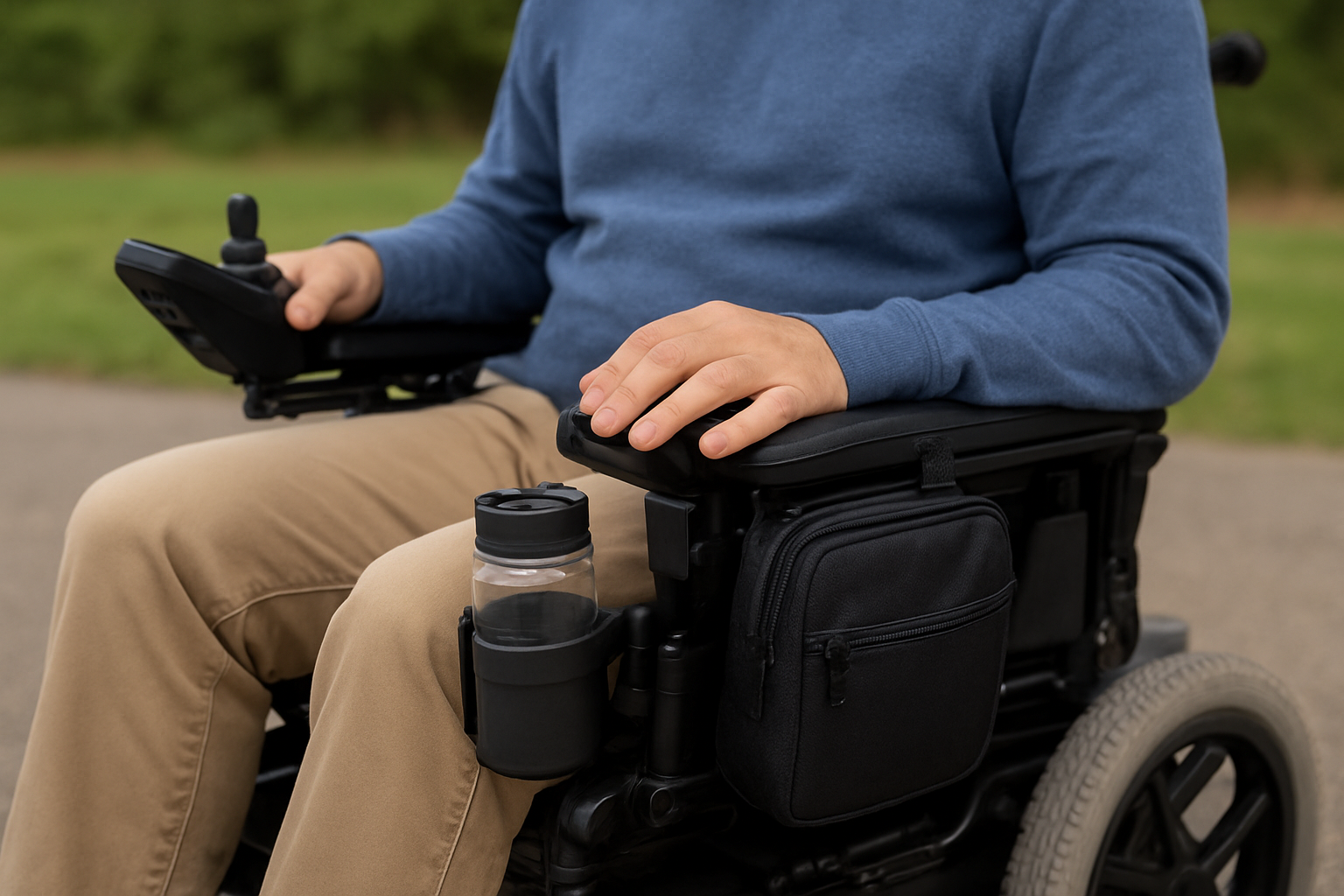
Under-Seat or Seat-Back Storage Bag with ID Card
Keep cables, straps, and your instruction sheet in one soft bag that stays attached to the chair. Add a laminated card that lists how to disconnect the battery, where to lift safely, and your mobile number. If ground staff have questions, your instructions answer them fast.
- Airline note: Remove valuables like wallets and medication into your personal item.
- Coverage clue: Utility bags are generally not covered by Medicare (CMS).
-
Lightweight Transfer Board or Slide Sheet
Some travelers prefer a compact transfer board or a slick slide sheet for predictable moves to the aircraft seat. The right tool reduces strain on shoulders and speeds up preboarding. Choose a board under two pounds with a carry sleeve.
- Airline note: Request preboarding and an aisle chair in advance with the airline’s accessibility team.
- Coverage clue: Transfer aids may be considered durable medical equipment (DME) for some plans when medically necessary. Documentation matters.
-
Pressure-Relief Cushion and Anti-Slip Pad
Long sitting times call for thoughtful pressure management. An air or gel cushion with a breathable cover and a thin anti-slip pad keeps you stable and comfortable, whether in your chair or the aircraft seat. Your skin and back will thank you after a transcontinental flight.
- Airline note: Cushions are allowed onboard. Tell the crew if you plan to use it in the aircraft seat.
- Coverage clue: Pressure-relief cushions are often covered by Medicare Part B (CMS) with medical necessity documentation.
-
Quick-Release Anti-Tip Wheels
Travel can mean uneven jet bridges and steep curbs at pickups. Quick-release anti-tip wheels add stability without permanent bulk. Look for tools-free mechanisms so you can remove them if the crew needs to collapse part of your chair.
- Airline note: Demonstrate how to remove or stow them to avoid damage.
- Coverage clue: May be part of the base wheelchair configuration under durable medical equipment (DME), but standalone upgrades are often out of pocket.
-
Tool Roll with Essentials
Pack a small tool roll with hex keys, a screwdriver with interchangeable bits, Velcro ties, a spare fuse, zip ties, and a valve extender if you run pneumatic tires. Keep tool lengths under seven inches to align with TSA guidance for carry-on tools.
- Airline note: Keep the tool kit in your personal item for quick access at the gate.
- Coverage clue: Consumables and general tools are not covered by Medicare (CMS).
-
QR (Quick Response) Instruction Card and Handle Tags
A bold, laminated card with a QR code linking to a short video shows airline teams exactly how to switch the chair to freewheel, where to lift, and how to secure the joystick. Add “Do Not Lift Here” tags at weak points. Clear instructions prevent most damage.
- Airline note: Place the card where it is visible from the rear handle or backrest.
- Coverage clue: Documentation aids are not covered by Medicare (CMS).
-
Bluetooth Luggage Tracker for Chair and Bag
A small Bluetooth-enabled tracker attached under the seat or inside a pouch helps you locate your chair during tight connections. Real-time location nudges are incredibly reassuring when you are waiting on the jet bridge.
- Airline note: Trackers are allowed in both carry-on and checked bags.
- Coverage clue: Trackers are not covered by Medicare (CMS).
-
Universal Cup Holder with Spill-Proof Bottle
Hydration is often overlooked and airports are dehydrating. A universal clamp-on cup holder and a spill-proof bottle keep your hands free and your boarding pass unwrinkled. Choose a low-profile mount that will not snag during transfers.
- Airline note: Remove the holder before gate-checking to avoid damage.
- Coverage clue: Not typically covered by Medicare (CMS).
| Accessory | Carry-On Friendly | Battery-Safe Impact | Medicare Coverage Likelihood |
|---|---|---|---|
| Modular lithium-ion battery kit | Yes, spares only (subject to airline rules) | High | Possible with documentation |
| Smart charger | Yes | Medium | Sometimes |
| Gate-check travel cover | Packable | Low | Unlikely |
| Controller guard | Yes | Low | Unlikely |
| Seat-back storage bag | Yes | Low | Unlikely |
| Transfer board or slide sheet | Yes | None | Possible when medically necessary |
| Pressure-relief cushion | Yes | None | Often covered |
| Quick-release anti-tip wheels | Packable | None | Sometimes |
| Tool roll | Yes | None | Unlikely |
| QR (Quick Response) instruction card | Yes | None | Unlikely |
| Bluetooth tracker | Yes | None | Unlikely |
Medicare-Savvy: What Might Be Covered and What Is Not
Let’s talk benefits without the guesswork. Medicare Part B (CMS) covers durable medical equipment (DME) that is medically necessary for use in the home. That can include power wheelchairs, replacement batteries, and pressure-relief cushions when your clinician documents the need. Accessories that are convenience-oriented, such as cup holders or travel covers, are generally not covered. Private insurance and Medicaid plans vary, so checking your plan specifics is important.
Here is a practical way to think about it. If the item directly supports your safe mobility or protects your skin and posture, coverage is more likely with proper documentation. If it is a comfort or travel convenience, it is usually out of pocket. When in doubt, ask your supplier for a detailed written order and a product code so your insurer can make a determination before you buy. Go Wheelchairs helps customers assemble that paperwork and navigate approvals every day.
| Accessory | Typical Medicare Part B (CMS) Coverage | Notes |
|---|---|---|
| Pressure-relief cushion | Often covered | Requires medical necessity documentation and correct sizing. |
| Replacement battery for power chair | Often covered | Must be for a covered power wheelchair and reasonable useful lifetime applies. |
| Charger | Sometimes covered | Coverage varies by plan and reason for replacement. |
| Transfer board | Possible | When prescribed for safe transfers at home. |
| Cup holder, storage bag, travel cover, controller guard | Typically not covered | Considered convenience or non-medical accessories. |
| Anti-tip wheels | Sometimes | Often part of chair configuration rather than a separate covered item. |
Pro tip: If you are selecting a new chair specifically for travel, coordinate accessories at the same time. It is much easier to document medical need and optimize your setup while the main order is being written.
Pack Like a Pro: Timeline and Checklists
Air travel rewards planners. A simple timeline and a two-bag strategy keep surprises at bay. Your personal item carries essentials like batteries, charger, and documentation. Your chair carries the instruction card, soft storage bag, and removable parts that stay attached until the gate. Meanwhile, label everything with your name and itinerary so lost-and-found actually finds you.
| When | Action | Why It Helps |
|---|---|---|
| 2 to 3 weeks out | Call airline accessibility desk, note battery type and Wh (Watt-hour), request preboarding | Ensures the airline is ready for your chair and battery type |
| 1 week out | Create QR (Quick Response) instruction card and print battery specs and manufacturer letter | Speeds up check-in and protects your chair |
| 72 hours out | Reconfirm assistance request and aisle chair if needed | Prevents surprises on departure day |
| Night before | Charge batteries, pack charger and tool roll in personal item | Gives you power margin if there are delays |
| At the airport | Ask for gate-check tag, show instruction card, remove fragile parts | Reduces risk of damage during handling |
| Arrival | Inspect chair before leaving the jet bridge, report issues immediately | Faster resolution if something is wrong |
Carry-on essentials checklist:
- Printed battery specs, manufacturer travel letter, and your itinerary
- Spare lithium-ion battery packs in protective sleeves with taped terminals
- Smart charger and slim international adapter
- Tool roll with short tools per TSA guidance
- Pressure-relief cushion if you will use it in flight
- Bluetooth tracker already paired to your phone
A Quick Real-World Story From the Road
Here is a composite of what many of our customers at Go Wheelchairs experience. Maya flies cross-country twice a year with a compact, foldable power chair and a 252 Wh (Watt-hour) pack labeled on the battery case. Her QR (Quick Response) instruction card shows how to disengage the motors and where not to lift. She travels with a slim transfer board, a pressure-relief cushion, and a controller guard. Gate agents love the clear directions. She loves skipping the last-minute scramble.
On a recent flight, a delay pushed her boarding back and she still felt calm because the essentials lived in her personal item. The charger, spare fuse, and documentation were all within reach. On arrival, she did a quick inspection on the jet bridge. When a knob was slightly loose, the tool roll fixed it in sixty seconds. Little accessories, big confidence.
Why Travelers Choose Go Wheelchairs for Air Travel
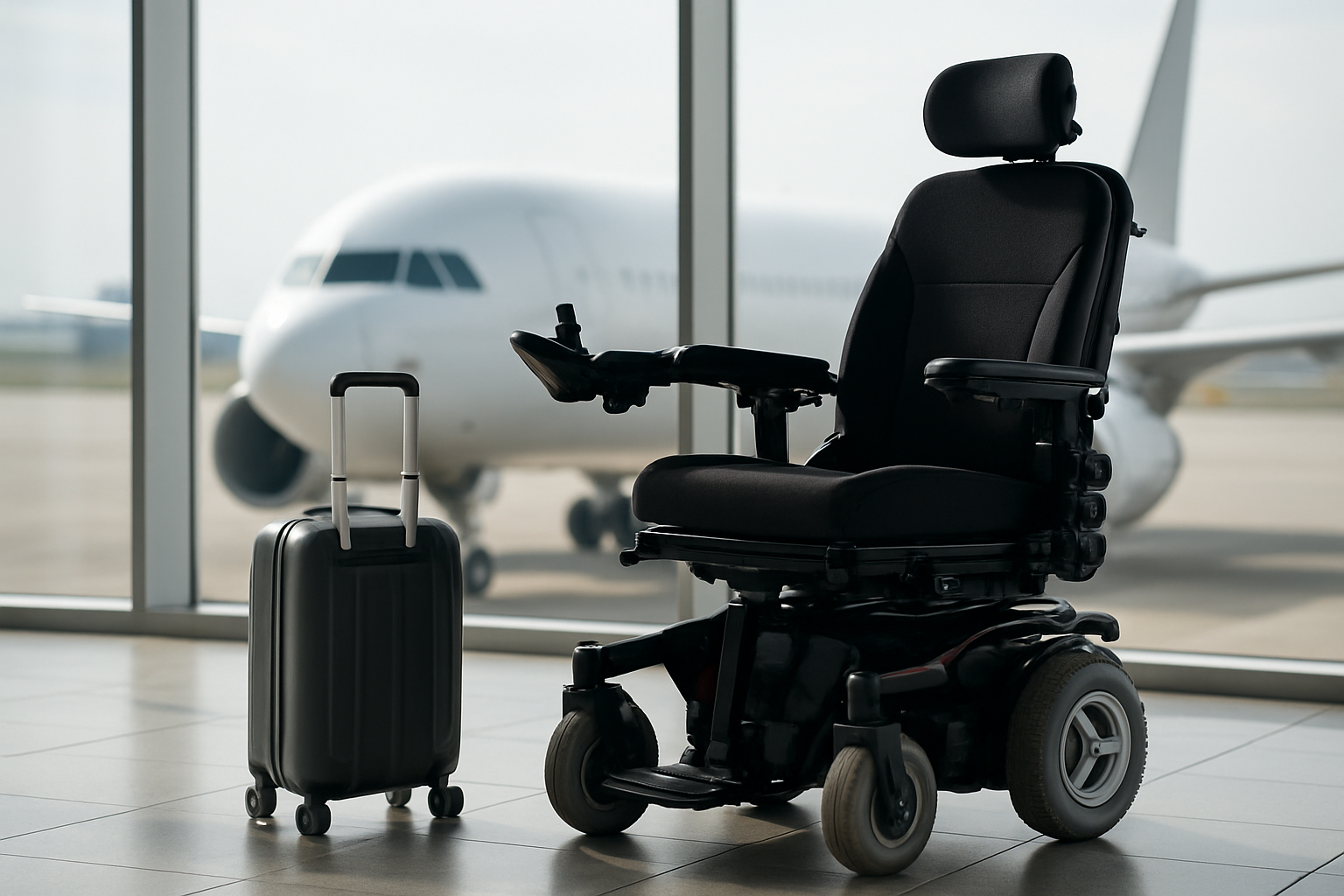
When you are picking accessories, it often makes sense to step back and ask, is my chair itself suited to how I travel? Go Wheelchairs offers a wide range of standard and heavy-duty motorized wheelchairs plus lightweight, foldable designs that fit real airport life. If you need rugged range for long days, a heavy-duty model with modular batteries keeps you moving. If you prioritize compact storage in car trunks and hotel rooms, a folding power chair paired with a padded travel cover is a dream combo.
But the gear is only half the story. You also get personalized support and guidance from people who speak both travel and insurance. Our team walks you through Medicare (CMS) and other insurance options, finds models that align with your medical documentation, and helps you plan accessory choices that actually support your goals. The Go Wheelchairs resources hub is your one-stop guide with buying guides, comparison tools, and travel tips that cut through noise and jargon. Individuals with mobility challenges often struggle to find affordable solutions that fit coverage and lifestyle. We exist to change that, so you can move forward with confidence and independence.
FAQs You Will Be Glad You Read
Is my battery allowed on the plane? If it is lithium-ion at or under 300 Wh (Watt-hour), you are generally within many airline standards when installed in the chair, and spares must ride in the cabin with protected terminals as required by the carrier. Always verify with your airline because procedures differ for folding chairs where the battery is removed.
What should I do if my chair is damaged? Report it right away at the gate or baggage office and ask for a written report and photos. The U.S. Department of Transportation (DOT) requires airlines to address assistive device damage. Your documentation and instruction card help establish proper handling steps.
Can I board first? Most airlines offer preboarding for travelers who need extra time or assistance. Request it when you book and reconfirm 72 hours before departure. This makes transfers calmer and lets you brief the crew.
The Bottom Line on Stress-Free Air Travel
These 11 accessories combine practical protection, airline battery compliance, and smart comfort so you roll onto every flight with less worry and more freedom.
Imagine the next 12 months with a chair-and-accessory setup dialed to your routine: fewer what-ifs, faster check-ins, better rest, and confidence from curb to carousel. With the right travel friendly electric wheelchair accessories and a trusted partner like Go Wheelchairs in your corner, what new places will you feel ready to explore next?
Additional Resources
Explore these authoritative resources to dive deeper into travel friendly electric wheelchair accessories.
Go Wheelchairs Makes Flight-Ready Mobility Simple
Explore a wide range of standard and heavy-duty motorized wheelchairs with personal guidance and coverage support for travel friendly electric wheelchair accessories.