
If you have ever tried to navigate power wheelchair options while juggling doctor visits and insurance forms, you know it can feel like a maze. When I first heard a neighbor rave about a local supplier, I thought, here’s another company making promises. But then she showed me how quickly her paperwork and delivery came together, and I had to look closer. The larger story is not just one company; it is a shift in how responsible providers make access simpler for Medicare users, and how you can benefit from that shift today.
In everyday terms, this “revolution” is about speed, clarity, and fit. Speed means getting the right chair sooner, not months later. Clarity means plain-language guidance through Medicare rules from the first phone call. Fit means the chair truly matches your body, your home, and your daily life, not just a generic spec sheet. While providers like Duramed Mobility Products Inc [Incorporated] have raised the bar on documentation and delivery, Go Wheelchairs brings that same energy to your corner by offering deep product choice, Medicare support, consultations, and delivery/setup assistance. Note that clinical, face-to-face medical evaluations are provided by licensed clinicians; Go Wheelchairs offers guidance to help you prepare for those evaluations and to navigate paperwork and coverage steps.
Why duramed mobility products inc Matters for Medicare [Centers for Medicare & Medicaid Services] Users
Let’s start with the pressure points that trip people up. Medicare Part B helps cover power wheelchairs when they are medically necessary for use inside the home, but the process hinges on documentation, a face-to-face evaluation, and supplier coordination. Many denials happen not because someone is ineligible, but because a tiny detail is missing or phrased the wrong way. Companies that invest in better intake, clearer checklists, and smarter communication make an outsized difference. That is where Duramed Mobility Products Inc [Incorporated] and other forward-leaning providers have changed expectations for what “good” looks like.
What does that look like for you in practice? It looks like a well-structured first call, a right-sized chair recommendation, and a documentation path that anticipates Medicare reviewers’ questions. It looks like a supplier that acts as a guide, not a gatekeeper. And importantly, it looks like honest talk about timelines, out-of-pocket costs, and alternatives if Medicare is not the best route. Go Wheelchairs aligns with that approach by offering a curated selection of standard and heavy-duty power wheelchairs, step-by-step coverage help, and post-delivery follow-through. The company provides consultations, an interactive product-matching quiz, delivery and setup assistance, and a 30-day return policy to help customers find the right fit—rather than formal clinical evaluations or in-home trial programs performed by the supplier.
- Clear, plain-language explanations of medical necessity and home-use criteria.
- Proactive checklists so your physician’s notes match Medicare [Centers for Medicare & Medicaid Services] needs.
- Pre-sale consultations, product-matching tools, and a 30-day return window to reduce wrong-chair outcomes.
- Coverage guidance and preliminary estimates to help you plan (final coverage decisions are made by Medicare/your insurer).
From Confusing to Clear: The New Medicare [Centers for Medicare & Medicaid Services] Path to a Power Wheelchair
Medicare rules have not vanished, but better suppliers make them feel manageable. Typically, you will need a clinical evaluation, a detailed written order, documentation proving the chair is reasonable and necessary for use inside your home, and a reputable supplier registered to provide durable medical equipment. Some areas require prior authorization. Strong suppliers coordinate with your clinician, translate the criteria, and prepare the paperwork in a reviewer-friendly way. If your case is urgent, they will also explain when expedited review may be available and what evidence supports it.
Watch This Helpful Video
To help you better understand duramed mobility products inc, we’ve included this informative video from News4JAX The Local Station. It provides valuable insights and visual demonstrations that complement the written content.
- Initial conversation: clarify goals, home layout, and mobility needs.
- Clinical evaluation: face-to-face exam documenting functional limitations and home-use necessity.
- Detailed order: physician signs a complete, specific prescription that fits Medicare [Centers for Medicare & Medicaid Services] criteria.
- Documentation review: supplier checks for completeness and consistency.
- Prior authorization (when required): submit, track, and communicate status.
- Delivery and training: fit confirmation, safe use instruction, and battery care basics.
| Key Document | Who Completes It | What Reviewers Look For |
|---|---|---|
| Face-to-face exam notes | Physician or qualified clinician | Clear home-use need, failed alternatives, functional limits |
| Detailed written order | Physician | Specific model or category, features, and justification |
| Supplier intake and measurements | Supplier | Seat width/depth, posture needs, turning constraints |
| Home assessment notes | Supplier with you | Door widths, flooring, ramp or threshold concerns |
Standard vs Heavy-Duty: Choosing the Right Motorized Wheelchair for Your Life
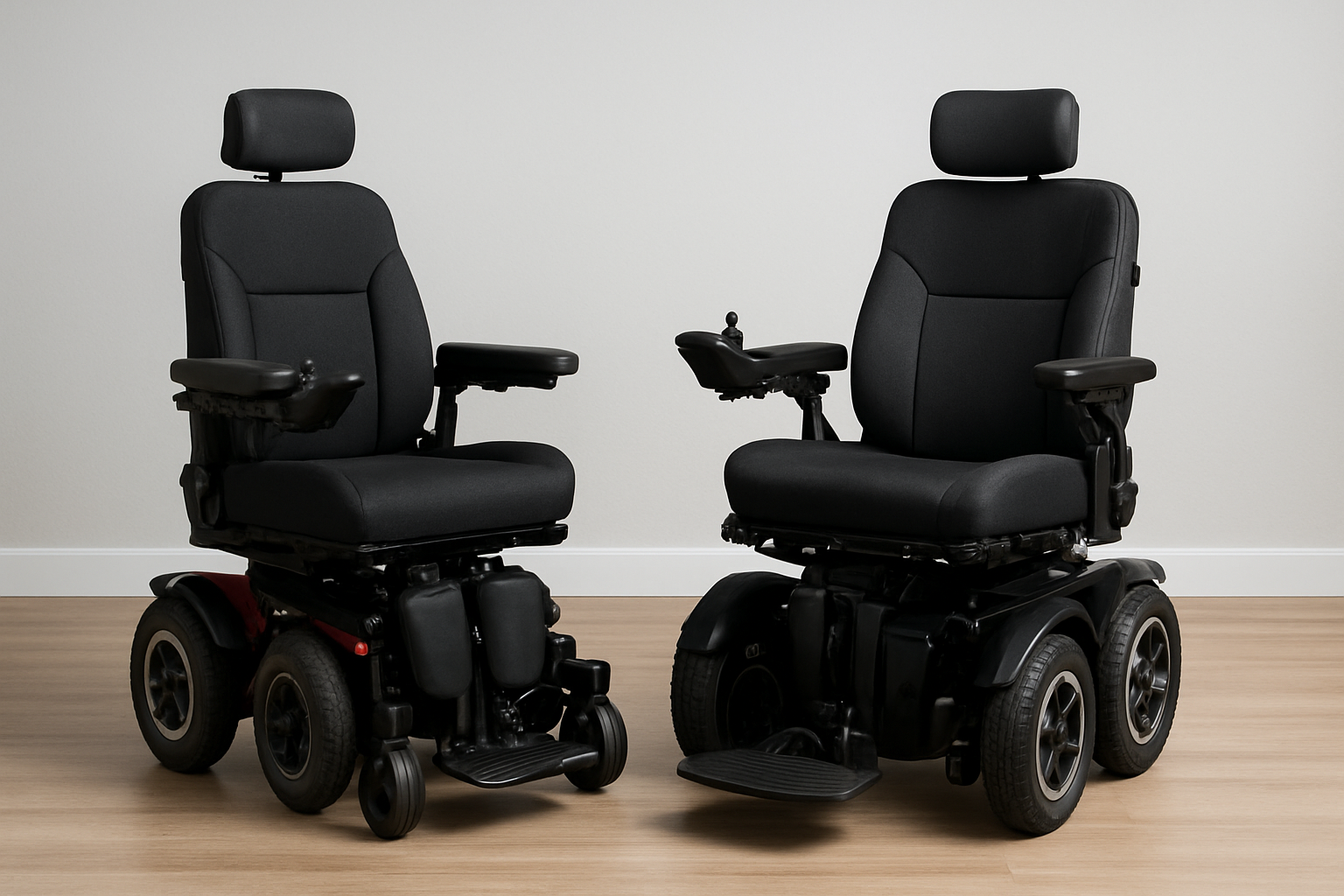
The “right” power wheelchair is the one that fits your body and your day. Standard models are nimble, often with tighter turning radiuses suited to smaller homes and apartments. Heavy-duty models provide higher weight capacities and reinforced frames, ideal for larger riders or users who need extra durability and stability. Consider your daily routes, typical surfaces, and transport needs. If you travel frequently, a lightweight, foldable design can be a game-changer; if you spend long hours seated, advanced seating and pressure management take priority.
| Feature | Standard Power Wheelchair | Heavy-Duty Power Wheelchair |
|---|---|---|
| Typical weight capacity | Up to 300 pounds | 300 to 450 pounds, some specialized up to 600 pounds |
| Turning radius | Tighter for indoor spaces | Wider but highly stable |
| Range per charge | About 10 to 15 miles | About 12 to 20 miles, depending on configuration |
| Transportability | Lighter frames, some foldable options | Heavier frames; vehicle lift or ramp recommended |
| Best for | Apartments, tight hallways, quick errands | Longer use, outdoor stability, rugged dependability |
Still on the fence? Try these prompts as a mental checklist: Do you often ride across uneven sidewalks or grass? Do you prioritize easy car loading? Is your doorway clearance tight or generous? And are you more focused on a nimble indoor ride or rock-solid outdoor confidence? Go Wheelchairs can help you map these daily realities to specific models so you avoid buyer’s remorse later.
- If your home has narrow turns, aim for a mid-wheel drive model with a compact turning radius.
- If you need stability on gentle slopes, consider a heavy-duty frame with enhanced traction.
- If travel is essential, look at lightweight, foldable power options to reduce lifting strain.
- If you sit for long periods, prioritize pressure relief seating and adjustable positioning.
Real-World Stories: Faster Approvals and Safer Rides
Let me share two composite stories that reflect what many readers experience. Maria lives in a cozy bungalow with narrow hallways. Her first supplier pushed a bulky model that barely fit through her bedroom door. She started over with a provider who measured every doorway, captured her transfer challenges, and worked with her physician to outline failed alternatives. The new documentation was reviewer-friendly, and the chair that arrived two weeks later fit like a glove. Small detail, big difference: the right turning radius changed her mornings from stressful to smooth.
James needed a heavy-duty chair for outdoor stability and longer range. He worried that Medicare would drag on, so the supplier explained the criteria and checked each box with him and his physician. They captured photos of his home thresholds, listed previous mobility aids that no longer worked, and presented why a robust frame was medically necessary. When the decision came through, he felt relief and validation, not surprise. Both stories echo a pattern: better documentation, clearer justifications, and precise fit lead to better outcomes and safer rides.
- Measure your home first. Doorways, hall turns, and thresholds matter as much as seat width.
- Ask your clinician to document why canes, walkers, or manual chairs are insufficient.
- Request a written timeline so you know what happens in week one, week two, and beyond.
- Confirm training at delivery: safe transfer techniques, charging habits, and maintenance basics.
How Go Wheelchairs Extends the Revolution
Here is where Go Wheelchairs steps in as your advocate and guide. The company offers a wide range of standard and heavy-duty motorized wheelchairs, backed by real humans who listen first and recommend second. You will also find lightweight, foldable wheelchair designs that ease travel and storage, smart comparison tools to cut through jargon, and help with Medicare and insurance steps. If you feel overwhelmed, your advisor will translate the criteria into plain language and help you prepare what matters most.
Crucially, Go Wheelchairs bridges the gap between recommendation and reality. Personalized support and guidance means you are not left hoping the chair will fit when it arrives. Advisors help align clinical notes with real-world needs, like how you transfer from bed to chair or how you navigate a tight kitchen. The resources hub offers buying guides, side-by-side model comparisons, and travel tips for cruises and flights, while the coverage team demystifies benefits and potential out-of-pocket costs. When providers elevate the standard, Go Wheelchairs brings that elevated experience directly to your screen and your front door.
| Go Wheelchairs Advantage | What It Means for You |
|---|---|
| Wide range of standard and heavy-duty motorized wheelchairs | Find a precise match for your body, home, and daily routes |
| Lightweight, foldable wheelchair designs | Travel-ready mobility without heavy lifting or complex breakdowns |
| Personalized support and guidance | Human advisors who understand coverage, fit, and safety |
| Insurance and Medicare assistance | Help navigating approvals, estimates, and documentation |
| Resources hub with buying guides and comparison tools | Clear, unbiased education to make confident decisions |
Pricing, Coverage, and Timing: What to Expect

Let’s talk practicalities. Medicare typically covers up to eighty percent of the allowable amount for eligible power wheelchairs after the annual deductible. You are responsible for the remaining share unless you have supplemental coverage. Timeframes vary, but a well-organized case can often move from evaluation to decision within several weeks. If you are outside Medicare or prefer to buy directly, Go Wheelchairs can outline cash pricing, payment options, and ways to reduce costs without sacrificing safety, like choosing a standard model with add-on seating instead of a top-tier frame you may not need.
| Step | Typical Timing | What Speeds It Up |
|---|---|---|
| Clinical evaluation | One to two weeks to schedule | Flexible appointment windows, prepared questions, bringing caregiver input |
| Documentation completion | Three to seven days with a proactive supplier | Supplier checklists, quick physician review, complete home measurements |
| Prior authorization (when required) | Several business days to a couple of weeks | Complete, consistent notes and clear medical necessity language |
| Delivery and training | Within days of approval, depending on inventory | Choosing in-stock models and confirming readiness for delivery |
- Ask for a coverage estimate or guidance so cost surprises do not derail progress (final coverage is subject to Medicare/insurer review).
- If you are a frequent traveler, consider a foldable model to save on transport accessories.
- If your hallways are narrow, prioritize turning radius over maximum speed.
- Keep a simple maintenance log to protect warranty and performance.
Practical Checklist: Preparing for a Smooth Approval
A little preparation can shave days off your journey. Before your evaluation, jot down where you struggle at home: reaching the bathroom in time, turning in tight hallways, transferring without help, or managing thresholds. Take quick measurements of doorway widths, hallway turns, and the steepest ramp or step. Bring a list of aids that no longer meet your needs and how they fall short. And decide what “a good day” looks like once you have the right chair: fewer transfers, more independence, and simpler errands. These specifics make physician notes stronger and show why a power chair is medically necessary for home use.
- Document three daily tasks that are hard without a power chair and why.
- Measure doorways and hallway turns; note any tight spots or slopes.
- List mobility aids you have tried and why they are insufficient now.
- Bring caregiver or family input to your evaluation for added context.
- Ask your supplier to pre-check documentation against Medicare criteria.
Beyond Approval: Living Well with Your Power Wheelchair
Approval is not the finish line; it is the starting gate. You will get more out of your chair if you treat the first week like a gentle training plan. Practice turns in your narrowest hallway. Test transfers with a trusted helper nearby. Charge consistently to extend battery life, and learn the onboard diagnostics so small issues do not become big frustrations. If your chair includes programmable settings for speed and acceleration, ask your supplier to fine-tune them for your home. Go Wheelchairs offers friendly follow-up to dial in comfort and provides travel tips if you are heading out by car, train, or plane.
Maintenance is your silent ally. Keep tires at the right pressure if your model uses pneumatic wheels. Wipe the joystick area and keep the charger in an easy, ventilated spot. Schedule periodic safety checks, especially before a trip. And do not underestimate the value of community: online groups and local peer networks can share practical fixes for everyday nuisances. When suppliers and users share knowledge openly, independence comes faster and stays longer.
The through-line in everything above is simple: the right partner turns red tape into a clear path. Providers have shown that when documentation and fit are handled with care, approvals feel less like a gamble. Go Wheelchairs builds on that momentum with a focus on choice, coverage guidance, and lifelong support. That combination helps you move from “I hope this works” to “I know this fits my life.”
In short, you have more power than you think. The process does not have to be intimidating, and the chair does not have to be a compromise. With thoughtful preparation and the right guide, your next ride can be the one you keep.
A faster, clearer path to the right power wheelchair is not a dream; it is here, and the momentum will build over the next year as smarter documentation and better-fit models become the everyday norm. Imagine measuring your space once, choosing confidently, and rolling into a safer, more independent routine in weeks, not months. What might that unlock for your travel, your hobbies, and your peace of mind with trusted suppliers leading the way and Go Wheelchairs at your side?
Additional Resources
Explore these authoritative resources to dive deeper into duramed mobility products inc.
Go Wheelchairs Guides Confident Power Choices
Go Wheelchairs offers a Wide range of standard and heavy-duty motorized wheelchairs, plus coverage guidance, empowering Medicare and insured buyers to choose confidently and move independently.