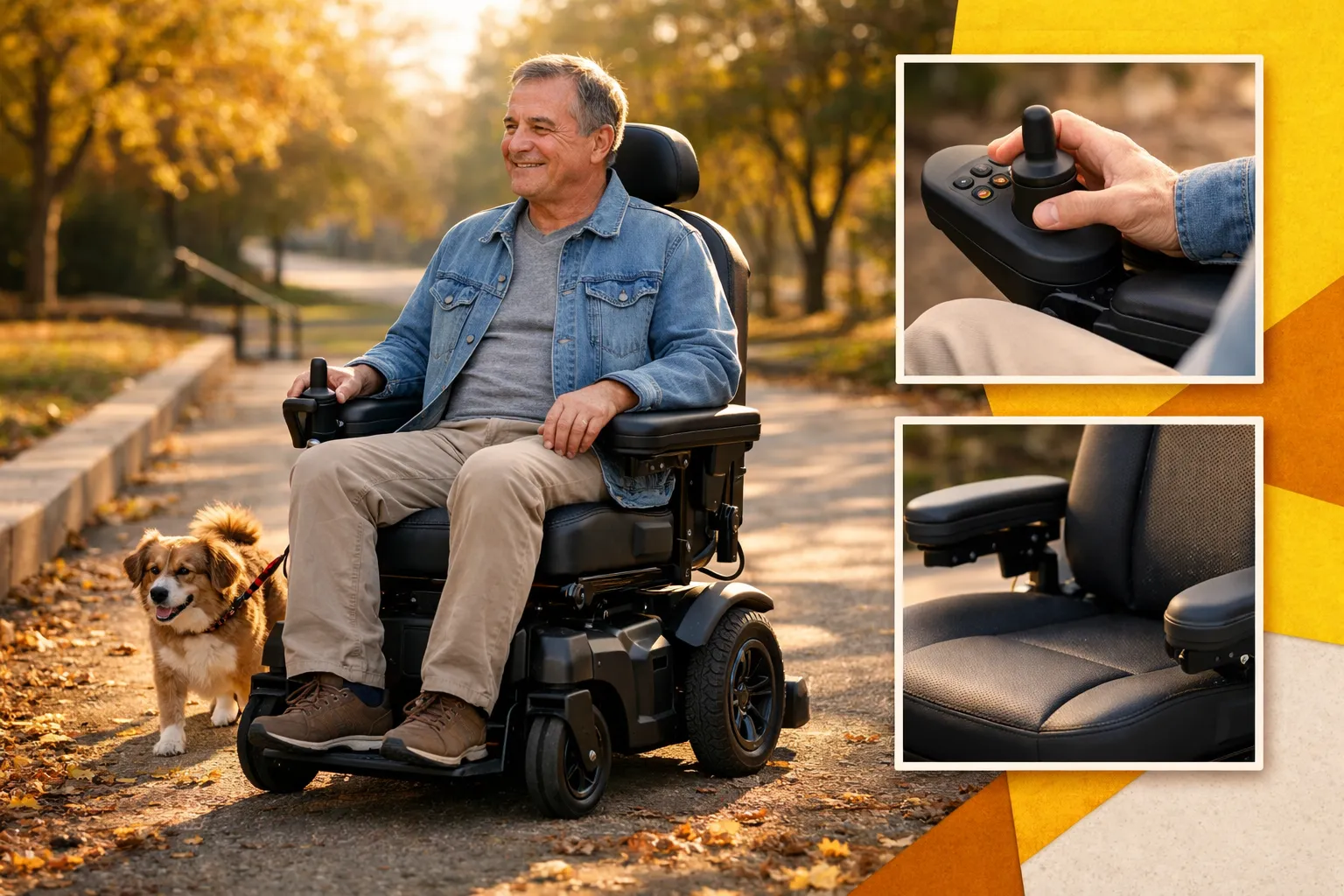
What is the turning radius needed for indoor power wheelchair use? If you have ever tried to swing into a bathroom or pivot around a kitchen island and felt your power chair hesitate, you already know how much the answer matters. The right turning radius is the quiet hero behind smooth, stress-free movement at home, and it is the difference between “I can do this on my own” and “I need to back up and try again.” When I helped a family friend set up his small condo, the single best upgrade was matching his chair’s turning ability to each room and then swapping two door hinges for extra clearance; suddenly, tight spaces felt like open roads.
This guide breaks down room-by-room specifications, door clearance realities, and which power wheelchair styles tend to fit where, all in plain language. You will find practical measurements, simple ways to test your space, and buying insights that go beyond the brochure. Throughout, I will point to how Go Wheelchairs supports you with a curated selection of standard and heavy‑duty power wheelchairs (primarily Pride/Jazzy models), lightweight foldable designs, and personalized guidance on insurance and Medicare coverage — including paperwork and prior‑authorization support — so you can choose confidently without overpaying or guessing. They provide documentation and appeals assistance but do not perform clinician face‑to‑face evaluations and cannot guarantee payer approval.
Before we dive in, picture a circle drawn on your floor with painter’s tape, about the size of a dinner table, and imagine your chair twirling fully inside it. That circle is the turning space you are planning for, and understanding it will help you breeze through doorways, square up at the sink, or do a neat three-point turn in the hallway without scuffing paint or bumping elbows. Let us translate specs into everyday movement and show you exactly how to make your home work with your power chair instead of against it.
What is the turning radius needed for indoor power wheelchair use?
Turning radius is the minimum distance from the center of the turning circle to the outermost point of the power wheelchair as it makes a complete spin. Think of it as half the size of the circle your chair needs to rotate 180 to 360 degrees without inching forward or backward. Manufacturers may publish a “turning radius” or a “turning diameter,” and the terms can be confusing: turning diameter is the full width of the required circle, while turning radius is half of that figure. Real-world turning also depends on your footplate, anti-tip wheels, and armrests, because these parts can stick out beyond the base, so the practical number at home can be a little larger than the brochure suggests.
Typical mid-wheel drive (MWD) chairs list a turning radius around 20 to 22 inches, creating a circle roughly 40 to 44 inches across, which is excellent for tight interiors. Front-wheel drive (FWD) models often land in the 22 to 25 inch range, trading a tad more space for smoother curb climbing and outdoor traction. Rear-wheel drive (RWD) chairs may need 25 to 28 inches or more, and heavy-duty or bariatric options can push into the high 20s or low 30s. Some compact, portable power chairs can dip under 20 inches, but product specifications vary — for example, Go Wheelchairs’ Go Chair® lists a 25.5 inch turning radius — so always check the published measurements for the models you are considering. Your goal indoors is simple: match your home’s tightest spots to a chair that turns inside them with a little buffer for comfort and safety.
| Term on Spec Sheet | Plain-English Meaning | Why It Matters Indoors |
|---|---|---|
| Turning Radius | Half the circle needed for a full spin, measured from the center to the chair’s farthest point | Smaller means you can pivot in tighter spaces without three-point turns |
| Turning Diameter | The full circle your chair needs to complete a 360-degree turn | Useful for checking if a bathroom or kitchen can fit a full spin |
| Overall Width | The widest part of the chair, usually across the armrests | Determines whether you clear doorways and narrow halls |
| Overall Length | Front to back, including footplate and anti-tip wheels | Affects how easily you position for transfers or face a sink |
| Drive Type | Where the main drive wheels sit: mid, front, or rear | Influences indoor maneuverability, curb handling, and outdoor stability |
Why does it matter for door clearance, hallways, and room-by-room planning?

Indoors, inches add up. A hallway that is only a smidge too narrow will force awkward three-point turns, and a bathroom that misses the circle by a few inches can become a daily obstacle course. Accessibility guidelines such as the ADA (Americans with Disabilities Act) call for at least 32 inches of clear door width when opened to 90 degrees and recommend a 60 inch diameter turning space to allow a manual wheelchair to spin, and those benchmarks are a smart starting point for power chairs as well. Many homes, especially older ones, have doors that measure 28 to 30 inches across the slab, which often translates to less than 28 inches of clear opening once you account for the door stop and hinges. The great news is that small tweaks, like swing-clear hinges or repositioning furniture, can unlock big mobility wins without major renovations.
In kitchens and bathrooms, aim for that 60 inch diameter turning space where possible, or plan for an alternative T-shaped turning area so you can enter, align, and back out without scraping knuckles. Bedrooms benefit from 36 to 42 inches of path width to roll around the bed, and living rooms feel better when you can trace a roughly 45 to 50 inch circle near your favorite chair or the television. If you rely on a heavy-duty model, budget a few more inches, or choose a chair with a shorter footprint and mid-wheel drive to keep the turning circle manageable. Go Wheelchairs helps you map these realities to actual models, using simple questions about your layout and your daily routines to narrow choices fast.
| Space | Practical Target | Works With | Quick Fixes If Tight |
|---|---|---|---|
| Entry Door | 32 to 36 inches clear width at 90 degrees | Most mid-wheel and many front-wheel chairs | Swing-clear hinges, remove storm-door closer, adjust strike plate |
| Hallway | 36 inches minimum path, 42 inches feels roomy | Mid-wheel drive thrives; compact travel chairs excel | Declutter walls, relocate console tables, use low-profile handrails |
| Kitchen | 60 inch turning circle or T-shaped turn | Mid-wheel and compact chairs; cautious with rear-wheel drive | Pull island stools, roll-out shelves, angle appliances for approach |
| Bathroom | 60 inch turning circle ideal; 48 to 54 inches workable with planning | Compact/mid-wheel; heavy-duty may need T-turn and careful positioning | Swing-clear hinges, offset sink trap, remove vanity doors, lever handles |
| Bedroom | 36 to 42 inch paths around bed | Most standard chairs with thoughtful furniture layout | Raise bed slightly, slide nightstands, mount lamps on wall |
| Living Room | 45 to 50 inch circle near seating | All drive types; heavy-duty needs smart furniture spacing | Use furniture sliders, angle coffee table, manage cord clutter |
How does it work inside a real home, and how do you choose the right fit?
Turning feel comes from how a chair’s weight and drive wheels interact with the floor. Mid-wheel drive (MWD) often spins almost in place, because the main wheels sit under the user’s center of gravity, making it a favorite for tight interiors and quick pivots in bathrooms or galley kitchens. Front-wheel drive (FWD) tracks smoothly over thresholds and uneven surfaces, and it can handle approach angles to doorways gracefully, though it may sweep a slightly larger arc in a pure spin. Rear-wheel drive (RWD) offers outdoor stability at speed and on inclines, but it typically needs the most room to pivot. Add in the chair’s length, footplate projection, and joystick sensitivity, and you have the recipe for how nimble it will feel in your home’s pinch points.
When choosing a model, start with a tape measure and a “mock loop” through your daily routine. Measure your tightest door’s clear width when opened to 90 degrees, the narrowest hallway span, and the biggest open floor circle you can carve out in your bathroom and kitchen. If your bathroom only allows a 48 inch circle, shortlist chairs with a published turning radius of 22 inches or less, and then budget an extra inch or two as a real-world buffer for footplates. If you are eyeing a heavy-duty chair for higher weight capacity, favor mid-wheel drive variants or those with compact footprints, and plan strategic fixes like swing-clear hinges at bathroom and bedroom doors. Go Wheelchairs’ advisors can walk you through these numbers, and even help you explore HCPCS (Healthcare Common Procedure Coding System) coding for coverage discussions with your clinician.
| Drive Type | Typical Turning Radius | Indoor Strengths | Watch Outs |
|---|---|---|---|
| Mid-wheel drive (MWD) | About 20 to 22 inches (typical; product specs vary) | Excellent pivot-in-place feel; shines in bathrooms and small kitchens | May feel “tippy” on very uneven terrain without suspension |
| Front-wheel drive (FWD) | About 22 to 25 inches (typical; product specs vary) | Smooth over thresholds; good approach angles to doorways and sinks | Needs a bit more space for a pure 360-degree spin |
| Rear-wheel drive (RWD) | About 25 to 28 inches (typical; product specs vary) | Stable outdoors and at higher speeds | Largest indoor turning circle; plan furniture and doors carefully |
| Heavy-duty/bariatric | About 27 to 32 inches (typical; product specs vary) | Durable, supportive for higher weight capacities | Pair with layout tweaks; consider swing-clear hinges and T-turns |
| Compact/portable | Varies (some models below 20 inches; product specs vary) | Great in micro-apartments, elevators, and tight hallways | May trade off range, ride quality, or seating options |
Try this simple home test to validate a candidate chair. Tape a circle on your bathroom floor equal to twice the published turning radius, and see if you can position that circle where you need to face the sink or toilet without blocking the door swing. Then, walk a “chair route” from entry to bedroom, measuring narrow points and noting any tight S-turns. A few small upgrades often pay off: swing-clear hinges can add roughly 1.5 to 2 inches of clear door width, low-profile thresholds smooth transitions, and a wall-mounted shelf can replace a bulky table along a hallway. Go Wheelchairs keeps a resource hub with checklists, comparison tools, and travel tips to make this process easier, and their team can suggest standard and heavy‑duty power wheelchair options from their curated selection that respect your space and your coverage needs.
| Upgrade | What It Does | Typical Gain | Notes |
|---|---|---|---|
| Swing-clear hinges | Moves door fully out of the opening | About 1.5 to 2 inches of clear width | Low-cost, quick to install, renter-friendly in many cases |
| Offset/retrofit hinges | Shifts hinge pivot outward | About 0.75 to 1.5 inches of clear width | Good for older doors that cannot use swing-clear hardware |
| Remove door stops/trim | Reclaims space on jambs | About 0.5 to 1 inch of clear width | Use carefully; may affect appearance or code compliance |
| Reverse swing direction | Prevents the door from blocking a turning path | Varies by layout | Combine with lever handles for easier reach |
Common questions
Is a smaller turning radius always better?
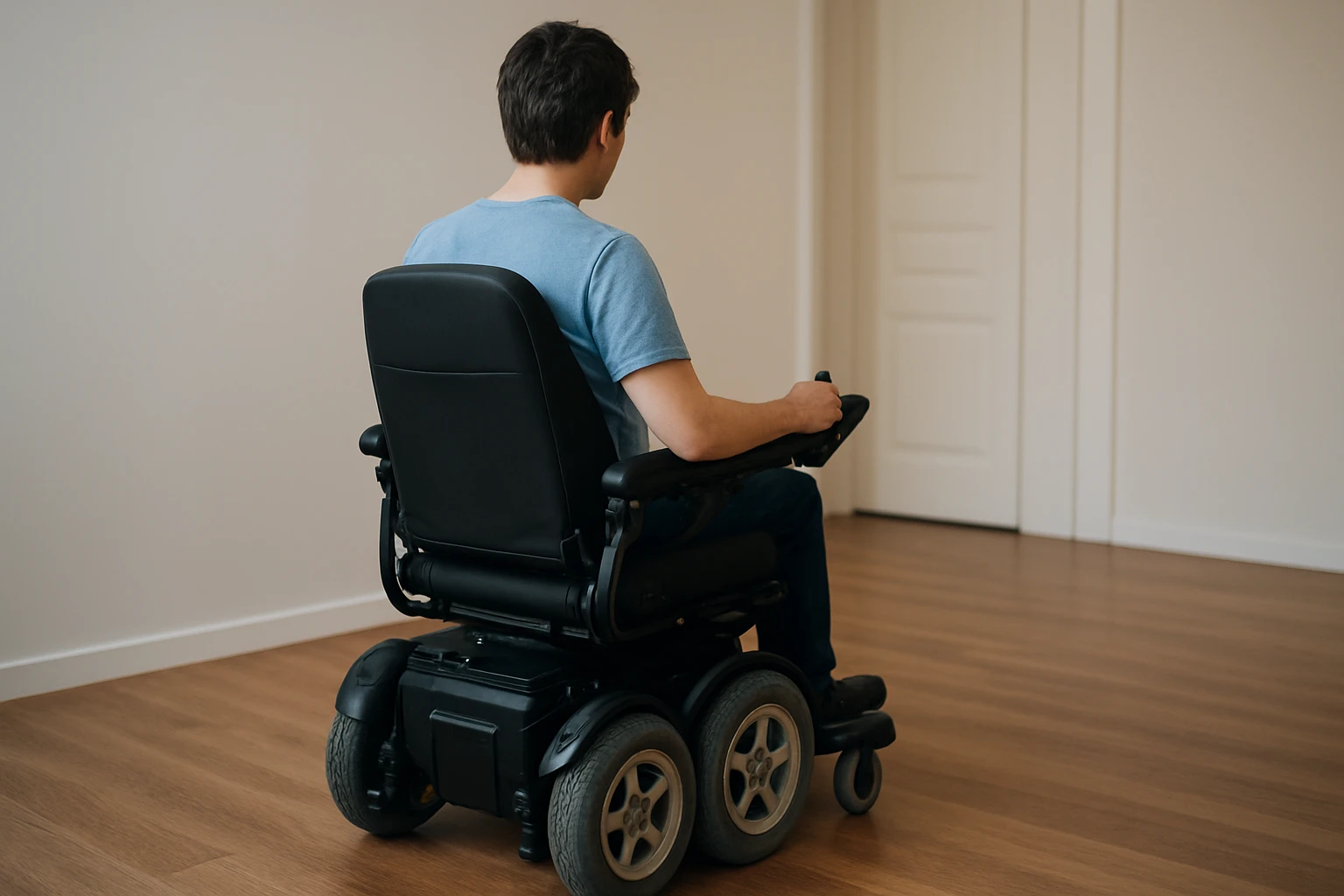
Smaller is usually better indoors, but balance it with stability, comfort, and your daily routes. A compact, ultra-tight turn shines in small apartments and bathrooms, while a slightly larger but smoother-driving chair may feel better if you spend time outdoors or on uneven floors. If you need higher weight capacity, a mid-wheel heavy-duty model can keep the circle decent without sacrificing support. The sweet spot is a chair that turns cleanly where you live most and still matches your body, posture, and terrain.
What door width do I really need for a power wheelchair?
Aim for at least 32 inches of clear width with the door opened to 90 degrees, measured between the face of the door and the door stop. Many interior doors are 30 inches or less, which can feel tight with armrests and knuckles passing through. If you cannot widen the opening, swap in swing-clear or offset hinges, and check whether removing a storm-door closer or adjusting a strike plate gives you the extra wiggle room. A couple of smart tweaks often turn a “no-go” doorway into one that rolls just fine.
Can heavy-duty chairs work in small bathrooms?
Yes, with thoughtful planning. Favor mid-wheel drive heavy-duty models that keep turning radius as low as possible, and design a T-shaped turning area with clear approach to the sink and toilet. Swing-clear hinges on the bathroom door and a floating vanity can open space dramatically. If the circle is still tight, practice a smooth two- or three-point turn near the doorway so you can align comfortably without bumping.
What is the difference between a zero-turn scooter and a power wheelchair for indoor use?
Zero-turn scooters can pivot very tightly by electronically coordinating front and rear wheels, but they often have a longer overall length and different steering dynamics than joystick-driven power wheelchairs. Scooters may struggle in cramped bathrooms where a short wheelbase chair glides. Power chairs with mid-wheel drive excel in pure pivoting and fine joystick control around fixtures and cabinets. If your home has several tight rooms, a mid-wheel power chair generally feels more precise.
How do I measure my home to pick the right turning radius?
Grab a tape measure, painter’s tape, and a notepad. Record the narrowest door’s clear width at 90 degrees, the tightest hallway span, and the largest open circle you can plot on bathroom and kitchen floors. Compare those numbers to published turning radius or diameter, and add a small comfort buffer for footplates and armrests. If your bathroom circle is 48 inches, target a chair with 22 inches of radius or under; if your kitchen can host 60 inches, you have flexibility to choose based on comfort and seating features.
What if I rent and cannot renovate?
You still have options. Swing-clear hinges, furniture rearrangement, low-profile thresholds, removable ramps for single steps, and lever door handles are often renter-friendly and reversible. Compact or mid-wheel drive chairs pair well with these small adjustments. Keep receipts and photos; many landlords appreciate improvements that benefit future tenants too.
How do elevators, landings, and condo hallways affect my choice?
Elevators typically require enough room to enter, rotate, and exit facing forward, and a compact turning circle helps a lot. Measure the cab interior width and depth, then check whether you can spin a circle that matches your target turning diameter. Condo or apartment hallways can be narrower than single-family homes, so favor chairs with strong pivot-in-place behavior and test approach angles to your door. If your building has tight lobbies, practice a smooth two-point reposition to line up with the elevator call buttons.
Does Medicare cover chairs with smaller turning radii?
Coverage depends on medical necessity documented by your clinician and how the chair supports in-home mobility, not just the turning radius itself. That said, if a specific configuration enables safe use inside your home, that detail can be part of the clinical justification. Go Wheelchairs offers guidance on insurance and Medicare, helping you understand paperwork, coding, and documentation. They provide assistance assembling prior‑authorization packets and appeals support but do not perform clinician face‑to‑face evaluations and cannot promise approval.
Any real-world example of a quick win?
A client in a 1950s bungalow had a bathroom that allowed only a 50 inch circle. We targeted a mid-wheel drive chair with a published 21.5 inch radius and installed swing-clear hinges on the bathroom and bedroom doors. Net result: about 2 inches more door clearance, a smooth two-point turn near the vanity, and a morning routine that went from frustrating to calm. Small numbers, big difference.
When should I consider a lightweight, foldable power chair?
If you travel frequently, have an elevator with a narrow cab, or need to stash your chair in a compact entryway, a lightweight foldable design can be brilliant. Some foldables can offer sub-20 inch turning radii, but specific models vary — always check published specifications for the chairs you are considering. Pair that with airline or car travel needs, and the convenience is hard to beat. Go Wheelchairs curates options that balance portability with comfort so you are not trading away stability you need at home.
How can Go Wheelchairs help me get this right the first time?
Their team starts with your layout and lifestyle, not just the catalog, then matches you to a curated selection of standard and heavy-duty power wheelchairs that fit your rooms. You will get personalized guidance, help with insurance and Medicare steps (including paperwork and prior‑authorization support), and access to a resources hub full of buying guides, comparison tools, and travel tips. They provide paperwork and appeals assistance but do not perform clinician face‑to‑face evaluations or guarantee payer approval. If you want, they will even talk through hinge swaps and quick layout wins so your home and chair work together. The outcome is confidence: a chair that moves like it belongs in your space.
Conclusion
Smart turning radius planning transforms everyday indoor spaces into effortless, independent movement.
Imagine gliding through doorways, pivoting at the sink, and lining up for transfers without a second thought, because your chair and your rooms finally match. In the next 12 months, a few tape-measure checks and small hinge swaps could unlock your best routes at home. Which room will you optimize first, and what is the turning radius needed for indoor power wheelchair use for your space?
Find Your Indoor Turning Radius Fit with Go Wheelchairs
Explore Go Wheelchairs’ curated selection of standard and heavy-duty power wheelchairs with personalized guidance and Medicare or insurance help, so you move confidently and independently at home.