If you rely on a wheelchair every day, a few simple wheelchair maintenance tips can be the difference between a smooth week and an unexpected breakdown. Think of your chair like a trusted car or laptop: it works hard, quietly, until one tiny part cries out for attention. The good news is most problems are preventable with small, consistent habits. I learned this the hard way years ago after a spontaneous coffee spill fried a joystick port. One wipe and a protective cover would have saved me a week of downtime and a rush repair bill.
So, let’s keep your wheels rolling. In the next few minutes, you will learn overlooked ways to protect batteries, banish caster tangles, set tire pressure correctly, and spot issues before they become emergencies. Whether you use a motorized chair, and whether your coverage includes Medicare or another health insurance plan, you will leave with practical steps you can start today. And if you want a partner who gets it, Go Wheelchairs offers guidance and a wide range of powered wheelchair solutions to fit your lifestyle and coverage needs.
Why Simple Maintenance Matters Every Single Day
Small tweaks add up. Many service providers report that a significant share of power chair service calls stem from preventable battery issues, like deep discharges or chronic overcharging. Meanwhile, biomechanics lab testing shows that properly inflated tires can cut rolling resistance by double-digit percentages, which reduces shoulder strain and improves range. These are not just comfort wins. They show up in your daily independence, from the extra block you can travel to the energy you still have in the evening.
There is also the money side. Catching a loose bolt or frayed cable early can avoid bigger repair costs later. Some Medicare and other health insurance plans may cover medically necessary repairs for DME [durable medical equipment], but coverage varies by insurer and circumstance; routine maintenance is often the owner’s responsibility. That is why a five-minute weekly check beats a long wait for parts. Consider this your friendly, real-world playbook, built from lived experience, technician wisdom, and what we see at Go Wheelchairs when we help riders choose reliable, maintainable chairs.
The 10 Wheelchair Maintenance Tips Everyone Forgets
-
1. Charge Smarter, Not Harder
Battery care is the number one overlooked habit. For sealed lead acid [SLA] batteries, slow, full overnight charges are better than quick top-ups. For Li-ion [lithium-ion] packs, partial charges are fine, but avoid frequent 0 to 100 percent cycles. Never leave chargers plugged into the wall endlessly, and avoid extreme temperatures. Heat and cold can permanently reduce capacity, so do not store or charge your chair in a hot car or an unheated shed.
Pro move: check the charger and power port for corrosion and wobble. A slightly loose plug causes intermittent charging that shortens battery life. Use a surge protector, keep the charger’s vents clear of dust, and follow your OEM [original equipment manufacturer] guidance. If your joystick or display shows unusual voltage swings or the LED [light emitting diode] bar graph drops quickly, schedule a battery test before range becomes a crisis.
-
2. Set Tire Pressure Like a Pro
Underinflated pneumatic tires create drag, chew through energy, and stress your shoulders. Keep pressure within the range printed on the tire, often checked in PSI [pounds per square inch]. A small digital gauge is more accurate than a thumb press. Lab tests suggest that staying within 10 percent of the recommended PSI can significantly reduce rolling resistance. That translates to longer battery range on power chairs and improved efficiency.
For solid tires, inspect for flat spots, cracks, and embedded debris. Replace when tread is worn or the ride feels harsh. A monthly tire check is a tiny habit with huge payoffs, especially if you traverse gravel, curb cuts, or winter salt. And if you are planning a trip, make this part of your pre-travel checklist to avoid surprises on the road.
-
3. Unwind the Casters
Casters collect hair, string, and small debris that can seize bearings and skew alignment. Flip the chair safely or use a mirror to inspect the forks. If you see a fuzzy halo, cut it away carefully. Then spin the wheels; they should move freely and silently. Any grinding or wobble means the bearings may be dry or worn.
Pro tip: a tiny drop of appropriate lubricant on the axle (not the tire) can restore smooth motion, but always follow OEM [original equipment manufacturer] recommendations. Many technicians say caster gunk is a top cause of steering issues. A quick five-minute cleanup each month can prevent the dreaded caster shimmy and keep turns precise.
-
4. Test Brakes and Anti-Tip Wheels
Parking brakes must hold on slight slopes without slipping. If your chair rolls even a little with brakes engaged, they likely need adjustment. For powered chairs, test anti-tippers for smooth rotation and secure mounts. These small wheels are your safety net during ramps and sudden stops.
Check brake pads for glazing or wear. Listen for squeaks, which can indicate misalignment or contaminants. And because emergencies do not schedule themselves, make this a weekly routine. A minute of testing today is worth a thousand moments of peace when you are outside on a busy sidewalk.
-
5. Care for Cushions and Upholstery
Seating is more than comfort; it is skin health and posture. For air cushions, verify inflation regularly using the manufacturer’s process. Foam cushions should rebound evenly and not show permanent dips. Covers trap sweat and debris, so wash them with mild detergent and dry fully to avoid odors and bacteria.
Scan fabric seams, arm pads, and backrests for tears or loosened hardware. If you feel new pressure points or notice redness after sitting, investigate immediately. Sometimes a small adjustment in cushion position or tensioning the back fabric brings relief. And if you are not sure, Go Wheelchairs can point you to seating specialists and practical guides in our resources hub.
-
6. Tighten the Frame and Fasteners
Chairs are bundles of bolts under constant load. Over time, vibration loosens fasteners and introduces squeaks. Keep a compact tool kit with metric and imperial hex keys, a small adjustable wrench, and threadlocker for non-moving bolts. Work methodically, checking high-stress areas like cross-braces, footplates, armrests, and battery trays.
If you find a bolt that repeatedly loosens, it could be signaling a bigger issue like a stressed joint or bent component. Mark fasteners with a small paint line so you can spot movement at a glance. A simple quarterly torque check can extend the life of motorized frames and keep the ride whisper-quiet.
-
7. Protect Joysticks, Displays, and Cables
Electronics do not love moisture, crumbs, or tugging. Keep joystick boots intact, wipe around buttons, and route cables so they are not pinched. If your controller has a USB [Universal Serial Bus] port, use a dust plug when not in use. Inspect connectors for oxidation and ensure strain relief collars are seated.
Sudden power cuts while turning, error codes, or flickering LCD [liquid crystal display] screens are early warnings. Before panicking, perform a quick reseat of connectors with the power off. If issues persist, note the pattern and contact support. At Go Wheelchairs, our team can walk you through triage steps and, if needed, schedule certified service without the guesswork.
-
8. Clean Without Soaking
Pressure washers are satisfying, but they push water into bearings and electronics. Instead, use a damp cloth with mild soap for frames, followed by a dry towel. Q-tips for tight spots, a soft brush for tread, and compressed air for dust in vents all help. If you roll through salt or beach sand, rinse those areas with fresh water and dry thoroughly to prevent corrosion.
Mind the IP [ingress protection] rating if your power chair lists one. Most are water resistant, not waterproof. Store your chair indoors away from direct sun, which can fade fabrics and degrade plastics under UV [ultraviolet] exposure. A simple, breathable cover keeps dust off and looks tidy too.
-
9. Transport and Storage Done Right
When loading into vehicles, use proper tie-down points and avoid lifting by armrests or joystick stalks. If you travel often, a folding or modular frame reduces lift effort and the risk of damage. For air travel, attach a printed card with battery type, folding instructions, and handling notes. Airlines appreciate clarity, and so does your chair.
If you will not use the chair for a few weeks, store it clean with batteries around 40 to 60 percent for Li-ion [lithium-ion] and fully charged for SLA [sealed lead acid]. Top up monthly. Cold garages sap capacity, so aim for a moderate, dry space. A little storage planning preserves range and keeps you ready to roll.
-
10. Keep a Maintenance Log
Write down what you did, when you did it, and what you noticed. A phone note or simple calendar reminder works. Logs help you catch patterns, like a front caster that loosens every six weeks or a battery that fades after specific trips. Bring this record to service appointments and decisions become faster and cheaper.
Your log also supports coverage conversations. While coverage varies, documented repairs for DME [durable medical equipment] often help when medically necessary. If you ever upgrade, a well-maintained chair with records keeps resale value higher. And of course, you will feel more confident every time you head out the door.
Watch This Helpful Video
To help you better understand wheelchair maintenance tips, we’ve included this informative video from Spencer2TheWest. It provides valuable insights and visual demonstrations that complement the written content.
Quick-Reference Schedule and What to Check

Use this table as a practical baseline. Your manual may suggest different intervals, and terrain or weather can speed up wear. The goal is a simple rhythm that saves money, time, and energy. Tweak the cadence to your life, then set repeating reminders so it runs on autopilot.
| Component | Motorized Chair: Frequency | What to Look For | Quick Fix You Can Do |
|---|---|---|---|
| Tires and Tread | Weekly PSI [pounds per square inch] check | Low pressure, cuts, worn tread | Inflate to spec, remove debris |
| Casters | Monthly | Hair wrap, wobble, grinding | Cut tangles, clean, light lube per OEM [original equipment manufacturer] |
| Brakes and Anti-tip | Weekly quick test | Slip on slope, stiff anti-tips | Adjust lever, free up rotation |
| Battery and Charger | Nightly charge, quarterly test | Short range, hot charger, error codes | Inspect ports, reseat cables, schedule test |
| Electronics and Cables | Monthly visual | Frayed wires, loose connectors | Reroute, secure, dust covers for USB [Universal Serial Bus] |
| Seating and Upholstery | Monthly | Sag, tears, uneven cushion | Wash cover, reposition, inflate air cells |
| Frame and Fasteners | Quarterly | Loose bolts, squeaks, cracks | Tighten, mark bolts, consult on cracks |
| Cleaning | Weekly wipe-down | Dirt, salt, sticky residue | Damp cloth, dry fully, avoid soaking |
Troubleshooting: Early Warning Signs You Should Not Ignore
Most chairs whisper before they shout. A faint squeak, a new vibration, or a battery gauge that drops faster than usual are all early clues. If something feels off, it probably is. Catch it when it is small. That is the heart of good maintenance and the stress relief we all want.
- Range drop after normal routes: check tire pressure, add a full charge cycle, and inspect for dragging brakes.
- Joystick lag or cut-outs: reseat connectors, test with a different cable if available, and keep the controller dry and clean.
- Pulling to one side: remove hair from casters, check caster alignment, and inspect frame square.
- New pressure points or soreness: verify cushion setup, cover tension, and seat depth; adjust before skin issues appear.
- Clicks or creaks while turning: tighten fasteners at cross-braces, forks, and arm supports.
When in doubt, write down what happened, where, and what you were doing. Patterns make causes obvious. If you need help, Go Wheelchairs can triage by phone, connect you to certified technicians, and advise on whether a repair may be covered by your plan. We aim to keep you rolling, not waiting.
Your Essential Toolkit and Supplies
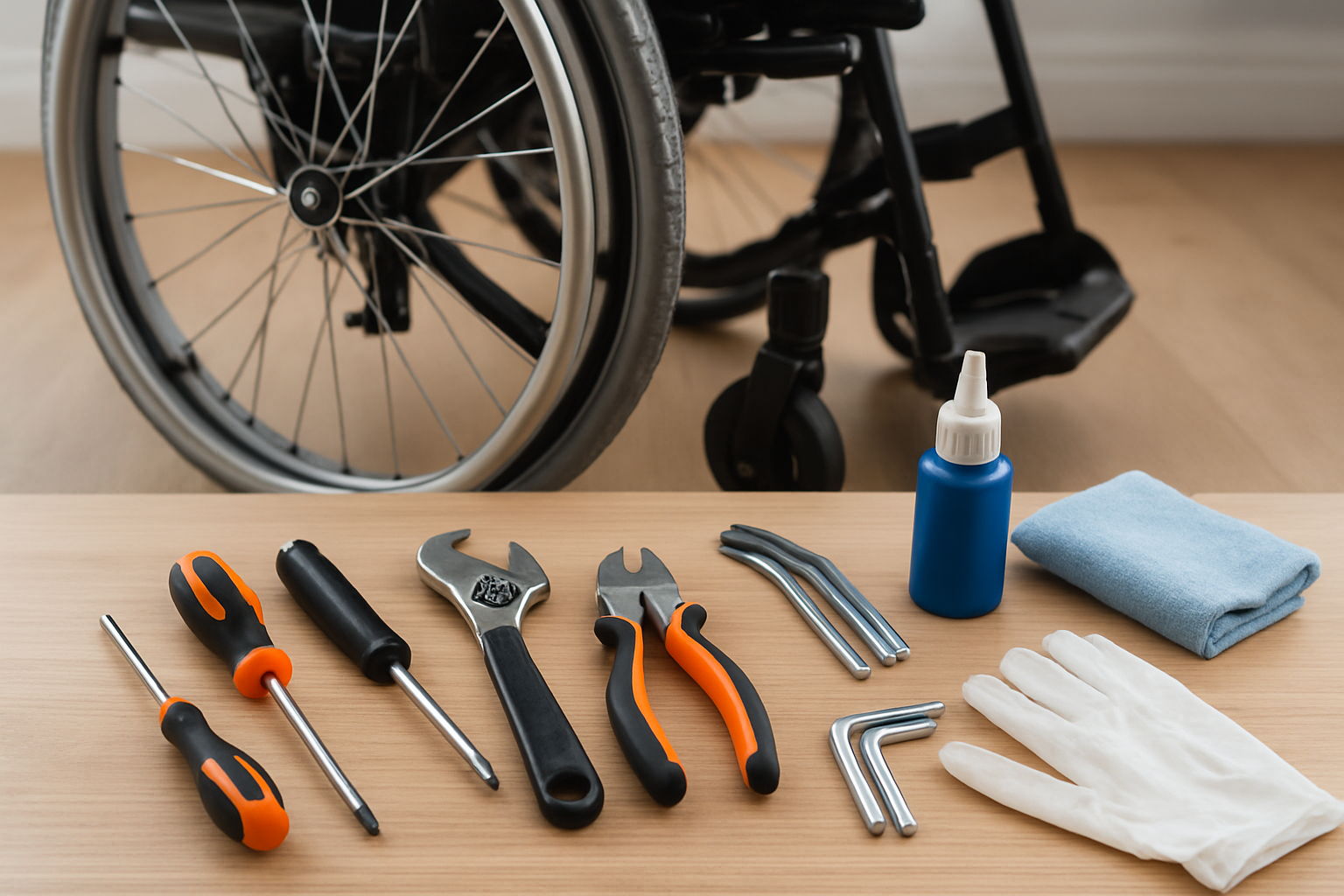
Keeping a small kit nearby turns maintenance from a chore into a quick win. Store it in a pouch on your chair or by the door. You will use it more often when it is easy to reach, and that convenience adds up to fewer surprises and longer-lasting parts.
| Item | Purpose | Suggested Spec | Approx. Cost (USD [United States dollar]) |
|---|---|---|---|
| Digital Tire Gauge | Accurate PSI [pounds per square inch] checks | 0 to 150 PSI [pounds per square inch], backlit | 10 to 20 |
| Compact Pump | Top up tires on the go | With gauge, fits Schrader/Presta | 20 to 40 |
| Hex Key Set | Tighten most bolts | Metric and imperial sizes | 10 to 25 |
| Adjustable Wrench | General fasteners | Small, smooth jaws | 10 to 20 |
| Threadlocker | Keep non-moving bolts secure | Medium strength | 6 to 10 |
| Microfiber Cloths | Gentle cleaning | Lint-free, washable | 6 to 12 |
| Small Brush/Q-tips | Detail cleaning, casters | Soft bristle | 3 to 8 |
| Cable Ties | Secure loose wires | Reusable if possible | 5 to 10 |
| PPE [personal protective equipment] Gloves | Protect hands while cleaning | Nitrile or similar | 5 to 15 |
| Surge Protector | Protect charger and electronics | UL-listed | 10 to 25 |
If your chair uses specialty parts, add spares to your kit: a spare inner tube, fuses, and an OEM [original equipment manufacturer] battery cable. Keep the manual handy, too. It is your quick guide for torque specs, battery types, and error code meanings without hunting online when you are in a hurry.
How Go Wheelchairs Helps You Stay Rolling
Finding a chair you can trust should not feel like a maze, especially when you are balancing comfort, performance, and coverage rules. Go Wheelchairs is dedicated to providing reliable, motorized wheelchairs at fair prices with coverage options through Medicare and other health insurance providers. Our team pairs product know-how with real-world guidance, so you do not have to guess which features matter for your daily routes, terrain, and storage space.
Here is what sets Go Wheelchairs apart for riders who care about maintenance as much as mobility:
- Wide range of standard and heavy-duty motorized wheelchairs designed for durability and daily use.
- Lightweight, foldable wheelchair designs that simplify transport and reduce damage during loading.
- Personalized support and guidance so you pick a chair that matches your maintenance comfort level and environment.
- Insurance and Medicare assistance that clarifies coverage for DME [durable medical equipment] repairs and replacements.
- A deep resources hub with buying guides, comparison tools, and travel tips to keep you informed and confident.
Real story: a customer named Maria commuted across town every day and struggled with battery performance after winter. Our specialists reviewed her log, suggested a charge routine and tire upgrades, and paired her with a heavy-duty model with better ingress protection. The result was more range, fewer service calls, and a chair that matched her routine, not the other way around. That is the kind of partnership we aim for.
Wheelchair Maintenance Tips: Your Next Step
You now have a toolkit of ideas, a schedule, and a checklist to keep nearby. The secret is consistency. Pick two habits to start this week, like a Friday tire check and a Sunday wipe-down, and let momentum carry you. If you want help choosing a chair that fits your environment and reduces future repairs, our team at Go Wheelchairs is ready when you are.
Keep this mantra close: small checks prevent big problems. Imagine your next 12 months with fewer hiccups, longer range, and a chair that feels tuned to you. Which of these wheelchair maintenance tips will you make your signature move?
Additional Resources
Explore these authoritative resources to dive deeper into wheelchair maintenance tips.
Go Wheelchairs: Smarter Choices, Stronger Mobility
Explore a wide range of standard and heavy-duty motorized wheelchairs with personalized support and coverage guidance so you move confidently and independently.