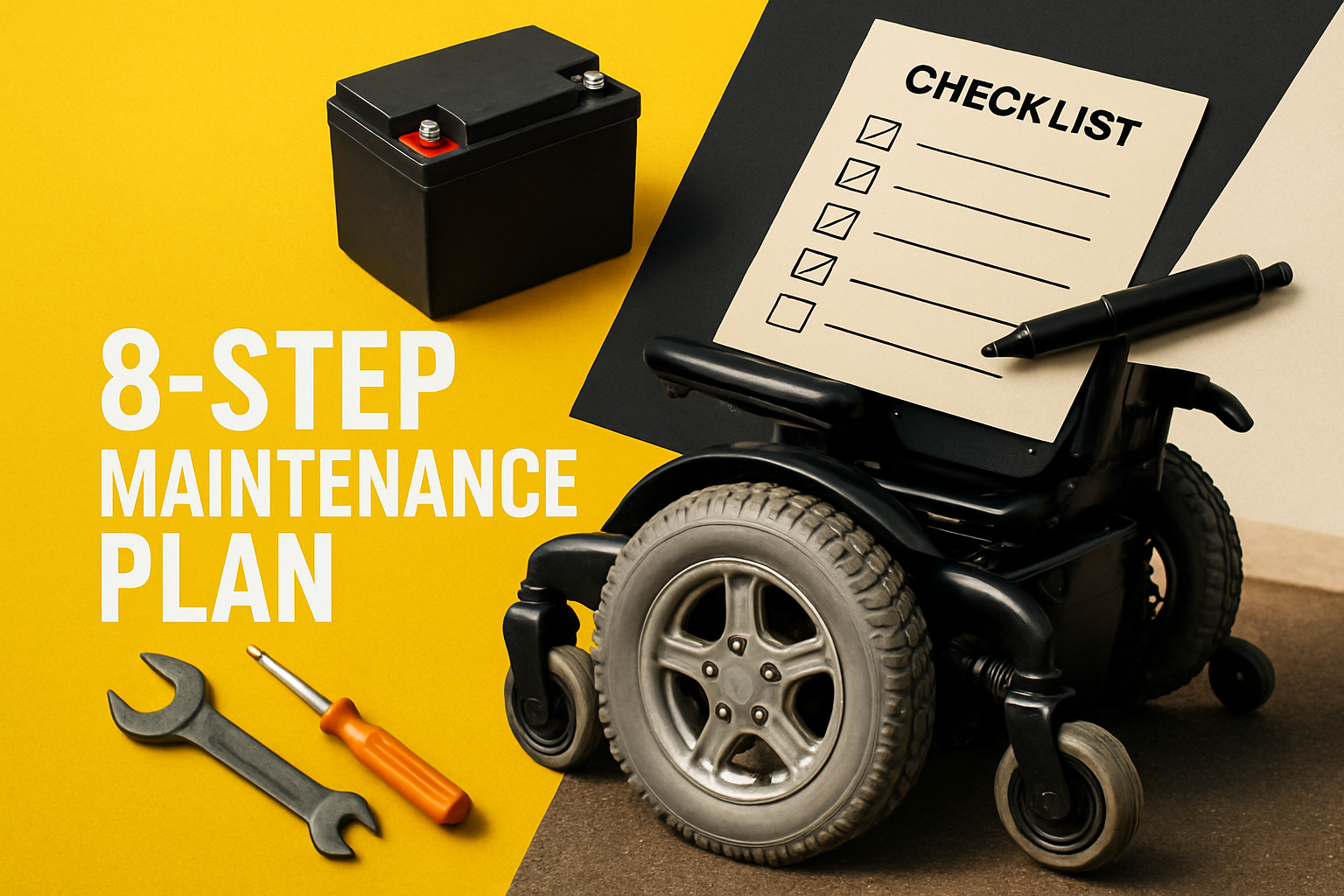
If you rely on a powered chair every day, a simple maintenance plan for electric wheelchair batteries and tires can save your schedule, your budget, and your peace of mind. Think of it like brushing your teeth for mobility gear: small, consistent habits prevent big, expensive problems. In fact, keeping tires properly inflated and charging correctly can add months, even years, to component life. In this friendly guide, you will learn the exact steps, tools, and insurer-friendly documentation guidance that keep you rolling smoothly. Note: Go Wheelchairs provides guidance and assistance assembling insurer-friendly documentation and appeals support, but does not perform clinician face-to-face medical evaluations.
I still remember the first time a friend’s power chair slowed to a crawl halfway through the farmers market. The culprit was not a dying chair, but a sagging front tire and a battery that had been quick charged for months. One low pressure tire can steal range and stress motors; mismatched charging turns batteries grumpy. The good news is that all of this is preventable with a clear checklist, a few low cost tools, and a rhythm you can follow in less than ten minutes a week.
Why Routine Care Pays Off for Battery and Tire Life
Let’s talk value, because none of us want surprise bills. Replacement battery packs can run several hundred dollars, and premature failures are often tied to habitual undercharging or frequent deep discharges. Industry experience suggests that consistent full charges and avoiding extreme temperatures can noticeably extend the life of sealed lead-acid, gel, and lithium-ion batteries; actual improvements vary by battery chemistry, usage, and climate. Likewise, keeping tires at the right pressure improves energy efficiency and stability and can increase real-world range, but the amount varies by chair model, tire type, and terrain. That is the difference between finishing errands carefree versus watching the gauge with worry.
There is also a safety side. Underinflated tires flex more, heat up, and wear unevenly, which can affect steering or even cause a slow leak after hitting a curb. Overinflation, on the other hand, reduces grip and ride comfort, especially on wet or uneven sidewalks. For batteries, extreme cold slows chemical reactions and cuts capacity, while summer heat accelerates aging. Store and charge your chair in a cool, dry place when possible, and you will feel the difference in smooth starts, predictable braking, and quiet operation.
On the coverage front, the Centers for Medicare and Medicaid Services expects proper use and care for durable medical equipment. If a component fails early, being able to show basic maintenance habits and timelines can support replacement discussions. That is one reason Go Wheelchairs encourages a simple log. A few dates and notes can shorten service calls, reduce back and forth with insurance teams, and help you avoid preventable repairs. Now, let’s turn this into an easy plan you can start today.
The 8-Step Maintenance Plan for Electric Wheelchair Batteries and Tires
- Set your weekly charging rhythm. Charge fully after daily use, ideally overnight on a smart charger matched to your battery type. Avoid frequent deep discharges below roughly one quarter remaining charge, because that adds strain. If you use your chair lightly on a given day, still top off to maintain balance across battery cells. Use the manufacturer’s charger or an approved equivalent to prevent over or under charging.
- Check tire pressure every week. Underinflated pneumatic tires sap range and make turning sluggish. Keep pressure within the specific range printed on the tire sidewall or the chair manual. Use a reliable digital gauge and a bicycle style pump for fine control. If your chair has solid or foam filled tires, inspect for cracks, flat spots, and loose fasteners instead of pressure.
- Do a quick tread and wheel inspection. Spin each wheel and listen for scraping or wobble. Look for embedded debris, uneven wear, or sidewall bulges. A small stone lodged near the fork or a tiny zip tie scraping the hub can create drag and noise. Catching that early keeps energy focused on motion, not friction.
- Wipe and inspect battery connections monthly. Dust and moisture can creep onto terminals and brackets. Power off, unplug the charger, and remove the shroud if needed. Gently wipe with a dry cloth, and if you see white powdery residue, ask a technician about safe cleaning to avoid sparks or damage. Ensure straps and brackets are snug so batteries do not jostle over bumps.
- Run a monthly range baseline. Choose a familiar route and note start and end battery indicators. If you consistently see range shrinking while usage stays the same, it can signal aging batteries, misaligned casters, or low tires. Keeping a two line note in a log helps technicians find causes quickly and strengthens warranty or insurance conversations.
- Keep spares and a mini roadside kit. Store a compact pump, valve caps, a simple patch kit or tire sealant recommended for your tire type, disposable gloves, and a small multi tool. Consider tire liners to reduce punctures if you ride over thorns or gravel often. Having basics on hand turns a day ending flat into a short pit stop.
- Mind temperature and charging habits. Avoid charging in very hot or very cold spaces like car trunks or unheated sheds. If you bring the chair in from winter weather, let the batteries come to room temperature before charging. Small changes like this reduce stress on cells, leading to steadier performance over time.
- Schedule a professional tune once or twice a year. Ask a certified technician to check motor brushes where applicable, joystick calibration, caster alignment, and braking response, along with a deeper inspection of battery health. It is like a dental cleaning for your chair. Many issues get caught long before they become expensive.
Watch This Helpful Video
To help you better understand maintenance plan for electric wheelchair batteries and tires, we’ve included this informative video from Chelsea Bear – Living With Cerebral Palsy . It provides valuable insights and visual demonstrations that complement the written content.
To make life easier, here is a quick cadence you can print or copy into your phone. If you prefer visual aids, imagine a simple calendar with short icons: a plug for charge, a tire for pressure, a magnifying glass for inspection. Keeping these rhythms turns care into second nature.
| Task | How Often | What to Do | Why It Matters |
|---|---|---|---|
| Full charge after use | Daily | Charge overnight on approved charger | Maximizes range and cell balance |
| Tire pressure check | Weekly | Use a digital gauge and top up with a pump | Improves efficiency and stability |
| Tread and debris scan | Weekly | Spin wheels, remove stones, inspect edges | Reduces drag and puncture risk |
| Battery terminal wipe | Monthly | Power off, unplug charger, dry wipe connections | Prevents corrosion and voltage drop |
| Range baseline note | Monthly | Log start and end indicators on a familiar route | Flags early battery or tire issues |
| Hardware snug check | Quarterly | Verify axle, fork, and guard fasteners | Stops rattles and uneven wear |
| Professional tune | Every 6 to 12 months | Full diagnostic and alignment by a technician | Catches small issues early |
Insurer-Friendly Checklist: What to Document and When
This is the part that most riders skip, yet it pays off when you need parts or repairs. A maintenance log shows you are using the equipment properly and can support coverage conversations with insurers, including Medicare. You do not need anything fancy. A small notebook or a notes app works. Below is a simple checklist to copy. It helps your future self, your technician, and your claims specialist speak the same language.
- Date you fully charged and any abnormal charging lights or messages you noticed.
- Tire pressure numbers or a quick note like feels low, topped up, or solid tires ok.
- Range baseline entries: neighborhood loop, started full, returned at three quarters.
- Changes in feel: pulls slightly right when turning, braking jerky on slopes, new squeak front left.
- Service visits: who, what was adjusted or replaced, and any recommendations.
- Photos of tire wear patterns or battery connections if you notice residue or corrosion.
| Document | How Often | How It Helps Coverage | Pro Tip |
|---|---|---|---|
| Charging routine | Daily or weekly summary | Shows appropriate use and care | Take a photo of the charger model label for your records |
| Tire checks | Weekly | Demonstrates preventive care to avoid avoidable flats | Note the pressure range from your manual for quick reference |
| Range baselines | Monthly | Helps justify battery evaluation or replacement | Use the same route for apples to apples comparison |
| Service logs | At each visit | Documents professional assessments and findings | Ask for a summary printout or email |
If you are unsure what to write, Go Wheelchairs can share a printable template from our resources hub that matches what many technicians like to see. Our team helps you assemble insurer-friendly documentation and prior-authorization packets, and offers appeals support—however, we do not perform clinician face-to-face medical evaluations—so you spend less time tracking paperwork and more time getting back out there. We know that individuals with mobility challenges often struggle to find dependable solutions that fit coverage rules, which is why our guidance is as practical as it is patient friendly.
Troubleshooting Table: Quick Diagnoses for Battery and Tire Issues
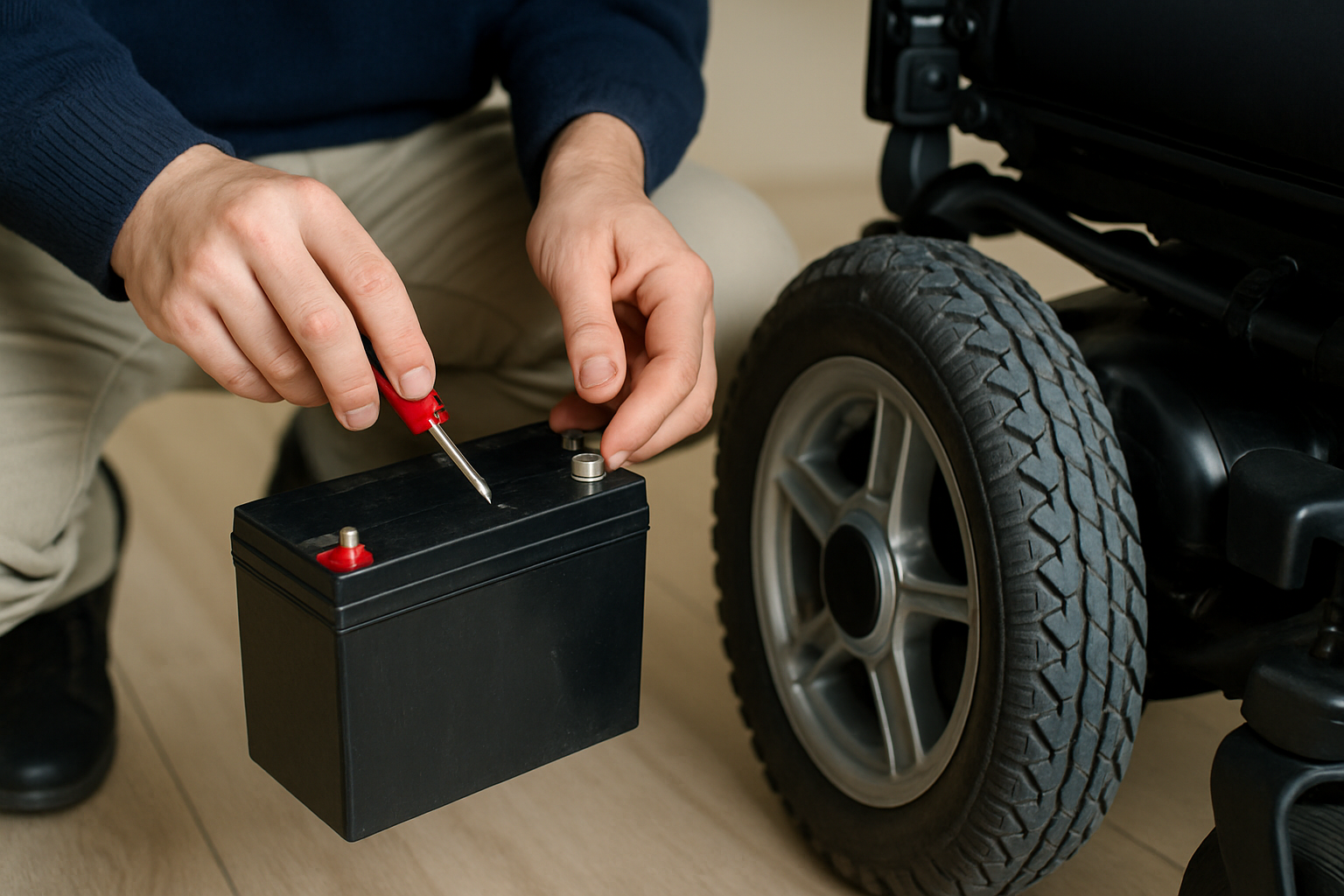
Even with the best habits, hiccups happen. Use this quick table to narrow the cause before you call a technician. A little detective work can get you rolling fast or help you explain the issue clearly to support, saving time and repeat visits.
| Symptom | What You Notice | Likely Cause | Try This First | Call a Technician If |
|---|---|---|---|---|
| Sudden range drop | Battery indicator falls faster than usual | Undercharging, aging batteries, low tires | Full overnight charge, check tire pressure, compare to last baseline | Range still short after two full cycles or batteries feel warm during charge |
| Pulls to one side | Chair drifts right or left on flat ground | Uneven tire pressure or tread wear, caster alignment | Match tire pressures and inspect tread for uneven wear | Drift persists or you see caster wobble |
| Soft or bouncy ride | Chair feels sluggish over bumps | Underinflated pneumatic tires | Inflate to recommended range and recheck after a short ride | Pressure drops again within 24 hours, indicating a slow leak |
| Charger light stays on fault | Indicator shows error for hours | Loose connection, incompatible charger, battery issue | Unplug, reseat connections, try a known good outlet | Error persists or batteries do not warm slightly during early charge |
| New squeak or scrape | Noise when turning or at low speed | Debris in wheel, loose guard, misaligned caster | Spin wheels and remove debris, tighten obvious loose guards | Noise continues or you feel vibration in the joystick hand |
Go Wheelchairs Support: Choosing the Right Chair and Keeping It Rolling
Choosing the right chair is step zero for great maintenance outcomes. A chair that matches your terrain, weight, and daily distance reduces strain on batteries and tires from day one. Go Wheelchairs offers a wide range of standard and heavy-duty motorized wheelchairs, plus lightweight foldable designs for travel or tight living spaces. Our specialists listen first, then guide you to models that fit your daily routes, room layouts, and storage spots, which makes everything from tire selection to charging flow naturally with your life.
We also know coverage can feel confusing. Our team helps you navigate insurance and Medicare requirements, explains what is considered necessary durable medical equipment, and prepares the clean documentation insurers appreciate. You get a clear path to fair pricing and responsible ownership. Meanwhile, our online resources hub brings buying guides, comparison tools, and travel tips into one place, so you can compare turning radiuses, battery types, and tire options without opening a dozen tabs.
Here is how Go Wheelchairs turns knowledge into confidence:
- Personalized support from the first call to long after delivery, so you always know who to ask.
- A curated selection that includes compact indoor whizzes and rugged outdoor champs, minimizing battery strain and tire wear in your environment.
- Insurance and Medicare guidance with friendly humans who have seen just about every scenario.
- Resources you can keep: printable maintenance checklists, seasonal care guides, and travel prep sheets.
- Service and parts help when you need it, including advice on tires, tubes, and safe charging routines.
Seasonal, Storage, and Travel Tips You Will Actually Use
Seasons change, and your chair notices. In winter, expect a temporary dip in range as batteries deliver less in the cold. Try to store and charge indoors, even if you ride outside. Wipe moisture from contact points after slush or rain to avoid corrosion. In summer, avoid leaving the chair in a hot car or sun soaked patio for long stretches. Heat ages batteries faster and can soften tire compounds, accelerating wear. A simple shade and a cool corner do wonders.
For storage, give batteries a full charge, clean connections, and keep the chair in a dry, moderate temperature space. If you will not use it for a few weeks, set a reminder to top off the charge every couple of weeks to keep cells happy. For solid or foam filled tires, a quick roll every so often helps prevent flat spotting. For pneumatic tires, recheck pressure before your first ride back to the usual routine.
Traveling by car, train, or plane? A little prep unlocks smooth trips. Secure the chair to prevent tipping or jostling that could loosen battery brackets. For flights, check the airline’s mobility device rules a week ahead and add the chair’s dimensions, battery type, and handling instructions to your reservation notes. Print a brief handling card that says, lift from frame here and do not lift by the armrests. Pack your charger in carry on when flying and label it clearly. For hotel or family visits, confirm a grounded outlet near where you plan to park and charge overnight.
Battery Types and Charging Best Practices at a Glance
While most everyday users do not need to become battery engineers, knowing your battery type helps you charge correctly and set expectations for lifespan. The table below highlights common types you will see across standard and heavy duty motorized wheelchairs offered by Go Wheelchairs, along with care notes that keep things simple.
| Battery Type | Typical Use | Charging Guidance | Care Notes |
|---|---|---|---|
| Sealed lead acid gel | Common in many power chairs | Charge fully after use, avoid frequent deep discharges | Stable and reliable, moderate weight, steady performance |
| Sealed lead acid absorbed glass mat | Comfortable mix of cost and performance | Use manufacturer approved charger, full overnight cycles | Handles bumps well, benefits from regular top ups |
| Lithium ion packs | Premium, lightweight, travel friendly models | Use only approved charger; partial charges are okay | Long life and lighter weight; observe airline rules |
Unsure which you have? Look in your manual or ask Go Wheelchairs for help. Using the right charger and a steady routine is the fastest way to protect your investment. Pair that with the weekly tire check, and you will feel your chair respond with quiet confidence and consistent range on every ride.
Frequently Asked Questions That Make Maintenance Easier
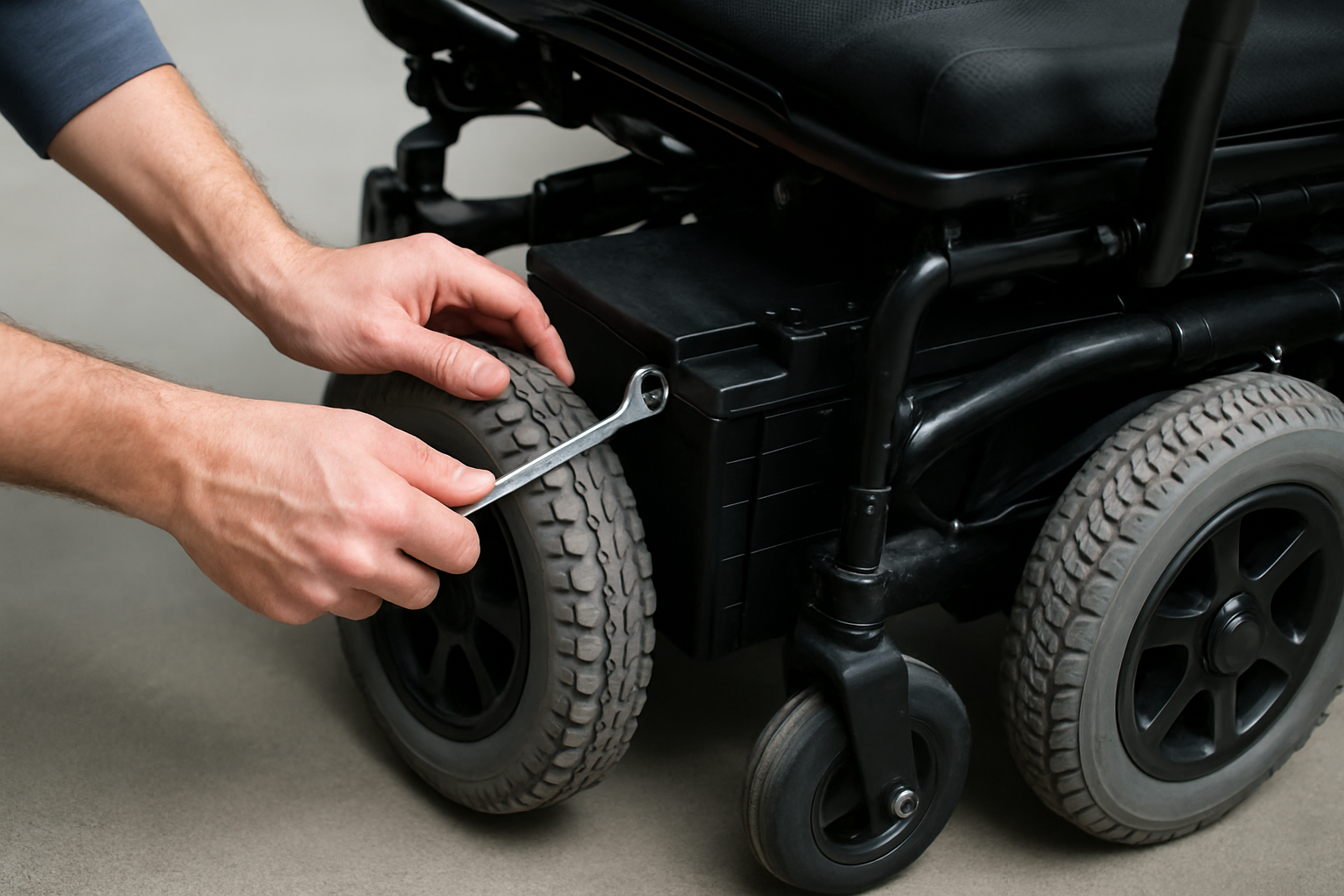
What pressure should my tires be? Check the sidewall or manual because ranges vary, but many pneumatic wheelchair tires land between forty and sixty pounds per square inch. What if I have solid tires? Focus on visual inspection, wheel hardware, and caster alignment instead. How do I store the chair for a month? Charge fully, clean connections, and top off every couple of weeks. Should I ever leave the charger plugged in all the time? Follow your manufacturer’s instructions. Many smart chargers switch to maintenance mode when full, but it is best practice to unplug and allow a cool down before the next ride.
When do batteries usually need replacement? Usage patterns vary, but many sealed lead acid and gel batteries deliver reliable service for approximately one to three years; lithium-ion packs often last longer depending on use. Heavy outdoor use, heat, and deep discharges shorten life; gentle indoor use and careful charging extend it. If you see range sliding quickly or hear the chair struggle on slopes despite good tire pressure and a clean drivetrain, it is time for a health check. Go Wheelchairs can walk you through a quick checklist before you schedule service, saving time and stress.
Putting It All Together: Your Simple Weekly Routine
Now that you have the steps, turn them into habit. Pick a day for the weekly tire check, like Sunday evening after your last outing, and keep the digital gauge and pump near your charging spot. Charge fully after daily use when possible, and glance at your range baseline once a month. Every season change, give the chair a slightly longer check, wipe battery connections, and tighten visible fasteners. And when it is time for a deeper tune, book a service visit before problems knock on the door.
Remember, Go Wheelchairs is here for the full journey. We are the supportive partner many riders wish they had years ago, with a wide range of standard and heavy-duty motorized wheelchairs and a team that helps you match features to your lifestyle and coverage. Our goal is simple: fewer surprises, smoother days, and more confidence every time you head out. Start with the maintenance habits above, and we will handle the heavy lifting when you need a new chair, new tires, or calm guidance on coverage.
Insurer-Friendly Maintenance Log Template
For quick reference, here is a simple log format you can copy into notes on your phone or print and keep by your charger. Consistency beats complexity. Two minutes once a week creates a record that helps you get support faster and keeps your chair lively longer.
- Date and time charged; any unusual charger indicator lights or messages.
- Tire pressure readings or a quick check note; any added air or observations.
- Route and range baseline note; start at full, returned at three quarters, usual pace.
- Noises, drift, vibration, or other ride feel notes; what you tried to fix it.
- Service visit details; provider, actions taken, parts replaced, recommendations.
If you would like a printable version with large fonts and checkboxes, the Go Wheelchairs resources hub offers a free, accessible template. You can also ask our team to email a version tailored to your chair model and battery type so everything lines up perfectly with your daily life.
Final Thoughts Before You Roll
Small, steady habits protect your time, money, and independence. With a few minutes a week, your chair will feel stronger, safer, and more predictable day after day. Better yet, your maintenance notes will help speed service and support coverage conversations when you need them.
Imagine twelve months from now: your tires wear evenly, your range is reliable, and you plan outings without battery anxiety. You have the skills, the checklist, and a partner in Go Wheelchairs when questions come up. What will you do first with the time and confidence that a thoughtful maintenance plan for electric wheelchair batteries and tires gives back to you?
Additional Resources
Explore these authoritative resources to dive deeper into maintenance plan for electric wheelchair batteries and tires.
Keep Batteries and Tires Strong with Go Wheelchairs
Go Wheelchairs offers a wide range of standard and heavy-duty motorized wheelchairs, plus guidance on Medicare and insurance, so individuals move forward confidently and independently.